

Storefront glass pricing can seem hard to pin down. Two bids for what looks like the same front may differ by thousands of dollars. That gap usually comes from real differences in glass, framing, doors, labor, and site conditions. Once you know what drives the cost, bids start to make sense, and you can decide where to spend and where to save. This guide breaks down each cost factor in plain language.
Business owners, property managers, and developers can use it to set a budget and compare quotes with confidence.
Why Storefront Glass Pricing Varies So Much
No two storefronts are exactly alike. Opening sizes, glass types, frame systems, and door hardware all change from job to job. Site access, local codes, and labor rates also vary by city. As a result, storefront glass pricing depends on the details of your project, not just the square footage.
That said, the same handful of factors drive most of the cost. Knowing them helps you ask better questions.
Factor 1: Size and Layout
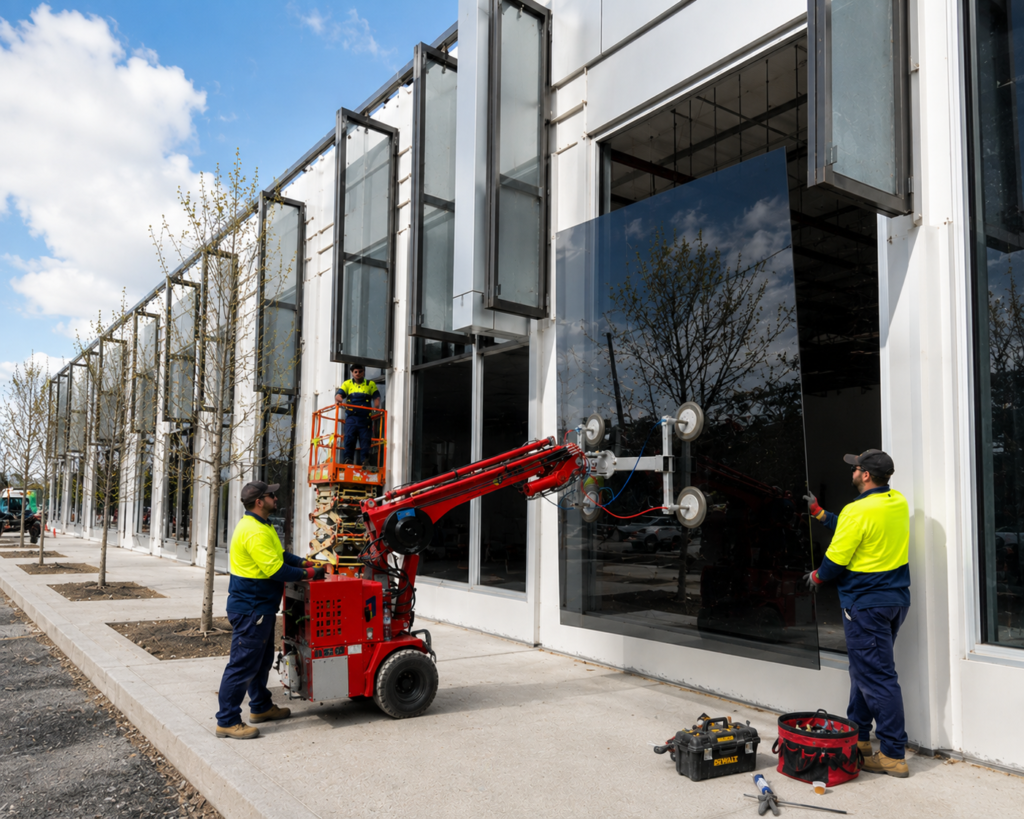
Bigger storefronts need more glass and more framing, so they cost more. However, size is not the only issue. Very large panels need special handling, heavier frames, and more crew members. So one huge panel may cost more than two smaller ones that cover the same area.
Layout matters too. Corners, angles, curves, and transoms add labor and parts. On the other hand, a simple straight front with even panel sizes is usually the most affordable.
Factor 2: Glass Type
Glass choice has a big impact on storefront glass pricing. Here is how common types compare, from lower to higher cost:
- Single-pane tempered glass: The basic option, often used in mild climates.
- Insulated tempered glass: Two panes with an air space for better comfort.
- Low-E insulated glass: Adds a coating to cut heat gain and loss.
- Laminated glass: Adds security and sound control.
- Specialty glass: Includes impact-rated, fire-rated, tinted, or decorative glass.
Energy codes in many areas now require insulated Low-E glass, which sets a minimum cost. Our energy-efficient glass page explains these options.
Factor 3: Framing System
Aluminum frames come in several grades. Basic non-thermal frames cost the least. Thermally broken frames cost more but improve comfort and meet stricter codes. Heavier frames for tall openings or high wind areas also add cost.
Finish matters as well. Standard clear or dark bronze anodized finishes are common and affordable. By contrast, custom paint colors cost more and may take longer to arrive.
Factor 4: Doors and Hardware
Doors are often the most expensive single part of a storefront. A basic aluminum door with a standard closer and lock costs far less than a frameless glass door or an automatic sliding door. Hardware choices add up too. Panic bars, electric strikes, card readers, and heavy-duty closers all raise the price.
Accessibility rules may also require certain hardware or door operators. So confirm these needs early to avoid change orders later.
Factor 5: Labor and Crew Size
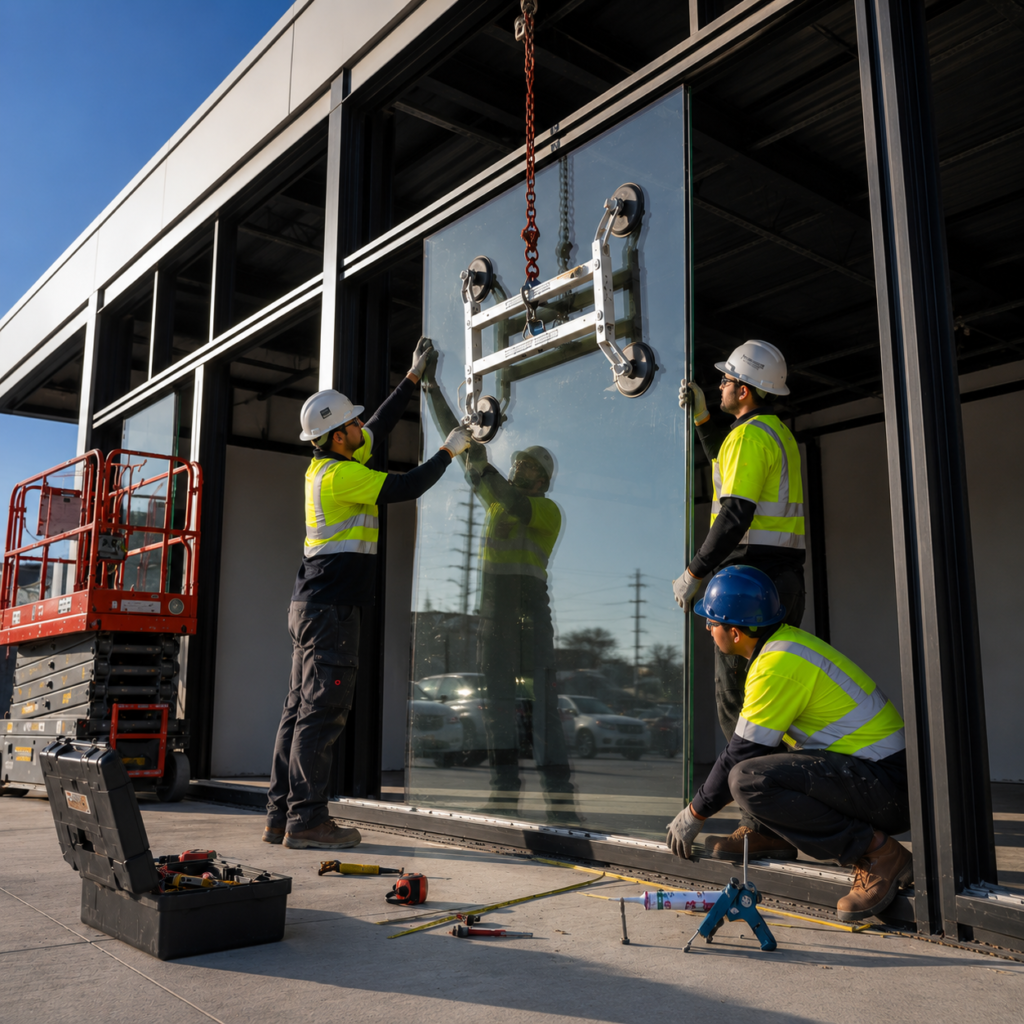
Labor is a large share of storefront glass pricing. Rates vary by city, union status, and season. Large or heavy panels need bigger crews and special lifting gear. Work at night or on weekends also costs more, though it may save you lost sales during business hours.
Factor 6: Site Access and Conditions
Easy access keeps costs down. For example, a ground-floor front on a quiet street with nearby parking is simple to reach. On the other hand, a busy downtown site may need street permits, traffic control, or a crane. Second-floor or mall locations may need lifts or special routes for glass delivery.
Existing conditions matter too. If the old front must be removed, or if the opening needs repairs, expect added cost. Hidden damage, such as rotted framing or uneven slabs, can also add work once the old system comes out.
Factor 7: Permits, Drawings, and Engineering
Most new storefronts need a building permit. Some also need stamped engineering for wind loads, especially in coastal areas. Shop drawings, permit fees, and engineering add to the total. However, they protect you by making sure the work meets code.
Factor 8: Lead Times and Market Conditions
Material prices change with the market. Aluminum and glass costs can rise quickly. Long lead times may also affect cost, since contractors may need to lock in prices early. Rush orders, if available, usually cost extra.
How to Compare Storefront Glass Pricing Between Bids
When bids differ, look closely at what each one includes. Ask these questions:
- Do both bids use the same glass type and frame system?
- Are doors and hardware listed in detail?
- Does the price include removal of the old storefront?
- Are permits, drawings, and engineering included?
- What warranty comes with the work?
It also helps to ask each bidder how they handle surprises, such as hidden damage behind the old frame. A clear answer now prevents arguments later. Often, the lowest bid leaves something out. So compare scopes line by line before you choose. Our glass cost guide offers more tips for reading quotes.
Storefront Glass Pricing for New Builds vs Replacements
New construction and replacement jobs are priced differently. On a new build, the opening is clean, square, and ready. The crew simply measures, installs, and seals. As a result, labor tends to be more predictable.
Replacement work, however, adds steps. First, the crew must remove the old storefront safely, often while the business stays open. Next, they may need to repair the opening, add new flashing, or level the sill. Finally, they install the new system. So storefront glass pricing for a replacement often runs higher than for the same size front on a new building.
Storefront Glass Pricing and Long-Term Value
The cheapest front today is not always the cheapest over time. For example, a basic system may need more repairs and waste more energy. Meanwhile, a better system can lower utility bills, reduce service calls, and last longer.
To compare value, think about the next 15 to 20 years. Add up the purchase price, expected repairs, and energy costs for each option. In many cases, the higher-quality storefront wins once you count those savings. In addition, a modern front can raise rents and help attract tenants, which adds even more value.
Ways to Save Without Cutting Corners
- Use standard panel sizes where possible.
- Choose stock finishes instead of custom colors.
- Keep high-end glass for sun-facing walls.
- Schedule work in slower seasons.
- Approve drawings quickly to avoid delays.
Above all, avoid skipping safety or code items. Those shortcuts often cost far more later. Codes from the International Code Council set many of these rules.
FAQ on Storefront Glass Pricing
What is the biggest factor in storefront glass pricing?
Usually the size of the front, the glass type, and the doors. Together, they make up most of the cost.
Why are some bids so much lower?
Lower bids may use different materials or leave out items like removal, permits, or hardware.
Can I get a price without a site visit?
You can get a rough range, but an accurate price needs field measurements.
Get a Clear, Detailed Quote
A detailed quote helps you budget with confidence. Visit our installation services page, or request a site visit today.