



Storefront window replacement does not always mean tearing out the whole front. In many buildings, the aluminum frames are still straight, strong, and sealed well. Only the glass is cracked, foggy, outdated, or inefficient. In those cases, keeping the existing frames can save a lot of money, time, and disruption. Yet frames that look fine at a glance may hide real problems. This guide explains how to decide whether your frames can stay, what to check, and when new frames are the smarter move.
Landlords, store owners, and property teams will find it useful before asking for quotes.
What Keeping the Frames Really Means
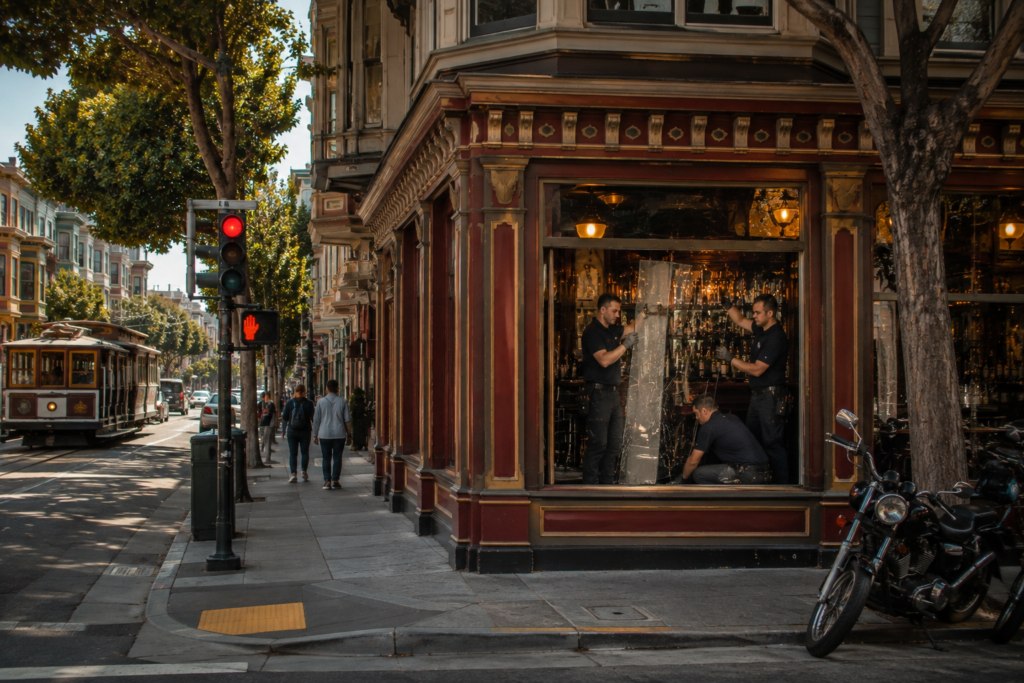
When you keep your frames, the crew removes only the glass and the glazing materials. Then they install new glass into the same frames, along with new gaskets, tape, and sealant. The aluminum stays in place, along with its anchors and flashing.
This approach is often called reglazing. It works well when the frames are in good shape and can accept the new glass you want.
Benefits of Keeping Existing Frames
- Lower cost: You avoid the price of new framing and most demolition.
- Faster schedule: No new shop drawings for framing, and often no long waits.
- Less disruption: The work is quieter and more contained.
- Fewer permits: Many cities treat glass swaps as simple repairs.
- Consistent look: The front keeps its familiar lines.
For many owners, these benefits make storefront window replacement with existing frames the first choice.
Step 1: Check Frame Condition
A glazier should inspect every frame before you decide. They will look for:
- Bent, twisted, or cracked mullions
- Corrosion, especially at the sill
- Loose anchors or frames out of square
- Signs of past leaks or water damage
- Worn or missing drainage parts
If the frames pass this check, they may be good candidates to keep.
Step 2: Check Glass Pocket Size
Next, the glazier measures the glass pocket. This is the space in the frame that holds the glass. Many older storefronts were built for single-pane glass about a quarter inch thick. Modern insulated glass is often an inch thick.
If the pocket is too small, the new glass will not fit. In some cases, special adapters or thinner insulated units can help. Otherwise, you may need new frames to get the glass you want.

Step 3: Check Code Requirements
Codes may also shape your choice. For example, codes call for safety glass in doors and beside walkways. Energy codes may require certain performance levels for new glass. Some cities treat large glass replacements as alterations that must meet current energy rules.
Your contractor can confirm what applies. Model codes from the International Code Council form the basis of most local rules.
Storefront Window Replacement Glass Options
If your frames can stay, you still have many glass choices:
- Tempered glass: Strong and safe, the standard for most storefronts.
- Laminated glass: Adds security and blocks UV light.
- Insulated glass: Improves comfort if the pocket allows it.
- Low-E coatings: Reduce heat gain and glare.
- Tinted or frosted glass: Adds privacy where needed.
Our laminated glass vs security film guide helps if security is a concern.
Limits of Keeping Old Frames
Keeping frames has trade-offs. Older aluminum frames are usually not thermally broken. So even with new insulated glass, the frames may still feel cold and let heat escape. In addition, old seals between frame pieces may keep leaking unless they are redone.
Finish is another factor. New glass in faded frames may look mismatched. Field refinishing can help, though it adds cost.
When New Frames Are the Better Choice
Consider new frames when:
- Frames are badly corroded, bent, or leaking
- The glass pocket cannot hold the glass you need
- You want big energy savings
- The doors and hardware also need replacing
- You plan a new look or layout for the front
In these cases, a full system often delivers better value over time. Our full replacement services page explains that process.
How Storefront Window Replacement Works With Existing Frames
The process is fairly simple. First, the glazier measures each opening and orders glass. While you wait, the old glass stays in place. On install day, the crew removes the glazing stops or gaskets, takes out the old glass, and cleans the frame. Then they set new glass on fresh setting blocks, install new gaskets or tape, and seal the joints. Finally, they clean up and remove the old glass from the site.
Most panels take only an hour or two each, so many storefronts are done in a day.
Cost Comparison
In general, storefront window replacement with existing frames costs much less than a full new system. The savings come from skipping new framing, extra labor, and most permits. However, if the frames need major repairs first, the gap narrows. So get both options priced before you decide. Ask each bidder to list glass type, labor, sealing, and disposal on separate lines, which makes the quotes much easier to compare.
Storefront Window Replacement and Energy Savings
Many owners replace storefront windows to lower energy bills. New insulated Low-E glass can cut heat gain in summer and heat loss in winter. As a result, the space feels more comfortable near the windows, and the HVAC system works less.
However, keep expectations realistic when the old frames stay. Since older frames are usually not thermally broken, they still move heat. So the savings may be smaller than with a full new system. Even so, upgrading the glass alone often makes a clear difference, especially if the old storefront had single-pane glass.
Storefront Window Replacement Timing
Timing affects both cost and disruption. For example, spring and fall offer mild weather, which helps sealants cure well. Summer and winter can work too, though extreme heat or cold may slow the crew. In addition, plan around your busy seasons. A retail store may want to avoid the holiday rush, while a restaurant may prefer a slow weekday.
Storefront Window Replacement After Damage
Sometimes the choice is made for you. After a break-in or storm, broken glass must come out fast. In that case, the crew boards up the opening first. Then, once the new glass arrives, they reglaze the existing frames. This is often the quickest way to get back to normal. Afterward, you can decide whether the rest of the storefront needs attention. Meanwhile, keep photos and receipts, since many insurance policies cover sudden glass breakage.
Questions for Your Glazier
- Are my frames in good enough shape to keep?
- Will the glass I want fit the existing pocket?
- Do local codes require new performance levels?
- How much would new frames add, and what would they save?
- Should we reseal the frame joints at the same time?
FAQ on Storefront Window Replacement
Can storefront window replacement be done in one day?
Often, yes, once the glass arrives. Large or many panels may take longer.
Can I add insulated glass to old frames?
Only if the glass pocket is deep enough or adapters are available.
Will keeping my frames affect the warranty?
The new glass usually carries its own warranty, while the old frames do not.
Find the Right Path
A short inspection shows whether your frames can stay. Visit our window services page, or book a site visit today.