



The crack started at the corner of one lite and has crept a few inches since last week. The store is open seven days and the owner does not want a crew in the window display on a Saturday. Replacing a cracked storefront panel in Summerlin between business hours is very doable, as long as the glass is measured and made before anyone touches the opening.
The timing of the swap depends on one thing you can watch yourself: the crack.
The owner has to choose when and how to swap the panel.
- Replace in a single early-morning or evening window once glass arrives
- Tape and monitor the crack, replacing on the next quiet day
- Board up now if the crack is spreading quickly or the glass is loose
- Replace during a planned closure such as an inventory day
Track the Crack
Put a small piece of tape or a fine marker line at the tip of the crack and write the date beside it. Photograph it. Check it every day. A crack that does not move for a week gives you time to schedule. One that runs several inches in a day, or branches, tells you the lite is under stress and should be made safe sooner. Also note where the crack started: an edge or corner start often points to an edge chip, frame pressure or heat stress, while a crack from a point in the middle usually means an impact.
What it cannot tell you yet: Why the lite cracked. If the frame is pinching the glass, a new lite in the same frame could crack again.
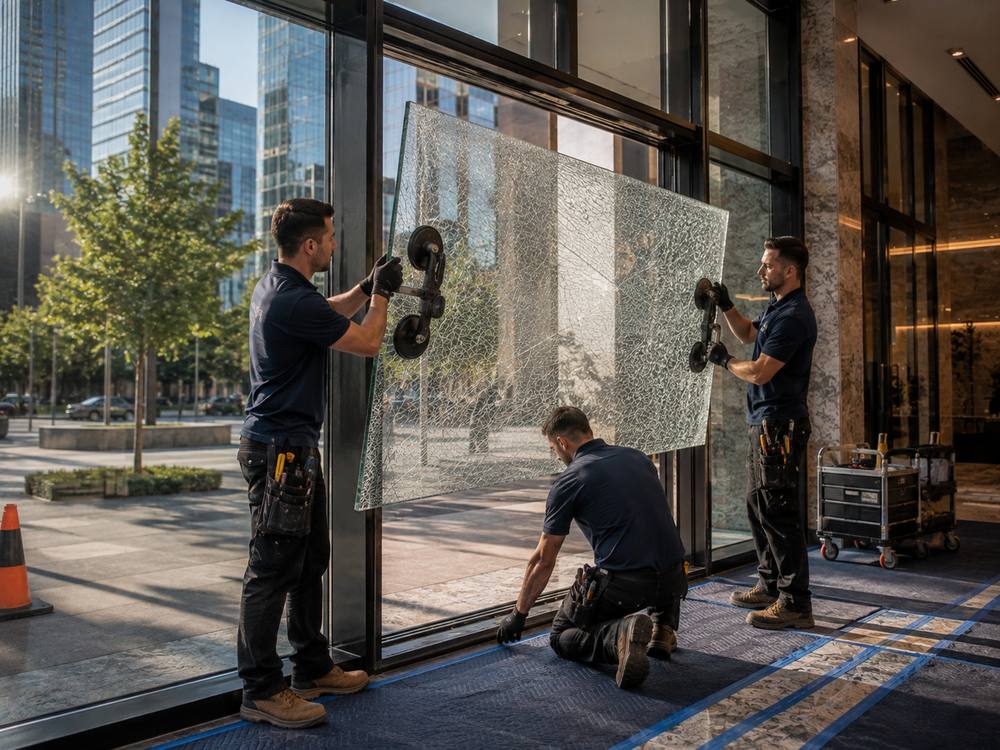
How an After-Hours Swap Works
- The glazier measures the lite and identifies the glass type, including whether it is tempered, laminated or an insulated unit.
- The replacement is ordered. Tempered glass and insulated units are made to size, so there is a lead time.
- On the day, the crew arrives with the new lite before opening or after closing, removes the stops and the cracked glass, checks the frame pocket and setting blocks, sets the new lite and reglazes.
- Displays near the window are moved by store staff the night before, and the floor is protected.
A single lite in a standard storefront can often be swapped in a few hours. Large or insulated lites take longer, and if the pocket needs new gaskets or setting blocks, those should be on the truck.
- The frame is bowed or pinching the glass, which caused the crack
- Setting blocks are missing or crushed, letting the glass touch metal
- Glazing stops are bent and cannot be reinstalled
- The cracked lite is beside the door and the door frame is out of square
The Summerlin factor: quiet hours and sun
Many Summerlin centers sit next to homes, so ask the landlord about allowed construction hours before booking a very early start. Thermal stress is also worth considering. A lite that sits partly in shadow from a column or awning and partly in strong sun heats unevenly, and a crack from the edge with no impact mark can be a sign of that. The glazier may suggest heat-strengthened or tempered glass for the replacement if that is the cause.
A gift shop in a Summerlin center finds a crack running from the bottom corner of a display lite. The tape marks show it has not moved for five days. There is no impact point. The glazier finds a missing setting block, so the glass was resting on the metal sill. The new lite goes in on a Monday morning before opening with new setting blocks, and the shop never closes.
When you remove the cracked lite, will you check the setting blocks and the pocket for anything touching the glass edge?
If something in the frame caused the crack, replacing the glass alone will not stop the next one. This check is quick when the lite is out, and impossible once the new glass is in.
| What you can document | What the glazier verifies on site |
|---|---|
| Dated photos of the crack tip | Glass type and makeup |
| Where the crack started | Frame and pocket condition |
| Any impact or event before it appeared | Setting blocks and edge clearance |
| Store hours and the best swap window | Whether a different glass type is advisable |
A Swap-Day Checklist
- ☐ Replacement lite delivered and checked against the order
- ☐ Display cleared and floor protected
- ☐ Landlord notified of the work window
- ☐ Cracked glass removed and disposed of
- ☐ Pocket, gaskets and setting blocks checked
- ☐ New lite set and glazed
- ☐ Labels or stamp visible where required
- ☐ Glass cleaned and area swept before opening
- Safety glazing requirements if the lite is near a door or the floor
- Whether heat-strengthened or tempered glass is appropriate for the location, from the glass supplier
- Landlord rules on work hours and noise
- That the replacement matches the original appearance
The Next Decision
The next decision is the swap window. Book it once the glass is in production and the crack is stable.
Have this ready:
- Crack tracking photos
- Glass type and size from the glazier
- Store hours
- Landlord work-hour rules
Talk It Through
If a storefront lite has cracked, we can measure it and plan a swap outside your opening hours. See our pages on storefront glass in Summerlin and storefront glass replacement, or call 866-665-3975 to schedule a site visit.
Sources and Further Reading
- ASTM C1048: Heat-Strengthened and Fully Tempered Flat Glass
- ASTM C1036: Standard Specification for Flat Glass
- National Glass Association (glass.org): glazing industry technical resources
- International Code Council (IBC, including Chapter 24 safety glazing)
- Summerlin (community information)
- Guardian Glass: architectural glass performance data