



After a storm, there is a puddle inside the storefront along the floor. In a dry climate this is easy to dismiss as a one-off. But a storefront leak in Summerlin that shows up at the sill usually has a specific cause in the frame or the flashing, and it will be back with the next storm.
This guide is about finding that cause before anyone starts sealing things at random.
The manager has to decide what to investigate and repair.
- Reseal the perimeter of the storefront
- Open up the sill and check the flashing and weep system
- Reglaze the leaking lites with new gaskets
- Ask for a water test to find the entry point first
Start a Leak Log
For each event, record the date, the rain and wind (from the National Weather Service in Las Vegas or a weather app), which bays leaked, where the water appeared (corner, middle of the sill, below a mullion) and how much. Add photos. Water that only appears in wind-driven rain from one direction points to a different cause than water after every rain. Water under a mullion often means a joint in the frame. Water along the whole sill often points to the sill flashing or blocked weeps.
What it cannot tell you yet: Where the water enters. It may come in high and run down inside the frame. A controlled water test is the only way to be sure.
How Water Is Supposed to Leave a Storefront
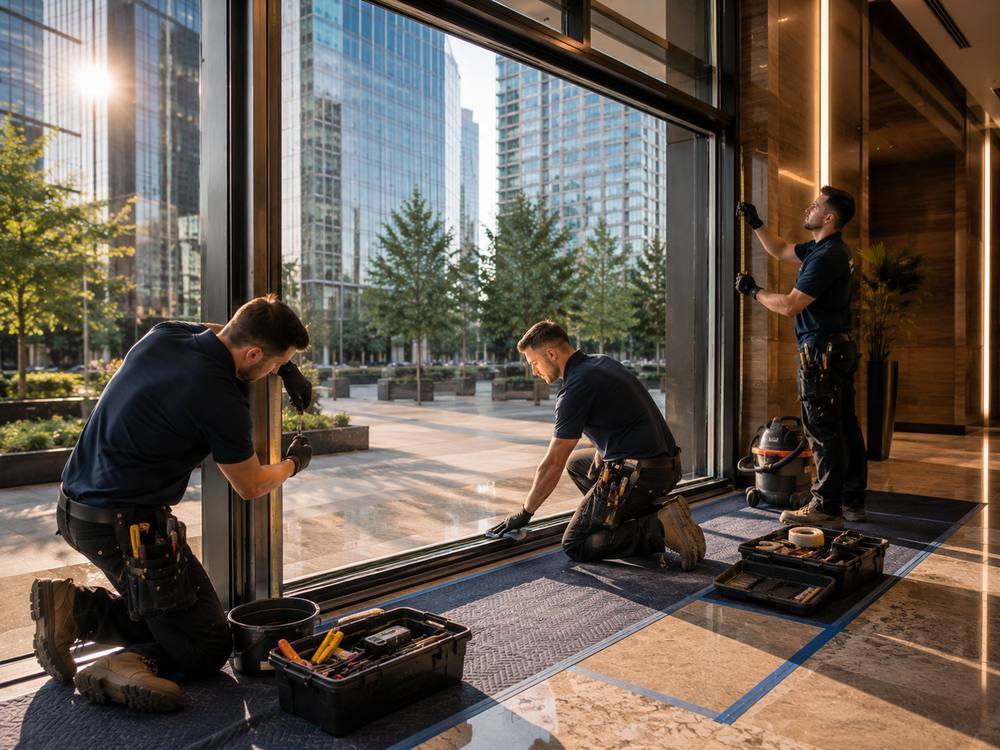
Most storefront systems are designed to let a little water into the frame and drain it back out. The sill has end dams, a sloped surface and weep holes or slots that let water escape to the outside. If weeps are painted over, packed with dirt or caulked shut by a well-meaning maintenance crew, the water has nowhere to go but in. Gaskets that have shrunk, open corner joints and failed perimeter sealant at the jambs also let water in.
Common Causes
| Where the water appears | Likely cause | Typical fix |
|---|---|---|
| Along the whole sill | Blocked weeps or failed sill flashing | Clear weeps, rework sill flashing |
| Below a mullion | Open joint or failed seal at the mullion | Reseal joint, replace gasket |
| At a corner | End dam or corner seal failure | Rework end dam and seal |
| Only in wind-driven rain | Pressure-driven water at gaskets | Reglaze or improve seals |
| Down the wall beside the frame | Perimeter sealant or wall above | Reseal perimeter or check the wall |
- The sill flashing was never installed or is damaged and the frame must come out to fix it
- The slab slopes toward the building at the threshold
- The frame anchors through the sill are leaking and corroded
- The leak comes from the wall or roof above and the storefront is only where it shows
The Summerlin factor: rare rain, heavy storms
The valley gets little rain most of the year, so a leak may hide for months. Then a summer monsoon storm with wind-driven rain finds every weakness at once. Dust and debris collect in sill weeps during long dry spells, which is another reason to check them before the monsoon season. Planned-center landscaping can also matter: irrigation spray hitting a storefront every night can look like a leak.
A Summerlin café sees water along the sill after two storms but not after a third. The leak log shows the first two had strong west winds. The glazier finds the weep holes clear but the gaskets shrunk back at the corners on the west-facing lites. Replacing the gaskets solves it; the sill flashing was fine.
Can you do a controlled water test, starting low and working up, before recommending repairs?
Testing one section at a time shows where water actually gets in. It costs a site visit but can save a full reseal that misses the real cause.
| What you can document | What the glazier verifies on site |
|---|---|
| The leak log with dates and weather | Weep holes and sill drainage |
| Photos of water inside and the exterior at the same spot | Gaskets and corner joints |
| Irrigation schedule near the storefront | Perimeter sealant and wall interface |
| Any past sealant or caulk work | Water test results |
Before You Call: a Quick Exterior Check
- ☐ Weep holes at the sill visible and open (not painted or caulked)
- ☐ Sealant at jambs and sill intact, no gaps
- ☐ Gaskets in place at the corners
- ☐ Sprinklers not spraying the glass
- ☐ Ground or paving slopes away from the sill
- Sill flashing and drainage details with the storefront system manufacturer’s installation instructions
- Sealant compatibility with the frame and existing sealant
- Whether repairs need landlord approval
- Whether the wall or roof above needs a separate investigation
The Next Decision
The next decision is whether to pay for a water test or approve a targeted repair. If the leak log does not point to one cause, test first.
Have this ready:
- The leak log
- Photos
- The exterior check results
- Budget for testing
Talk It Through
If water is getting in at the base of your storefront, we can test and find the source. See our pages on storefront glass in Summerlin and commercial glass repair, or call 866-665-3975 to schedule a site visit.
Sources and Further Reading
- National Weather Service, Las Vegas office
- Fenestration and Glazing Industry Alliance (FGIA): window, door and storefront standards
- Kawneer: storefront, entrance and framing system documents
- YKK AP America: commercial storefront and entrance systems
- National Glass Association (glass.org): glazing industry technical resources