




What Does a Tenant Improvement Contractor Do During a Commercial Build-Out?
During a commercial build-out, a tenant improvement contractor build-out team turns approved drawings into finished space by directing every trade in the right order. The contractor owns the schedule, the budget, and the relationship with the building department.
This article walks through what the contractor is doing each week, from demolition to the certificate of occupancy.
The Tenant Improvement Contractor Build-Out Sequence
A build-out follows a repeatable order. The contractor mobilizes, protects existing finishes and neighboring tenants, then runs selective demolition. Framing goes up next, followed by overhead rough-ins for electrical, mechanical, plumbing, and low-voltage. Inspections clear the rough work before walls close.
- Demolition and shell prep
- Framing, backing, and in-wall blocking
- MEP rough-in and fire-life-safety
- Drywall, tape, and ceiling grid
- Glass, doors, flooring, paint, millwork, and fixtures
- Punch list, final inspections, and closeout
Managing Trades and Inspections
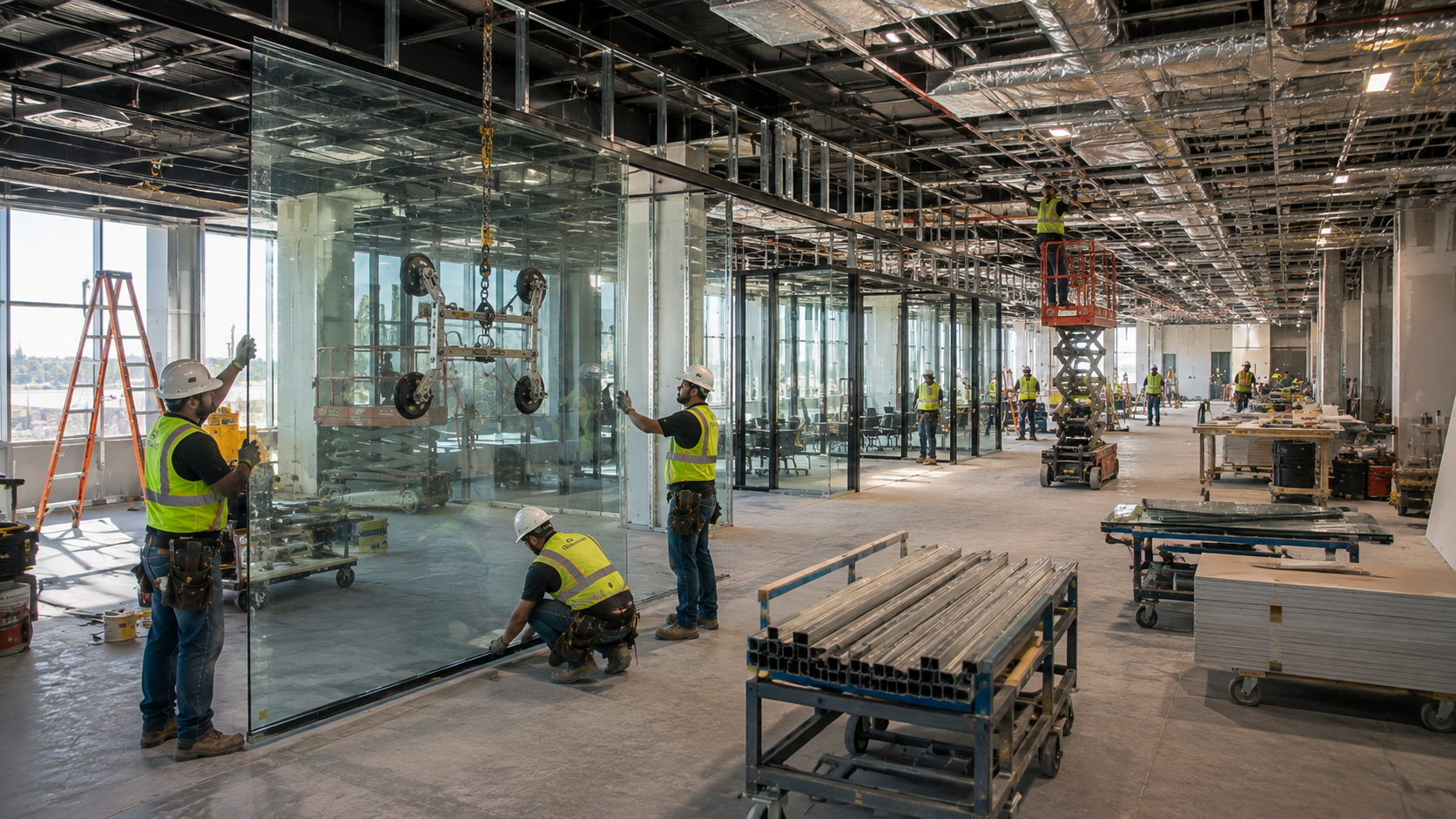
The superintendent holds a daily plan and a weekly look-ahead. They confirm each subcontractor has what they need, resolve conflicts between trades, and schedule inspections so the project never waits on the building department. Missed inspection windows are one of the biggest hidden causes of delay.
The project manager runs procurement, submittals, change orders, and pay applications in parallel.
Handling Glass and Glazing
Glazing is ordered early because storefront, curtain wall systems, and interior fronts have multi-week lead times. The contractor verifies field dimensions, approves shop drawings, schedules the install after drywall so openings are true, and books the safety-glazing inspection.
See storefront glass installation for how that scope is executed.
Closeout and Handover
At the end, the contractor walks the space with the tenant, completes every punch item, obtains the certificate of occupancy, and delivers warranties, operation manuals, and as-built drawings. A clean closeout protects the tenant and the landlord.
A Week in the Life of a Build-Out
In a typical construction week, the tenant improvement contractor build-out superintendent runs a Monday plan meeting, walks the job daily to check quality and safety, coordinates the two or three inspections scheduled that week, and updates the look-ahead for the following two weeks.
The project manager spends the same week processing submittals, releasing material, answering requests for information from the field, and preparing the monthly pay application with lien releases from every subcontractor.
How Delays Are Prevented
Most build-out delays trace back to four causes: late decisions by the tenant, long-lead materials ordered too late, missed inspection windows, and trade conflicts that were never coordinated. A tenant improvement contractor build-out plan attacks all four with a decision log, an early buyout, a rolling inspection schedule, and a coordinated overhead layout.
Bottom Line for Commercial Property Owners
A well-managed tenant improvement contractor build-out decision protects three things at once: your construction schedule, your build-out budget, and the long-term performance of the space. Getting it right early, with a contractor who has done it many times, is far cheaper than correcting it later.
Every commercial building reaches these decision points. The owners and tenants who plan for them, document the scope, and work with an experienced team consistently open on time, stay on budget, and end up with space that leases and performs better for years.
Key Takeaways
- The contractor converts approved drawings into finished space on one schedule
- Work follows a fixed sequence: demo, framing, rough-in, inspections, finishes, closeout
- A superintendent runs trades and inspection timing day to day
- Glass is ordered early and installed after drywall to keep openings true
- Closeout includes the certificate of occupancy and a full document package
Frequently Asked Questions
What does the superintendent do all day?
Directs subcontractors, enforces safety and quality, sequences the next two weeks of work, and schedules inspections.
When is glass installed in a build-out?
Usually after drywall and before final finishes, so framed openings are square and protected during earlier trades.
Talk to a Commercial Glazing and Tenant Improvement Team
Our superintendents run build-outs with in-house glazing crews so the glass scope never stalls the schedule. contact our team to plan yours. For further reading, see the IBC glazing requirements.