



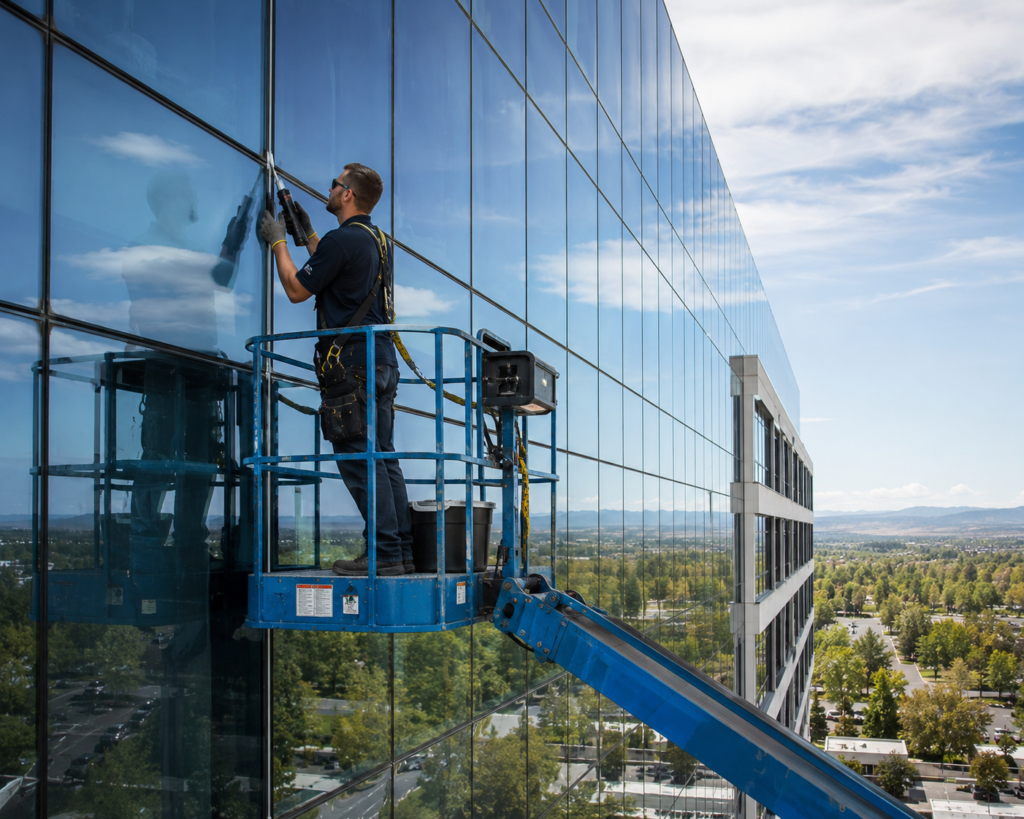
Tenant Improvement Glass: A Complete Guide for Commercial Spaces
Tenant improvement glass is the glazing scope inside a commercial build-out: storefronts, glass entry systems, interior office fronts, conference glazing, and demountable partitions. It is one of the most visible parts of a project and one of the most commonly under-scoped.
This guide covers the systems, the code requirements from IBC Chapter 24 glazing requirements, typical lead times, and how the glass scope is managed alongside the rest of the build-out.
The Main Types of Tenant Improvement Glass
A commercial build-out usually includes several distinct glazing systems, each with its own framing, hardware, and inspection:
- Aluminum storefront: the exterior glass wall at grade, with entrances
- Curtain wall and window wall: floor-to-floor or multi-story exterior glazing
- Interior office fronts: framed or frameless glass walls for offices and conference rooms
- Demountable partitions: modular glass wall systems that can be reconfigured
- Glass doors: all-glass, framed, and automatic entrances with hardware
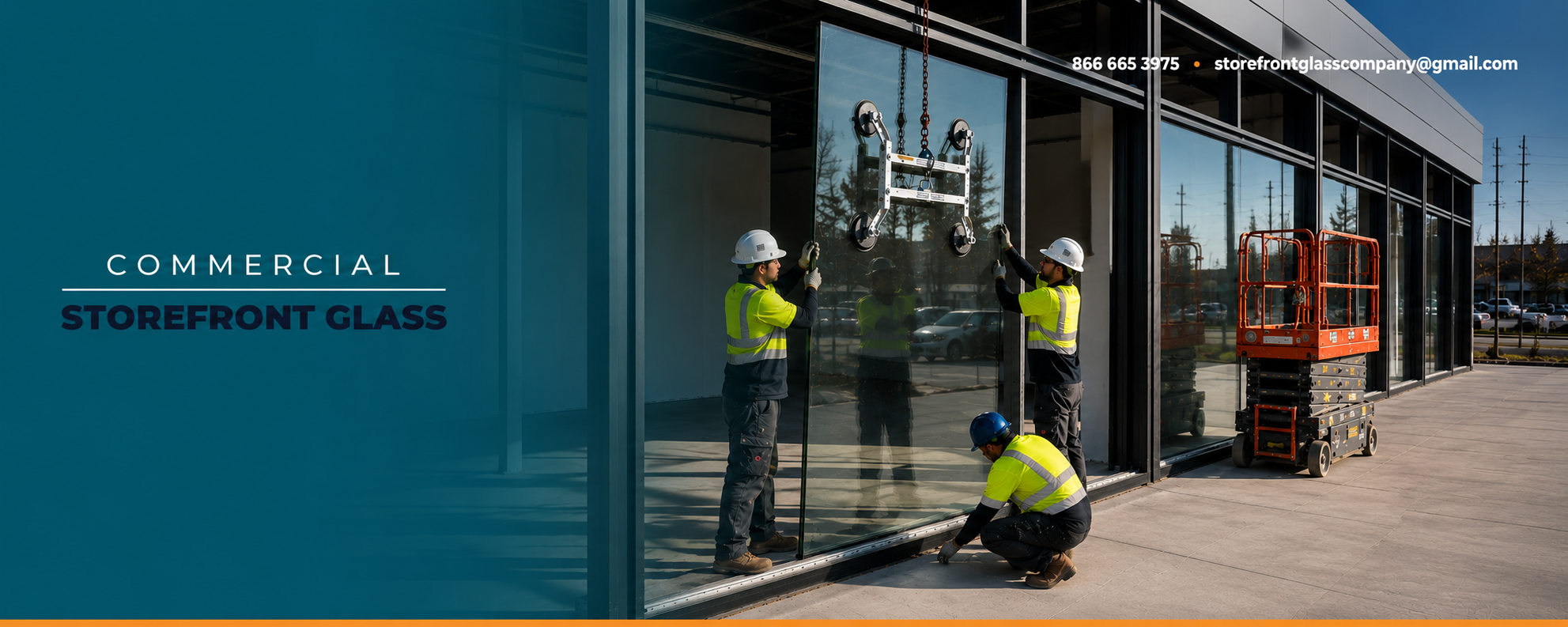
Code and Safety Requirements
Glass in doors, next to doors, in low walls, and in large panes must be safety glazing — tempered or laminated — per the building code. Fire-rated openings, guard railing infill, and acoustic ratings for conference rooms add further requirements. A glazing contractor identifies these locations during design.
The National Glass Association publishes reference standards used across the industry.
Lead Times and Scheduling
Storefront and curtain wall commonly run six to ten weeks from approved shop drawings. Interior systems are faster but still measured in weeks. Because of this, glass is ordered at buyout, right after the permit, and installed after drywall so openings are true.
See storefront glass installation for the field sequence.
What Tenant Improvement Glass Costs
Glass is priced by opening and by performance: pane size, insulation, tint or coating, framing finish, and hardware. Our guide to tenant improvement glass cost breaks down the ranges.
Performance Ratings to Understand
When specifying tenant improvement glass, three ratings matter most: the U-factor for insulation, the solar heat gain coefficient for heat control, and the sound transmission class for acoustics. Your glazing contractor matches these ratings to each opening and exposure.
Visible light transmittance is a fourth number worth checking, because a heavily tinted unit that controls heat can also make an interior feel dim.
Maintenance and Warranty
Tenant improvement glass systems carry manufacturer warranties on the insulated units, typically ten years against seal failure, and separate warranties on hardware and finishes. Routine maintenance is minimal: clean the glass, keep weep holes clear, and service door closers and operators annually. Keep the closeout documents so warranty claims are simple.
Bottom Line for Commercial Property Owners
A well-managed tenant improvement glass decision protects three things at once: your construction schedule, your build-out budget, and the long-term performance of the space. Getting it right early, with a contractor who has done it many times, is far cheaper than correcting it later.
Every commercial building reaches these decision points. The owners and tenants who plan for them, document the scope, and work with an experienced team consistently open on time, stay on budget, and end up with space that leases and performs better for years.
Key Takeaways
- Tenant improvement glass spans storefront, curtain wall, office fronts, partitions, and doors
- Safety glazing is required in and near doors, low walls, and large panes
- Storefront and curtain wall lead times often drive the whole schedule
- Glass is ordered at buyout and installed after drywall
- Cost depends on opening size, performance, framing, and hardware
Frequently Asked Questions
Is tenant improvement glass covered by the landlord allowance?
Base-building storefront often is; interior glass and upgrades are usually tenant-funded. Confirm in the lease.
Can interior glass walls be moved later?
Demountable partition systems are designed to be reconfigured. Framed glass fronts can be relocated but with more labor.
Talk to a Commercial Glazing and Tenant Improvement Team
For help scoping the glazing on your build-out, contact our team or start with our commercial glass services overview.