

Commercial Storefront Glass

Tennessee–Virginia Tri-Cities Glazing Repair, Replacement & Installation

The Tennessee–Virginia Tri-Cities region is one of the Appalachian Highlands’ largest commercial, healthcare, manufacturing, and distribution markets, bringing together Johnson City, Kingsport, Bristol, and neighboring communities across Northeast Tennessee and Southwest Virginia. Positioned along the Interstate 81 corridor, the region supports advanced manufacturing, healthcare, logistics, education, aerospace suppliers, retail, tourism, and professional services while continuing to attract investment in office buildings, healthcare campuses, industrial facilities, distribution centers, hotels, retail developments, educational institutions, government buildings, and mixed-use projects. Throughout the Tri-Cities region, property owners, facility managers, property managers, developers, architects, and general contractors regularly evaluate whether commercial glazing systems should be repaired, replaced, or upgraded to improve energy efficiency, occupant comfort, weather resistance, security, and long-term building performance.

Commercial activity extends throughout Downtown Johnson City, Downtown Kingsport, Bristol, the Interstate 81 corridor, Tri-Cities Airport, East Tennessee State University, the MedTech Corridor, industrial parks, and neighboring communities including Bluff City, Elizabethton, Jonesborough, Gray, Colonial Heights, Abingdon, Gate City, and Bristol, Virginia. Whether serving healthcare providers, manufacturers, distribution companies, universities, retailers, hospitality properties, government agencies, or corporate offices, commercial glazing plays a critical role in protecting commercial investments while supporting modern building performance.


The Tennessee–Virginia Tri-Cities Economy Continues to Grow

Commercial construction supports one of the most diversified regional economies in the Appalachian Highlands.

Major industries include:

  • Healthcare systems
  • Advanced manufacturing
  • Distribution and logistics
  • Aerospace suppliers
  • Higher education
  • Professional services
  • Retail development
  • Tourism and hospitality
  • Government facilities
  • Financial services
  • Technology
  • Mixed-use construction

Commercial glazing supports these industries throughout every phase of the building lifecycle, from new construction and tenant improvements to modernization and long-term facility maintenance.

When Glazing Repair Is the Right Choice

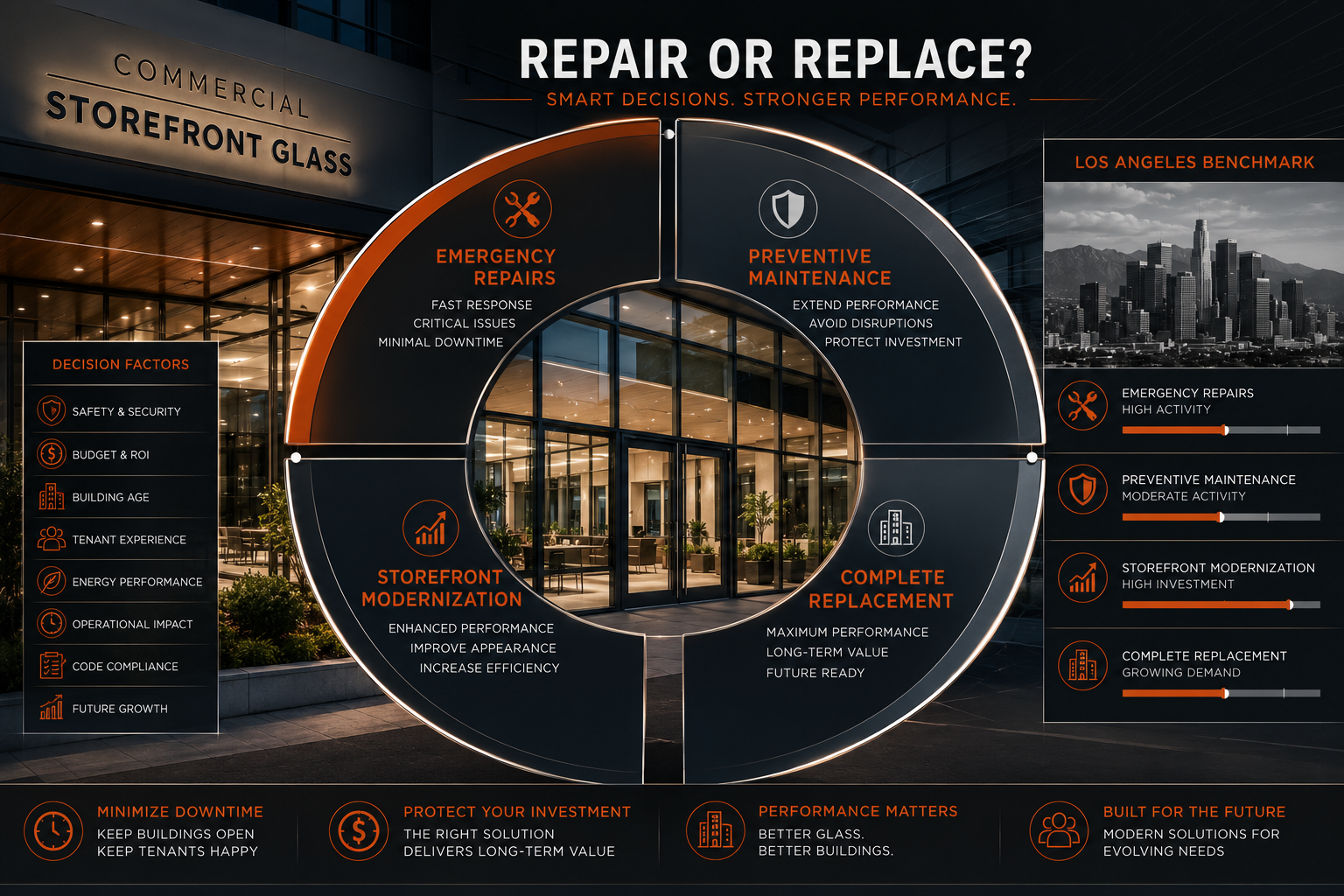
Many commercial glazing systems can continue performing efficiently through targeted repairs.

Repair is often appropriate when:

  • Broken storefront glass requires replacement
  • Insulated glass units develop condensation or seal failure
  • Commercial entrance doors require adjustment
  • Automatic entrance systems require servicing
  • Door closers, pivots, locks, and panic hardware become worn
  • Weather seals deteriorate after years of exposure
  • Minor water intrusion develops
  • Existing aluminum storefront framing remains structurally sound

Prompt repairs restore safety, appearance, and energy performance while minimizing disruptions to employees, tenants, customers, patients, students, hotel guests, and visitors.

When Glazing Replacement Creates Better Long-Term Value

Replacement often becomes the preferred long-term investment as commercial buildings age.

Replacement is commonly recommended when:

  • Multiple insulated glass units have failed
  • Energy efficiency continues declining
  • Maintenance costs continue increasing
  • Commercial façades become outdated
  • Moisture infiltration becomes recurring
  • Tenant improvement projects require modernization
  • Capital improvement programs include exterior upgrades
  • Existing glazing systems no longer meet current building performance standards

Modern glazing systems improve insulation, daylighting, occupant comfort, sustainability, operational efficiency, and the overall performance of the building envelope.


New Glazing Installation Supports Continued Growth

Commercial development continues throughout the Tennessee–Virginia Tri-Cities region.

Modern installations commonly include:

  • Curtain wall systems
  • Aluminum storefront systems
  • Commercial windows
  • Glass entrance systems
  • Automatic entrance systems
  • Security glazing
  • Fire-rated glazing
  • High-performance insulated glass
  • Interior office glazing
  • Architectural glass systems

These systems improve durability, sustainability, occupant comfort, and long-term property performance while supporting modern commercial architecture throughout the region.

The Appalachian Climate Influences Glazing Performance

Commercial buildings throughout the Tri-Cities experience a four-season climate that requires durable glazing systems.

Property owners commonly prepare for:

  • High humidity
  • Heavy rainfall
  • Severe thunderstorms
  • Strong winds
  • Hail
  • Flash flooding
  • Winter snow
  • Ice accumulation
  • Seasonal temperature fluctuations

These environmental conditions influence glazing specifications, framing systems, waterproofing strategies, sealant performance, thermal efficiency, impact resistance, and preventative maintenance planning.

Commercial Glazing Supports Every Property Type

Commercial glazing serves nearly every commercial property sector throughout the Tri-Cities region.

Common projects include:

  • Office buildings
  • Corporate headquarters
  • Healthcare campuses
  • Medical office buildings
  • Manufacturing facilities
  • Warehouses and distribution centers
  • Hotels
  • Retail centers
  • University buildings
  • Government facilities
  • Research centers
  • Mixed-use developments

Each property type requires glazing systems engineered to maximize durability, energy efficiency, occupant safety, and long-term building performance.


Building Performance Protects Long-Term Investment

Commercial glazing contributes to much more than architectural appearance.

Property owners commonly prioritize:

  • Energy efficiency
  • Occupant comfort
  • Weather protection
  • Natural daylight
  • Security
  • Preventive maintenance
  • Building envelope performance
  • Sustainability
  • Long-term property value

A proactive glazing strategy helps reduce lifecycle costs while improving operational reliability and protecting valuable commercial assets.

Commercial Glazing Throughout the Tennessee–Virginia Tri-Cities

Major commercial markets include:

  • Johnson City
  • Kingsport
  • Bristol, Tennessee
  • Bristol, Virginia
  • Jonesborough
  • Elizabethton
  • Bluff City
  • Gray
  • Colonial Heights
  • Tri-Cities Airport
  • East Tennessee State University
  • Abingdon, Virginia
  • Gate City, Virginia
  • Piney Flats
  • Interstate 81 Corridor

Additional commercial development continues throughout Washington, Sullivan, Carter, and Unicoi counties in Tennessee, along with Washington, Scott, and Wise counties in Virginia, as healthcare providers, manufacturers, logistics companies, universities, developers, retailers, and professional service firms continue investing across the Appalachian Highlands.

Supporting the Future of Commercial Construction in the Tennessee–Virginia Tri-Cities

Glazing repair, replacement, and new installation each play an essential role in supporting the continued growth of the Tennessee–Virginia Tri-Cities region. Repairs help extend the life of valuable building assets, replacements improve energy efficiency and reduce long-term operating costs, and new installations create durable, high-performance commercial buildings designed to withstand the changing climate of the Appalachian Highlands for decades.

Whether upgrading a downtown office building in Johnson City, modernizing a healthcare campus in Kingsport, expanding a manufacturing facility in Bristol, renovating a retail center along Interstate 81, improving a distribution facility near Tri-Cities Airport, or constructing a new mixed-use development anywhere throughout the Tri-Cities region, professionally engineered commercial glazing strengthens the building envelope, improves energy efficiency, enhances occupant comfort, supports operational reliability, and increases the long-term value of commercial real estate across Northeast Tennessee and Southwest Virginia.