




Glass storefront repair is often the fastest and most affordable way to fix a damaged front. A good crew can usually fix a cracked panel, a sticking door, or a leaky seal in a day or two. Yet sometimes repair only buys a little time. When frames wear out, seals keep failing, or the glass no longer meets code, replacement may be the smarter choice. This guide explains how to tell the difference, so you spend money where it does the most good.
Store owners, property managers, and facility teams can use it to make better decisions after damage or during routine upkeep.
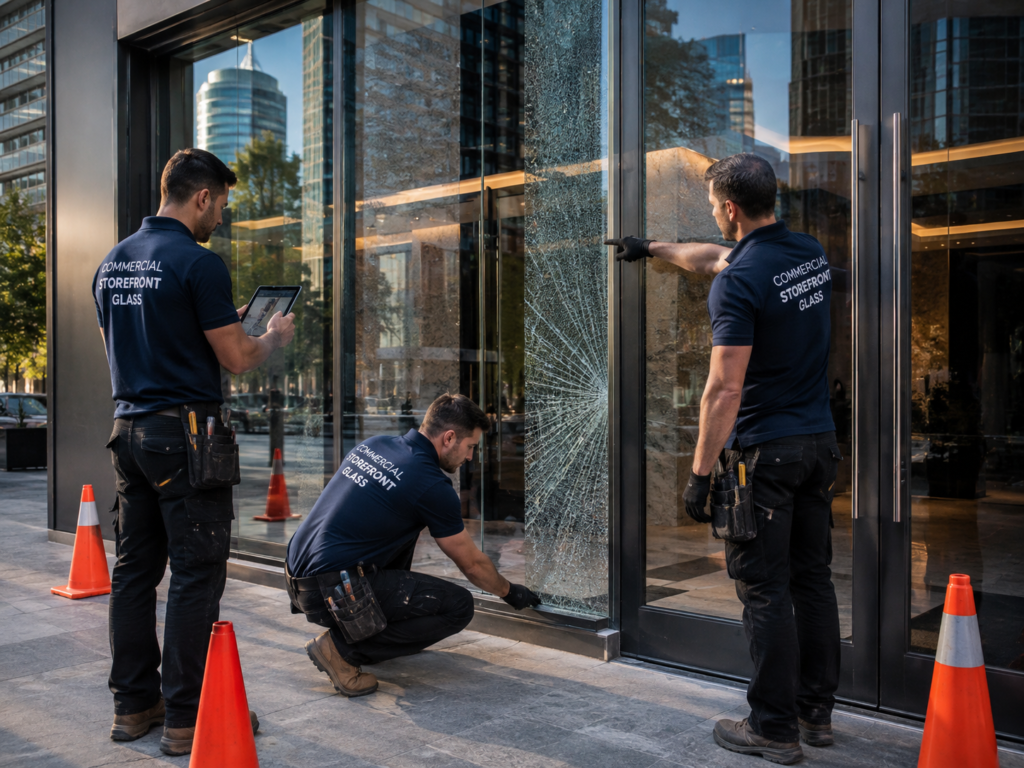
Why the Repair or Replace Choice Matters
A storefront protects your building, your stock, and your people. It also makes the first impression on every customer. So a bad choice can cost you twice. For example, repairing a front that is near the end of its life may lead to more breakdowns. On the other hand, replacing a front that only needs a small fix wastes money.
Making the right call starts with a clear look at the damage and the age of the system.
Common Problems That Need Glass Storefront Repair
Many storefront problems are simple to fix. Here are the most common:
- Cracked or broken glass from impacts, break-ins, or stress
- Foggy insulated glass caused by a failed seal
- Door problems such as sagging, dragging, or failed closers
- Leaks from worn sealant or gaskets
- Loose or damaged glazing stops
- Scratched or etched glass from vandalism
In most cases, a skilled crew can handle these issues without touching the frame.
When Glass Storefront Repair Makes Sense
Repair is usually the right choice when:
- The damage affects one or two panels
- The frames are straight, solid, and in good shape
- The doors work well after adjustment
- The system is less than 20 years old
- The glass still meets current safety rules
In these cases, glass storefront repair restores the front quickly and keeps costs low. It also keeps the look consistent, since the rest of the system stays in place.
Safety First After Breakage
Broken glass is dangerous. First, keep people away from the area. Next, remove any loose pieces that could fall. Then board up the opening if the crew cannot replace the glass right away. Our emergency board-up service can secure the opening the same day.
After that, take photos for your insurance claim. Many policies cover glass breakage, but they need proof of the damage.

Signs It Is Time to Replace Instead
Sometimes repair is not enough. Watch for these warning signs:
- Frequent breakdowns: You call for repairs several times a year.
- Corroded frames: The aluminum shows pits, bends, or cracks.
- Constant leaks: New sealant does not stop the water for long.
- Drafts and high bills: The front lets in cold or heat.
- Outdated glass: The glass does not meet today’s safety or energy codes.
- Parts are hard to find: The system is no longer made.
If you see several of these signs, a new storefront may cost less over time.
Comparing the Costs
Glass storefront repair almost always costs less up front. For example, replacing one tempered panel or adjusting a door may cost a small fraction of a new storefront. However, frequent repairs add up. So compare the total cost over the next five to ten years, not just this year’s bill.
Energy matters too. An old front with single-pane glass and standard frames may waste a lot of heating and cooling. A new system with insulated Low-E glass can lower monthly bills. Our long-term cost guide explains how to compare options.
A Middle Path: Partial Replacement
You do not always have to choose all or nothing. Sometimes the best answer is a mix. For instance, you might keep good frames and install new insulated glass. Or you might replace the entrance doors and keep the rest of the front. This approach spreads costs over time and fixes the biggest problems first.
How Glass Storefront Repair Works
A typical repair visit follows a few clear steps. First, the technician inspects the damage and measures the opening. Next, they order the right glass, which may take a few days for tempered or insulated units. Meanwhile, the opening stays boarded or covered. Then the crew removes the old glass, cleans the frame, sets the new panel, and seals it. Finally, they test any doors and clean up.

Glass Storefront Repair for Doors and Hardware
Doors take more abuse than any other part of a storefront. They open and close hundreds of times a day, and people push, pull, and lean on them. As a result, closers wear out, pivots loosen, and locks stop lining up. Fortunately, most door problems are easy to fix.
For example, a technician can adjust a closer so the door shuts gently and latches every time. Likewise, they can replace worn pivots, tighten loose rails, or swap a broken lock. These small jobs often cost far less than a new door. Still, if the door frame is bent or the rails keep separating, a new door may be the better value. Our glass door repair page lists common fixes.
Budgeting for Glass Storefront Repair
Smart owners plan for repairs before they happen. First, set aside a small yearly budget for glass and door upkeep. Next, keep a record of every repair, including the date, the cost, and the part that failed. Over time, this log shows patterns. For instance, if the same door needs work every few months, you will know it is time to replace it.
Also think about timing. Repairs often cost less when you schedule them during normal hours instead of as emergencies. So fix small problems early, before they turn into urgent calls on a busy weekend. In short, a little planning keeps glass storefront repair simple and affordable.
Questions to Ask Your Glazier
- Is the frame in good enough shape to keep?
- Does the current glass meet code?
- How many more years will this system last with repairs?
- What would a full replacement cost, and what would it save?
- Can we phase the work over time?
Also ask for a written estimate for both paths, repair and replacement, so you can see the numbers side by side. Honest answers help you compare options fairly. A good glazier will tell you when repair is enough, even if replacement would earn them more.
Preventing Future Damage
Regular care extends the life of any storefront. Clean glass and frames often. Check sealant once a year. Adjust doors before they start dragging. Also consider laminated glass or security film in high-risk areas. The Fenestration and Glazing Industry Alliance publishes care guidance that many owners find helpful.
FAQ on Glass Storefront Repair
How fast can glass storefront repair be done?
Simple fixes take a few hours. New tempered or insulated glass may take several days to arrive.
Is glass storefront repair covered by insurance?
Often, yes, especially for break-ins and accidents. Check your policy and document the damage.
Can foggy glass be repaired?
Usually, the insulated unit must be replaced, but the frame can often stay.
Get an Honest Assessment
The right choice saves money and keeps your front looking sharp. Visit our repair services page, or request an inspection today.