

Commercial Storefront Glass

Repair

Fast, reliable repairs for all types of commercial glass and storefronts.

Replacement

High-quality glass replacement for safety, security, and efficiency.

Installation

Professional installation for new construction and renovation projects.

Commercial Renovation vs Home Remodeling — Asset Performance And Lifestyle Improvements

Renovation Means Different Things Depending On The Property

A commercial renovation and a home remodeling project may involve similar construction activities.

Walls can be moved.

Glass may be replaced.

Entrances often change.

Exterior improvements are common in both.

The motivation behind the work is usually very different.

Commercial properties are renovated to improve performance.

Residential projects are often completed to improve quality of life.

One focuses on asset value, competitiveness, tenant attraction, and long-term returns.

The other centers on comfort, functionality, personal taste, and everyday enjoyment.

Because the objectives differ, renovation strategies frequently follow completely different paths.
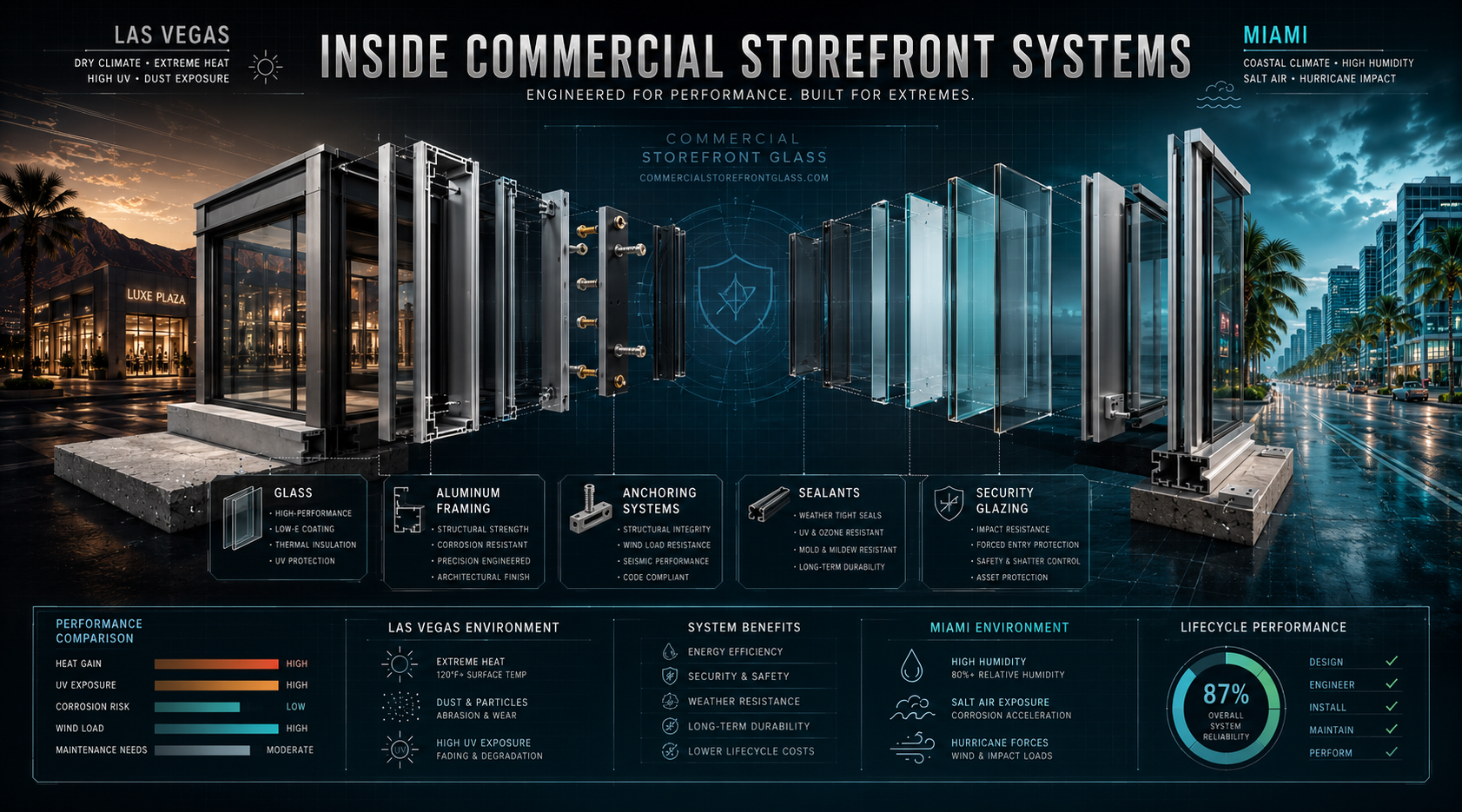
commercial glass replacement las vegas vs miami — storefront security and facade maintenance (9)

Commercial Properties Operate As Investments

Every commercial building is an asset.

Occupancy affects revenue.

Property image influences leasing activity.

Tenant quality can impact long-term performance.

As a result, renovation decisions are often tied to business outcomes.

A property owner may modernize a storefront to attract stronger tenants.

An office building might undergo improvements to remain competitive.

A shopping center could invest in exterior upgrades to support repositioning efforts.

The work itself may be visible.

The goal is usually financial performance.

Common Commercial Renovation Objectives

  • Improve leasing performance
  • Attract new tenants
  • Modernize aging properties
  • Increase competitiveness
  • Strengthen property image
  • Support long-term value

These priorities frequently drive renovation planning.

Homeowners Renovate For Different Reasons

A family does not evaluate construction projects the same way an investor does.

Lifestyle often influences decisions.

Functionality may become a priority.

Personal preferences shape outcomes.

A kitchen remodel might improve daily living.

A bathroom renovation can increase comfort.

Exterior improvements often enhance enjoyment rather than support occupancy objectives.

Because the property serves as a home rather than an investment asset, success is measured differently.

Asset Performance Drives Commercial Decisions

Commercial ownership frequently evaluates projects through a performance lens.

Leasing activity matters.

Market perception matters.

Occupancy matters.

Future competitiveness matters.

Consequently, renovation budgets are often connected to long-term business objectives.

Commercial Performance Metrics

Objective

Potential Impact

Tenant attraction

Improved occupancy

Property modernization

Greater competitiveness

Exterior upgrades

Stronger market perception

Storefront improvements

Better visibility

Building performance

Long-term value

Repositioning efforts

Increased relevance

These factors often influence renovation priorities.

Lifestyle Improvements Shape Residential Projects

A homeowner may never think about leasing performance.

Occupancy is not a concern.

Tenant attraction is irrelevant.

Instead, renovations are often evaluated through personal experience.

Natural light can improve comfort.

Updated finishes may enhance enjoyment.

Additional space often improves functionality.

The project succeeds when life inside the home improves.

That perspective creates a completely different decision-making process.

Modernization Means Different Things

Commercial modernization is frequently tied to competition.

New developments enter the market.

Tenant expectations evolve.

Consumer behavior changes.

To remain relevant, ownership groups often invest in improvements that strengthen the property’s position.

Residential modernization usually follows a different pattern.

Design trends change.

Family needs evolve.

Technology advances.

Rather than competing for tenants, homeowners are often adapting the property to better fit their lives.

denver vs phoenix — storefront energy efficiency and commercial glass systems repair & replacement (10)

Renovation And Repositioning Often Work Together

Commercial properties sometimes require more than physical improvements.

Market perception may need to change as well.

An aging retail center can pursue a new identity.

An office building may target a different tenant profile.

A mixed-use development might evolve alongside neighborhood growth.

In these situations, renovation becomes part of a broader repositioning strategy.

The objective extends beyond construction.

The goal is changing how the market views the asset.

Personal Preference Carries Greater Weight In Residential Remodeling

Commercial renovations rely heavily on performance considerations.

Residential remodeling allows for greater personalization.

Material choices often reflect individual taste.

Layout changes may support family routines.

Design decisions frequently prioritize enjoyment rather than financial performance.

Both approaches are valid.

The difference lies in the intended outcome.

One serves an asset.

The other serves a household.

Return On Investment Is Evaluated Differently

Commercial real estate often measures renovation success through financial performance.

Higher occupancy can justify investment.

Improved leasing activity may support long-term value.

Stronger competitiveness often contributes to asset appreciation.

Residential projects rarely follow the same framework.

A homeowner may accept a renovation simply because it improves everyday life.

The return may be measured through comfort rather than revenue.

That distinction influences how projects are planned and prioritized.

Exterior Improvements Serve Different Goals

Facade upgrades are common in both sectors.

The purpose behind them frequently changes.

Commercial renovations often focus on visibility, modernization, and tenant attraction.

Residential improvements may emphasize curb appeal, pride of ownership, or architectural character.

The same construction activity can support completely different objectives depending on who owns the property.

Long-Term Planning Influences Commercial Ownership

Property managers frequently think in decades.

Lifecycle costs matter.

Maintenance requirements influence decisions.

Future modernization opportunities are often considered during renovation planning.

Because commercial properties operate as long-term assets, improvements are usually evaluated within a broader ownership strategy.

Residential remodeling tends to focus more heavily on current needs and personal goals.

The timeline is often shorter.

The decision-making process is usually more personal.
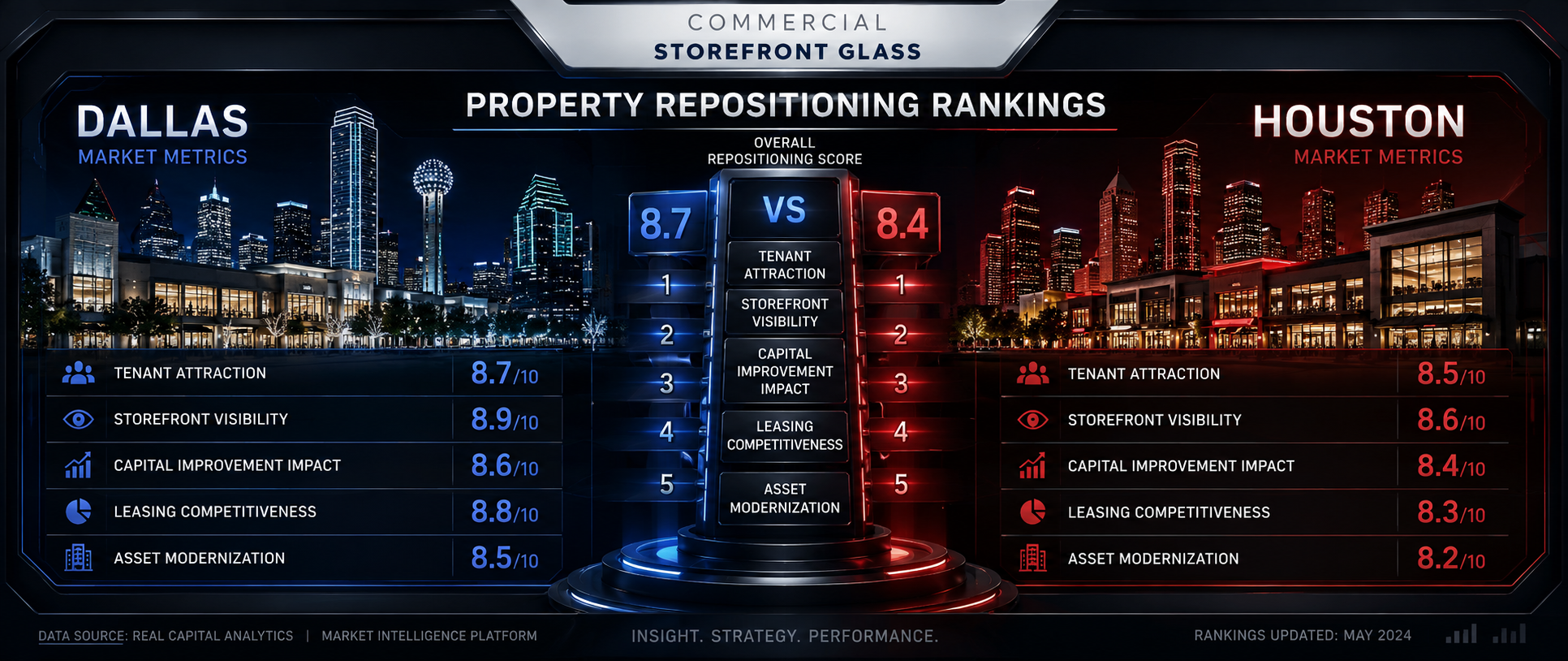
dallas vs houston — shopping center upgrades and property repositioning commercial storefront glass replacement (3)

Key Differences At A Glance

Commercial Renovation

  • Asset performance
  • Tenant attraction
  • Leasing competitiveness
  • Property modernization
  • Market positioning
  • Long-term value

Home Remodeling

  • Lifestyle improvements
  • Personal comfort
  • Everyday functionality
  • Design preferences
  • Family needs
  • Residential enjoyment

The construction work may appear similar.

The objectives behind it are not.

Purpose Determines The Value Of The Project

A renovation project should always be evaluated within the context of the property it serves.

Commercial buildings are improved to strengthen performance, increase competitiveness, and support long-term asset value.

Homes are remodeled to improve comfort, functionality, and quality of life.

One focuses on business outcomes.

The other focuses on personal outcomes.

Understanding that distinction helps explain why commercial renovation and home remodeling often follow entirely different strategies despite sharing many of the same construction methods, materials, and design possibilities.