


Retail Storefront Systems
The Storefront Is Part Of The Customer Experience
Customers often form opinions before entering a business.
Visibility influences engagement.
Exterior presentation affects perception.
Storefront design shapes first impressions.
Because of this, retail storefront systems play a critical role in how businesses attract customers and compete within the marketplace.
A well-designed storefront does more than separate the interior from the street.
It helps connect the business to the surrounding environment while supporting customer experience, brand identity, and long-term property performance.

Retail stores at a glance
What the glass usually looks like on this kind of building, what fails first, how to maintain it and when it is typically replaced.
Typical storefront
Maximum display glass in aluminum storefront framing, a branded entrance and, in many centers, a matching facade across tenants.
Typical failures
- Impact and vandalism damage to display lites
- Break-ins through doors and lower glass
- Faded or dated frame finishes that no longer match the brand
Typical maintenance
- Daily door operation checks in busy stores
- Quarterly hardware adjustment and lock service
- Annual sealant and finish inspection
Typical upgrades
- Laminated or film-protected glass in high-theft areas
- Larger, clearer lites with narrow sightlines
- Automatic entrances for carts and accessibility
Typical replacement cycles
Storefronts are often updated with each new tenant or rebrand, every 7 to 15 years, well before the framing wears out.
Compare with other building types in the building type explorer.
Visibility Drives Retail Performance
Retail properties depend on attention.
Customers must notice the business before they can enter.
Storefront systems help create that connection.
Large expanses of glass improve visibility.
Open sightlines encourage interaction.
Natural light often enhances the shopping environment.
Together, these elements help support customer engagement at street level.
Many successful retail environments rely on storefront systems as one of their most important customer-facing assets.
First Impressions Influence Customer Decisions
The storefront often becomes the face of the business.
Potential customers evaluate the property from outside.
Building appearance contributes to perception.
Modern storefront systems create cleaner and more inviting environments.
A well-maintained storefront can strengthen confidence before a customer ever opens the door.
This influence becomes especially important in competitive retail corridors where businesses compete for attention every day.
Storefront Systems Support More Than Glass
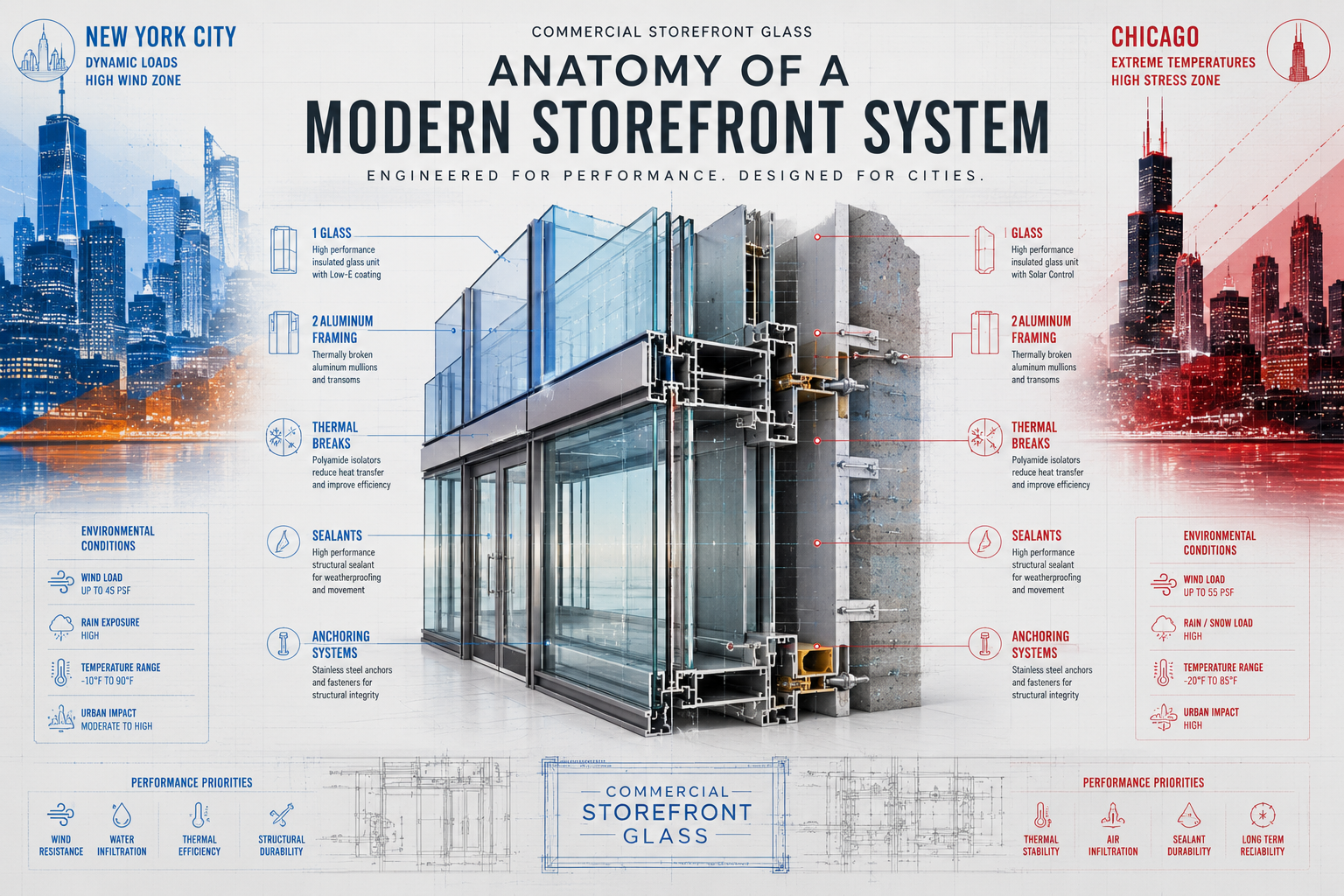
A retail storefront functions as a complete system.
Glass provides visibility.
Framing systems create structure.
Entrances support accessibility.
Together, these components shape how customers interact with the property.
Common Storefront Components
- Storefront glass
- Glass entry systems
- Aluminum framing systems
- Commercial entrances
- Architectural glazing
- Tenant improvement upgrades
Each component contributes to the overall performance of the storefront.
Retail Corridors Depend On Street-Level Engagement
Many retail districts thrive on pedestrian activity.
Customers browse visually.
Businesses compete for attention.
Storefront presentation influences foot traffic.
As a result, storefront systems often become a major factor in customer engagement.
Properties located in high-visibility retail corridors frequently invest in storefront improvements designed to strengthen their presence within the marketplace.
Shopping Centers Rely On Consistency
Multi-tenant retail properties often require storefront systems that create a cohesive appearance while allowing individual businesses to maintain their identity.
Property owners balance aesthetics with functionality.
Tenants seek visibility and accessibility.
Modern storefront systems help support both objectives.
This balance becomes increasingly important as shopping centers pursue modernization and redevelopment projects.
Tenant Improvements Frequently Include Storefront Upgrades
New tenants often require changes to the exterior presentation of the space.
Branding objectives may differ.
Customer experience priorities frequently evolve.
Storefront modifications help align the property with the goals of incoming businesses.
These improvements often become one of the most visible aspects of tenant improvement projects.
Property Modernization Starts At The Storefront
Many commercial renovation projects begin with exterior improvements.
Storefront systems are highly visible.
Customers notice them immediately.
Tenants evaluate them regularly.
Because of this, property owners frequently prioritize storefront upgrades during modernization efforts.
Updated systems can help improve perception while supporting broader redevelopment and repositioning goals.
Retail Architecture Continues Evolving
Consumer expectations change over time.
Retail environments adapt accordingly.
Natural light has become increasingly important.
Open and welcoming designs remain popular.
Modern storefront systems support these trends while helping businesses create stronger connections with customers.
As retail environments evolve, storefront design continues to play a major role in shaping the customer experience.
Storefront Systems Influence Leasing Performance
Property owners compete for quality tenants.
Building appearance affects perception.
Modernized storefronts can help strengthen leasing competitiveness.
Businesses often prefer spaces that present well to customers and align with contemporary expectations.
For this reason, storefront improvements frequently contribute to broader property performance objectives.
Common Ownership Goals
- Improve tenant attraction
- Increase customer engagement
- Support leasing performance
- Strengthen property image
- Modernize retail environments
- Enhance long-term value
These priorities often influence storefront investment decisions.
Long-Term Performance Matters
Retail storefront systems operate continuously.
Customers interact with them every day.
Environmental exposure affects them year-round.
Maintenance planning helps protect performance over time.
Property owners often evaluate storefront systems through a long-term lens because visibility, functionality, and appearance all contribute to the success of the asset.
Supporting Modern Retail Environments
Retail storefront systems influence how businesses are perceived, how customers interact with a property, and how commercial buildings compete within the marketplace.
Whether the project involves new construction, tenant improvements, storefront replacement, property modernization, shopping center upgrades, or commercial redevelopment, storefront systems help support visibility, customer experience, leasing performance, and long-term property value.
Where this fits in your storefront project
Every storefront moves through the same five stages: repair, deciding whether to repair or replace, upgrading, replacing and installing new. Pick the stage that matches where you are.
Repair
Fix what is broken. Broken glass, doors, frames, hardware, leaks and emergencies.
Repair vs Replace
Decide what makes sense. Damage, cost, building age, energy, safety and code.
Upgrade
Improve performance. Better glass, security, energy savings, access and appearance.
Replacement
Replace the whole system. Tear-out, full replacement, remodels and modernization.
Installation
Build something new. New construction, tenant build-outs and new storefronts.
Ready to talk through your project?
Share the address, a few photos and your timeline, and we will tell you what the next step looks like.


