



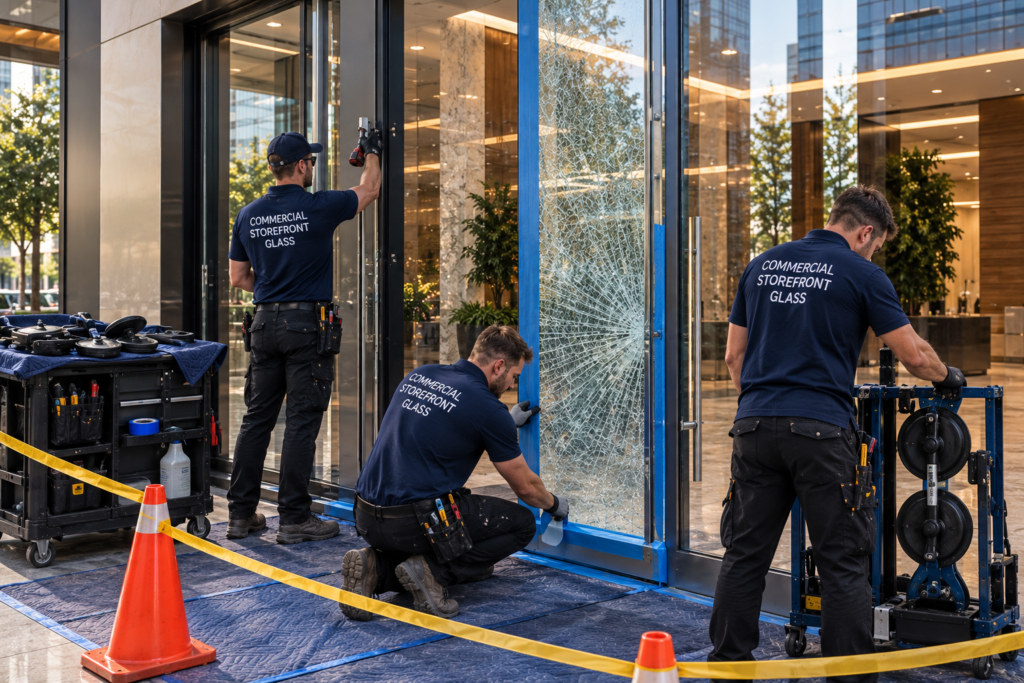
Long Island glass repair calls tend to come at the worst possible moment. A delivery truck clips a door, a nor’easter rattles a weak pane loose, or a break-in leaves shards across the sidewalk at 2 a.m. For storefront owners in Nassau and Suffolk counties, the next few hours decide how much the damage really costs. Fast safety steps, the right temporary protection, and a smart choice of replacement glass can turn a crisis into a quick fix. This guide walks property owners through each step, from the first phone call to the finished storefront.
Shopping center owners, landlords, and small business owners from Hempstead to Huntington to the Hamptons can use it as a practical playbook.

Why Long Island Storefronts Need Special Care
Long Island storefronts face a unique mix of stress. Along the South Shore, salt air slowly attacks aluminum frames and hardware. In winter, freezing temperatures and nor’easters test seals and gaskets. Summer sun, meanwhile, fades finishes and heats up glass. In addition, busy retail corridors like Sunrise Highway and Jericho Turnpike bring heavy traffic, carts, and the occasional fender bender. As a result, Long Island glass repair often involves more than a single cracked pane.
Step 1: Make the Site Safe
First, protect people. Broken glass can fall without warning, especially from upper sections. So close off the area with cones or tape. Then remove loose shards only if it is safe to do so. Keep customers and staff away until a professional arrives. If the damage leaves your store open to the street, request an emergency board-up right away.
Step 2: Secure the Opening
Next, secure the store. Most glass shops offer same-day board-up with plywood. Some also offer clear polycarbonate panels, which let light in and keep the store looking open. That matters for retailers who want to keep selling while they wait for new glass. Our emergency board-up service can secure most openings quickly.
Step 3: Document the Damage
Before anything is removed, take photos and video. Capture the glass, the frame, the door, and the area around it. Note the date, time, and cause if you know it. If the damage came from a crime or an accident, file a police report. These records support your insurance claim and help the glazier price the work.
Step 4: Long Island Glass Repair Starts With an Inspection
During Long Island glass repair, a good glazier inspects more than the glass. They check:
- The glass type and thickness
- The aluminum frame for bends or corrosion
- Gaskets, setting blocks, and sealant
- Door closers, pivots, and locks
- Anchors where the frame meets the building
Sometimes the glass is the only problem. Other times, a bent frame or failed closer caused the break in the first place.
Long Island Glass Repair Options
Once the glazier knows what failed, you can choose a path:
- Glass-only replacement: new pane in the existing frame
- Door repair: new glass plus closer, pivot, or lock fixes
- Frame repair: straightening, re-anchoring, or replacing a section
- Partial replacement: new storefront bays where damage is worst
Our commercial glass repair page explains each option in more detail.
Choosing the Right Replacement Glass
Every Long Island glass repair is also a good time to upgrade. Tempered glass is required in doors and many storefront areas, because it breaks into small, dull pieces. Laminated glass holds together when broken, which helps stop smash-and-grab theft. Insulated Low-E units cut winter heat loss and summer heat gain. Product ratings from the National Fenestration Rating Council help compare energy performance.
Long Island Glass Repair Near Salt Air
Near the water, of course, salt speeds up corrosion. Look for white powder, pitting, or bubbling paint on frames and hardware. Light corrosion can be cleaned and coated. However, deep pitting may weaken frames and anchors. So ask the glazier to check corrosion during every repair visit, especially on South Shore and North Fork properties.
Winter Seals and Long Island Glass Repair
Likewise, cold snaps make aluminum shrink and seals stiffen. As a result, gaskets can pull away and sealant can crack. Drafts and leaks often show up after the first hard freeze. So check seals each fall. Replacing worn gaskets during a repair visit can prevent the next service call.

Permits and Local Rules
Notably, Long Island has many towns and villages, each with its own building department. Simple glass swaps often need no permit. However, new storefront framing, new doors, or structural changes may require one. Some villages also have design rules for storefronts. So ask your glazier to check local rules before larger repairs.
Working With Insurance
Fortunately, many commercial policies cover sudden breakage. Call your agent early and share your photos and police report. Keep receipts for board-up, temporary repairs, and the final glass. If you upgrade to better glass, your policy may cover only the cost of matching the original.
Long Island Glass Repair Timelines
In most cases, board-up happens the same day. Standard tempered glass may take a few days to a week. Insulated, laminated, or custom-sized units may take one to three weeks. Installation itself often takes only a few hours. So plan temporary protection for the wait.
Long Island Glass Repair for Strip Centers
Many Long Island stores sit in strip centers with one landlord and many tenants. So repairs often involve more than one party. For example, the lease may say the tenant pays for glass, while the landlord pays for frames. In addition, the center may have rules about glass tint and frame color. Therefore, call the property manager as soon as damage happens. Then share photos and the glazier’s quote. As a result, approvals move fast and the store reopens sooner.
What to Expect on Repair Day
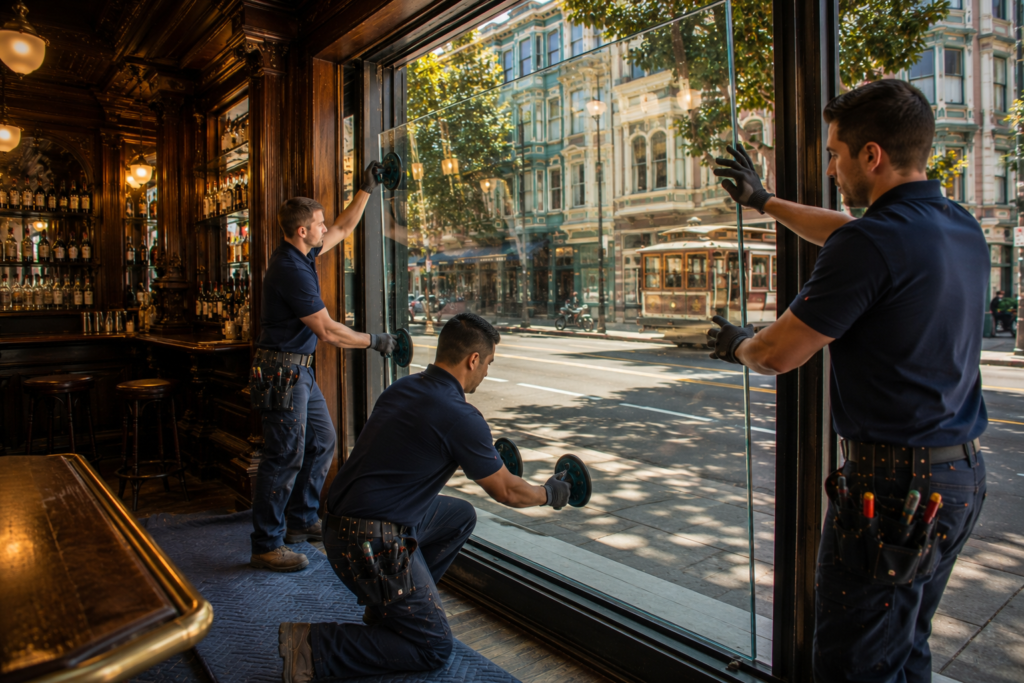
On repair day, the crew arrives with the new glass. First, they remove the board-up. Next, they pull out the old glazing stops and any broken pieces. Then they clean the frame and set the new pane on fresh blocks. After that, they seal the glass and test any doors. Finally, they clean up and haul away the debris. For a single pane, the whole visit often takes just a few hours.
Choosing a Glazier
Pick a glazier with commercial experience on Long Island. Ask about emergency response times. Also ask how they handle salt-air corrosion and winter seals. Then check their insurance and local references. A team that knows Nassau and Suffolk storefronts will make your Long Island glass repair faster and easier.
Preventing Future Breaks
- Add bollards or planters near parking areas.
- Adjust door closers so doors do not slam.
- Consider laminated glass in high-risk locations.
- Inspect frames and seals every fall and spring.
- Clean salt residue from frames near the coast.
FAQ on Long Island Glass Repair
How fast can Long Island glass repair happen?
Board-up is usually same day. New glass often takes a few days to a few weeks.
Do I need a permit for glass repair?
Simple glass swaps usually do not. Frame or door changes may.
Can I upgrade to laminated glass?
Often, yes, if the frame can hold the thicker glass.
Get Your Storefront Back Fast
Quick, careful repairs keep your Long Island business open and secure. Visit our storefront replacement page, or call our team today.