



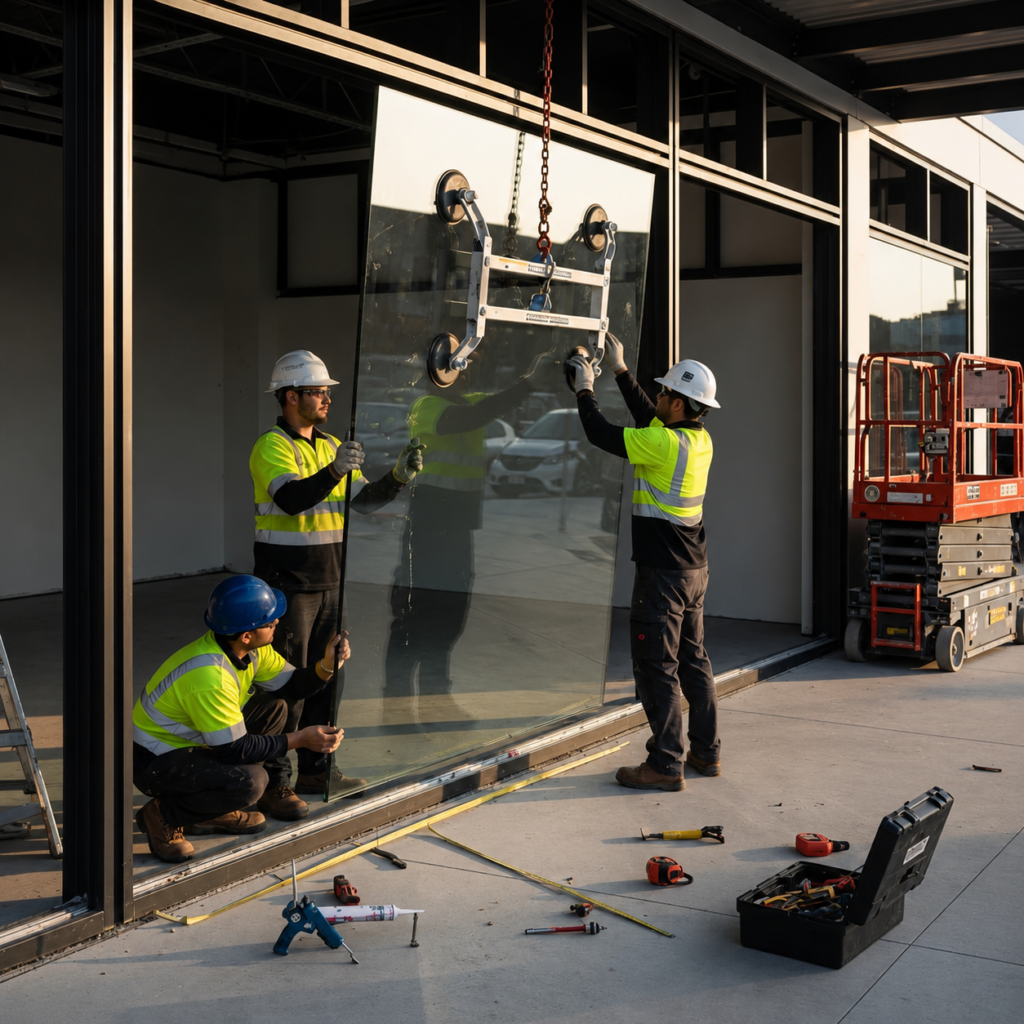
NYC storefront glass installation is as much about logistics as it is about glass. In most cities, a crew backs a truck up to the curb, unloads the panels, and gets to work. In New York, that same task can involve street permits, tight delivery windows, narrow sidewalks, busy pedestrians, and neighbors who need their entrances clear. Large storefront panels can weigh hundreds of pounds, and there is rarely room to stage them. This guide explains how to plan access, deliveries, and installation so your project runs smoothly.
Retail tenants, landlords, general contractors, and property managers across the five boroughs can use it to plan a storefront project from start to finish.
Why Logistics Drive NYC Projects
In New York, space is the scarcest resource. Sidewalks are crowded, curb lanes are busy, and many streets have parking rules that change by the hour. In addition, buildings often share walls and entrances. As a result, the way glass gets to the site can shape the entire schedule. Good planning prevents fines, delays, and frustrated neighbors.
Step 1: Survey the Site
First, walk the site with your glazier. Measure the opening and check its condition. Then look at the street. Where can a truck park? Is there a loading zone? Are there trees, hydrants, bus stops, or bike lanes in the way? Also check the sidewalk width and any sidewalk sheds or scaffolding. These details shape how and when glass can arrive.
Step 2: Glass Sizes for NYC Storefront Glass Installation
Large single panels look great, but they are hard to move in Manhattan or Brooklyn. So designers sometimes split storefronts into smaller panels. Smaller lites fit through doors, up stairs, or into freight elevators more easily. They also cost less to replace if one breaks. However, fewer mullions often look sleeker. So balance the look with what the site can handle.
Permits for NYC Storefront Glass Installation
Many storefront projects need a permit from the Department of Buildings, especially when framing, doors, or structure change. In addition, using the street or sidewalk for cranes, trucks, or staging may need permits from the city’s transportation department. The NYC Department of Buildings lists filing and permit requirements. Your glazier or general contractor usually handles these filings.
Step 3: Schedule Deliveries
Delivery timing matters a great deal for NYC storefront glass installation. Many streets have delivery restrictions during rush hours. Some buildings only allow deliveries early in the morning or late at night. So coordinate the delivery window with the building manager, the glazier, and the fabricator. In addition, plan for traffic. A truck stuck in traffic can miss its window and push the install to another day.

Moving Glass for NYC Storefront Glass Installation
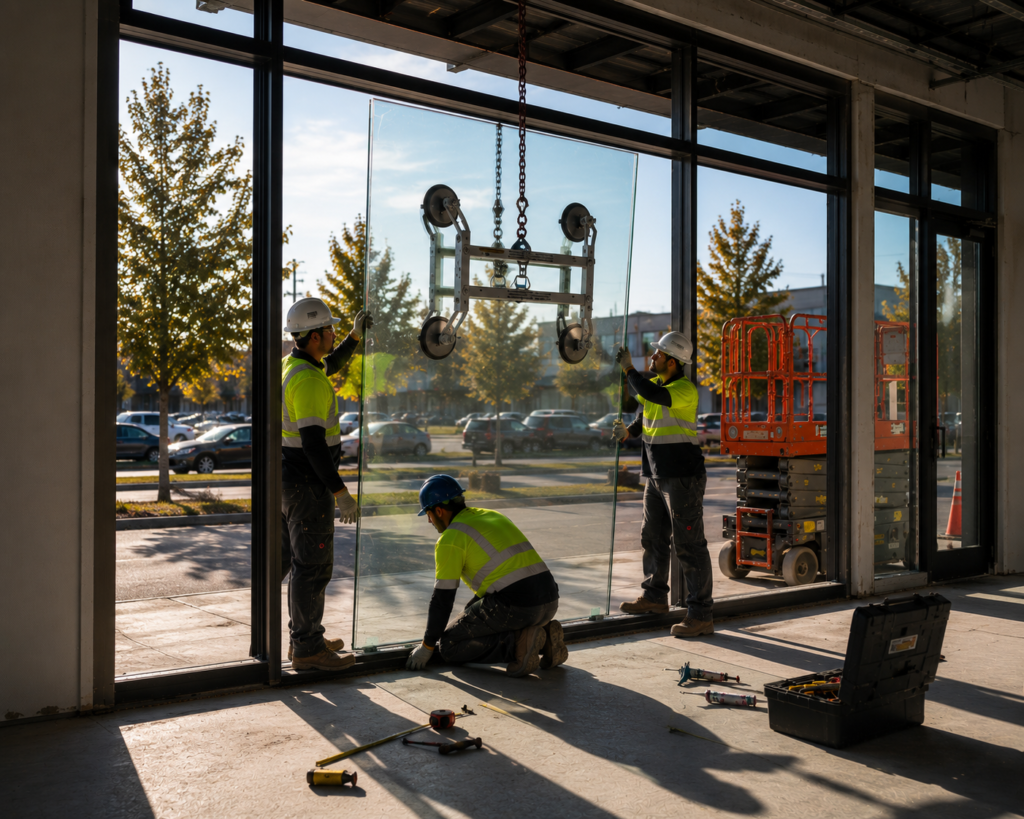
In any NYC storefront glass installation, the glass is heavy and fragile. Crews use suction lifters, glass carts, and sometimes small cranes or glazing robots. On narrow sidewalks, they may close part of the walkway with barriers and flaggers. Workers need clear paths, good communication, and enough hands to move each panel safely. The OSHA website covers safety rules for handling heavy materials.
Protecting Pedestrians and Neighbors
New Yorkers will walk around almost anything, so safety barriers matter. Crews should fence off the work area, post signs, and keep a clear path for pedestrians. Neighboring businesses need their doors open, too. So talk with them before install day. A quick heads-up builds goodwill and prevents complaints.
NYC Storefront Glass Installation Day
On install day, timing is tight, and NYC storefront glass installation crews work fast. Typically, the crew removes old glass and frames first, often early in the morning. Then they set new frames, install glass, and hang doors. Sealing and cleanup follow. For larger storefronts, the work may stretch over several days. In that case, crews must secure the opening each night with temporary panels.
Security Gates and Storefronts
Many NYC stores use roll-down security gates. Current city rules push owners toward gates you can see through, rather than solid ones. So if you are replacing a storefront, think about the gate at the same time. The gate housing, guides, and storefront frame must work together. Planning both now avoids rework later.
Bird-Friendly and Energy Rules
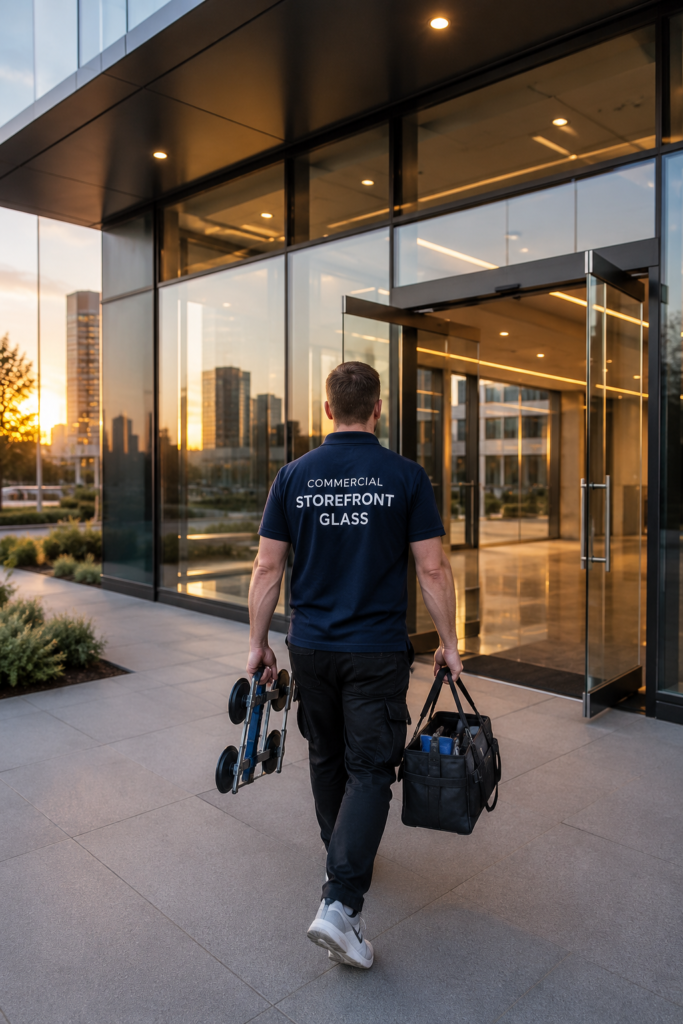
New York has rules that may apply when large areas of exterior glass are replaced, including bird-friendly glass requirements and energy code standards. Not every storefront project triggers them. However, it is worth asking your designer early. Choosing the right glass upfront avoids redesigns during permit review.
Budgeting for NYC Storefront Glass Installation
Costs in New York often run higher than elsewhere. Common drivers include:
- Street and sidewalk permits
- Off-hours delivery and labor
- Cranes or lifting equipment
- Smaller panels and extra framing
- Protection for pedestrians and neighbors
- Building insurance requirements
Our storefront installation page explains how we price these jobs.
NYC Storefront Glass Installation in Each Borough
Each borough has its own rhythm. In Manhattan, streets are tight and buildings control access closely. In Brooklyn and Queens, many storefronts sit in older mixed-use buildings with apartments above. Meanwhile, the Bronx and Staten Island often have wider streets and more parking, which can make deliveries easier. So plan your NYC storefront glass installation with the borough in mind. A glazier who works across the city will know what to expect.
Working With Building Managers
Building managers control a lot. For example, they decide when crews can work and where they can stage. They also set insurance rules. So meet with them early. Share the schedule, the crew size, and the delivery plan. Then confirm everything in writing. A good relationship with the building manager can save days on a tight schedule.
Weather and Timing
New York weather changes fast. Rain can stop sealant work. Wind can make moving large glass unsafe. Snow and ice make sidewalks slick. Therefore, build a little extra time into the schedule. Also plan a backup date for the install. That way, a bad weather day does not throw off the whole project.
A Simple Planning Timeline
- Early on (weeks 1 to 2): Survey the site and finish the design.
- Next (weeks 2 to 6): File permits and order glass.
- Before install (weeks 6 to 8): Confirm delivery windows and street access.
- Install week: Remove the old storefront and set the new one.
Every job is different. Still, this rough plan helps you set a realistic opening date.
Common Mistakes to Avoid
- Ordering glass sizes the site cannot handle
- Forgetting street or sidewalk permits
- Missing delivery windows
- Ignoring the security gate during design
- Skipping neighbor communication
FAQ on NYC Storefront Glass Installation
How long does NYC storefront glass installation take?
Small storefronts may install in a day or two. Larger projects can take longer, especially when permits, street access, or custom glass add time before install day.
Do I need a permit?
Often, yes, especially for framing, doors, or street use. Your glazier can tell you which apply.
Can installation happen at night?
Sometimes. Building rules and city restrictions decide. Night work costs more, but it often avoids crowds, traffic, and delivery limits.
Plan Your Storefront Project
Smart logistics turn a hard job into a smooth one. Visit our storefront glass page, or contact our team to plan your installation.