

Anyone who has worked behind a west-facing storefront in a Dallas August knows the problem. The afternoon sun pours through the glass, the air conditioning runs nonstop, merchandise near the window fades, and customers squint at the counter. Low-E glass is one of the most effective ways to fix that without giving up the open, bright look a storefront needs.
What Low-E Glass Is
Low-E stands for low emissivity. A microscopically thin metallic coating is applied to one surface of the glass. The coating lets visible light through while reflecting a large share of the infrared heat that comes with sunlight. In a storefront, low-E coatings are usually part of an insulated glass unit: two panes of glass separated by a sealed air or gas space, with the coating on one of the inner surfaces.
Why It Matters in Dallas
North Texas has long, hot summers and strong sun for much of the year. For storefronts, that means:
- Cooling costs: heat coming through clear glass adds directly to the cooling load
- Comfort: customers and staff near the glass feel radiant heat even when the thermostat says the room is cool
- Glare: low sun angles in the afternoon make screens and displays hard to read
- Fading: sunlight fades merchandise, furniture and flooring near the window
West- and south-facing storefronts take the worst of it. A restaurant patio wall facing west or a retail front facing a parking lot to the south can be uncomfortable for hours every afternoon.
Low-E Versus Tint and Film
Tinted glass and window film also cut heat, but they work differently. Dark tints absorb heat and reduce visible light, which can make a storefront look closed. Films can be a good retrofit, but quality and warranty vary, and some films affect the glass manufacturer’s warranty. Modern low-E coatings are designed to keep glass looking clear while blocking much of the heat, which is usually what a retailer or restaurant wants.
What to Ask When Replacing Glass
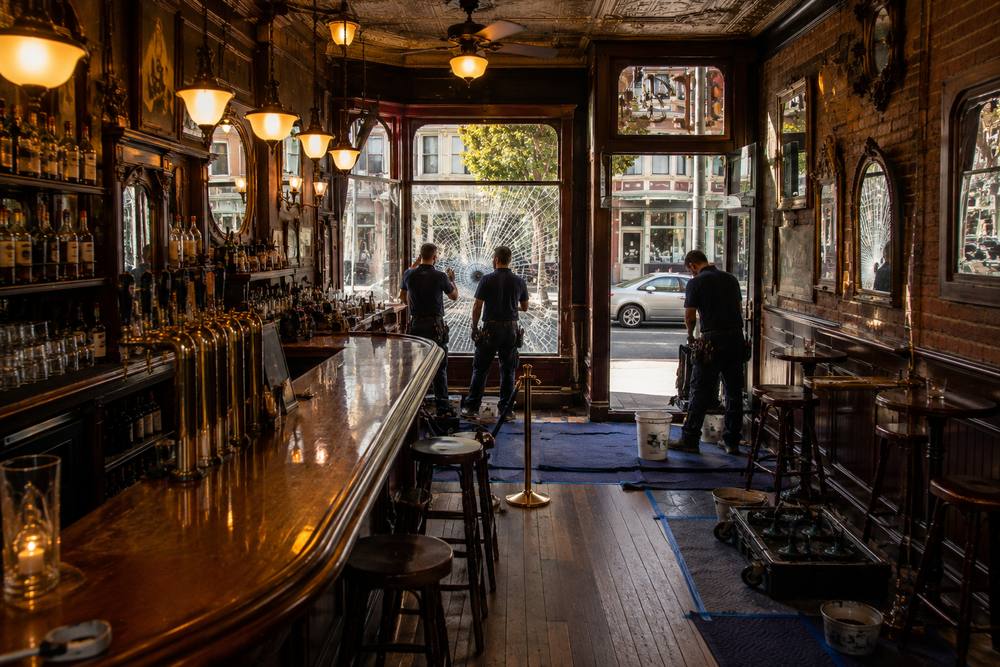
If you are replacing broken or fogged storefront glass, ask about low-E options at the same time. Useful questions include:
- What is the solar heat gain coefficient (SHGC) of the proposed glass? Lower numbers block more heat.
- What is the visible light transmittance? Higher numbers keep the storefront brighter.
- Does the unit need to be tempered or laminated in this location?
- Will the new unit match the color and look of the surrounding glass?
- Does the existing frame accept an insulated unit of the right thickness?
Replacing one lite with low-E glass next to clear lites can look different, especially in reflections. Many owners replace a whole elevation at once for a consistent look.
Energy Codes and New Storefronts
New storefronts and major alterations must meet the energy code adopted by the city where the building sits. In practice, that usually means insulated glass with performance ratings that limit heat gain. Your glazing contractor and designer should confirm the requirements for your project before glass is ordered.
Is It Worth It?
For a small storefront, the savings on cooling alone may take time to pay back the upgrade. The bigger return is usually comfort and usability: a dining room people want to sit in, a sales floor near the window that stays cool, and displays that do not fade. For larger glass areas and sun-facing elevations, the energy savings add up faster.
Upgrade Your Dallas Storefront
We replace storefront glass with low-E insulated units across Dallas and the suburbs, including Richardson, Frisco and McKinney. See our glass comparisons or call 866-665-3975 to talk about your storefront.