



Phoenix storefront glass installation is a big step for any commercial property. The storefront is the face of the building. It welcomes customers, lets in light, and keeps out heat, dust, and intruders. In Phoenix, it also has to survive some of the hottest summers in the country. A storefront that looks great on day one but fails in July is a costly mistake. So planning matters. This guide walks property owners, managers, and tenants through each step of planning a new storefront in Phoenix.
It covers glass choices, framing, doors, permits, scheduling, and the local conditions that shape every decision.

Why Phoenix Storefronts Need Extra Planning
Phoenix sees more than 100 days a year above 100 degrees. Summer highs often pass 110. In addition, the monsoon season brings strong winds, dust storms, and sudden rain. All of this puts stress on glass, frames, and seals. As a result, a storefront built for a mild climate may not last here. Good planning picks products that can handle the heat and the storms.
Step 1: Define the Goals of the Storefront
Start by asking what the storefront must do. Should shoppers see deep into the store? Do you need privacy for an office or clinic? Will the entrance see heavy traffic? Is security a major concern? Clear goals guide every choice. For example, a restaurant may want large clear panes, while a bank may want laminated glass and strong locks.
Step 2: Review the Lease and Landlord Criteria
If you are a tenant, read the lease first. It spells out who funds the storefront and which sign-offs you need. Many Phoenix centers also have tenant design criteria. These rules may set frame color, glass tint, door style, and sign zones. So get these documents early. Designing within them from the start saves time and avoids rejected plans.
Glass Choices for Phoenix Storefront Glass Installation
Glass is the most important choice in a desert climate. Today, nearly every new commercial storefront in the Valley uses dual-pane units. A sealed gap between the two lites slows heat flow. On top of that, a low-e layer turns back a large share of the solar load. A pale tint helps with glare, while a deep tint risks hiding the sales floor. A good glazier will help you balance comfort, energy savings, and visibility for your Phoenix storefront glass installation.
Safety Glass Requirements
Building rules call for safety glazing at doors, at sidelites next to doors, and in low panes. Most of the time, glaziers use tempered glass, which crumbles into small, blunt bits when it fails. Laminated glass is the other route. Its inner layer keeps the broken lite in the frame, so it also slows down intruders. Your glazier will mark which panes need each type.

Framing for Phoenix Storefront Glass Installation
Aluminum framing holds the glass in place. Frames come in different depths, finishes, and styles. A thermally broken frame has a resin strip inside that keeps outdoor heat from racing through the aluminum. In Phoenix, that barrier can make a real difference in comfort near the windows. Finish options include clear anodized, dark bronze, black, and painted colors. Darker finishes absorb more heat, so ask your glazier about performance.
Phoenix Storefront Glass Installation and Entry Doors
Entry doors work harder than anything else on the storefront. They swing hundreds of times a day under hot sun and blowing grit. So size the door to the foot traffic. Busy shops do well with medium or wide stile aluminum doors. Boutiques and offices often prefer all-glass doors for a clean look. Meanwhile, clinics and grocers lean toward automatic sliders. Whatever you pick, match it with heavy-duty closers, pivots, and seals.
Accessibility at the Entrance
Public entrances must work for everyone. Doors need enough clear width for wheelchairs. Keep the threshold low and flat. Choose hardware a person can use with a closed fist. Closers must not require too much force to open. Check these details during design. Fixing them after installation is far more expensive.
Permits Through the City of Phoenix
Most new storefronts need a building permit. The City of Phoenix Planning and Development Department handles plan review and site inspections. Your drawing package will typically show the storefront elevation, glass types, safety glazing, doors, and energy details. Many landlords also want to sign off before the city sees the plans. Your general contractor or glazier can guide the process.
Licensing and Insurance
In Arizona, commercial glazing contractors must hold a license from the Registrar of Contractors. Always confirm the license before signing a contract. Also, ask for proof of liability and workers’ compensation insurance. These steps protect you if something goes wrong during the job.
Shop Drawings and Approvals
Next comes the shop drawing package. It maps every frame, lite, anchor, and door to the inch. The design team and the landlord mark it up and send it back. Only then should anyone place an order. After all, catching a wrong door swing on paper is far cheaper than catching it on site.
Phoenix Storefront Glass Installation Lead Times
Nothing in a storefront comes off a shelf. Basic frames ship fairly fast, but coated insulated units take longer. Custom colors and frameless doors stretch the wait even further. So release the order the day drawings are approved. Then log every delivery date in the job schedule.
Preparing the Opening
Before the crew arrives, the opening must be ready. It should be the right size, square, and level. Any steel or wood framing should be complete. If you plan powered doors or card readers, the electrician should finish that wiring first. A ready opening leads to a faster, cleaner installation.
Installation Day
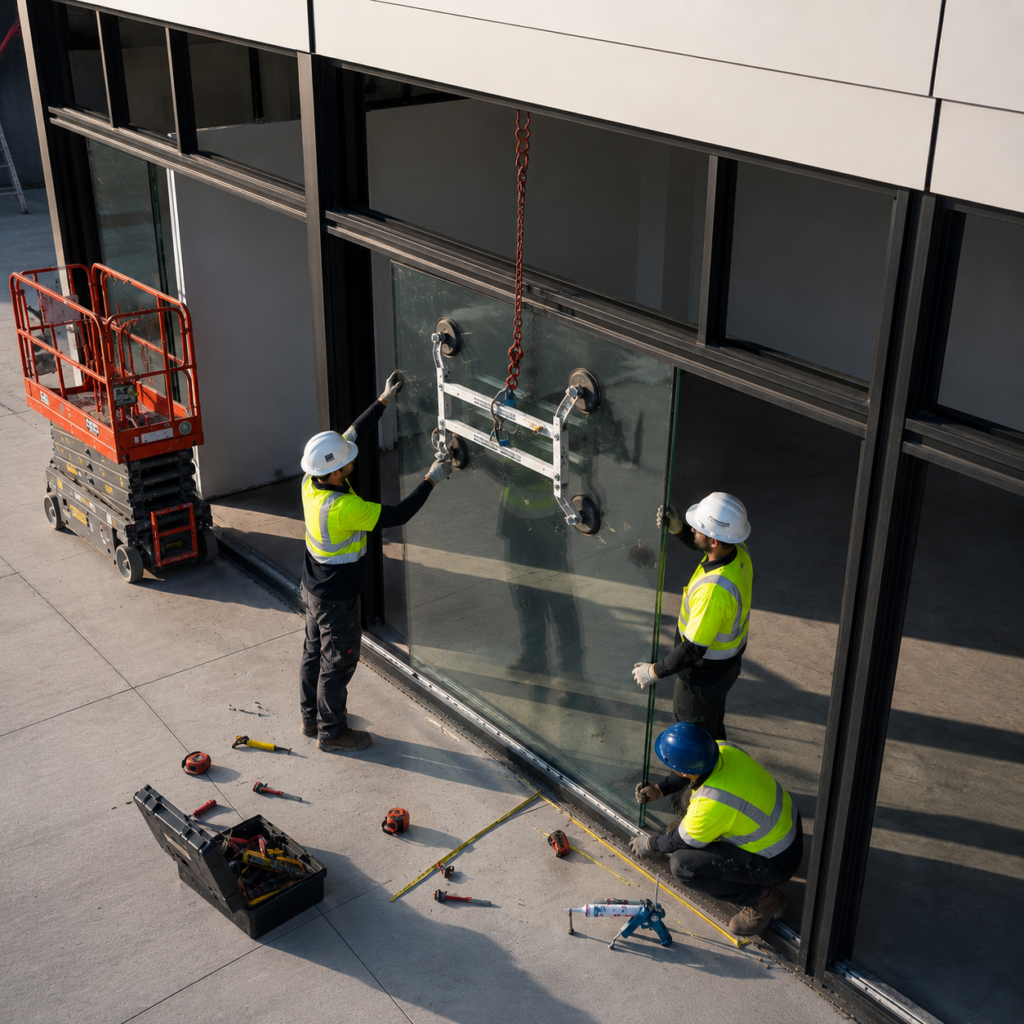
The crew begins by fastening the frames to the opening. Once the frames are tight, each lite is set, and then the doors are hung. They then caulk the perimeter and tune the closers. A careful cleaning comes last. A modest storefront is often finished within two or three days.
Working in the Heat
Summer installs need special care. Crews often start at dawn to avoid the worst heat. Glass and metal get very hot in the sun, so handling takes extra caution. In addition, sealants cure differently in high temperatures. A local glazier knows how to adjust products and timing for Phoenix summers.
Inspections and Final Walk-Through
After installation, the city inspects the work. They look for the etched safety-glass marks, working hardware, and clear exits. Meanwhile, the owner and contractor walk the storefront together. Any scratch, gap, or sticky door goes on a punch list, and the glazier clears it before sign-off.
Budgeting for Phoenix Storefront Glass Installation
Costs depend on the size of the storefront, glass type, framing, doors, and site access. Insulated low-e glass and thermally broken frames carry a higher price, yet lower summer power bills usually make up the gap. Automatic doors and custom finishes also add cost. Request a line-by-line price, so options are easy to weigh. Our Phoenix storefront glass page shares more about local services.
Common Mistakes to Avoid
- Choosing glass without considering Phoenix heat
- Skipping the landlord’s design criteria
- Picking light-duty doors for busy entrances
- Placing orders while drawings are still in review
- Overlooking ADA details at the door
FAQ on Phoenix Storefront Glass Installation
What glass works best in Phoenix?
Insulated glass with a low-e coating usually offers the best balance of comfort and clarity.
Do I need a permit for a new storefront in Phoenix?
Yes, most new storefronts need a permit from the City of Phoenix.
How long does Phoenix storefront glass installation take?
Plan on several weeks for design and materials, then a few days on site.
Plan Your Phoenix Storefront
A well-planned storefront serves your property for decades. See our installation process guide, or request a project estimate today.