



Tenant Improvement Contractors: From Planning and Permits to Final Build-Out
The tenant improvement contractor process is a sequence of five phases that turn a leased shell into finished space. Knowing the phases helps tenants set realistic dates and understand where a schedule can slip.
Below is each phase, what the contractor delivers, and the typical duration.
The Five Phases of the Tenant Improvement Contractor Process
Every build-out moves through the same phases, whether it is a small suite or a full floor:
- Walkthrough and estimate: site visit, program review, and a line-item budget with a schedule
- Design and permitting: architect and engineer coordination, plan check, and permit issuance
- Buyout and scheduling: subcontractor contracts, submittals, and long-lead orders
- Construction: demolition through finishes, with inspections along the way
- Punch list and closeout: final walkthrough, certificate of occupancy, and document handover

Planning and Permits
Design and permitting is where most schedules are won or lost. The contractor helps the design team keep the drawings buildable and code-compliant, then manages plan-check comments so the permit issues on time. Starting the permit early, in parallel with buyout, saves weeks.
Construction and Inspections
During construction the superintendent runs a daily plan and a weekly look-ahead, sequences trades, and books inspections so the building department never becomes the bottleneck. Glass, flooring, and paint are protected until the space is nearly complete.
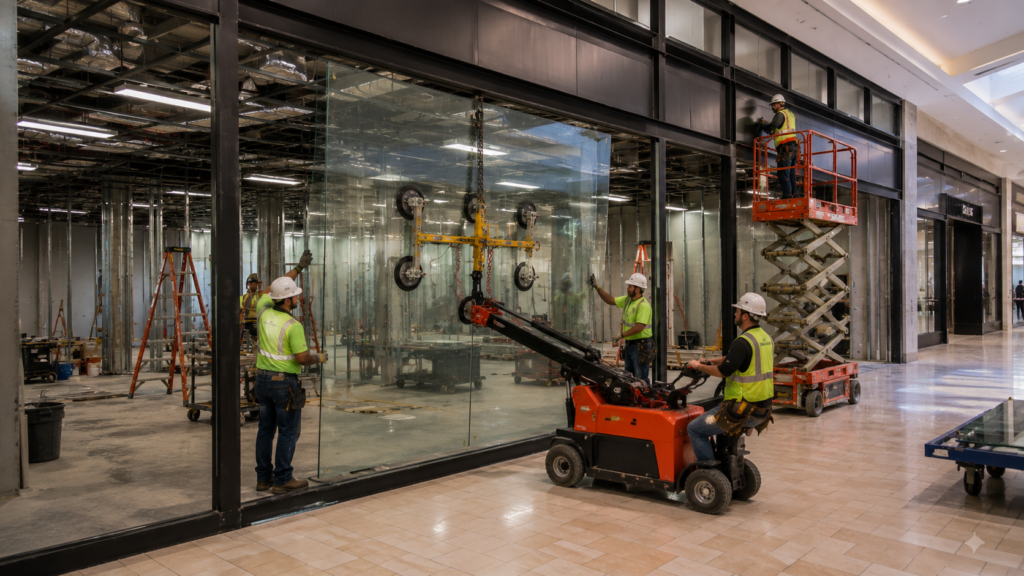
Storefront and curtain wall systems are installed on the schedule set during buyout, when the material was ordered.
Final Build-Out and Handover
The contractor completes punch items, passes final building and fire inspections, secures the certificate of occupancy, and delivers warranties and as-builts. The tenant can then move in and fixture the space.
What the Tenant Does at Each Phase
The tenant improvement contractor process runs smoothly when the tenant plays its part: approve drawings on time, make finish and furniture decisions by the deadlines in the schedule, sign change orders promptly, and attend the milestone walkthroughs.
Every day a decision is late is usually a day added to the end of the schedule, because the trades downstream cannot proceed without it.
Closeout Documents to Expect
At the end of the tenant improvement contractor process, expect a closeout package that includes the certificate of occupancy, permit cards, subcontractor and material warranties, operation and maintenance manuals, air-balance and commissioning reports, and a set of as-built drawings. Store these; you will need them for future work and for the next tenant.
Bottom Line for Commercial Property Owners
A well-managed tenant improvement contractor process decision protects three things at once: your construction schedule, your build-out budget, and the long-term performance of the space. Getting it right early, with a contractor who has done it many times, is far cheaper than correcting it later.
Every commercial building reaches these decision points. The owners and tenants who plan for them, document the scope, and work with an experienced team consistently open on time, stay on budget, and end up with space that leases and performs better for years.
Key Takeaways
- The process has five phases from walkthrough to closeout
- Design and permitting is the phase most likely to slip; start the permit early
- Buyout is when long-lead glass and equipment are ordered
- Construction is run on a daily plan and a weekly look-ahead
- Closeout delivers the certificate of occupancy and a document package
Frequently Asked Questions
How long does permitting take?
It varies by jurisdiction, but four to eight weeks is common for a standard interior build-out, longer for change of use.
Can construction start before the permit issues?
Some jurisdictions allow limited early-start work such as demolition. The contractor confirms what is permitted.
Talk to a Commercial Glazing and Tenant Improvement Team
We manage the full process, from the first walkthrough to the certificate of occupancy. contact our team to begin, or see tenant improvement projects. For further reading, see the certificate of occupancy.