



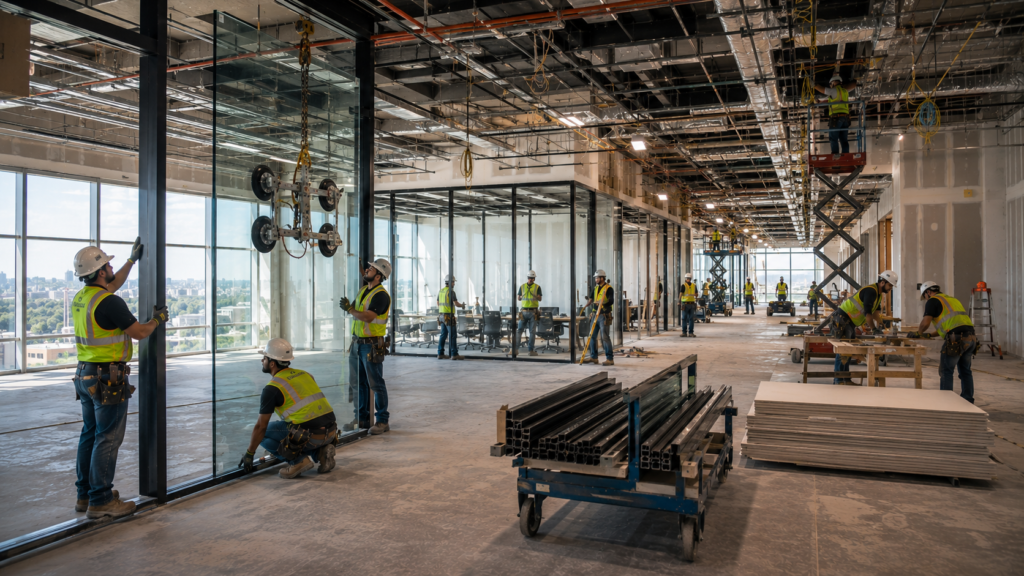
How Much Does a Commercial Tenant Improvement Contractor Cost?
Tenant improvement contractor cost depends on the condition of the space, the finish level, and how much glass, mechanical, and electrical work the design requires. Most commercial build-outs are priced per square foot, then adjusted for scope.
This article explains the cost drivers, typical ranges, and how the landlord’s allowance for leasehold improvements changes your net number.
What Drives Tenant Improvement Contractor Cost
Two suites of the same size can differ widely in price. The main drivers are the starting condition, the density of rooms and walls, the finish grade, the amount of glass and specialty doors, and the mechanical and electrical load.
- Warm shell vs. previously built suite that needs demolition
- Open plan vs. many private offices and conference rooms
- Building-standard finishes vs. premium flooring, millwork, and lighting
- Storefront, curtain wall, and interior glass quantity
- New HVAC units, added electrical capacity, or plumbing relocations
- After-hours or phased work to keep neighbors operating

Typical Cost Ranges
As a general guide, a cosmetic refresh is the lowest tier, a standard office build-out of a warm shell is the middle tier, and restaurant, medical, or lab space is the highest tier because of equipment, plumbing, and specialized inspections. Your contractor should convert these tiers into a line-item budget for your actual drawings.
Soft costs — design, engineering, permits, and project management — typically add ten to twenty percent on top of construction.
How the Landlord Allowance Offsets Cost
Landlords often contribute a tenant improvement allowance, quoted as a dollar amount per square foot. You direct how it is spent, and you fund anything above it. A precise contractor reconciles the bid against the allowance so you know your out-of-pocket cost before construction starts.
Where Glass Affects the Budget
Glass is a common source of cost creep because storefront, glass entry systems, and demountable partitions are priced by opening and by performance. Getting the tenant improvement glass scope defined early keeps it inside the budget rather than arriving as a change order.
How to Get an Accurate Cost Early
The fastest way to a reliable tenant improvement contractor cost is to give the contractor a real drawing set, even a preliminary one, plus the finish intent and the mechanical and electrical scope. A number built from drawings is far more accurate than a number built from a phone call.
Ask for the estimate as line items grouped by trade. That format lets you value-engineer specific areas, such as swapping a premium floor finish, without reopening the whole budget.
Contingency and Change Orders
A well-built budget carries a construction contingency, usually five to ten percent, for conditions discovered after demolition. Existing buildings hide surprises: outdated wiring, undocumented plumbing, structural conditions above the ceiling. Planning for a contingency keeps a discovery from becoming a crisis, and keeps the tenant improvement contractor cost predictable.
Bottom Line for Commercial Property Owners
A well-managed tenant improvement contractor cost decision protects three things at once: your construction schedule, your build-out budget, and the long-term performance of the space. Getting it right early, with a contractor who has done it many times, is far cheaper than correcting it later.
Every commercial building reaches these decision points. The owners and tenants who plan for them, document the scope, and work with an experienced team consistently open on time, stay on budget, and end up with space that leases and performs better for years.
Key Takeaways
- Cost is driven by starting condition, wall density, finish grade, glass, and MEP load
- Restaurant, medical, and lab space costs more than standard office space
- Soft costs add roughly ten to twenty percent over construction
- The landlord allowance reduces your net cost; reconcile the bid against it
- Define the glazing scope early to avoid change orders
Frequently Asked Questions
Is tenant improvement priced per square foot?
Initial budgeting often is, but the final contract should be a line-item price built from your specific drawings.
Does the allowance cover furniture and cabling?
Frequently not. Furniture, data cabling, security, and signage are often excluded or capped. Confirm in the lease.
Talk to a Commercial Glazing and Tenant Improvement Team
For a line-item estimate on your space, including the glazing package, contact our team or review our commercial glass services.