



How Tenant Improvement Contractors Coordinate Glass, Doors, HVAC, Electrical & Plumbing
Tenant improvement trade coordination is the core skill of a commercial build-out. The contractor sequences glass, doors, HVAC, electrical, and plumbing so each trade has clear access, nothing gets built twice, and every inspection passes the first time.
Here is how that coordination actually works on a job site, trade by trade.
Why Tenant Improvement Trade Coordination Matters
Interior trades share the same walls and ceiling plenum. If electrical conduit, HVAC ductwork, sprinkler mains, and plumbing all get installed without a plan, they clash, block one another, and force expensive rework. Coordination resolves those conflicts before the work happens.
- A coordinated overhead layout so ducts, conduit, and pipe fit above the ceiling
- In-wall blocking installed before drywall for doors, glass, and equipment
- Inspections scheduled so rough work is signed off before walls close
- Finish trades sequenced so flooring, paint, and glass are not damaged

Sequencing the Overhead and In-Wall Work
Ductwork usually goes first because it is largest and least flexible, then sprinkler, then conduit and plumbing, then low-voltage. The contractor confirms clearances for the ceiling height and light fixtures, then releases drywall once the rough inspection clears.
Blocking for glass office fronts, door frames, wall-mounted equipment, and millwork is installed during framing, because adding it later means opening finished walls.
Where Glass and Doors Come In
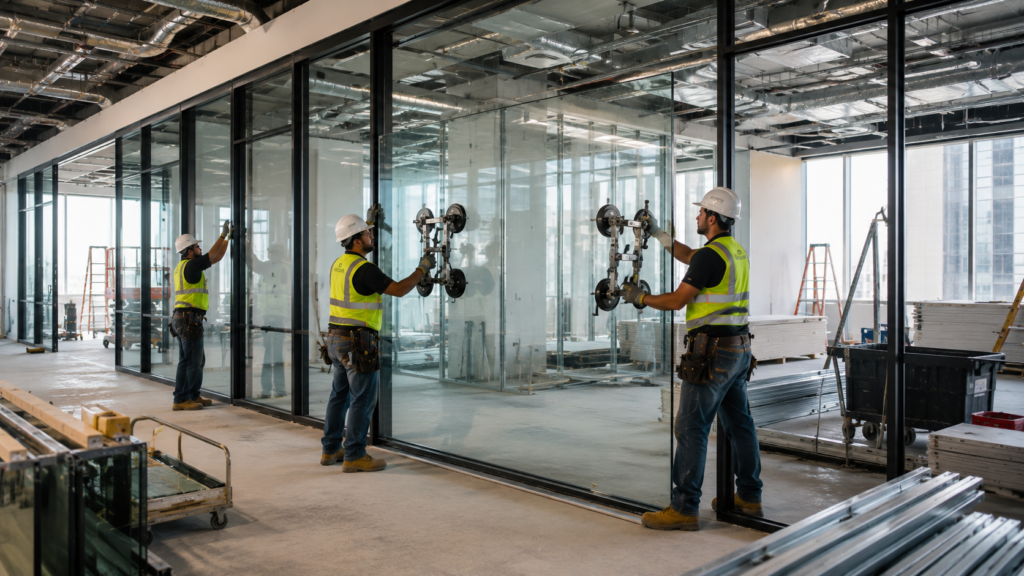
Glass and door openings depend on framing being true and on hardware backing being in place. The contractor installs storefront and interior glass entry systems after drywall, coordinates power and low-voltage for automatic operators and access control, and books the safety-glazing inspection.
For the full glazing sequence, see storefront glass installation.
HVAC, Electrical, and Plumbing Handoffs
The contractor makes sure the electrician has the mechanical unit data before rough-in, that the plumber’s wall penetrations are firestopped, and that HVAC controls, thermostats, and life-safety interlocks are commissioned before the final inspection.
Tools That Support Trade Coordination
On larger build-outs, tenant improvement trade coordination is supported by a coordinated drawing set or a simple clash review, where the contractor overlays duct, sprinkler, conduit, and plumbing to find conflicts before installation. On smaller jobs, the superintendent does this in the field with the foremen.
Either way, the goal is the same: agree on who occupies each part of the ceiling plenum and each wall cavity before anyone installs anything.
Coordination at the Finish Stage
Trade coordination continues through finishes. The contractor sequences flooring, paint, glass, and casework so wet trades finish before glass is set, and so the glaziers and finish carpenters are not working over new floor. Good tenant improvement trade coordination shows up as a clean, damage-free punch walk.
Bottom Line for Commercial Property Owners
A well-managed tenant improvement trade coordination decision protects three things at once: your construction schedule, your build-out budget, and the long-term performance of the space. Getting it right early, with a contractor who has done it many times, is far cheaper than correcting it later.
Every commercial building reaches these decision points. The owners and tenants who plan for them, document the scope, and work with an experienced team consistently open on time, stay on budget, and end up with space that leases and performs better for years.
Key Takeaways
- Coordination prevents trade clashes, rework, and failed inspections
- Overhead work is sequenced largest-to-smallest: duct, sprinkler, conduit, low-voltage
- In-wall blocking for glass, doors, and equipment goes in during framing
- Glass and doors install after drywall, with power and low-voltage pre-coordinated
- Commissioning and firestopping are completed before final inspection
Frequently Asked Questions
What is a trade clash?
When two systems are designed or installed in the same physical space, such as a duct running through a light fixture location. Coordination catches clashes before installation.
Does the glazier need power?
Yes, when the opening includes an automatic operator, access control, or switchable glass. That power and low-voltage is coordinated with the electrician early.
Talk to a Commercial Glazing and Tenant Improvement Team
Our contractor teams coordinate glazing in-house, which removes the most common handoff failure on a build-out. contact our team to discuss your project. For further reading, see MEP systems coordination.