

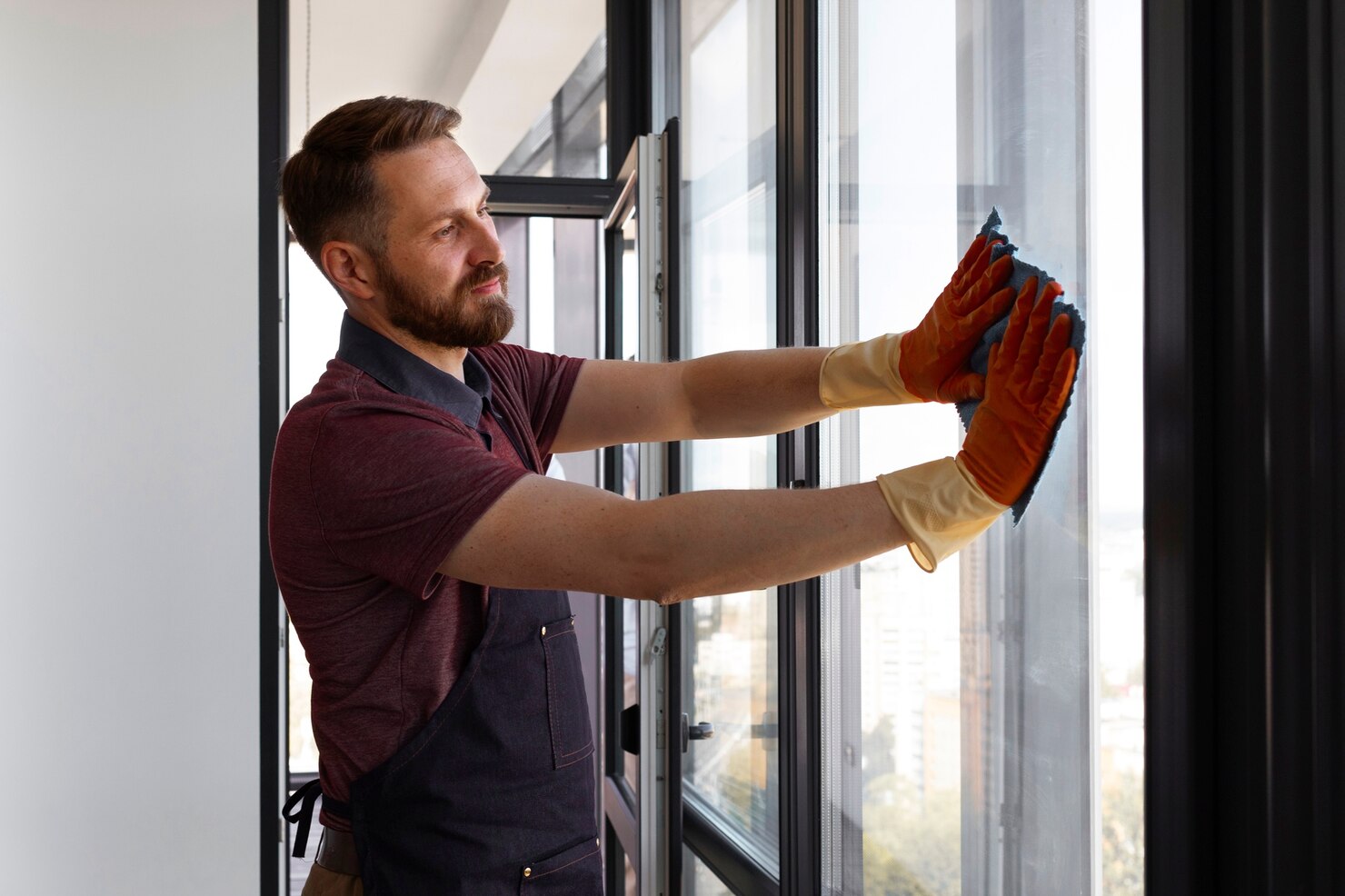

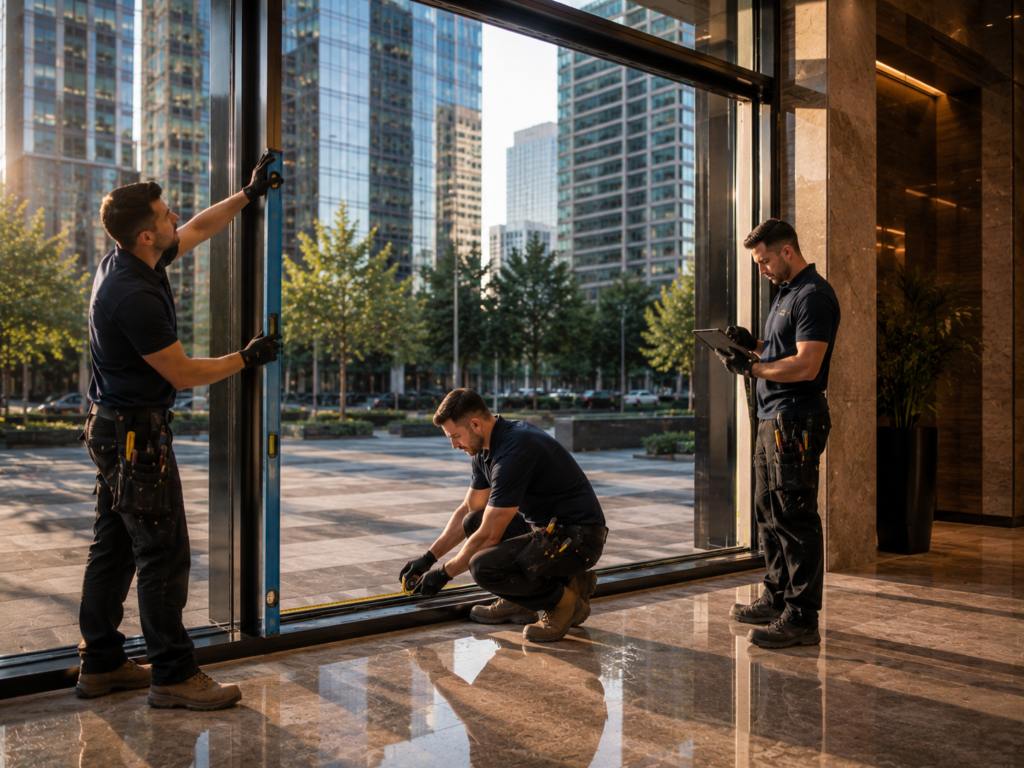
Manufacturers build aluminum storefront frames to last for decades, yet they do not last forever. Sun, rain, salt air, heavy door use, and building movement all take a toll. Over time, finishes fade, seals dry out, and joints start to leak. The good news is that a skilled crew can fix many frame problems without replacing the whole storefront. This guide explains the warning signs of frame damage and the repair options, from simple sealing to full replacement.
Property managers, building owners, and facility teams can use it to catch problems early and choose the right fix.
How Aluminum Storefront Frames Work
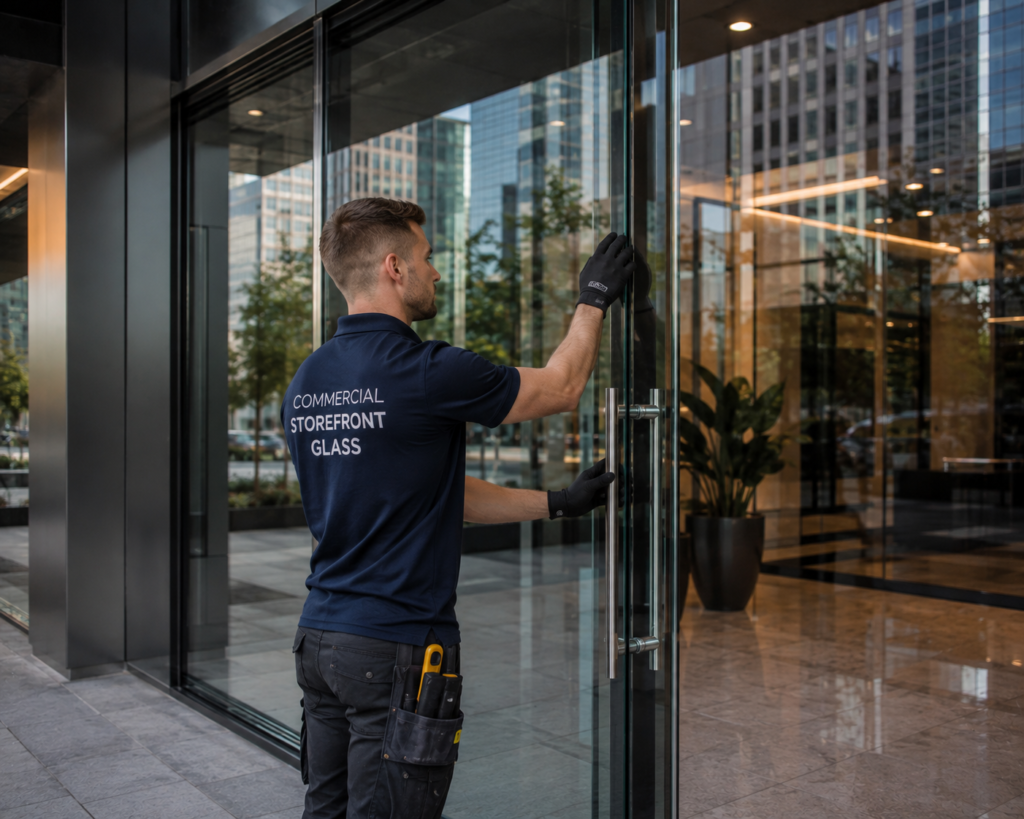
A storefront frame is a grid of aluminum pieces. Vertical pieces, called mullions, hold the glass on each side. Horizontal pieces form the sill at the bottom and the head at the top. Gaskets, tape, and sealant hold the glass in place and keep water out.
Many frames also include weep holes and drainage paths. These let any water that gets in drain back out. When these parts work together, the frame stays dry and strong. When one part fails, however, problems can spread to the rest of the system.
Why Aluminum Storefront Frames Wear Out
Several forces wear down frames over time:
- Sun: UV light fades finishes and dries out gaskets.
- Water: Rain and snow test every joint and seal.
- Salt and pollution: These speed up corrosion, especially near the coast.
- Temperature swings: Metal grows and shrinks, which stresses joints.
- Heavy use: Doors slam, carts bump, and people lean on frames.
- Building movement: Settling can twist frames out of square.
Sign 1: Leaks and Water Stains
In many buildings, leaks are the first sign of trouble. Watch for water on the floor after rain, stains on walls near the frame, or damp carpet by the door. Most of the time, leaks point to failed sealant, worn gaskets, or blocked weep holes. Left alone, they can damage floors, walls, and stock.
Sign 2: Drafts and Whistling
If you feel air near the frame or hear whistling on windy days, the seals may have failed. Drafts also raise heating and cooling costs, so they hit your budget too. In addition, they let in dust and noise from the street.
Sign 3: Corrosion and Pitting
Aluminum does not rust like steel, but it can corrode. Look for white powder, rough patches, or small pits in the finish. Typically, corrosion shows up first near the sill, where water sits longest. Light corrosion is mostly cosmetic. Deep pitting, however, can weaken the frame.
Sign 4: Bent or Damaged Frames
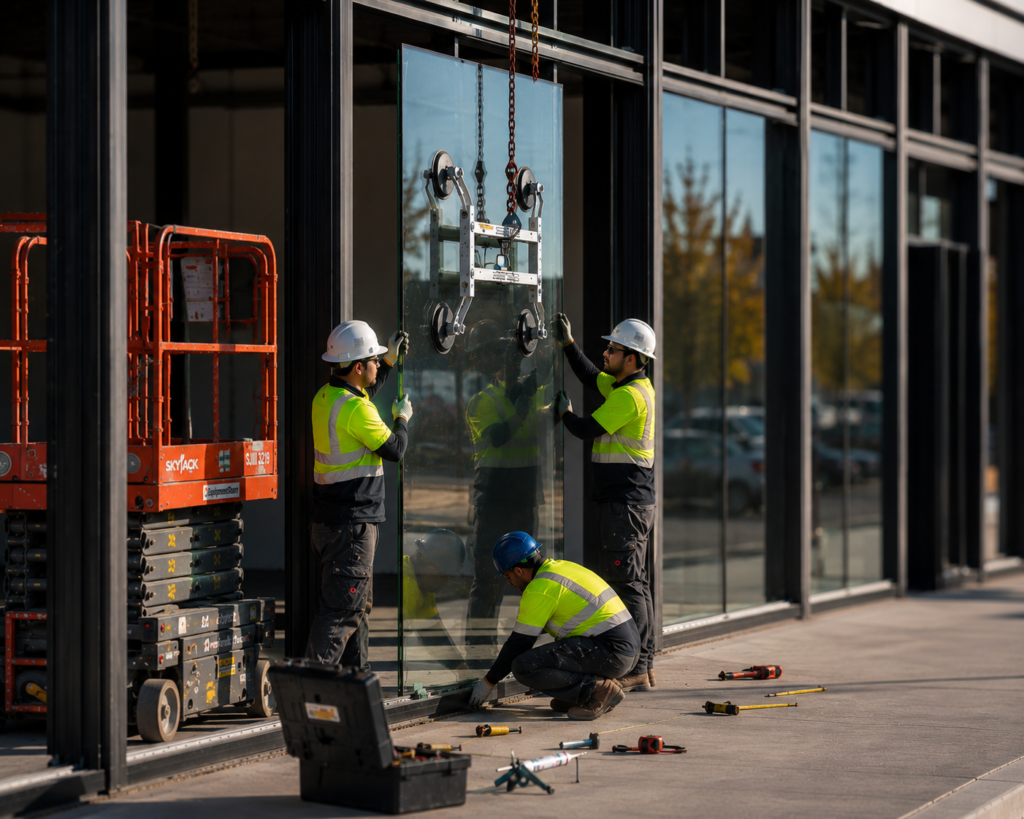
Over time, impacts from carts, cars, or break-in attempts can bend frames. A bent mullion may stress the glass and lead to cracks. It can also stop doors from closing properly. So inspect frames after any impact, even if the glass looks fine.
Sign 5: Faded or Peeling Finish
On older storefronts, faded or chalky finishes are common. Peeling paint is also a warning sign. While these problems are mostly about looks, they can expose bare metal to corrosion. Plus, a tired-looking front can hurt first impressions.
Sign 6: Doors That Drag or Will Not Latch
In many cases, door problems start in the frame. If a door drags, sticks, or will not latch, the frame may be out of square. Loose anchors or settling can cause this. A technician can often adjust the door, but the frame may need work too.
Repair Options for Aluminum Storefront Frames
Once you spot a problem, there are several ways to fix it. The right option depends on how serious the damage is.
Resealing
By far, resealing is the most common repair. The crew removes old, cracked sealant, cleans the joint, and applies new sealant. This often stops leaks and drafts for many years. It is fast and affordable.
Gasket and Glazing Replacement
As noted above, gaskets hold the glass and block air and water. When they shrink or crack, the crew can pull them out and press in new ones. Sometimes, they also replace glazing tape or setting blocks.
Clearing Weep Holes
Blocked weep holes trap water inside the frame. Fortunately, cleaning them is a simple fix that can stop chronic leaks.
Refinishing
Crews can clean faded frames and refinish them on site with special coatings. This refreshes the look and protects the metal. However, field finishes may not last as long as factory finishes.
Straightening and Anchoring
In some cases, a crew can straighten bent pieces or replace them one at a time. Loose frames can be re-anchored to the structure. These repairs often fix door problems too.
What Frame Repairs Typically Cost
Costs vary with the size of the front and the type of repair. Generally, resealing and clearing weep holes are the least expensive fixes. Next come gasket replacement and door adjustments. By contrast, straightening, re-anchoring, and refinishing cost more because they take longer and need special skills.
Still, even the larger repairs usually cost far less than a new storefront. That is why it pays to catch problems early. For instance, a small leak fixed today may prevent a damaged floor, a moldy wall, and a much bigger bill next year. So schedule an inspection whenever you notice a change, such as a new draft or a stain near the frame.
Moreover, keep records of every repair. Over time, these notes show whether problems are rare or growing. That history makes the repair-or-replace decision much easier.
When to Replace Aluminum Storefront Frames
Repairs make sense when damage is limited. However, replacement may be the better choice when:
- Corrosion has eaten deep into many pieces
- Leaks return soon after each repair
- Frames are badly bent or out of square
- The system cannot meet current energy codes
- Replacement parts are no longer available
New thermally broken frames can also cut energy costs and improve comfort. Our frame comparison guide explains the benefits.
Choosing a Repair Partner for Aluminum Storefront Frames
Not every glass shop works on frames. So ask whether the company repairs aluminum storefront frames or only swaps glass. Also ask for photos of past frame repairs. In addition, check that they carry commercial insurance. Finally, ask how they warranty sealant and gasket work. As a rule, a confident contractor will put the warranty in writing.
Routine Care to Extend Frame Life
Above all, a little care goes a long way. Wash frames a few times a year with mild soap and water. Inspect sealant and gaskets every spring. Keep weep holes clear. Also adjust doors before they start to drag. These small steps can add years to the life of your storefront. Our maintenance planning page offers a simple checklist.
Industry guides from the Fenestration and Glazing Industry Alliance also cover care for aluminum finishes.
FAQ on Aluminum Storefront Frames
How long do aluminum storefront frames last?
With good care, many last 30 to 40 years. Seals and gaskets usually need attention sooner.
Can corroded aluminum storefront frames be repaired?
Light corrosion can be cleaned and coated. Deep pitting may require new pieces or a new system.
Can I change the frame color?
Yes. Field refinishing can change the color, though a new factory finish lasts longer.
Protect Your Storefront
Catching frame problems early saves money and protects your building. Visit our glass repair services page, or schedule a frame inspection today.