


Phoenix storefront glass repair calls usually fall into three groups: cracked glass, failed seals, and damaged frames. Each problem has its own causes and its own fixes. A glazier can solve some in an afternoon. Others point to a system that is wearing out. In the Valley of the Sun, heat and dust speed up all three. So knowing what you are looking at helps you act fast and spend wisely. This guide explains each problem, what causes it, and how a commercial glazier repairs it.
Business owners, property managers, and facility teams across Phoenix can use it as a quick reference.
Why Storefronts Wear Faster in Phoenix
Storefront glass in Phoenix faces extreme conditions. Surfaces in direct sun can get far hotter than the air. At night, they cool down again. This daily swing makes glass and metal expand and shrink. Over time, seals weaken and frames shift. In addition, monsoon storms throw dust and debris at the glass. As a result, Phoenix storefronts often need repairs sooner than storefronts in milder climates.
Problem 1: Cracked Glass
Cracks are the most visible problem. They usually come from one of three sources:
- Impact from rocks, carts, break-ins, or flying debris
- Thermal stress when part of the glass heats faster than the rest
- Edge damage from poor installation or a shifting frame
Each cause leaves a different pattern. Impact cracks often spread out from one point. Thermal cracks usually start at the edge and run across the pane. A glazier can often tell the cause just by looking.
Thermal Stress Cracks in the Desert
Thermal stress is common in Phoenix. It happens when one part of a pane gets much hotter than another. For example, the center may sit in full sun while the edges stay shaded by the frame. Window film, dark signs, and displays set tight to the glass add to the problem. When one opening keeps cracking, the glass type may need to change. Heat-strengthened or tempered glass handles these stresses better.
Phoenix Storefront Glass Repair for Cracks
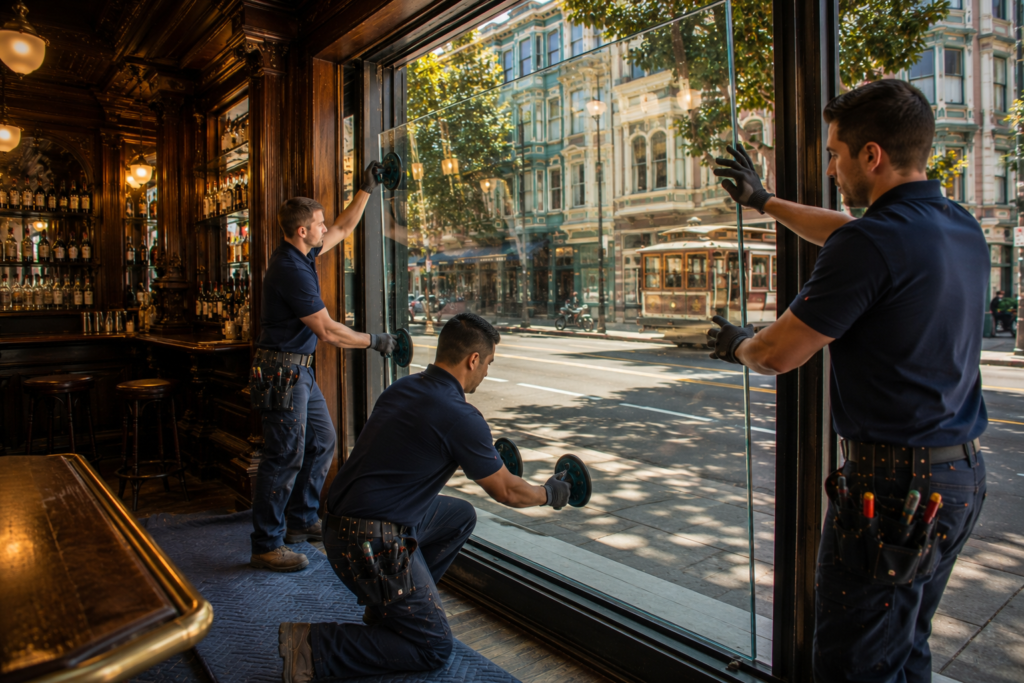
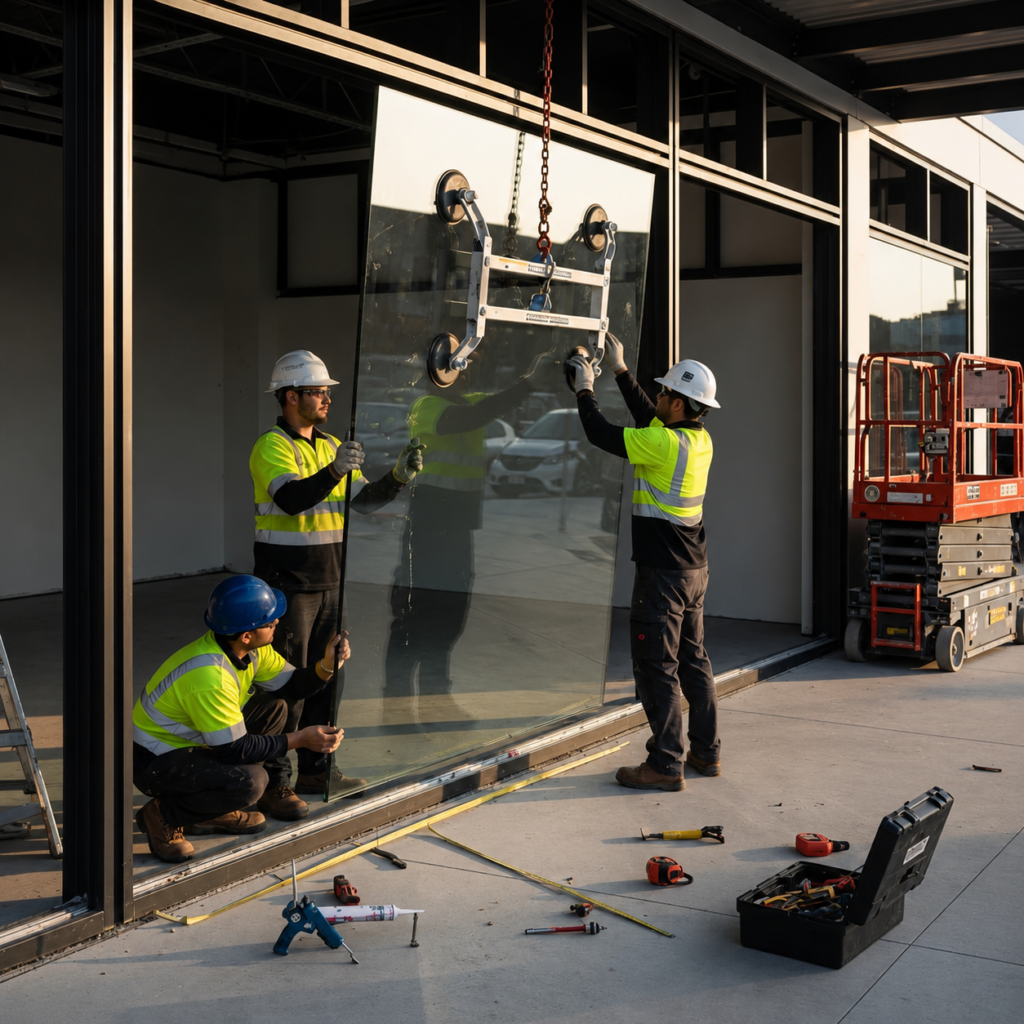
When the frame is healthy, a glazier can usually swap just the broken lite. First, the glazier secures the opening. Then they remove the broken glass and clean the frame pocket. Next, they set the new pane with fresh gaskets or glazing tape. Finally, they seal and clean the glass. This type of Phoenix storefront glass repair often takes a few hours once the new glass arrives.
Problem 2: Failed Seals
Nearly all newer storefronts use dual-pane units held together by an edge seal. Once that seal breaks, moisture creeps in. As a result, the glass looks foggy or streaked between the panes. Cleaning cannot fix it, since the moisture sits inside the unit. The unit has lost much of its insulating value, too.
What Causes Seal Failure?
Seals fail for several reasons. Age is the most common one. Heat cycles in Phoenix also stress the seals every day. In addition, water sitting in the frame can break down the seal from below. Poor installation can speed up the problem. So when one unit fails, check the drainage and frame condition too.
Phoenix Storefront Glass Repair for Fogged Units
Usually, the fix is a new insulated unit. In most cases, the frame stays in place. The glazier measures the opening, orders a new unit, and swaps it in. Many owners choose a better low-e coating during replacement. That upgrade can cut heat gain and glare. If many units have failed at once, however, the whole system may be near the end of its life.
Problem 3: Frame Damage
Aluminum frames are strong, but they are not invincible. Common frame problems include:
- Bent members from impacts or vehicles
- Loose anchors that let the frame shift
- Worn or missing gaskets
- Failed perimeter sealant
- Corrosion at the sill from trapped water
- Faded or chalky finishes from sun exposure
Frame problems often cause other issues, such as leaks, drafts, and cracked glass.
Phoenix Storefront Glass Repair for Frames
Many frame issues can be repaired. For example, glaziers can replace gaskets, reseal joints, and tighten or add anchors. Small dents can sometimes be straightened. Damaged sections can be cut out and replaced. However, if the frame is badly bent, corroded, or out of square, replacement may be the better choice. A careful inspection shows which path makes sense.
Phoenix Storefront Glass Repair for Monsoon Leaks
Monsoon rain can find every weak spot in a storefront. Water may show up on the floor inside or stain the wall below the sill. Common causes include failed sealant, blocked weep holes, and loose gaskets. A glazier can test the storefront with water to find the leak. Then they reseal the joints and clear the drainage paths.
Securing the Storefront First
After a break-in or accident, safety and security come first. Crews can cover the gap with plywood or a temporary panel. That protects your inventory while new glass is made. Custom units may take a week or more to arrive. So quick cover-up work usually comes before any real repair.
Repair or Replace?
Repair makes sense when the frame is sound and only one or two parts have failed. In contrast, replacement makes sense when cracks keep returning, many seals have failed, or the frame is badly damaged. Also, consider how long you plan to stay in the building. A full replacement may pay off over many years through better comfort and lower bills.
Choosing a Glazier for Phoenix Storefront Glass Repair
Hire a state-licensed glazier who works on storefronts every week. Ask about emergency response times, warranty terms, and typical lead times for glass. In addition, ask for references from other Phoenix businesses. Many good glaziers follow training and best practices from groups like the National Glass Association.
Phoenix Storefront Glass Repair Costs
Repair prices depend on the problem. Resealing a few joints or replacing a gasket is fairly low cost. Swapping one cracked pane costs more, especially if it is large or insulated. Replacing several fogged units adds up quickly. In addition, emergency board-up and after-hours calls carry higher rates. So ask your glazier to price each item on its own. Then you can decide what to fix now and what to plan for later. A clear quote makes Phoenix storefront glass repair easier to budget.
Preventing Future Repairs
A little care goes a long way. Keep dark posters and displays a few inches away from the glass. Clean weep holes at the bottom of the frame. Check sealant and gaskets once a year. Also, adjust door closers so they do not slam. These simple steps help your storefront last longer in the Phoenix heat.
Common Mistakes to Avoid
- Replacing the same cracked pane without finding the cause
- Trying to clean fog from inside a failed unit
- Ignoring small leaks during monsoon season
- Leaving a smashed opening unguarded overnight
- Patching frames that are badly out of square
FAQ on Phoenix Storefront Glass Repair
Why does my storefront glass keep cracking?
Often because of thermal stress. A different glass type may solve it.
Can foggy glass be fixed without replacing it?
Usually not. The insulated unit needs to be replaced.
How fast can Phoenix storefront glass repair happen?
Board-up can happen within hours. New glass may take several days to arrive.
Get a Clear Diagnosis
The right repair starts with the right diagnosis. Read our guide on repair or replace decisions, or schedule a storefront inspection today.