

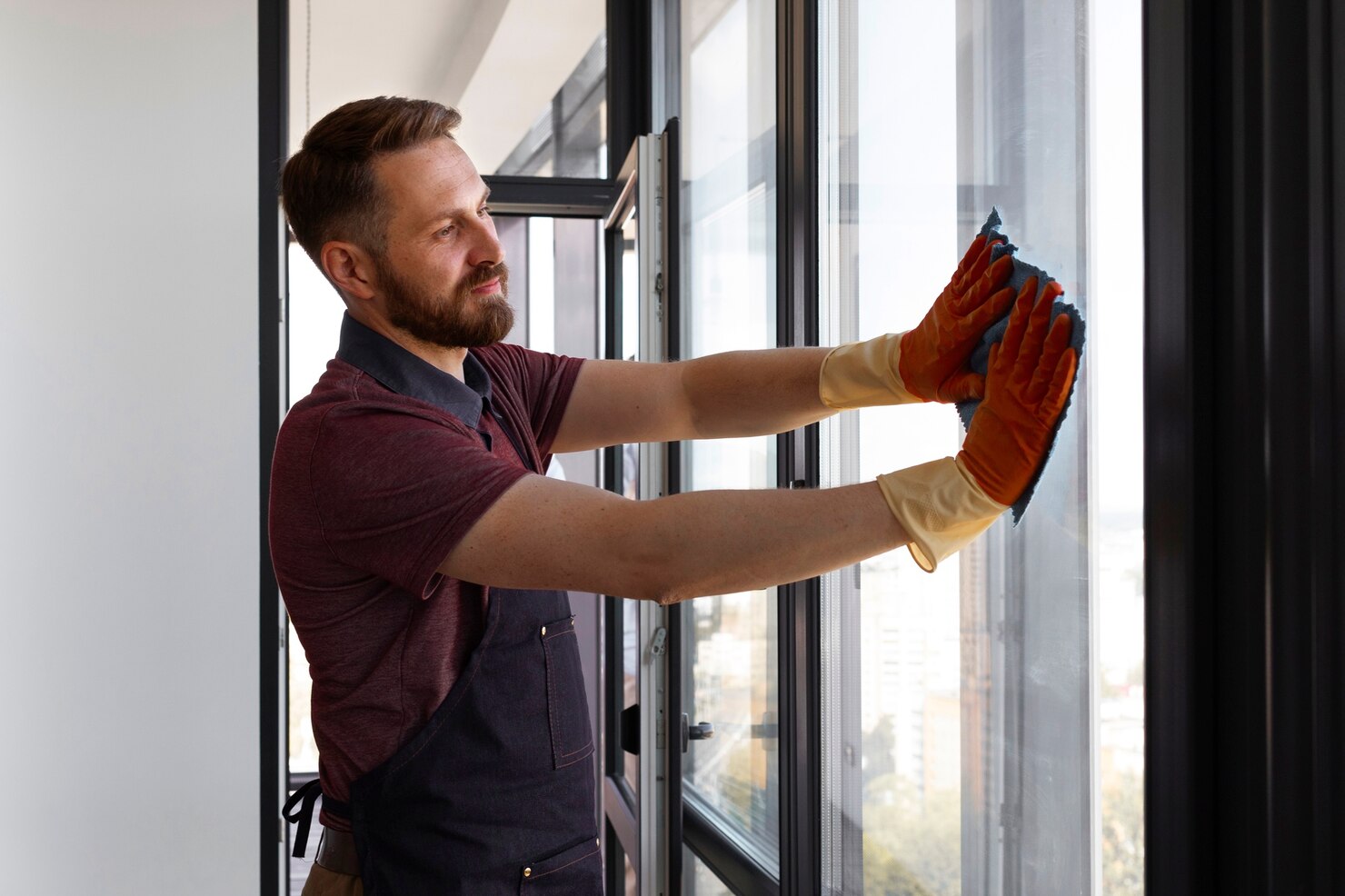

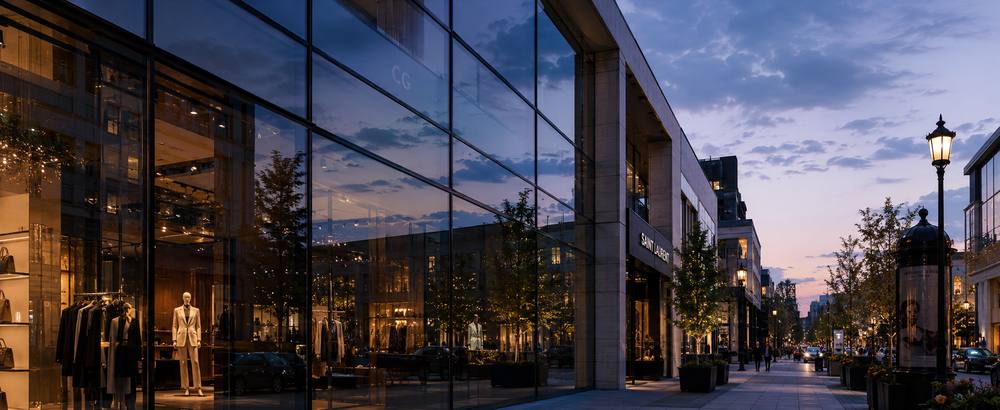
One bay in a row of matching storefronts gets new glass, and the next afternoon it stands out: slightly greener, slightly brighter, a different reflection. Shopping center glass tint matching is one of the most common complaints after a replacement, and it is almost always avoidable if the existing glass is identified before the new lite is ordered.
The landlord or manager has to decide how strictly the new glass must match.
- Match the existing product exactly, if it is still made
- Accept a close match on one lite where it is not prominent
- Replace a full bay or elevation so the change reads as intentional
- Set a new center standard and change bays over time
Compare in the Real Light
Ask the glazier for a sample of the proposed glass. Hold it against an existing lite from the outside, in the light shoppers see it, and photograph it from a few steps back and at an angle. Also photograph it from inside looking out. Differences that are invisible on a spec sheet show up here: tint color, reflection and how a coating looks from different angles.
What it cannot tell you yet: Exactly what the existing glass is. Tinted single glass, tinted insulated units and coated insulated units can look alike from the curb but use different products.
Why Matches Fail
- Different makeup. A tinted lite in an insulated unit looks different from the same tint as a single lite.
- Coating differences. Low-E and solar control coatings change the color and reflection, and they vary between products.
- Thickness. Thicker tinted glass is darker than thinner glass of the same tint.
- Age. Existing glass may be decades old, and the product may have changed or been discontinued.
- Position of the coating. In an insulated unit, which surface the coating is on changes how it looks.
- The existing product is discontinued and no close match exists, so the whole bay changes
- The energy code requires a coated product for replacement, changing the look
- The frame pocket cannot take the insulated unit needed to match neighboring bays
- The tenant also wants to change the door glass, which affects hardware
The Summerlin factor: consistent facades
Planned centers in Summerlin often have a consistent design language, and design standards may call for uniform storefront appearance. A mismatched lite may draw a complaint from the landlord’s design team or a neighboring tenant. Strong sun also exaggerates differences in tint and reflection, especially late in the day on west-facing rows.
A manager replaces a broken lite in a 10-bay row. The glazier identifies the existing glass from a label on a nearby lite and finds the tint is still made, but the neighbors are insulated units and the broken lite was a single lite from a past repair. The glazier recommends an insulated unit in the same tint so the replaced lite finally matches the row.
Can you identify the existing glass from a stamp, a label or a meter reading before ordering?
This is the most useful step in tint matching. A glazier with a thickness meter or coating detector can often tell the makeup without removing the glass, which narrows the product choice right away.
| What you can document | What the glazier verifies on site |
|---|---|
| Photos of the full row in afternoon light | Glass makeup and coating identification |
| Any labels or stamps on existing lites | Product availability |
| History of past glass replacements in the row | Energy and safety glazing requirements |
| Landlord design standards for storefronts | Frame pocket size |
When One Lite Is Not Worth Matching
Sometimes an exact match is not possible or not worth the cost. If the replaced lite is high in a transom, behind a sign or on a side elevation few people see, a close match may be acceptable. If it sits at eye level beside the main entrance, it will be noticed every day. A practical approach is to rank the lites in the row by visibility and decide the matching standard for each before the glass is ordered. That conversation is easier with the landlord before the work than after a tenant complains.
Keep a record of the product used for every replacement. A one-line entry with the bay, the date and the glass makeup means the next manager does not have to start the identification process from scratch.
A Tint Match Scorecard
| Check | Sample 1 | Sample 2 |
|---|---|---|
| Color from 10 feet in afternoon light | ||
| Reflection at an angle | ||
| View from inside | ||
| Makeup matches neighbors (single or insulated) | ||
| Meets energy code for replacement | ||
| Lead time |
- Glass makeup and coating identification with the glazier’s meter or labels
- Product data and availability from the glass manufacturer
- Energy code requirements for replacement glass
- Design standard requirements with the landlord
The Next Decision
The next decision is whether to accept a close match on one lite or change more of the elevation. Decide with the sample photos in hand.
Have this ready:
- Sample photos
- Identification of the existing glass
- Landlord standards
- Budget for one lite vs. a bay
Talk It Through
If you need new glass to match its neighbors, we can identify the existing glass and bring samples. See our pages on storefront glass in Summerlin and storefront glass replacement, or call 866-665-3975 to schedule a site visit.
Sources and Further Reading
- Vitro Architectural Glass: glass product data and coatings
- Guardian Glass: architectural glass performance data
- National Fenestration Rating Council (NFRC): U-factor, SHGC and visible transmittance ratings
- National Glass Association (glass.org): glazing industry technical resources
- Summerlin (community information)