


Storefront Glass Installation
Storefront Systems Shape First Impressions
A storefront is often the most visible part of a commercial property.
Customers notice it before entering.
Tenants evaluate it when considering a space.
Property owners rely on it to support both appearance and performance.
Because storefront systems influence visibility, accessibility, and customer experience, installation projects often become an important part of commercial construction and modernization efforts.
From retail centers and restaurants to office buildings and mixed-use developments, storefront glass plays a central role in how commercial properties engage with the public.
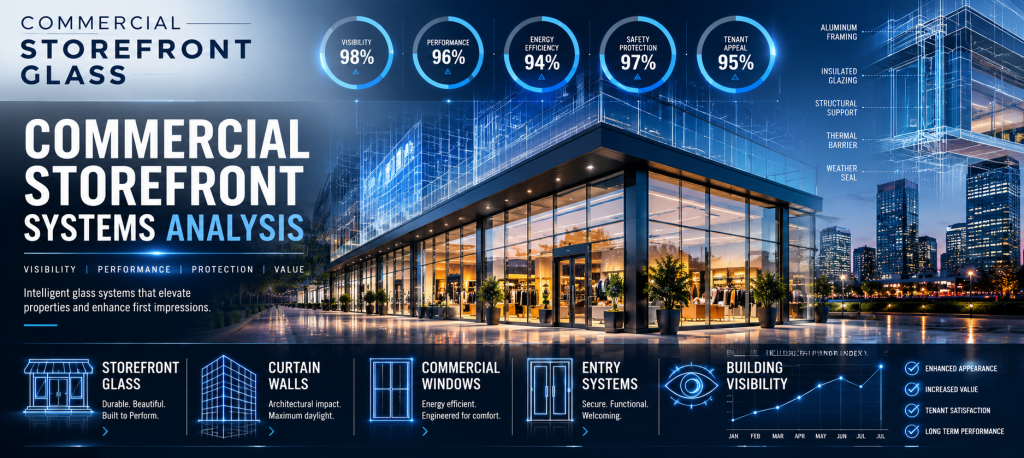
Visibility Starts At The Storefront
Many businesses depend on street-level exposure.
Pedestrians notice activity through the glass.
Customers often make decisions before entering.
Exterior presentation influences perception.
A well-designed storefront helps create a stronger connection between the business and the surrounding community.
Natural light contributes to the experience.
Open sightlines encourage engagement.
Together, these elements help support customer interaction and overall property performance.
Commercial Properties Depend On Modern Storefront Systems
Storefront glass is used across a wide range of commercial environments.
Different properties have different goals.
Retail centers prioritize customer visibility.
Restaurants benefit from transparency and natural light.
Office buildings often focus on professional presentation.
Mixed-use developments frequently combine several objectives within the same project.
Common Applications
- Retail Centers
- Shopping Centers
- Restaurants
- Office Buildings
- Mixed-Use Developments
- Medical Buildings
- Hospitality Properties
- Corporate Campuses
- Universities
- Commercial Corridors
Each environment places unique demands on the storefront system.

New Construction And Property Development
Many storefront installation projects occur during new construction.
Developers often use storefront systems to establish the visual identity of the property.
Architectural glazing contributes to modern design.
Entry systems improve accessibility.
Exterior presentation helps support leasing and tenant attraction.
Because storefronts are among the most visible building components, installation decisions frequently influence how the property is perceived long after construction is complete.
Tenant Improvement Projects
Commercial spaces continue evolving as tenants change.
New businesses often require modifications to existing storefront configurations.
Visibility requirements may differ.
Operational needs frequently change.
Tenant improvement projects commonly include storefront glass installation as part of broader renovations designed to align the property with new business objectives.
Property Modernization And Exterior Upgrades
Many commercial buildings install new storefront systems during modernization projects.
Older storefronts can affect perception.
Outdated designs may no longer support current tenant expectations.
Exterior improvements often include new glass, framing systems, entry doors, and architectural upgrades.
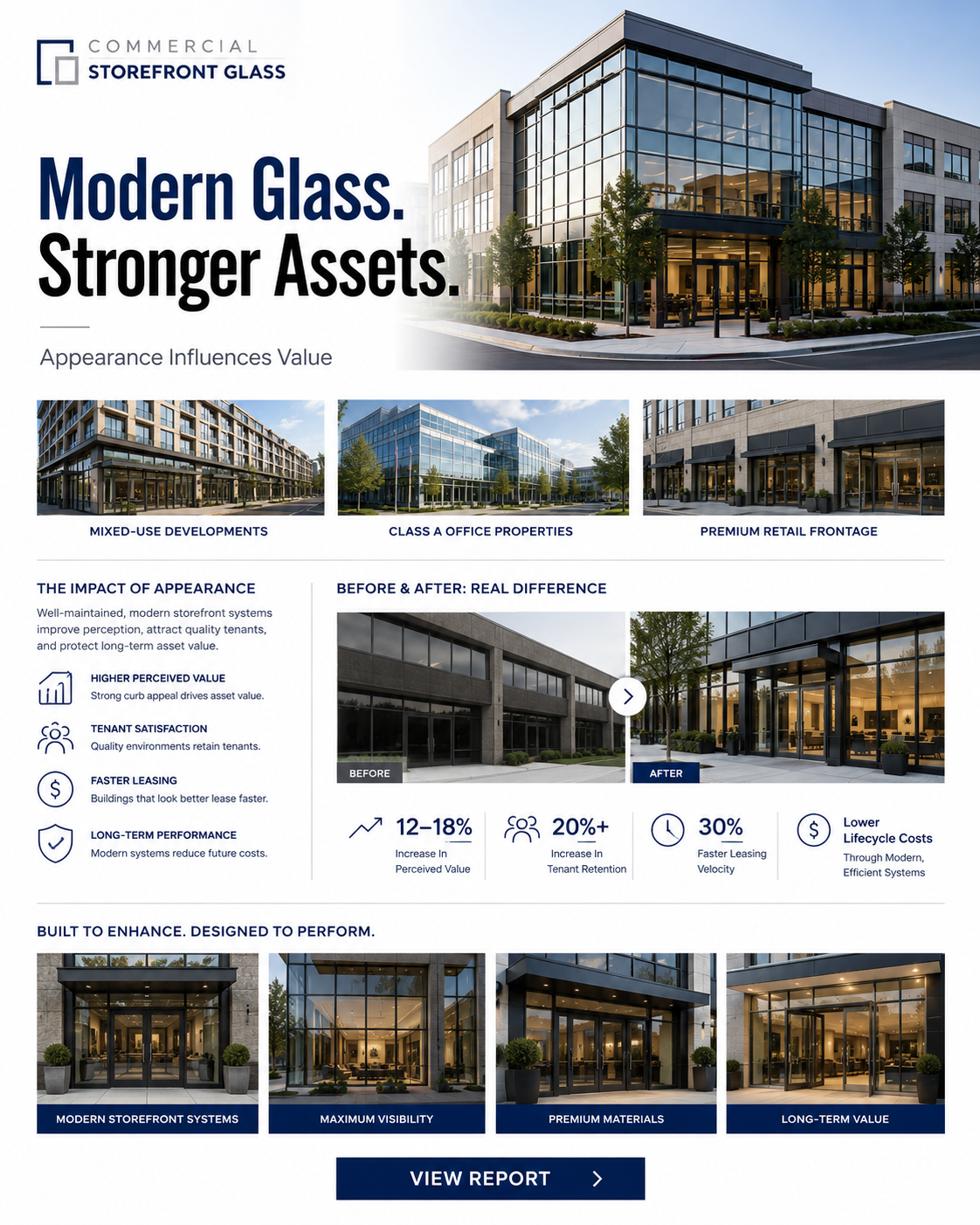
These projects help properties remain competitive while improving overall appearance.
Aluminum Framing Systems
Storefront performance depends on more than glass alone.
Framing systems provide structural support.
Durability affects long-term reliability.
Modern aluminum systems remain a popular choice because they combine strength, flexibility, and architectural versatility.
These systems support storefront glazing while helping create clean, contemporary designs.
Glass Entry Systems
Customers interact with the entrance every day.
Visitors form opinions before entering.
Accessibility influences usability.
Because entry systems play such an important role in customer experience, storefront installations frequently include new glass doors and entrance configurations designed to improve functionality and appearance.
Retail Storefront Installation
Retail properties depend heavily on visibility.
Storefront presentation influences customer engagement.
Natural light often improves the shopping experience.
Open sightlines help connect businesses with surrounding pedestrian activity.
For many retailers, storefront installation represents one of the most important investments made in the customer-facing portion of the property.
Restaurant Storefront Installation
Restaurants benefit from strong visual connections with the surrounding environment.
Exterior presentation affects perception.
Transparency helps create inviting dining spaces.
Natural light contributes to atmosphere.
Well-designed storefront systems often become part of the overall customer experience.
Office Building Storefront Systems
Professional office environments frequently utilize storefront systems to create modern, welcoming entrances.
Architectural glass contributes to building identity.
Natural light improves workplace quality.
Updated storefronts often support tenant attraction while enhancing the overall appearance of the property.
Long-Term Building Performance
Storefront systems influence more than aesthetics.
Customer engagement matters.
Visibility affects business performance.
Building appearance contributes to perception.
Property modernization supports competitiveness.
Because storefronts operate at the intersection of architecture, customer experience, and commercial performance, installation projects often provide value far beyond the glass itself.
Supporting Commercial Properties Through Better Storefront Design
Storefront glass installation helps commercial properties create stronger first impressions, improve visibility, and support long-term building performance.
Whether the project involves new construction, tenant improvements, exterior modernization, retail development, restaurant renovations, or office building upgrades, storefront systems remain one of the most important components of a successful commercial property.