



Commercial vs Residential Intelligence
Similar Materials. Different Objectives.
Commercial and residential properties often use many of the same building materials.
Glass appears in both.
Frames exist in both.
Entrances serve both environments.
However, the similarities often end there.
Commercial buildings operate under different pressures.
Tenant expectations influence decision-making.
Customer experience affects performance.
Property owners evaluate long-term asset value.
Leasing objectives shape investments.
Meanwhile, residential properties typically focus on comfort, privacy, lifestyle, and personal use.
Because the goals differ, the systems often evolve differently as well.
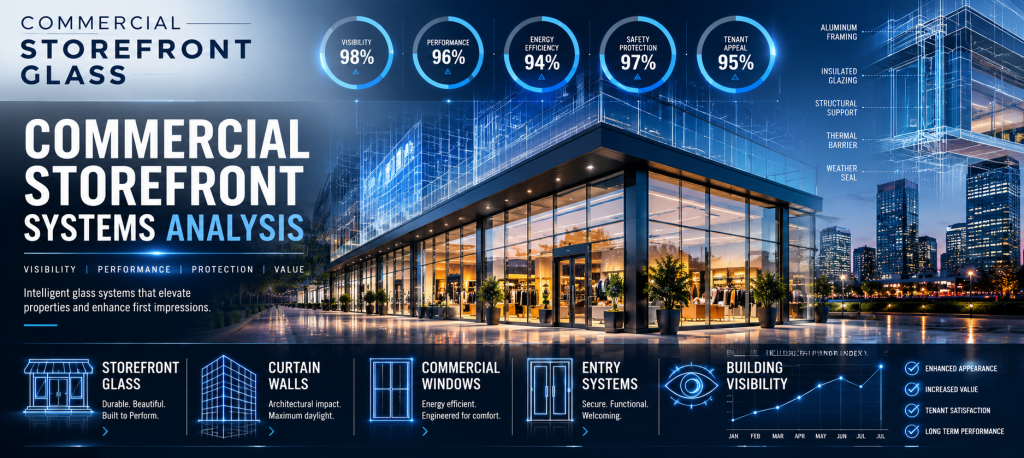
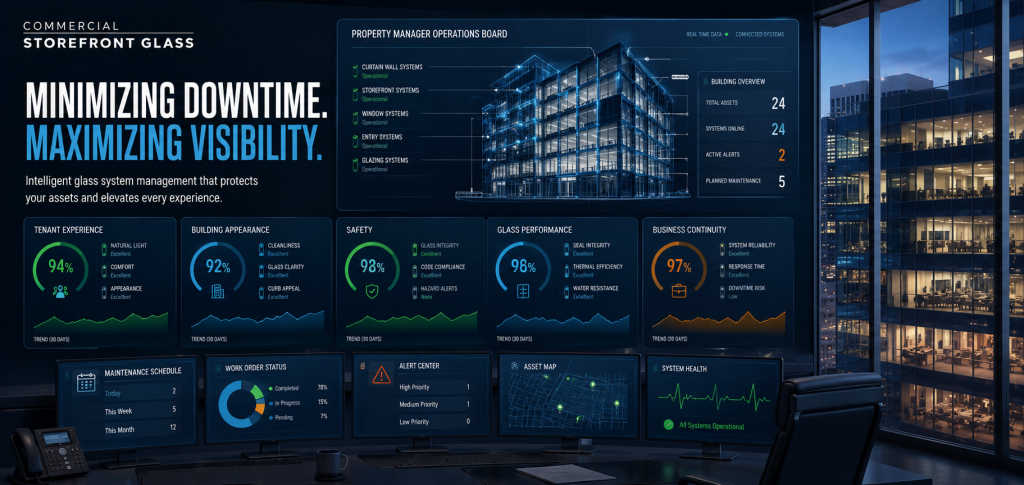
The Commercial vs Residential Intelligence series explores those differences and examines how building priorities change depending on who the property serves and how the asset generates value.
Explore Commercial vs Residential Intelligence
Storefront Systems vs Residential Windows
Visibility, Customer Experience, And Building Performance
Compare how commercial storefront systems support customer engagement, leasing performance, visibility, and property value while residential windows focus on comfort, privacy, and everyday living.
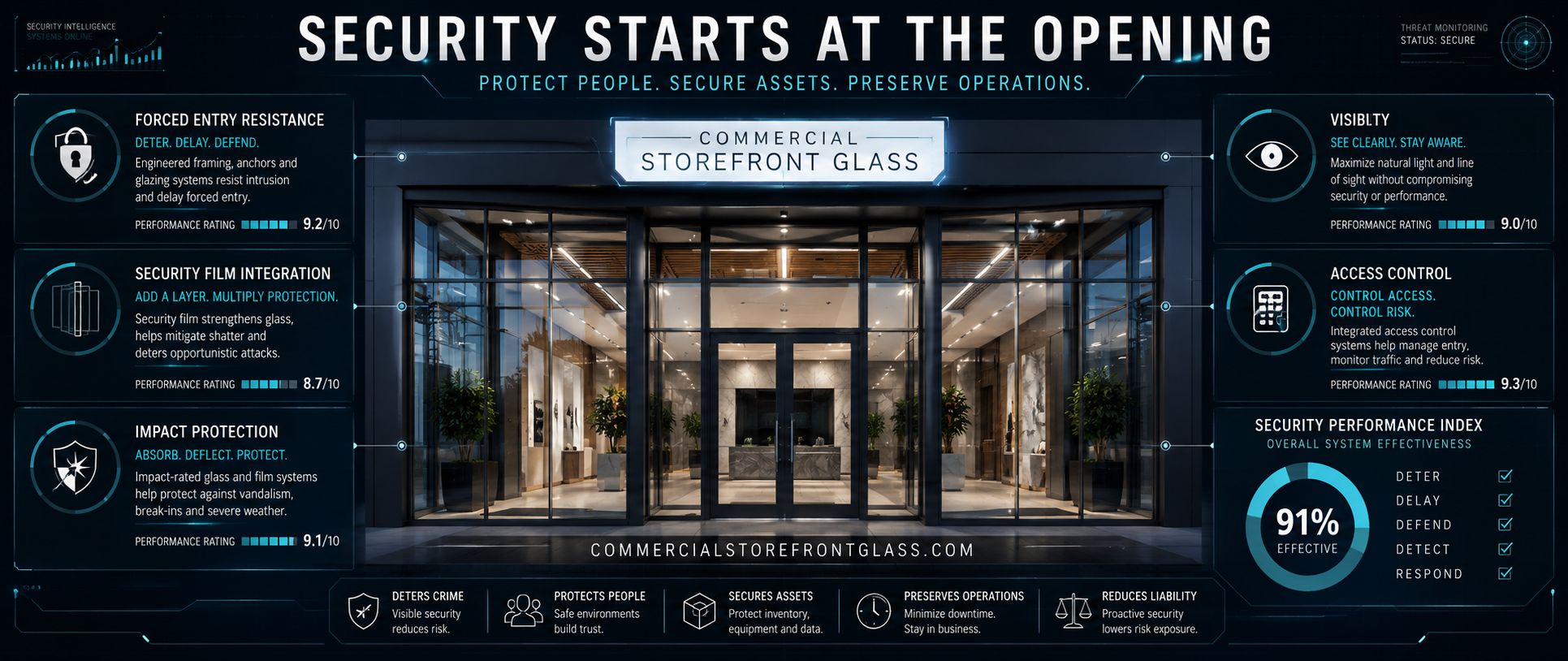
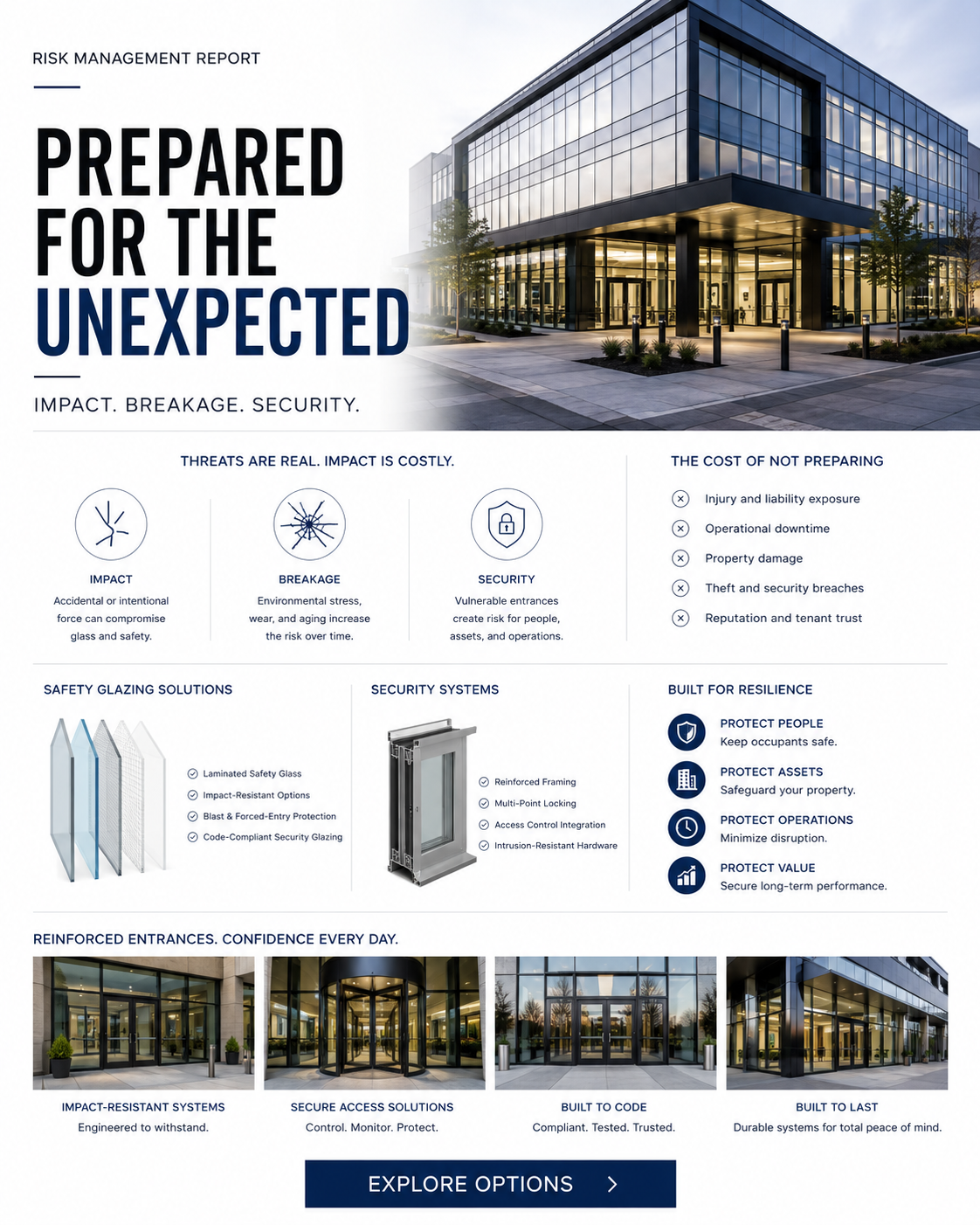
Commercial Security Glass vs Residential Impact Glass
Storefront Protection And Property Risk Management
Explore how commercial properties approach security, liability, operational continuity, and asset protection compared to residential storm protection and homeowner resilience strategies.
Retail Environments vs Luxury Homes
Customer Engagement And Residential Privacy
Understand why retail properties prioritize visibility, transparency, and customer interaction while luxury homes often emphasize privacy, exclusivity, and controlled exposure.
Office Buildings vs Residential Communities
Occupant Experience And Property Performance
Examine how office environments focus on productivity, leasing competitiveness, and workplace quality while residential communities prioritize comfort, lifestyle, and long-term livability.
Commercial Framing Systems vs Residential Framing Systems
Building Scale, Durability, And Lifecycle Planning
Learn how commercial framing systems support larger openings, greater usage demands, and long-term asset management compared to residential construction objectives.
Commercial Entrances vs Residential Entryways
Customer Flow And First Impressions
Compare how commercial entrances manage accessibility, traffic flow, visibility, and customer experience while residential entryways focus on personal use and homeowner convenience.
Commercial Glass Systems vs Residential Window Systems
Building Performance And Ownership Objectives
Explore how commercial glazing supports modernization, tenant attraction, customer engagement, and property value while residential systems prioritize comfort and efficiency.
Commercial Renovation vs Home Remodeling
Asset Performance And Lifestyle Improvements
Analyze how commercial renovations are driven by occupancy, competitiveness, modernization, and return on investment while residential projects often focus on lifestyle preferences and personal enjoyment.
Mixed-Use Developments vs Residential Neighborhoods
Property Activation And Community Design
Understand how mixed-use developments combine retail, office, hospitality, and residential uses while traditional neighborhoods focus primarily on residential living environments.
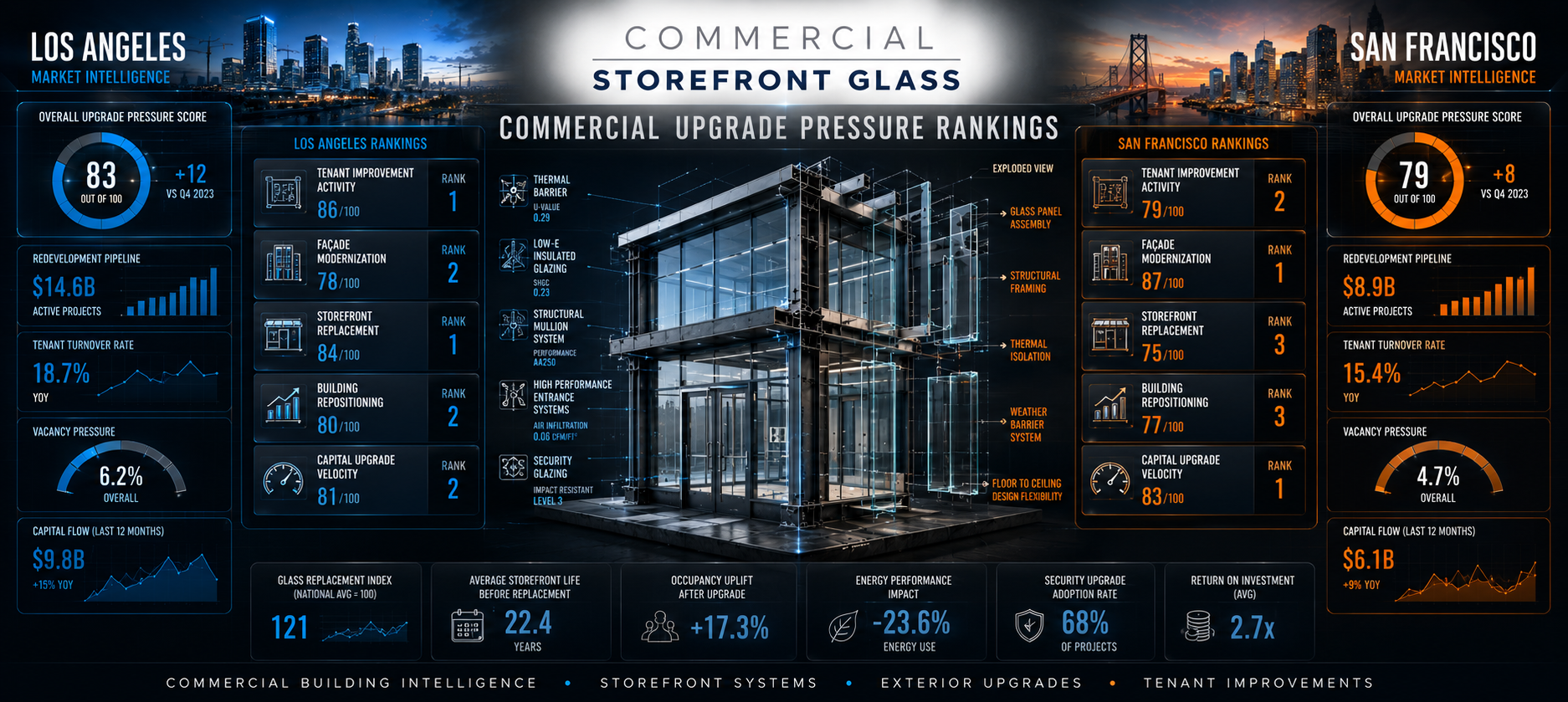
Commercial Property Modernization vs Home Upgrades
Investment Strategy And Long-Term Value
Compare how commercial modernization supports leasing performance, asset competitiveness, and property repositioning while residential upgrades frequently target comfort and resale appeal.
Why Commercial Buildings Operate Differently
A homeowner and a commercial property owner often evaluate the same improvement in completely different ways.
One may focus on comfort.
The other may focus on leasing performance.
Personal preference influences residential decisions.
Asset performance frequently drives commercial decisions.
Because of this distinction, commercial buildings often prioritize outcomes that have little connection to residential ownership.
Visibility matters.
Tenant attraction matters.
Customer experience matters.
Operating costs matter.
Property repositioning matters.
These factors help explain why commercial systems frequently look and perform differently than their residential counterparts.
Different Ownership Models Create Different Priorities
Residential properties typically serve the people who live inside them.
Commercial properties often serve customers, tenants, employees, investors, or all four simultaneously.
As a result, ownership goals tend to diverge.
Common Commercial Priorities
- Leasing performance
- Tenant attraction
- Customer engagement
- Property image
- Asset value
- Long-term competitiveness
Common Residential Priorities
- Comfort
- Privacy
- Lifestyle
- Personal preference
- Energy savings
- Family needs
Neither approach is better.
Each simply reflects a different purpose.
Visibility Vs Privacy
One of the clearest differences between commercial and residential design involves visibility.
Retail properties benefit from exposure.
Restaurants rely on engagement.
Office buildings often prioritize openness.
Conversely, residential properties frequently value privacy.
Luxury homes may intentionally limit visibility.
Neighborhoods often emphasize separation from public activity.
Because of these differences, commercial storefront systems and residential window systems frequently evolve in opposite directions.
Property Performance Means Different Things
Building performance is important in both environments.
The definition often changes depending on the asset.
Commercial owners may evaluate occupancy, operating costs, customer experience, and market competitiveness.
Residential owners often focus on comfort, convenience, and quality of life.
Consequently, identical materials can be used for entirely different reasons.
This distinction appears throughout modern construction.
Modernization Follows Different Paths
Commercial modernization is usually tied to performance.
Ownership groups seek stronger leasing outcomes.
Developers pursue repositioning opportunities.
Investors focus on long-term value.
Meanwhile, residential upgrades are often driven by lifestyle improvements.
The motivations differ even when the construction work appears similar.
Understanding those differences helps explain why commercial properties frequently approach renovation and modernization from a completely different perspective.
The Business Of Buildings
Commercial real estate functions as a business.
Revenue matters.
Occupancy matters.
Customer experience matters.
Market perception matters.
Because buildings often operate as income-producing assets, improvements are frequently evaluated through a performance lens.
Residential ownership follows a different model.
Personal enjoyment often plays a larger role.
Lifestyle goals influence decisions.
Family needs shape priorities.
This distinction sits at the center of nearly every commercial-versus-residential comparison.
Building Intelligence Starts With Understanding Purpose
Materials may look similar.
Glass may appear identical.
Entrances can seem interchangeable.
However, the purpose behind those systems often differs dramatically.
Commercial properties focus on performance.
Residential properties focus on living.
One prioritizes customers and tenants.
The other prioritizes homeowners and families.
The Commercial vs Residential Intelligence series explores these differences and provides a framework for understanding how design, performance, modernization, visibility, security, and long-term value change depending on the goals of the property.
Understanding that distinction is often the first step toward understanding modern commercial buildings themselves.
