Commercial Storefront Glass

Denver Commercial Glass Repair, Replacement & Installation

Denver has become one of the nation’s leading commercial construction markets, serving as the economic center of the Rocky Mountain region. Its diverse economy includes corporate headquarters, healthcare systems, technology companies, aerospace, financial services, government facilities, higher education, hospitality, industrial development, and mixed-use redevelopment. Continued investment throughout the metropolitan area has created strong demand for commercial storefront systems, curtain walls, office glazing, entrances, automatic doors, and complete building envelope modernization. Property owners, developers, facility managers, architects, and general contractors regularly evaluate whether commercial glass should be repaired, replaced, or upgraded to improve building performance, energy efficiency, occupant comfort, and long-term property value.

The Denver metropolitan area extends well beyond downtown and includes Aurora, Lakewood, Centennial, Greenwood Village, Englewood, Westminster, Thornton, Arvada, Broomfield, Littleton, Wheat Ridge, Commerce City, Northglenn, Castle Rock, Parker, Golden, and neighboring communities. Together these markets support Class A office buildings, healthcare campuses, industrial parks, distribution centers, research facilities, retail developments, government buildings, and rapidly expanding mixed-use projects.

Whether serving a downtown high-rise or a suburban corporate campus, commercial glass plays a critical role in protecting the building envelope while improving operational performance and creating attractive environments for tenants, employees, and customers.


Denver Continues to Lead Commercial Growth

Local profile

Commercial glass in Denver: what is different here

How Denver’s buildings, weather and codes shape storefront glass: the systems that work, what fails first and where the commercial activity is.

Building styles

Brick LoDo warehouses turned offices and restaurants, a growing downtown skyline, Cherry Creek retail and suburban office parks along I-25.

Weather exposure

High altitude with strong UV, frequent hail, rapid temperature swings, snow and many freeze-thaw cycles.

Heat and sun
Low to moderate
Wind and storms
Moderate
Hail
Very high
Freeze-thaw
Very high
Salt air
Low to moderate
Seismic
Low

Relative exposure for commercial glass compared with other major U.S. metros.

Popular storefront systems
  • Thermally broken frames with insulated low-E glass
  • Laminated or heat-strengthened glass where hail is common
  • Durable finishes rated for strong UV
Common failures
  • Hail-broken glass and dented frames
  • Sealant failure from freeze-thaw and UV
  • Condensation on older non-thermal frames
Replacement trends

Owners of larger buildings are upgrading glass and frames to meet energy performance goals, and hail claims often trigger full storefront updates.

Building codes

Denver uses the Denver Building and Fire Code, based on the International codes, and Energize Denver sets benchmarking and performance requirements for larger buildings.

Major commercial corridors
LoDo and Union StationCherry CreekRiNoDenver Tech CenterSouth BroadwayHighlands
Continue exploring

Planning work in Denver? Read these next

Decision tools and guides that apply to any storefront project.

Answer three questions and get a recommended path.

Typical storefronts, failures and upgrades by building type.

Compare markets side by side.

Protection options for street-level glass.

Energy, comfort and code compliance.

See a typical schedule for your project.

Commercial development remains active across nearly every major industry.

Key sectors include:

  • Corporate headquarters
  • Technology companies
  • Aerospace and defense
  • Healthcare systems
  • Financial services
  • Industrial manufacturing
  • Distribution and logistics
  • Government facilities
  • Higher education
  • Hospitality
  • Mixed-use developments
  • Research and laboratory facilities

Commercial glazing supports each of these industries throughout the building lifecycle.

When Commercial Glass Repair Is the Right Choice

Many glazing issues can be corrected without replacing the complete system.

Repair is often appropriate when:

  • Individual glass panels are damaged
  • Insulated glass units fail
  • Door hardware requires servicing
  • Automatic entrances need adjustment
  • Sealants deteriorate
  • Water intrusion remains localized
  • Aluminum framing remains structurally sound

Prompt repairs restore building performance while minimizing business interruptions.

When Replacement Creates Greater Long-Term Value

As commercial buildings mature, replacement often provides greater value than repeated repairs.

Replacement is commonly recommended when:

  • Multiple glazing systems begin failing
  • Energy performance declines
  • Building appearance becomes outdated
  • Water intrusion becomes recurring
  • Maintenance costs continue increasing
  • Tenant improvements are planned
  • Capital modernization projects begin

Modern glazing systems improve energy efficiency while extending the useful life of commercial buildings.
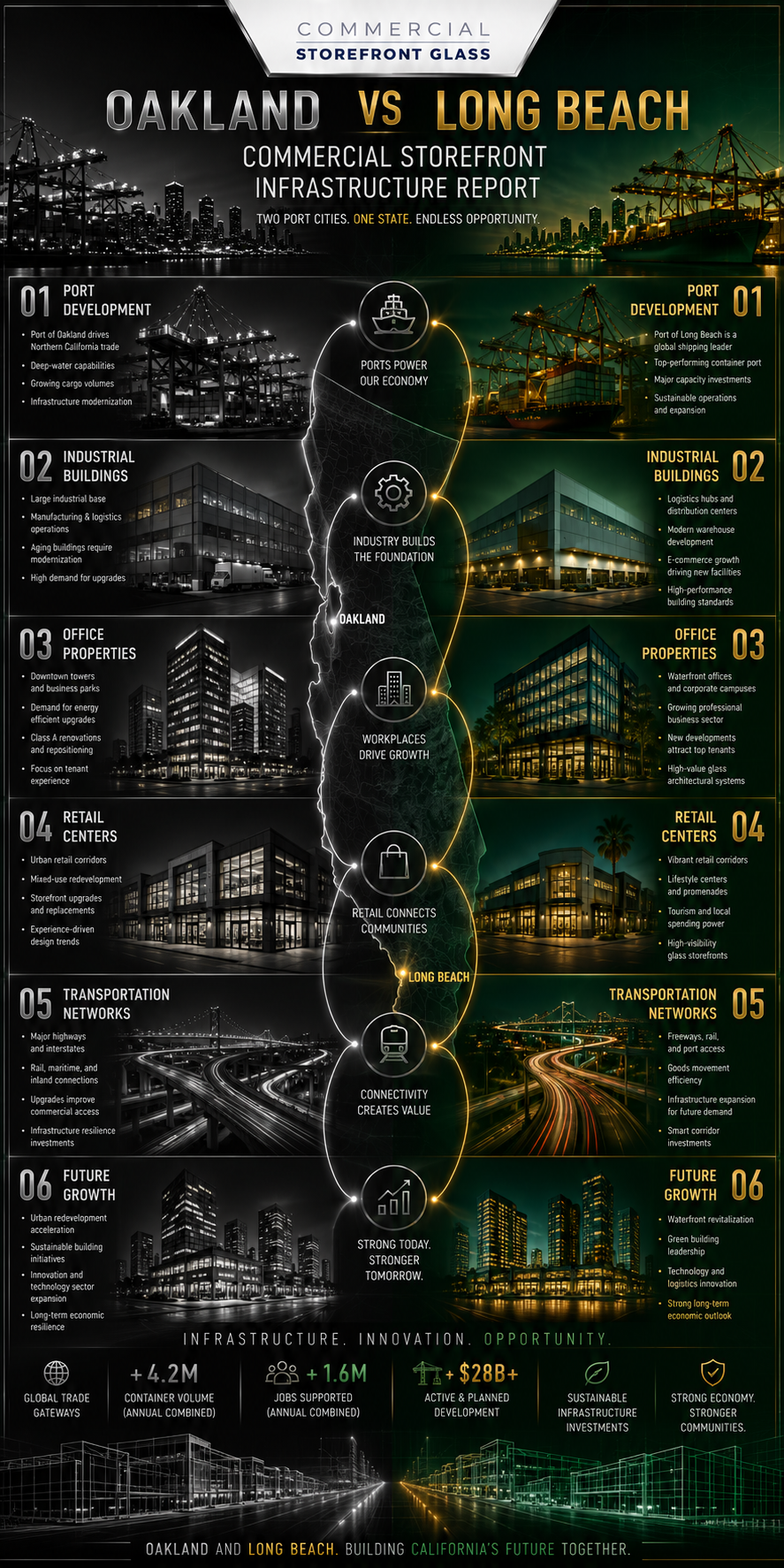


New Installation Supports Denver's Continued Expansion

Denver continues adding commercial space throughout the metropolitan area.

Modern installations commonly include:

  • Curtain wall systems
  • Aluminum storefront systems
  • Commercial windows
  • Glass entrances
  • Automatic doors
  • Security glazing
  • Fire-rated glazing
  • High-performance insulated glass

These systems strengthen the building envelope while improving occupant comfort, operational efficiency, and long-term durability.

Colorado's Climate Influences Commercial Glass Performance

Denver’s weather creates unique performance demands for commercial buildings.

Property owners commonly plan for:

  • Snow and ice
  • Freeze-thaw cycles
  • Strong ultraviolet exposure
  • Hail storms
  • High winds
  • Large daily temperature swings
  • Seasonal weather changes
  • Energy efficiency throughout the year

These conditions influence glazing selection, maintenance schedules, sealant performance, and long-term lifecycle planning.

Commercial Glass Supports Every Property Type

Commercial glazing serves nearly every major property sector.

Common projects include:

  • Office buildings
  • Corporate campuses
  • Healthcare facilities
  • Research laboratories
  • Industrial facilities
  • Warehouses
  • Retail centers
  • Hotels
  • Government buildings
  • Educational campuses
  • Mixed-use developments
  • Distribution centers

Each property type requires glazing systems designed to meet its operational, environmental, and long-term performance goals.

Building Performance Protects Long-Term Investment

Commercial glass contributes to much more than building appearance.

Owners commonly prioritize:

  • Energy efficiency
  • Occupant comfort
  • Weather resistance
  • Natural daylight
  • Security
  • Preventive maintenance
  • Building envelope performance
  • Long-term property value

Managing glazing proactively helps reduce operating costs while supporting dependable building performance for decades.


Commercial Glass Throughout Greater Denver

Major commercial markets include:

  • Downtown Denver
  • Cherry Creek
  • Denver Tech Center (DTC)
  • RiNo
  • Aurora
  • Lakewood
  • Centennial
  • Greenwood Village
  • Englewood
  • Westminster
  • Thornton
  • Arvada
  • Broomfield
  • Littleton
  • Commerce City
  • Parker
  • Castle Rock
  • Golden

Across the metropolitan area, commercial property owners benefit from preventive maintenance, strategic modernization, capital planning, and high-performance glazing systems designed for Colorado’s changing climate and growing economy.

Supporting Denver's Commercial Future

Commercial glass repair, replacement, and new installation each play an important role in supporting Denver’s continued commercial growth. Repairs preserve valuable building assets, replacements modernize aging properties, and new installations create durable, energy-efficient buildings prepared for future generations of business.

Whether upgrading a downtown office tower, modernizing a healthcare campus in Aurora, expanding an aerospace facility near Centennial Airport, improving a logistics center in Commerce City, renovating a mixed-use development in Cherry Creek, or constructing a new corporate headquarters in the Denver Tech Center, thoughtfully engineered commercial glazing strengthens the building envelope, improves energy efficiency, enhances occupant comfort, supports operational reliability, and increases the long-term value of commercial real estate throughout the Denver metropolitan area.