
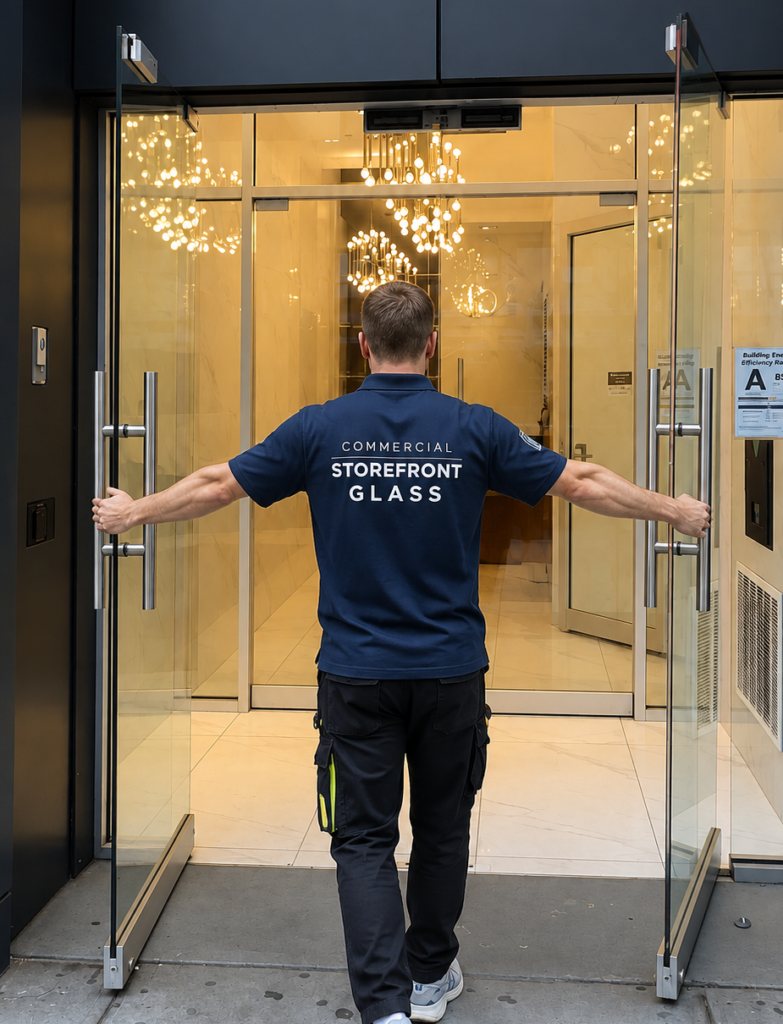
Commercial Storefront Glass

Repair vs Replacement vs Installation

The Commercial Glass Decision Guide

Commercial glazing projects rarely begin with the same objective.

Some buildings need immediate repairs after unexpected damage.

Others have aging storefronts that no longer perform efficiently.

New developments require complete glazing systems from the ground up.

The question isn’t simply whether commercial glass should be repaired or replaced.

The real decision is determining which investment creates the greatest long-term value.

Whether managing office towers in San Francisco, technology campuses in San Jose, biotechnology facilities in Redwood City, retail centers in Walnut Creek, or advanced manufacturing properties in Fremont, choosing the right approach affects operating costs, tenant satisfaction, energy efficiency, and long-term property performance.

Rather than viewing these as competing services, successful ownership groups evaluate repair, replacement, and installation as different stages within the lifecycle of a commercial building.
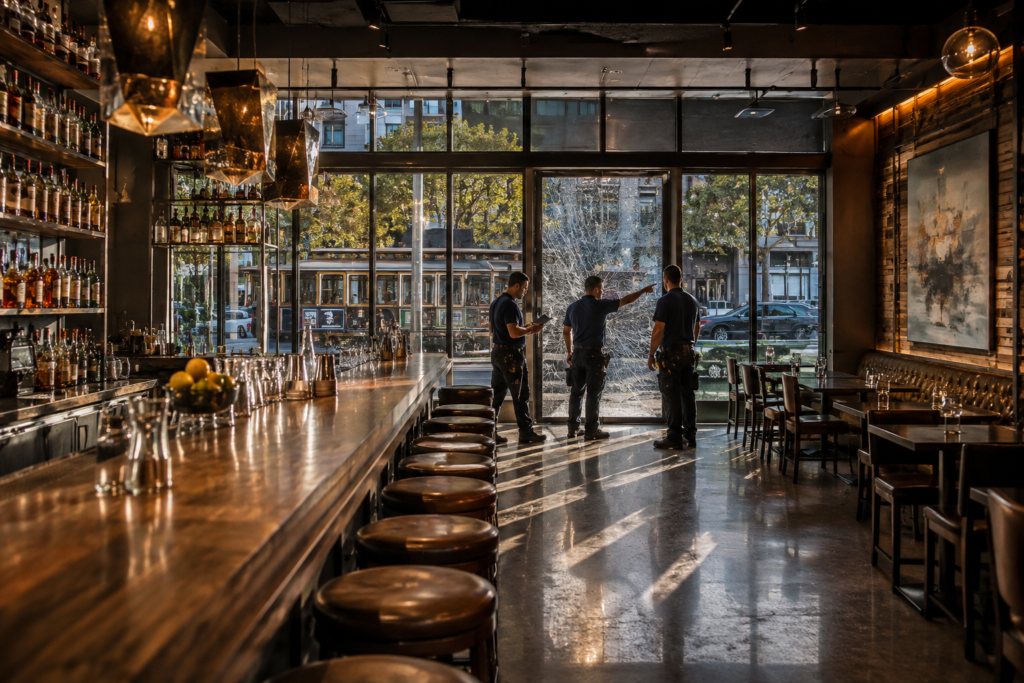
✓ Repair extends existing systems

✓ Replacement modernizes aging assets

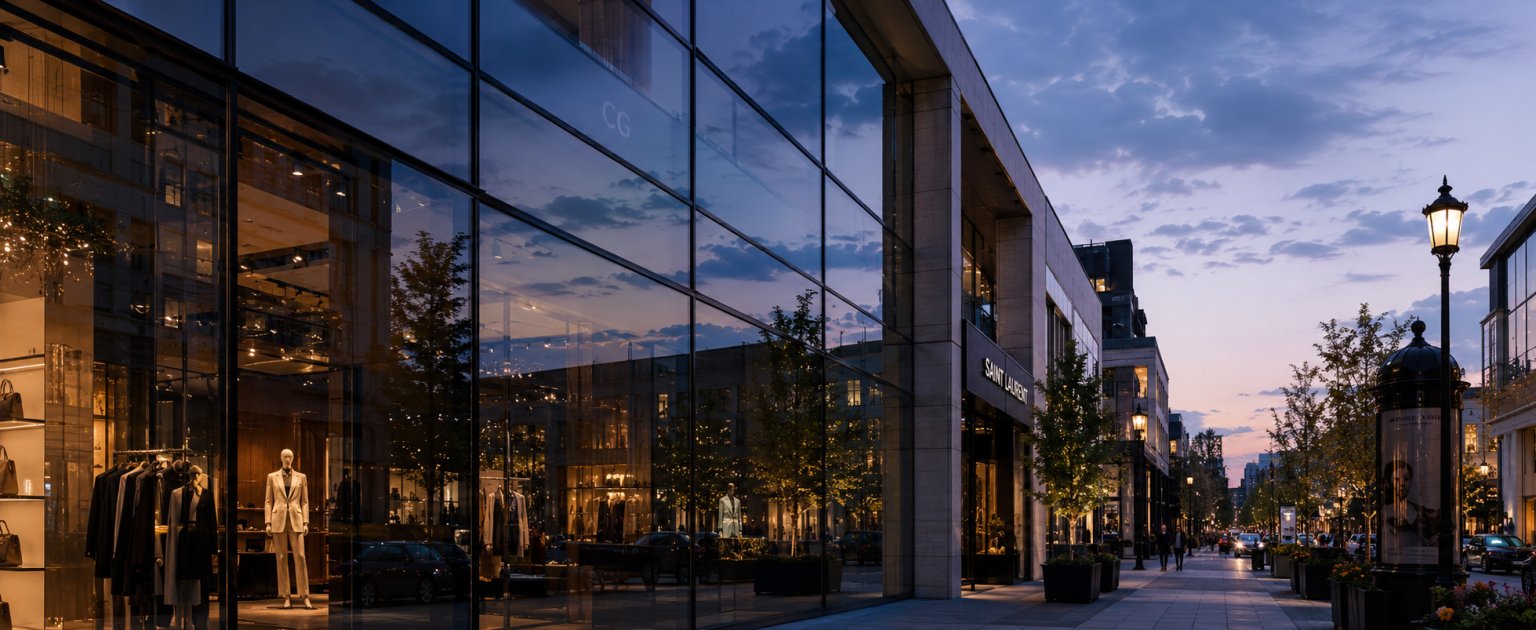
✓ Installation supports new commercial development

✓ Building condition determines the correct strategy

commercial window repair glass storefront replacement glazing company (26)

The Three Commercial Glass Strategies

Every commercial glazing project generally falls into one of three categories.

Commercial Glass Repair

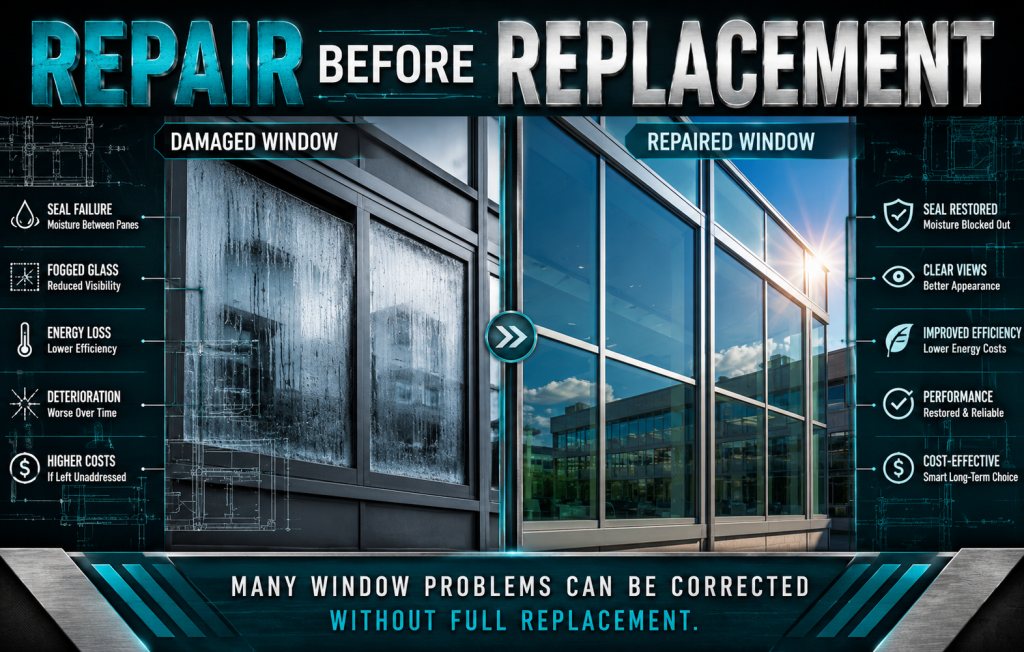
Best for buildings where the overall glazing system remains structurally sound.

Typical projects include:

  • Broken storefront glass
  • Seal failure repairs
  • Door hardware replacement
  • Commercial window repair
  • Aluminum framing repairs

Repairs typically offer:

✓ Lowest upfront investment

✓ Fastest completion

✓ Minimal business disruption

✓ Extended service life

commercial window repair glass storefront replacement glazing company (20)

Commercial Glass Replacement

Replacement becomes appropriate when glazing systems have reached the end of their useful life.

Typical replacement projects include:

  • Storefront replacement
  • Commercial window replacement
  • Curtain wall modernization
  • Glass entrance replacement
  • Building envelope upgrades

Replacement commonly improves:

✓ Energy efficiency

✓ Property appearance

✓ Operating costs

✓ Tenant satisfaction

Commercial Glass Installation

Installation focuses on entirely new construction or major redevelopment.

Typical projects include:

  • New storefront systems
  • Curtain walls
  • Corporate campuses
  • Mixed-use developments
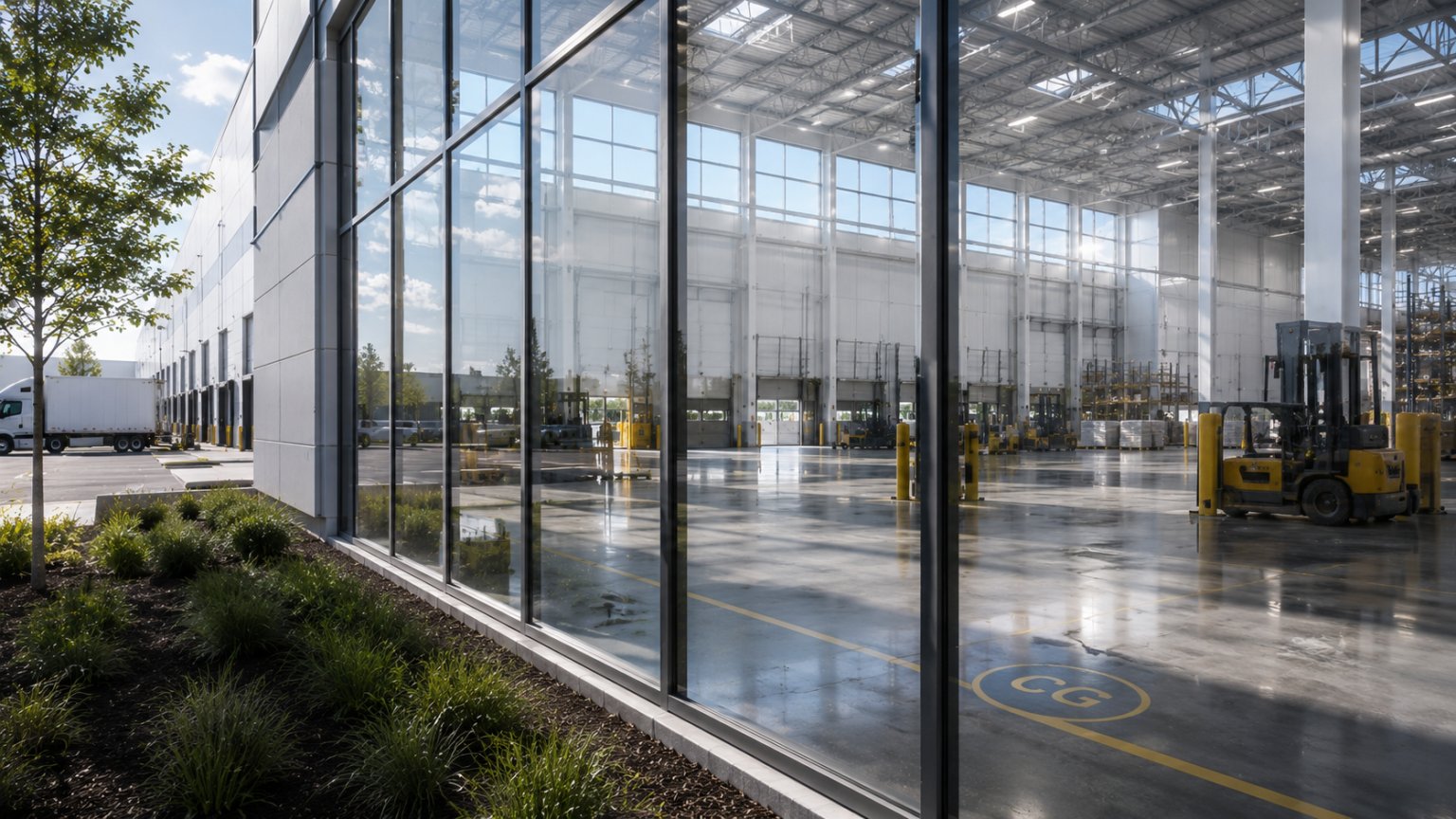
  • Industrial facilities
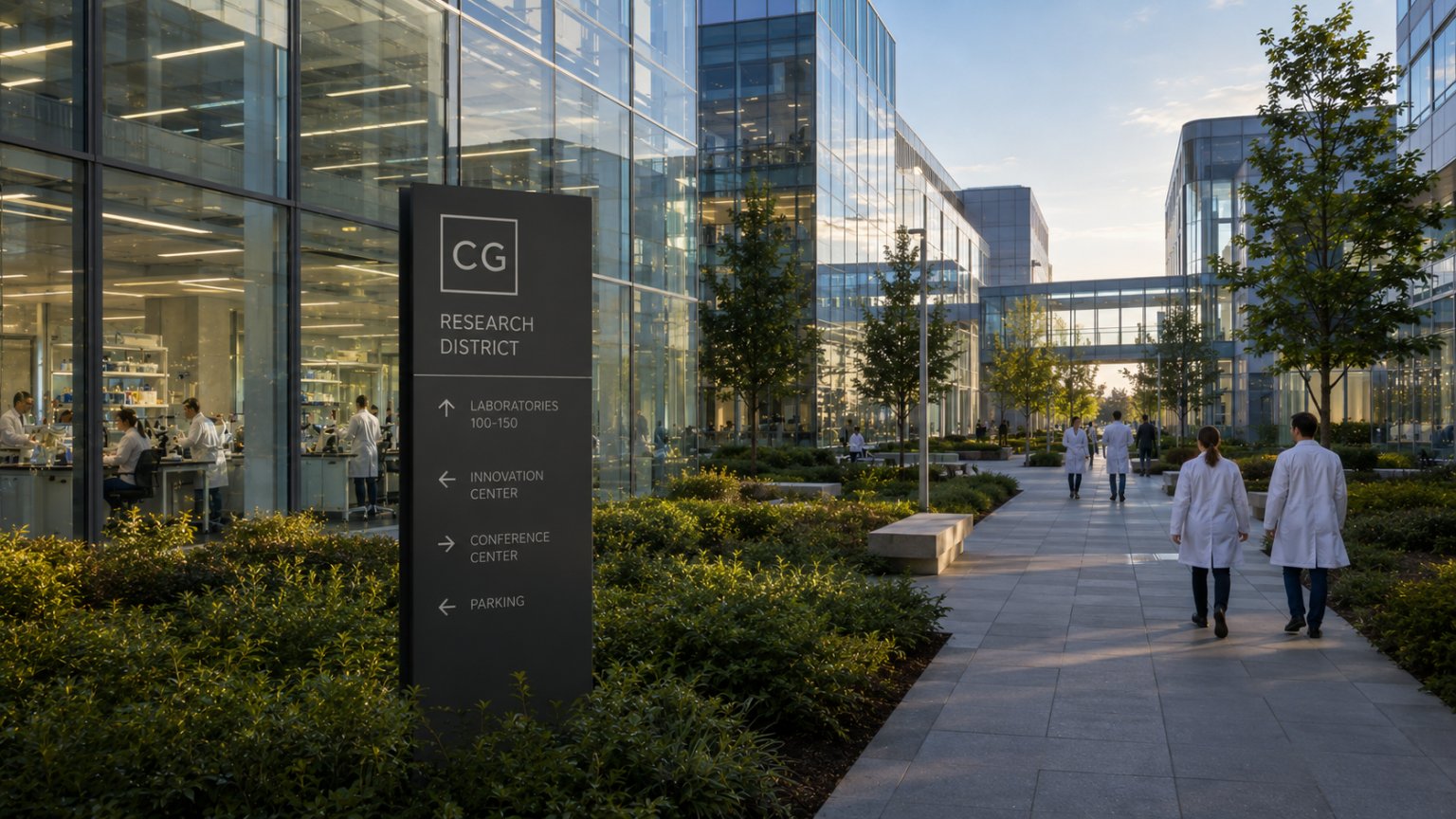
  • Healthcare buildings

Installation creates opportunities for:

✓ Modern building performance

✓ Architectural flexibility

✓ Current building code compliance

✓ Long-term lifecycle value

A Commercial Owner’s Decision Matrix

The best solution often depends less on the glass itself and more on the overall condition of the property.

Building Situation

Recommended Strategy

One broken pane

Repair

Localized seal failure

Repair

Aging storefront with repeated issues

Replacement

High operating costs

Replacement

Major tenant improvement

Replacement or Installation

New commercial development

Installation

Ground-up construction

Installation

Complete property repositioning

Installation

Rather than treating every problem the same way, experienced commercial property owners evaluate the entire building before making a decision.

commercial window repair glass storefront replacement glazing company (18)

Understanding The Commercial Building Lifecycle

Commercial glazing evolves alongside the building itself.

Early Years (0–10 Years)

The focus is on maintenance.

Most projects involve:

✓ Hardware adjustments

✓ Minor repairs

✓ Preventive maintenance

Mid-Life (10–25 Years)

Performance begins changing.

Owners often evaluate:

✓ Glass replacement

✓ Seal failures

✓ Energy improvements

✓ Tenant renovations

Mature Buildings (25–40+ Years)

Capital planning becomes increasingly important.

Projects frequently include:

✓ Storefront replacement

✓ Curtain wall modernization

✓ Building envelope improvements

✓ Complete system upgrades

Throughout this lifecycle, different glazing strategies become appropriate at different times.

Questions Every Property Owner Should Ask

Before beginning any commercial glazing project, ownership groups should evaluate several key factors.

✓ Is the framing still structurally sound?

✓ How old is the glazing system?

✓ Have repair costs increased each year?

✓ Are tenants requesting improvements?

✓ Has energy consumption increased?

✓ Does the building still meet current performance expectations?

✓ Will future renovations affect today’s decision?

Answering these questions often makes the correct path much clearer.

Common Mistakes Commercial Owners Make

Many unnecessary expenses occur because projects are approached too narrowly.

Common mistakes include:

✗ Replacing glass when framing has failed

✗ Repairing systems that have exceeded their useful life

✗ Ignoring recurring seal failures

✗ Delaying capital improvements for too long

✗ Evaluating upfront cost instead of lifecycle value

Successful commercial properties rarely focus on the least expensive option.

They focus on the option that performs best over time.

New York City Markets Driving Every Project Type

Different commercial markets naturally create different glazing demands.

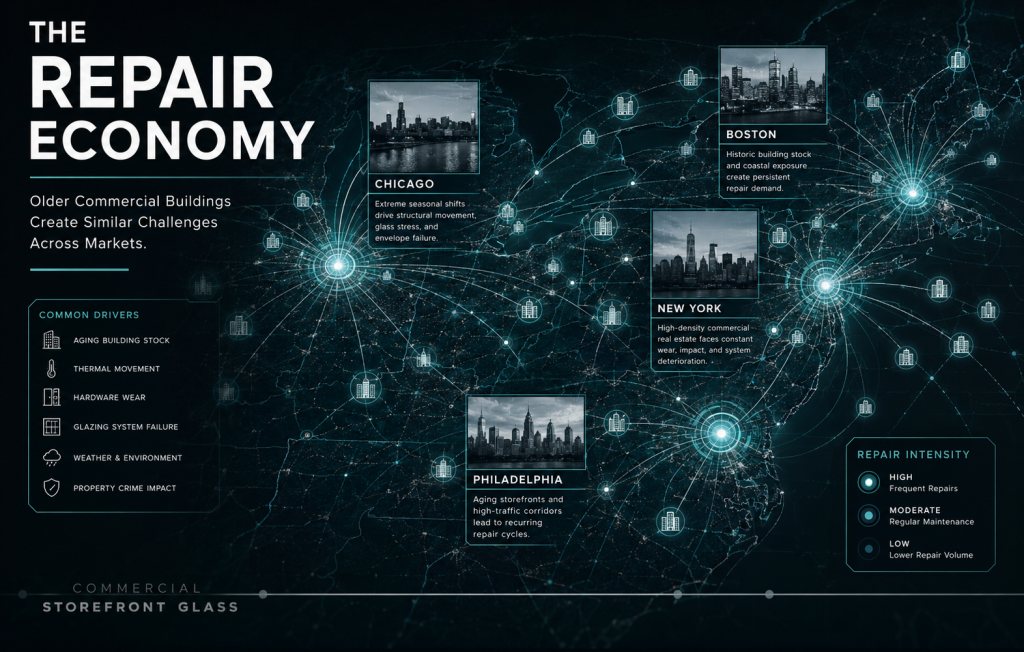
Repair activity remains especially common throughout Manhattan, Brooklyn, the Bronx, Long Island City, and Jersey City’s established commercial districts, where aging office towers, retail corridors, and mixed-use buildings require continuous maintenance.

Replacement projects continue expanding across Midtown East, Downtown Brooklyn, Long Island City, White Plains, Yonkers, and Stamford as commercial properties modernize aging storefronts, office buildings, and hospitality assets.

New installation remains strongest throughout Hudson Yards, Manhattan West, Long Island City, Brooklyn Waterfront developments, Jersey City, and emerging life science districts, where commercial redevelopment, corporate expansion, and mixed-use construction continue reshaping the region.

Together, these markets illustrate how every stage of the commercial building lifecycle contributes to ongoing demand for professional glazing services.

Regional Commercial Drivers

New York County (Manhattan)

Manhattan remains one of the world’s premier commercial real estate markets, generating continuous demand for office tower modernization, hospitality renovations, retail improvements, and curtain wall upgrades.

Commercial activity spans Midtown, the Financial District, Hudson Yards, Chelsea, SoHo, Tribeca, and the Upper West Side.

Common priorities include:

✓ Office tower modernization

✓ Curtain wall replacement

✓ Retail storefront upgrades

✓ High-performance building envelopes

Kings County (Brooklyn)

Brooklyn continues evolving through mixed-use redevelopment, healthcare expansion, creative office space, and neighborhood commercial investment.

Commercial activity extends throughout Downtown Brooklyn, Williamsburg, DUMBO, Industry City, Sunset Park, Greenpoint, and surrounding business districts.

Common priorities include:

✓ Mixed-use redevelopment

✓ Storefront modernization

✓ Adaptive reuse

✓ Commercial window replacement

Queens County

Queens supports one of the region’s fastest-growing commercial economies through aviation, logistics, healthcare, technology, and life science investment.

Commercial activity remains active throughout Long Island City, Flushing, Jamaica, Astoria, Maspeth, and surrounding commercial corridors.

Common priorities include:

✓ New commercial construction

✓ Corporate expansion

✓ Healthcare modernization

✓ High-performance glazing

Bay Area Markets Driving Every Project Type

Different commercial markets naturally create different glazing demands.

Repair activity remains especially common throughout established commercial districts in San Francisco, Berkeley, Oakland, Richmond, and San Mateo.

Replacement projects continue expanding across Walnut Creek, Pleasanton, Concord, Santa Rosa, Burlingame, and Petaluma as aging commercial inventory undergoes modernization.

New installation remains strongest throughout San Jose, Fremont, Santa Clara, Sunnyvale, Mountain View, Palo Alto, Redwood City, and South San Francisco, where corporate expansion, biotechnology investment, advanced manufacturing, and mixed-use development continue reshaping the region.

Together, these markets illustrate how every stage of the commercial building lifecycle contributes to ongoing demand for professional glazing services.

Regional Commercial Drivers

Santa Clara County

Silicon Valley continues generating one of the nation’s highest concentrations of new commercial construction.

Cities including San Jose, Santa Clara, Sunnyvale, Mountain View, Cupertino, Milpitas, Campbell, Los Gatos, Morgan Hill, and Palo Alto frequently emphasize installation projects alongside major tenant improvements.

Common priorities include:

✓ Corporate expansion

✓ Research facilities

✓ Workplace modernization

✓ High-performance building envelopes

Alameda County

Alameda County combines established commercial districts with large redevelopment projects.

Commercial activity extends across Oakland, Fremont, Berkeley, Pleasanton, Livermore, Dublin, Newark, Hayward, Alameda, and San Leandro.

Common priorities include:

✓ Repair

✓ Storefront replacement

✓ Mixed-use redevelopment

✓ Industrial modernization

San Mateo County

San Mateo County continues investing heavily in biotechnology, corporate headquarters, hospitality, and healthcare facilities.

Commercial activity remains active throughout Redwood City, San Mateo, South San Francisco, Burlingame, Foster City, Menlo Park, San Carlos, Belmont, and Millbrae.

Common priorities include:

✓ Building envelope modernization

✓ Corporate renovations

✓ Laboratory upgrades

✓ High-performance glazing

Los Angeles Markets Driving Every Project Type

Different commercial markets naturally create different glazing demands.

Repair activity remains especially common throughout Downtown Los Angeles, Hollywood, Santa Monica, Pasadena, and Long Beach, where aging commercial buildings, retail districts, and hospitality properties require ongoing maintenance.

Replacement projects continue expanding across Glendale, Burbank, Torrance, Culver City, El Segundo, and Beverly Hills as office buildings, hotels, and retail properties undergo modernization.

New installation remains strongest throughout Century City, Playa Vista, Irvine, Costa Mesa, Orange County, and the South Bay, where entertainment, technology, healthcare, and mixed-use development continue driving commercial construction.

Together, these markets illustrate how every stage of the commercial building lifecycle contributes to ongoing demand for professional glazing services.

commercial window repair glass storefront replacement glazing company (24)

Regional Commercial Drivers

Los Angeles County

Los Angeles County supports one of the largest commercial building inventories in the country, ranging from entertainment campuses and office towers to healthcare systems and logistics facilities.

Common priorities include:

✓ Office modernization

✓ Hospitality renovations

✓ Storefront replacement

✓ Curtain wall upgrades

Orange County

Orange County continues attracting technology companies, healthcare providers, financial services, and master-planned commercial development.

Commercial activity extends throughout Irvine, Costa Mesa, Newport Beach, Anaheim, Orange, and Huntington Beach.

Common priorities include:

✓ Corporate campus expansion

✓ Office improvements

✓ Mixed-use construction

✓ High-performance glazing

Riverside County

Riverside County continues experiencing rapid industrial, logistics, healthcare, and commercial growth throughout the Inland Empire.

Common priorities include:

✓ Industrial development

✓ Distribution facilities

✓ Commercial storefront installation

✓ New commercial construction

Dallas Markets Driving Every Project Type

Different commercial markets naturally create different glazing demands.

Repair activity remains especially common throughout Downtown Dallas, Irving, Arlington, Garland, and Mesquite, where established office buildings and retail centers require continuous modernization.

Replacement projects continue expanding across Plano, Richardson, Addison, Carrollton, and Grand Prairie as commercial corridors evolve alongside corporate relocation.

New installation remains strongest throughout Frisco, McKinney, Allen, Prosper, Las Colinas, and North Dallas, where headquarters relocations, mixed-use development, and corporate expansion continue reshaping North Texas.

Together, these markets illustrate how every stage of the commercial building lifecycle contributes to ongoing demand for professional glazing services.

Regional Commercial Drivers

Dallas County

Dallas County remains one of America’s strongest office, healthcare, hospitality, and commercial construction markets.

Common priorities include:

✓ Office tower modernization

✓ Tenant improvements

✓ Commercial redevelopment

✓ Building envelope upgrades

Collin County

Collin County continues leading North Texas in corporate expansion and commercial development.

Commercial activity extends throughout Plano, Frisco, McKinney, Allen, Prosper, and surrounding business districts.

Common priorities include:

✓ Corporate headquarters

✓ New commercial construction

✓ Workplace modernization

✓ High-performance glazing

Tarrant County

Tarrant County supports manufacturing, logistics, healthcare, aviation, and commercial office growth centered around Fort Worth and Arlington.

Common priorities include:

✓ Industrial modernization

✓ Distribution facilities

✓ Retail development

✓ Commercial storefront systems

Miami Markets Driving Every Project Type

Different commercial markets naturally create different glazing demands.

Repair activity remains especially common throughout Downtown Miami, Little Havana, Coral Gables, Hialeah, and Fort Lauderdale, where coastal exposure and aging commercial inventory create steady maintenance demand.

Replacement projects continue expanding across Doral, Hollywood, Aventura, Boca Raton, and West Palm Beach as hospitality, office, and retail properties modernize aging glazing systems.

New installation remains strongest throughout Brickell, Wynwood, Miami Worldcenter, Sunny Isles Beach, Edgewater, and emerging mixed-use districts, where luxury residential towers, hotels, and corporate investment continue transforming South Florida.

Together, these markets illustrate how every stage of the commercial building lifecycle contributes to ongoing demand for professional glazing services.

Regional Commercial Drivers

Miami-Dade County

Miami-Dade County remains one of the nation’s fastest-growing commercial construction markets, driven by international business, hospitality, healthcare, and mixed-use development.

Common priorities include:

✓ Hurricane-resistant glazing

✓ High-rise construction

✓ Hospitality modernization

✓ Building envelope performance

Broward County

Broward County supports a diverse commercial economy built around healthcare, marine industries, logistics, office space, and retail.

Commercial activity extends throughout Fort Lauderdale, Hollywood, Pembroke Pines, Miramar, and surrounding markets.

Common priorities include:

✓ Commercial redevelopment

✓ Storefront modernization

✓ Office renovations

✓ Coastal building performance

Palm Beach County

Palm Beach County continues attracting healthcare investment, corporate offices, hospitality, and luxury mixed-use development.

Commercial activity remains active throughout West Palm Beach, Boca Raton, Delray Beach, Jupiter, and Palm Beach Gardens.

Common priorities include:

✓ Office expansion

✓ Hospitality improvements

✓ Commercial storefront systems

✓ High-performance glazing

dallas vs houston — shopping center upgrades and property repositioning commercial storefront glass replacement (2)

Which Investment Creates The Greatest Long-Term Value?

Repair.

Replacement.

Installation.

Each serves a different purpose.

The best commercial glazing strategy depends on the condition of the building, the owner’s long-term objectives, lifecycle costs, tenant expectations, and future capital planning.

Across San Francisco, San Jose, Fremont, Redwood City, Walnut Creek, Oakland, Pleasanton, Santa Rosa, Napa, and commercial markets throughout the Bay Area, successful commercial properties rarely ask which service is best.

They ask which solution is right today, while positioning the building for the next twenty years.

That perspective transforms commercial glazing from a maintenance expense into a long-term investment, connecting directly to building envelope performance, tenant improvements, energy efficiency, property modernization, lifecycle planning, and commercial real estate value.

917 383 0795