

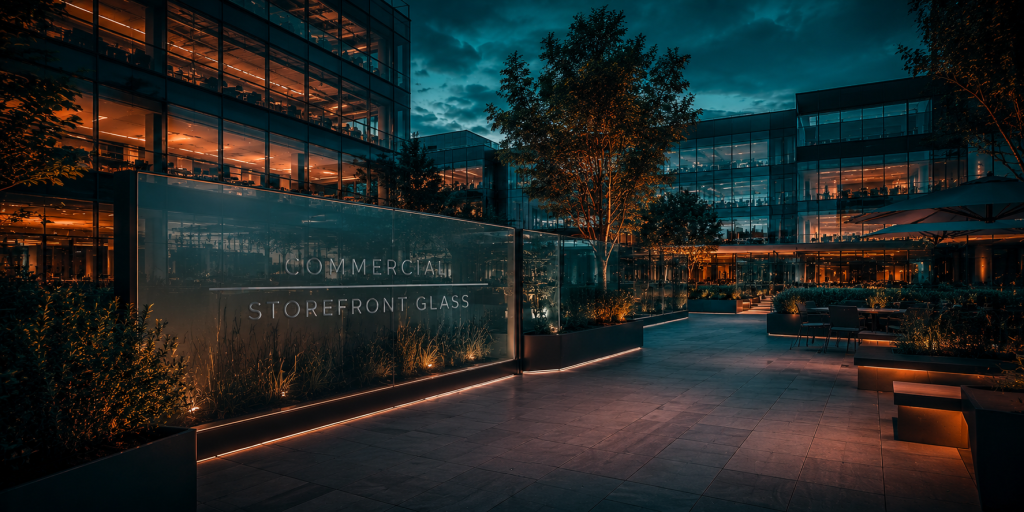
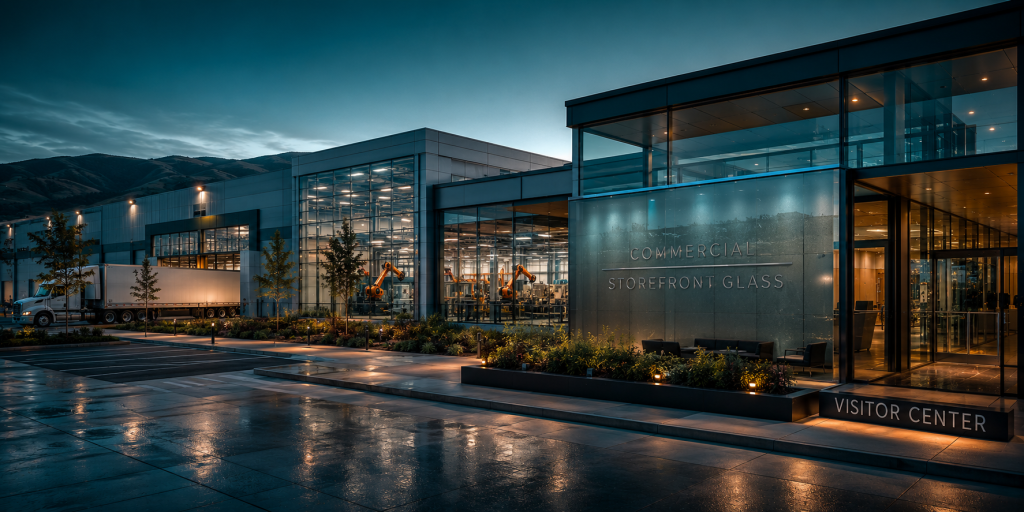
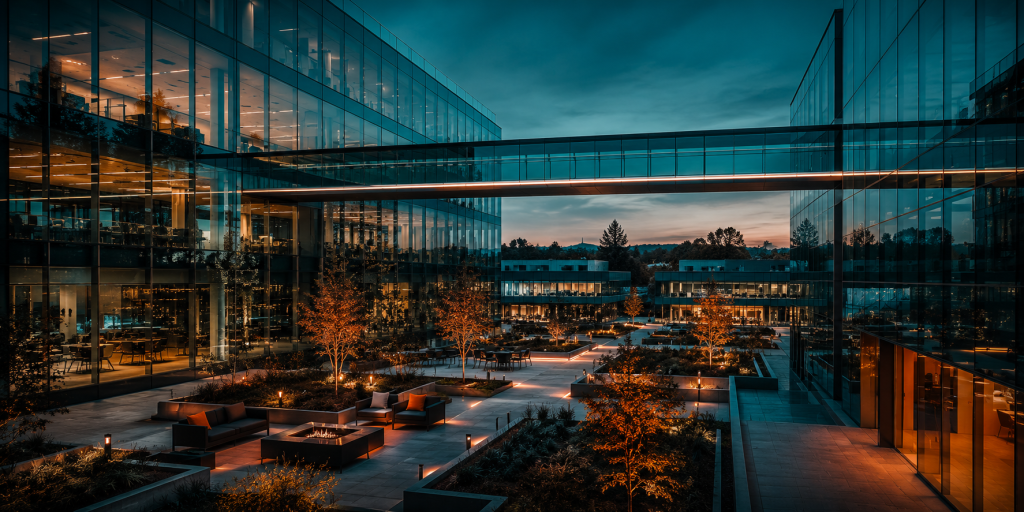
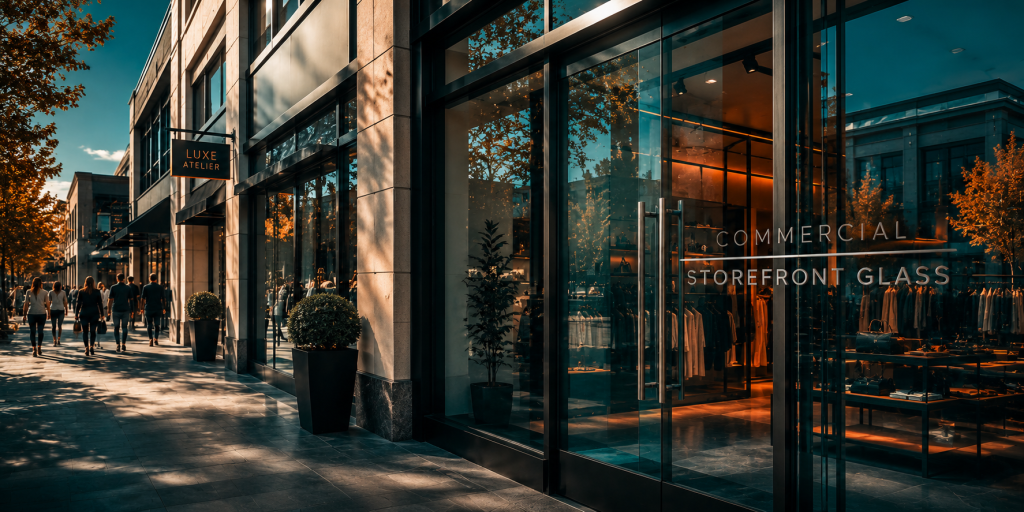
Commercial properties throughout the Bay Area face unique demands.
Dense urban corridors require visibility.
Technology campuses prioritize modern design.
Retail centers depend on customer engagement.
Mixed-use developments continue to reshape commercial districts.
As a result, commercial glass systems play a critical role in building performance, tenant attraction, and property modernization.
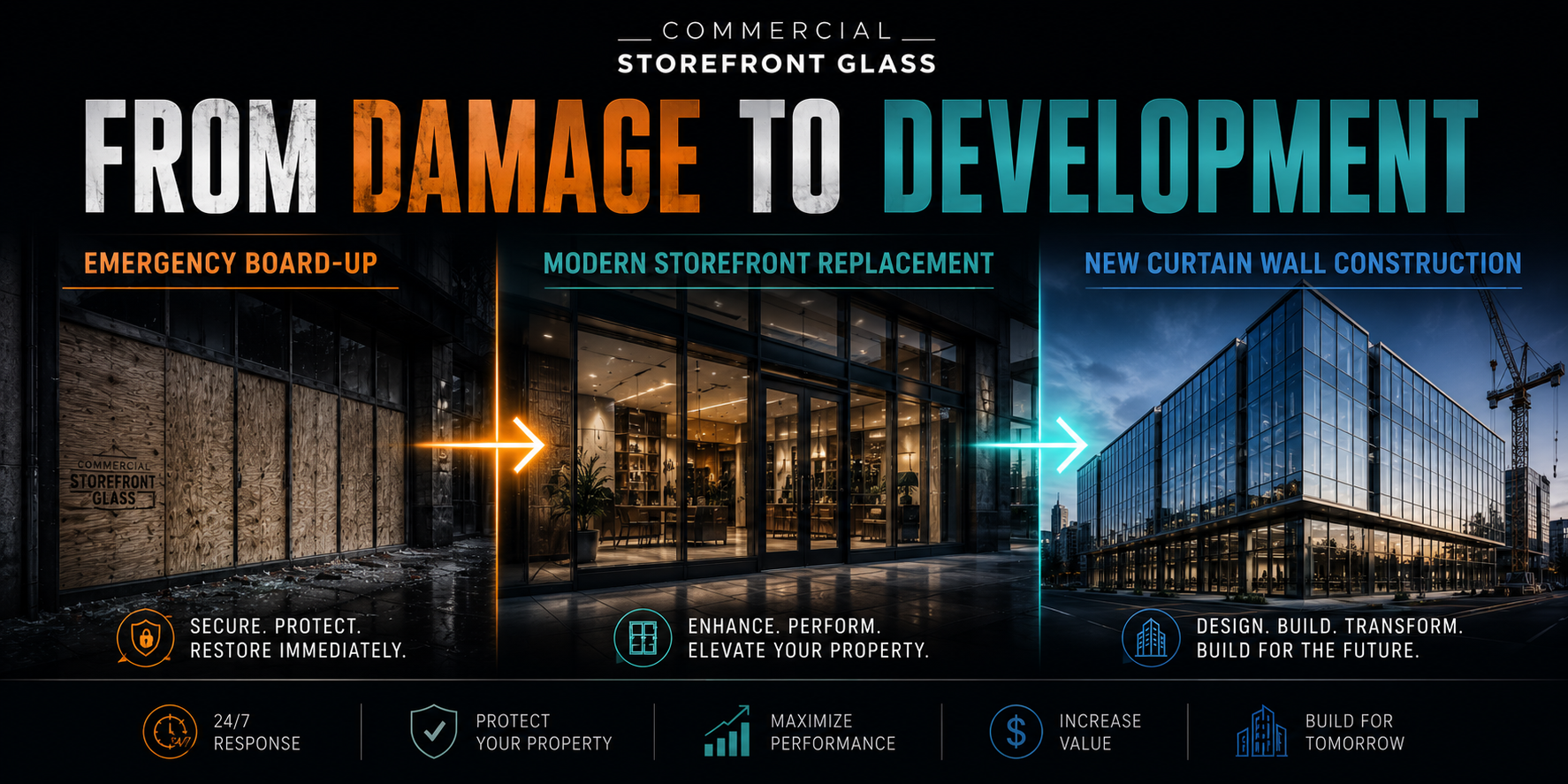
Repair vs Replacement vs Installation Bay Area
The General Contractor (GC) Perspective
How They Perceive It: The GC views commercial glazing projects across the SF Bay Area as an intricate balancing act between some of the nation’s most stringent building codes and punishing logistical constraints. From the zero-lot-line urban corridors of San Francisco and Oakland down through Silicon Valley corporate campuses, the GC must engineer for aggressive Title 24 envelope energy mandates, high lateral seismic inter-story drift calculations, and coastal marine-layer moisture infiltration. Permitting timelines can be notoriously sluggish, crane staging and sidewalk-closure permits (such as SFMTA) require lengthy lead times, and union trade coordination demands rigid scheduling to prevent costly delays.
Decisions They Normally Make:
Treats standard storefront extrusions as universally compliant: Re-uses standard anodized commercial storefront profiles across projects without verifying whether local municipal reach codes or bird-safe glazing ordinances mandate specific visual markers or tighter overall assembly U-factors.
Compresses field-measurement timelines against framing: Pressures framing crews and the glazing sub to pull dimensions from incomplete rough openings to beat the schedule, resulting in expensive misfits, field-trimming, or rejected shop drawings.
Neglects seismic drift allowances at perimeter joints: Anchors storefront framing rigidly to concrete or structural steel substrates without providing adequate slotted clips or dynamic perimeter caulking joints capable of absorbing localized fault-line ground movement.
Decisions They SHOULD Make:
Engage the glazing contractor during early pre-construction: Align shop drawings with base-building structural movement criteria, ensuring framing clips, expansion joints, and perimeter air/vapor barriers meet seismic drift limits and Title 24 envelope standards.
Lock down rough openings early and verify with 3D laser scanning: Coordinate with dry-in trades to finalize opening tolerances weeks in advance so custom insulated glass units (IGUs) and thermally broken frames can be fabricated without holding up the critical-path Certificate of Occupancy (CO).
Submit logistical, crane, and right-of-way permits 60–90 days ahead: Account for Bay Area transit agency coordination, pedestrian canopy requirements, and tight delivery windows to keep urban job sites safe, compliant, and citation-free.
- Tenant Improvement Contractors
- Tenant Improvement Construction
- Tenant Improvement Build Outs
- Tenant Improvement Remodeling
- Tenant Improvement Renovations
- Commercial Tenant Improvement Services
- Office Tenant Improvement Contractor
The Commercial Tenant Perspective
How They Perceive It: The Bay Area commercial tenant (tech workspace, flagship retail boutique, specialty café, or life-science facility) views the storefront facade through the lenses of brand identity, indoor comfort, and asset protection. They need natural daylighting that supports employee well-being and showcases merchandise, along with seamless acoustic isolation to buffer streetcars, BART lines, and urban street noise. At the same time, they are acutely aware of regional microclimates—where mornings bring cold, damp fog and afternoons bring direct sun—as well as ongoing concerns regarding property security and break-ins in high-density commercial corridors.
Decisions They Normally Make:
Pushes for maximum transparency without acoustic or thermal safeguards: Chooses standard dual-pane glass to save initial Tenant Improvement (TI) budget, only to deal with chilly interior drafts, excessive street noise disrupting meetings, and soaring heating bills.
Skips forced-entry protection until an incident occurs: Leaves clear tempered glass unprotected by security laminates or anti-graffiti sacrificial films, leading to costly emergency board-ups, disrupted operations, and high insurance deductibles after vandalism or smash-and-grab attempts.
Overlooks landlord lease demarcations regarding perimeter glass: Signs commercial leases assuming the property management company covers all exterior glass maintenance, seal failures, and frame repairs, only to discover those costs fall directly on the tenant under triple-net (NNN) terms.
Decisions They SHOULD Make:
Invest in multi-layer laminated security glass with exterior sacrificial film: Enhance baseline IGUs with acoustic/impact-resistant laminated interlayers (achieving STC ratings of 38+) and replace-ready exterior film to simultaneously mitigate urban street noise and stop forced-entry attempts.
Specify spectrally selective, thermally broken assemblies: Pair high-performance low-E coatings with modern thermally broken aluminum frames to maintain comfortable indoor temperatures against chilly marine-layer drafts while cutting HVAC runtimes.
Clarify storefront and envelope maintenance clauses upfront: Review lease terms during initial negotiations to delineate clearly who is responsible for broken glass, hardware servicing, and exterior weather seals before finalizing the TI buildout scope.
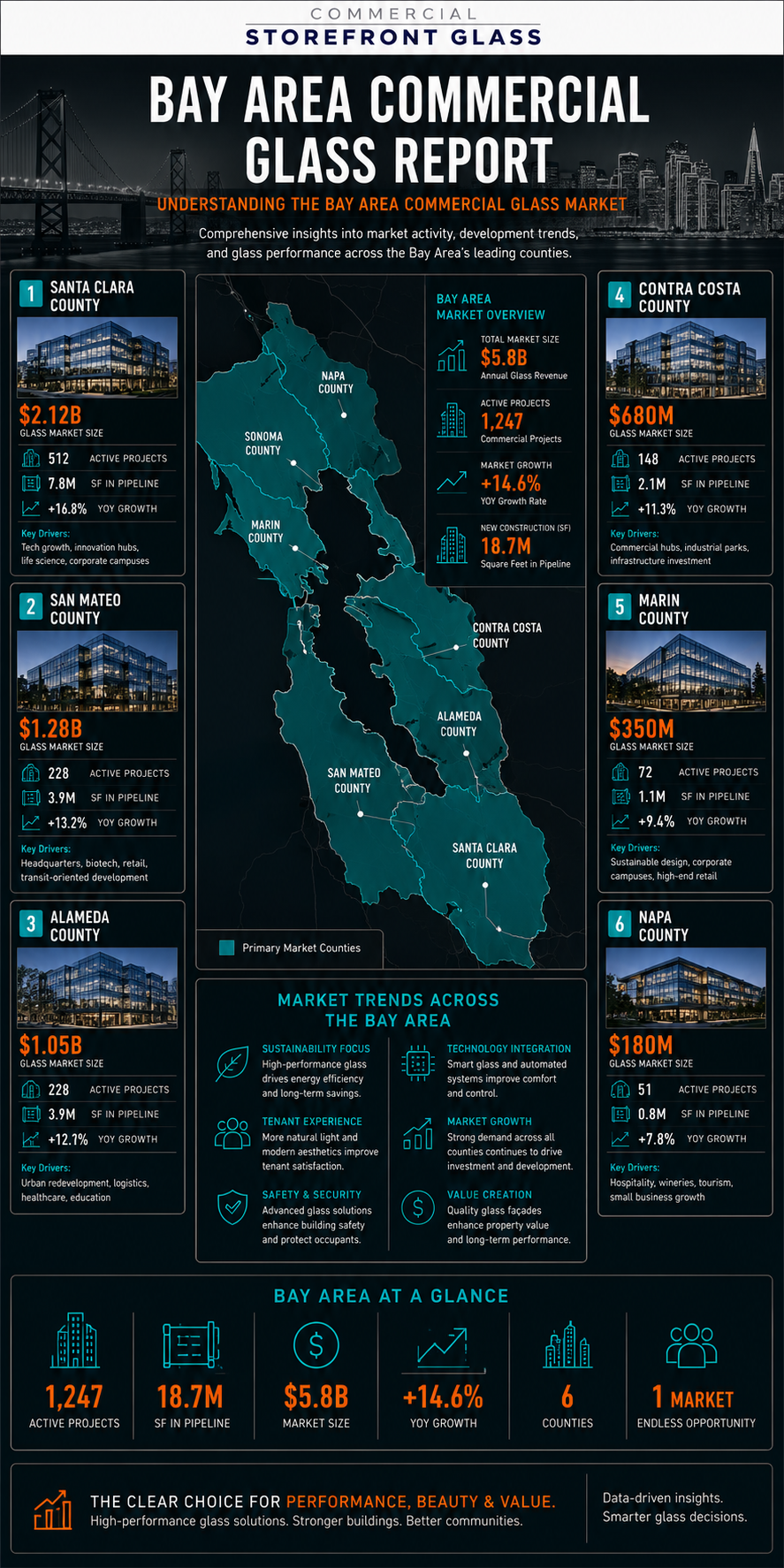
The Bay Area comprises nine counties and is home to one of the nation’s most diverse commercial construction and property markets. From Silicon Valley technology campuses and life science research facilities to urban redevelopment districts, industrial logistics hubs, healthcare systems, hospitality destinations, and luxury mixed-use developments, each county presents unique building performance challenges and commercial glazing opportunities. Explore every county below to learn more about its commercial property trends, storefront systems, building envelope performance, and modernization activity.
- Alameda County
- Contra Costa County
- Marin County
- Napa County
- San Francisco County
- San Mateo County
- Santa Clara County
- Solano County
- Sonoma County
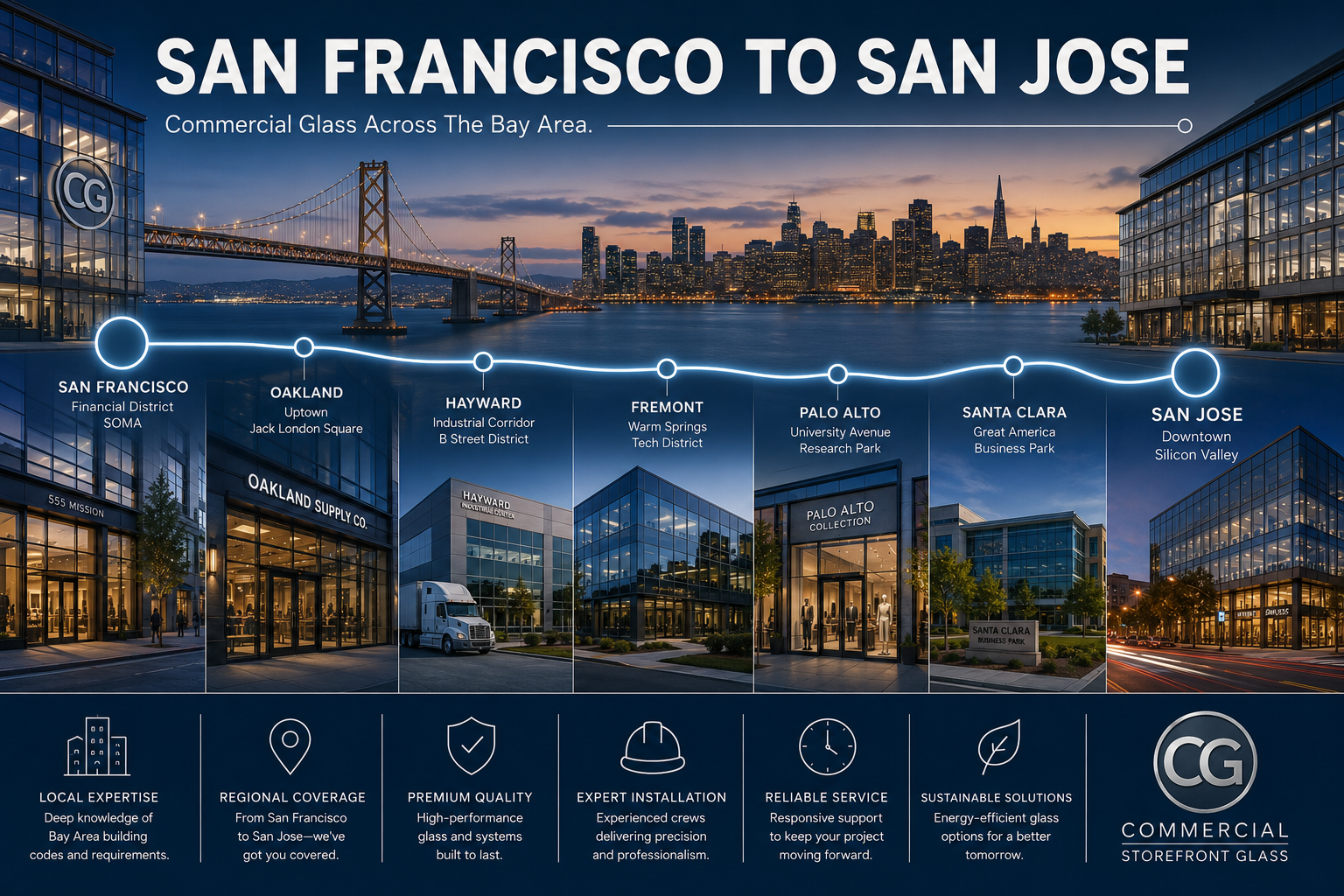
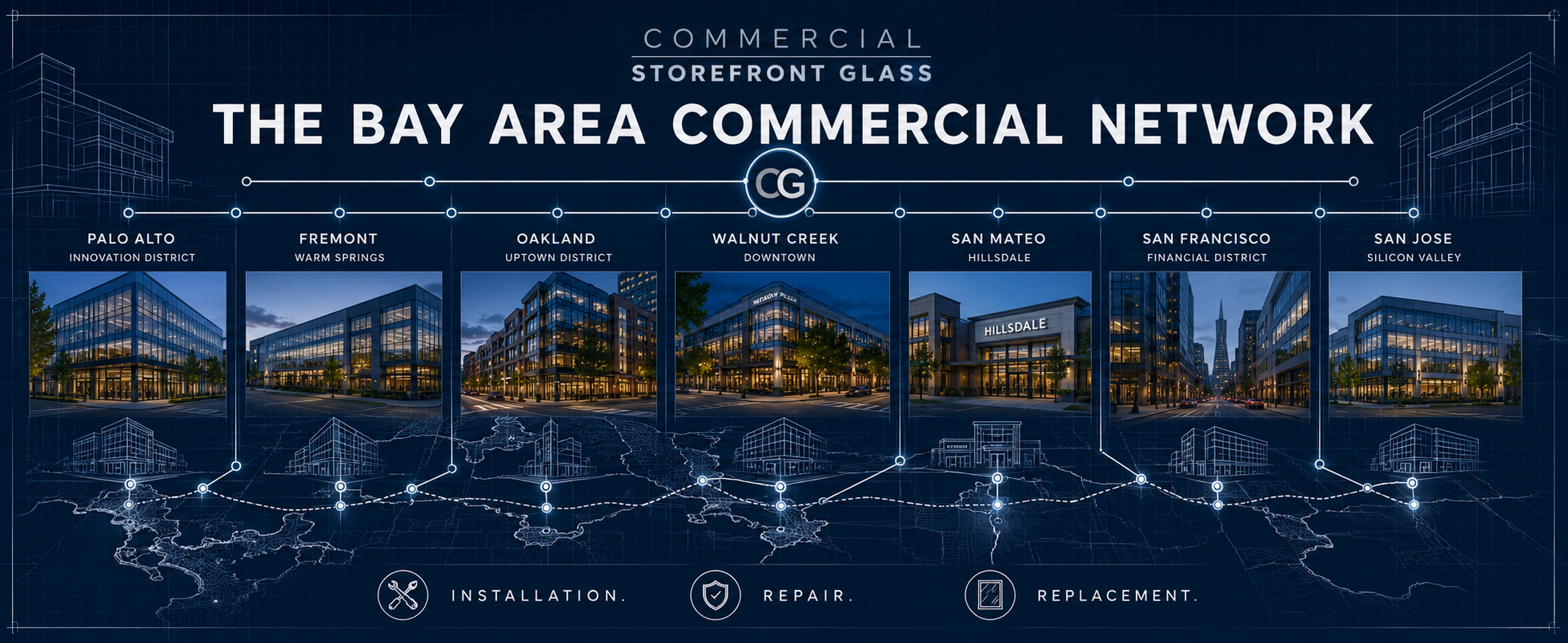
From San Francisco to San Jose, commercial glass services help support the appearance, functionality, and long-term value of commercial properties.

The highest-intent zones in the region. These locations feature dense inventories of street-facing retail or older commercial assets, high rates of property crime/vandalism, and severe retail vacancy pressures, driving patch-and-repair mandates.
1. San Francisco – The definitive top market. Enormous inventory of older commercial stock, historic high-rise glazing, severe ground-floor storefront property crime/smash-and-grabs, and high vacancy rates forcing property managers to preserve capital over full replacements.
2. Oakland – Exceptionally high reactive demand. Massive commercial and industrial footprint combined with intense street-level property crime and vandalism, generating an endless cycle of emergency board-ups and storefront hardware restoration.
3. San Jose – While more sprawling and structurally newer than SF, its massive sheer volume of commercial real estate (downtown core, retail corridors, older business parks) creates the highest absolute baseline volume of repair requests in the South Bay.
4. Berkeley – High density of older, street-facing retail storefronts with legacy framing systems. Persistent property crime, exposure to civil unrest, and older building infrastructure create nonstop hardware exhaustion and glass replacement needs.
5. Richmond – A heavy industrial and older commercial waterfront layout. Strong marine salt-air corrosion rapidly degrades commercial window hardware and seals, compounded by high property crime rates.
6. Vallejo – Older commercial inventory with significant budget constraints for local property managers. High property crime creates a steady demand for reactive storefront patching and security hardening.
7. San Leandro – Dense industrial and commercial transition zone bordering Oakland. Features older warehouse glazing, storefront corridors facing elevated property crime rates, and heavy mechanical wear at the entryway.
8. Hayward – A massive central logistics and retail hub. High volume of commercial glass exposure along major thoroughfares, aging commercial strip malls, and consistent forced-entry repair needs.
9. Concord – The largest commercial hub in Contra Costa County. Older suburban office parks facing IGU seal blowouts due to hot inland summer temperatures, adjacent to high-traffic retail centers.
10. Antioch – Rapidly aging suburban commercial stock. High property-crime profiles and limited capital improvement budgets mean property managers rely heavily on low-cost glass and door hardware repairs.
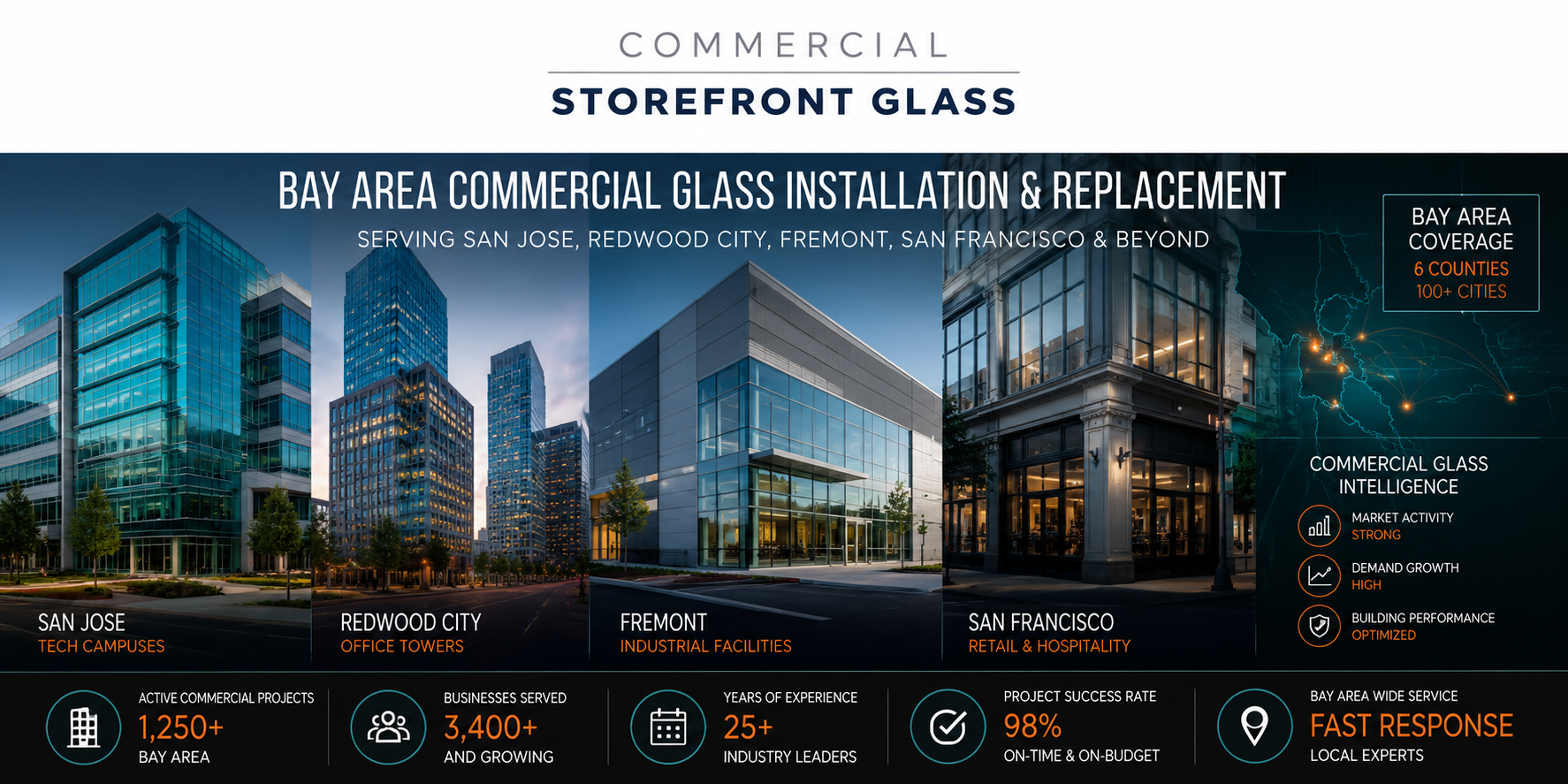
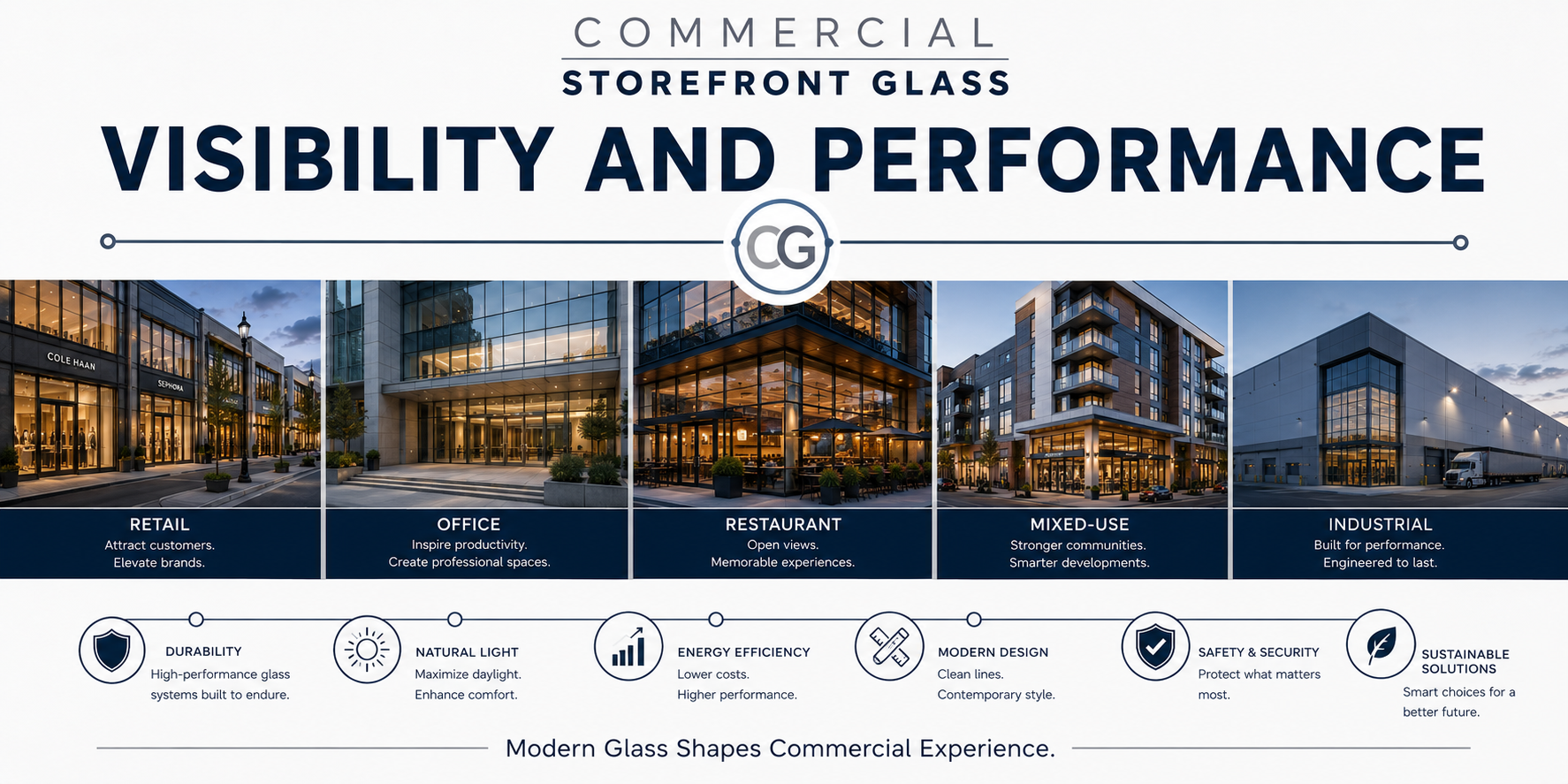
The Bay Area contains one of the most diverse commercial real estate markets in the country.
Technology companies occupy massive corporate campuses.
Healthcare systems continue expanding throughout the region.
Life sciences facilities demand specialized environments.
Industrial and logistics properties support global supply chains.
Because each property type operates differently, commercial glass systems often serve different objectives.
Visibility may be the priority for one project.
Security can become the focus for another.
Building performance frequently influences decision-making across every sector.

Markets are heavily driven by a mix of older mid-rise commercial real estate, heavy-traffic auto/retail rows, and marine environments that rapidly corrode mechanical hardware and blow out insulated glass seals.
11. South San Francisco – The industrial and biotech capital of the Peninsula. Features massive older concrete tilt-ups and mid-rise office labs with extensive glass footprints exposed to punishing, corrosive foggy marine air.
12. San Mateo – High density of older downtown retail storefronts and mid-rise office structures along the El Camino Real corridor, experiencing high mechanical hardware wear.
13. San Rafael – The commercial heartbeat of Marin County. Combines aging downtown storefronts facing localized vandalism with older office complexes suffering from failed thermal window seals.
14. Redwood City – A mix of historic downtown retail and older waterfront industrial spaces. Heavy structural settling in bay-mud zones causes frame deflection and spontaneous glass breakage.
15. Daly City – Dense commercial corridors constantly battered by heavy Pacific coastal fog and high winds, leading to rapid weather-stripping degradation and rampant IGU seal fogging.
16. Fremont – Massive, sprawling industrial, manufacturing, and auto-retail footprint. High absolute volume of heavy-duty commercial glass and large-scale industrial entryway repair needs.
17. Sunnyvale – Silicon Valley core containing older low- and mid-rise R&D parks built in the 1980s and 90s. These legacy campuses are experiencing widespread IGU seal dissipation and hardware exhaustion.
18. Santa Clara – Huge commercial density featuring massive data centers, older business parks, and retail centers with steady programmatic maintenance and glass-hardening needs.
19. Walnut Creek – High-end premier retail and office hub. While property crime is lower than in the urban cores, high-traffic mechanical failures on heavy automatic glass entries and strict aesthetic standards drive rapid repair turnarounds.
20. Fairfield – A major North Bay commercial transit corridor. Extreme inland summer heat bakes out commercial window caulking and sealants, causing rapid breakdown of the thermal barrier.
Large corporate environments often rely on extensive glazing systems.
Natural light contributes to workplace quality.
Architectural design helps shape company identity.
Modern campuses frequently use storefront systems, curtain walls, glass entry systems, and interior glazing to create collaborative environments.
- Repair vs Replacement
- Installation vs Retrofit
- Storefront vs Curtain Wall
- Office Buildings vs Retail Buildings
- Tenant Improvements vs New Construction
- Glass Doors vs Automatic Entrances
- Emergency Response vs Planned Renovations
- High-Rise Systems vs Street-Level Storefronts
- Security Glass vs Decorative Glass
- Energy Efficiency vs Visibility
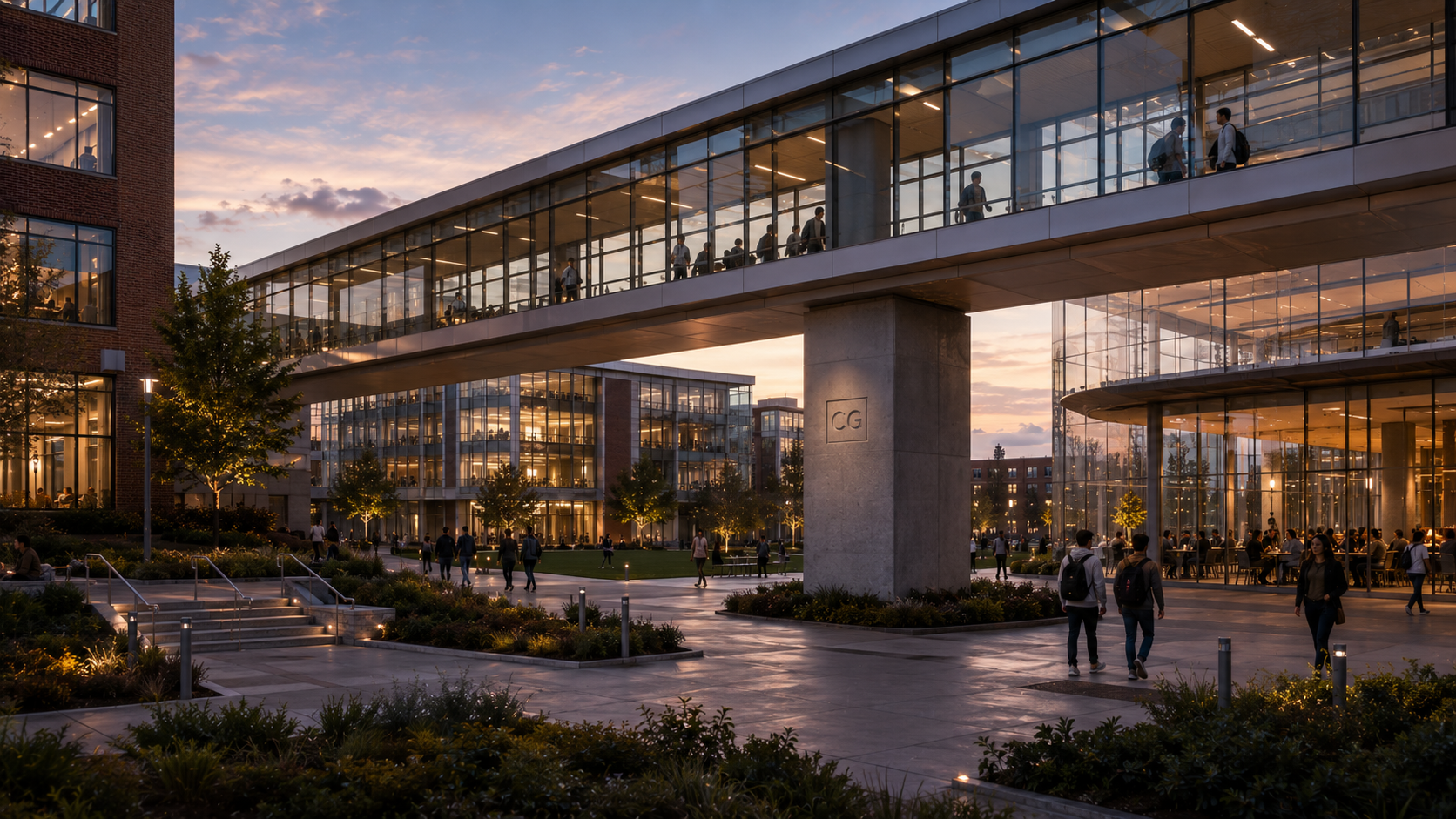
Throughout Silicon Valley and surrounding business districts, glass remains a defining feature of campus development.
1. A Brief History of Commercial Glass in the Bay Area
The Bay Area’s commercial glass industry was forged by two major forces: natural disaster and rapid technological boom.
Following the 1906 San Francisco earthquake, the vulnerability of standard annealed plate glass became terrifyingly clear. Shattered glass rained down on city streets, prompting immediate shifts in building codes and manufacturing. The region became an early testing ground for wire-reinforced glass, advanced structural framing, and seismic joint systems designed to let glass panes “float” and flex within steel building skeletons during tremors.
By the early to mid-20th century, the East Bay established itself as a manufacturing powerhouse. Operations like the massive Owens-Illinois Glass Factory in Oakland (operating from 1936 to 2015) anchored the region’s industrial glass identity.
When the Silicon Valley tech boom took off in the late 20th century, the demand shifted overnight from industrial production to cutting-edge architectural execution. Tech giants demanded sprawling, minimalist, all-glass corporate campuses. This birthed an era of massive, structural glass engineering, pushing the boundaries of what curtain walls, point-supported glass, and glass fin systems could achieve.
- SF Commercial Glass Repair vs San Jose Storefront Replacement
- Oakland Aluminum Storefront vs Fremont Curtain Wall
- Walnut Creek Office Glass vs Pleasanton Storefront Systems
- Redwood City Commercial Glass Doors vs Burlingame Office Glass
- Berkeley Window Replacement vs Oakland Emergency Board-Up
2. Why Commercial Glass Matters Here
In the Bay Area, commercial glass is at the absolute intersection of environmental safety, aggressive climate tech, and high-end corporate identity:
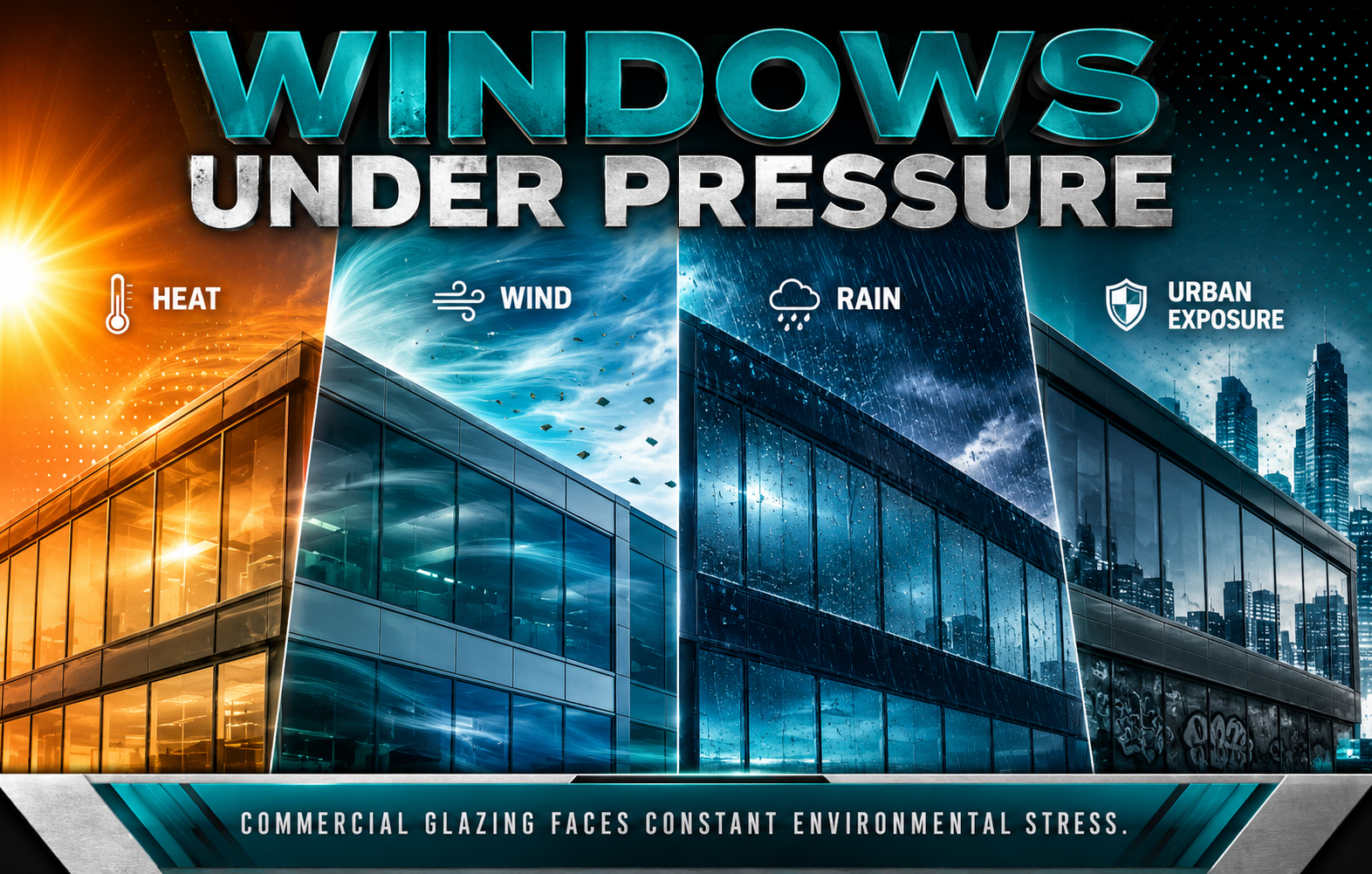
Seismic Engineering & Life Safety: Positioned directly over major fault lines (the San Andreas and Hayward), the Bay Area has some of the strictest structural codes on Earth. Commercial glazing systems must be engineered with advanced seismic dynamic movements to ensure massive glass facades can withstand major lateral shaking without collapsing onto pedestrians.
Aggressive Energy & Carbon Mandates (Title 24): California’s Title 24 energy standards and strict municipal green building codes heavily regulate the building envelope. Commercial glass must utilize advanced double- or triple-pane Insulated Glass Units (IGUs), high-performance low-emissivity (Low-E) soft coatings, and dynamic smart-tinting glass to minimize solar heat gain and slash carbon footprints.
The “Tech-Couture” Aesthetic: High-valuation firms across San Francisco, the Peninsula, and the South Bay view their physical headquarters as a direct reflection of their brand. The region demands ultra-premium visual clarity—utilizing low-iron glass to eliminate the standard green tint—creating seamless, highly transparent structures that flood interiors with natural daylight.
3. Primary Commercial Glass Services Needed
| Service Category | High-Demand Applications in the Bay Area |
| Advanced Curtain Wall Systems | Engineering, fabricating, and erecting massive, multi-story structural steel and aluminum curtain walls for high-rises and major life-science/biotech labs. |
| Seismic Retrofitting & Glazing Repair | Upgrading older, rigid storefronts and commercial window systems to modern, code-compliant seismic framing that allows for structural shifting. |
| Interior Acoustic Glass Partitions | Installing heavy-duty, high-STC (Sound Transmission Class) laminated glass walls, glass doors, and modular conference room enclosures for tech and corporate office interiors. |
| Low-Embodied-Carbon Glass Upgrades | Retrofitting existing commercial real estate with high-efficiency triple-pane glass or advanced solar-control films to comply with tightening California carbon emission rules. |
| High-End Specialty Storefronts | Custom, low-iron structural glass entries, all-glass spider walls, and oversized pivot doors for premium retail corridors, auto dealerships, and luxury hospitality spaces. |
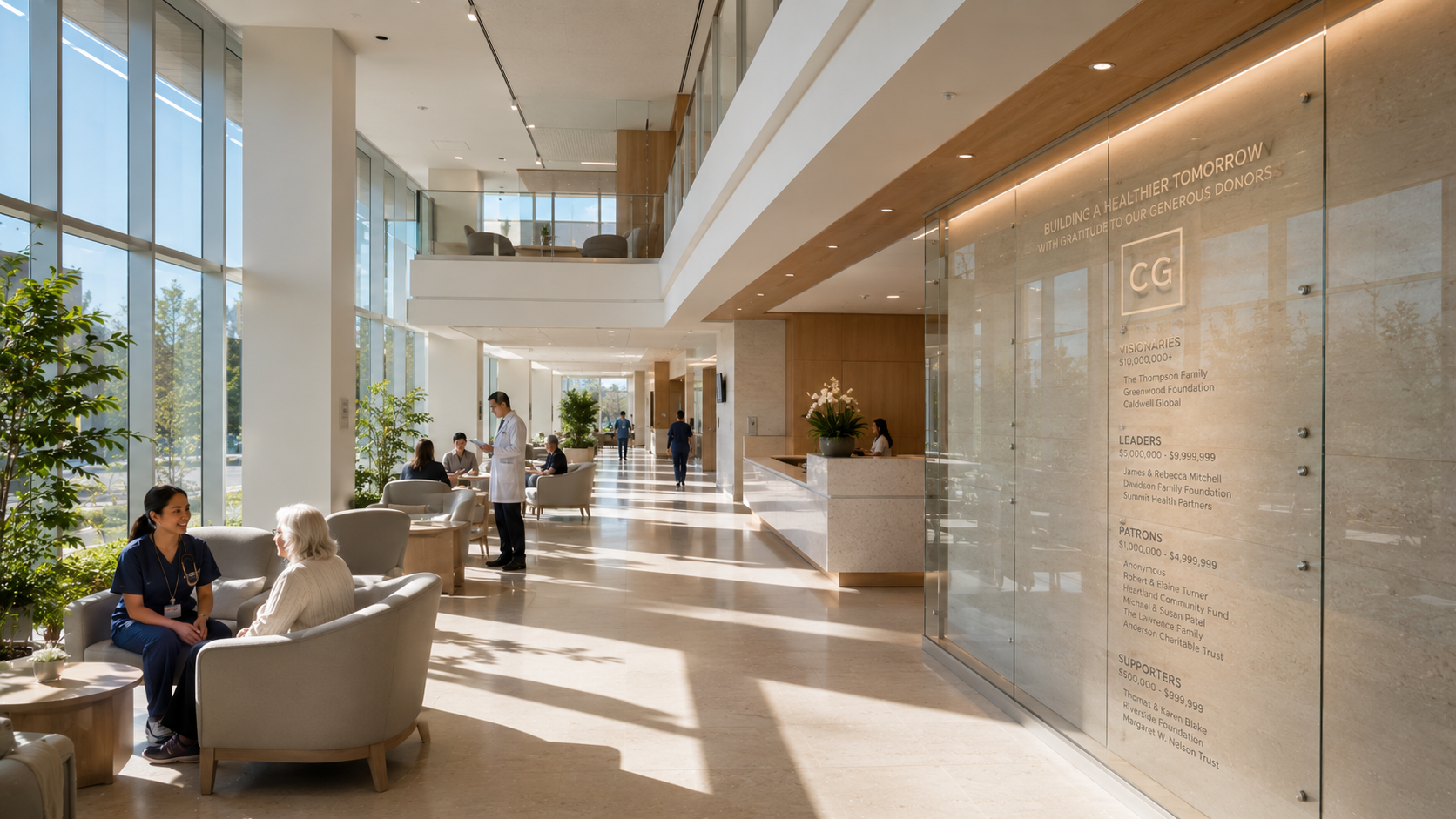
Medical facilities balance visibility, functionality, and patient experience.
Hospitals, medical office buildings, and outpatient centers frequently invest in modern glazing systems as part of expansion and modernization projects.
Durability, accessibility, and long-term performance often become important considerations.

Steady mid-tier markets where business parks, massive strip malls, and auto malls require continuous, programmatic facilities maintenance and localized emergency service.
21. Santa Rosa – The largest commercial footprint in the North Bay. Extensive retail and office inventory requiring routine programmatic glass repair, window resealing, and property damage remediation.
22. Pittsburg – Older industrial and delta-waterfront commercial inventory facing high wind loads, moisture-induced hardware oxidation, and tight maintenance budgets.
23. Livermore – High inland thermal shifts (hot summers, cold winter nights) accelerate spontaneous glass fractures and stress cracks in sprawling retail and industrial business parks.
24. Pleasanton – High concentration of corporate business parks (e.g., Hacienda Business Park). Widespread need for programmatic IGU replacement, acoustic window gasket overhauls, and commercial door pivot repair.
25. San Carlos – Highly dense, older industrial and auto-row corridors transitioning into life-science spaces. Heavy physical wear and tear on commercial glass and industrial entryways.
26. Burlingame – Premium auto rows and hotel/commercial corridors lining the bay. Heavy exposure to saltwater air accelerates the degradation of window tracks, balances, and operational mechanics.
27. Mountain View – Massive commercial footprints. While many assets are new tech campuses, a substantial baseline of older commercial stock requires ongoing glass maintenance to maintain energy efficiency.
28. Milpitas – High-density retail centers (e.g., Great Mall area) and industrial parks facing high daily foot-traffic wear and mechanical entryway breakdowns.
29. Dublin – Rapidly expanded commercial footprint. Primarily newer inventory, but its sheer volume of sprawling retail strip malls creates a high baseline for accidental breakages and tenant improvements.
30. Palo Alto – High-end corporate and institutional real estate. Exceptionally strict building performance expectations and high acoustic demands drive immediate repair responses for any compromised window envelope.
Retail districts depend heavily on visibility.
Customer engagement begins at the storefront.
Exterior presentation influences perception.
Many Bay Area shopping districts rely on storefront systems that create strong connections between businesses and surrounding pedestrian activity.
Because competition for attention remains high, storefront performance often becomes a business asset.
Steady local demand driven by standard wear-and-tear, regional weather exposure, and tenant-turnover storefront updates.
31. Vacaville – Large premium outlet and retail presence along the I-80 corridor, experiencing high traffic and weather-exposed storefront wear.
32. San Pablo – Older, high-density residential and commercial overlay with elevated property crime indices driving steady storefront glass replacement.
33. Alameda – Historic island commercial district with older wood and steel storefront framing requiring highly specialized component repair and hardware retrofitting.
34. Brentwood – Growing East Bay suburban commercial infrastructure dealing with extreme inland heat stress on perimeter caulking and seals.
35. Cupertino – Tech-centric market with a mix of high-profile corporate facilities and older retail strips requiring ongoing, standard commercial glazing support.
36. Menlo Park – High institutional and venture capital real estate presence; high-end acoustic needs and rapid tenant turnover drive repairs.
37. San Ramon – Home to massive master-planned office parks (e.g., Bishop Ranch) requiring programmatic thermal seal oversight and energy-compliance maintenance.
38. Napa – High-density hospitality, wine-tasting retail, and downtown commercial real estate facing high seasonal foot traffic and accidental glass damage.
39. Novato – North Bay office and light industrial parks dealing with aging architectural window systems and seal degradation.
40. Petaluma – Historic downtown storefronts and older business parks requiring specialized architectural glass repair and structural hardware adjustments.

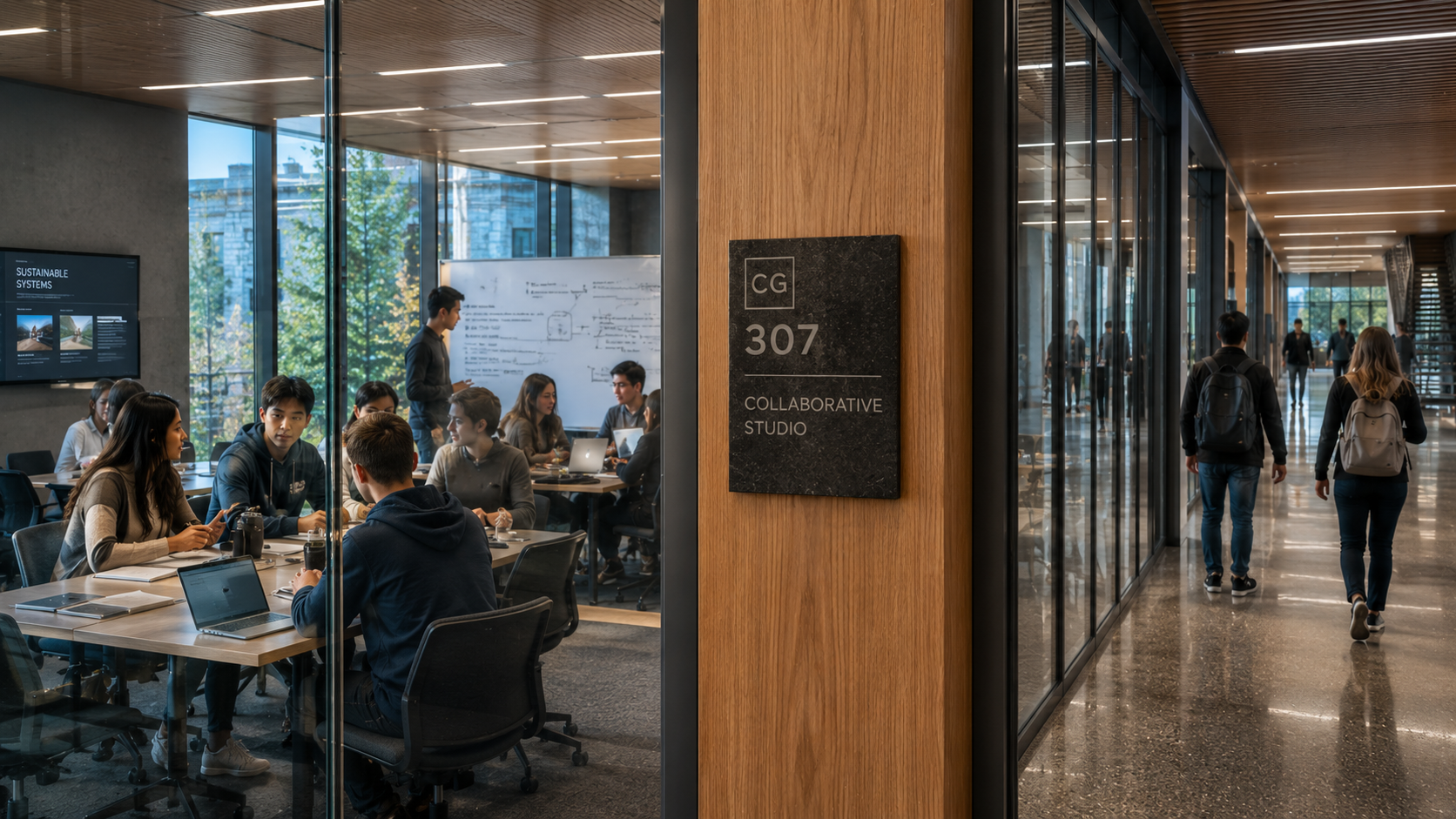
Higher education campuses frequently manage large and diverse building portfolios.
Academic facilities, student centers, research buildings, and administrative offices all require different glazing solutions.
Long-term durability, lifecycle planning, and modernization efforts often influence investment decisions across university properties.
Lower-frequency markets where master-planned designs, lower crime rates, or newer building envelopes reduce the need for emergency, reactive repairs, leaving demand focused on standard maintenance.
41. Morgan Hill – Southernmost Santa Clara County commercial asset base; standard horizontal retail and light industrial maintenance profiles.
42. Campbell – High-density local retail and tech office extensions experiencing standard wear and tear.
43. Los Gatos – High-end historic downtown retail corridor; properties are highly maintained, lowering the frequency of major failures but demanding premium, seamless repair work.
44. Mill Valley – Dense, highly weathered coastal-adjacent commercial assets tucked into heavy foliage zones; damp conditions rot older framing and degrade weather-stripping.
45. Foster City – Master-planned lagoon city with modern commercial buildings; low exposure to crime or severe structural aging, but highly prone to coastal humidity.
46. Larkspur – Ferry-terminal and premium retail property base experiencing standard marine weather wear on operational window hardware.
47. Danville – Low-hazard, affluent suburban commercial village where repair needs are overwhelmingly aesthetic or routine rather than emergency-driven.
48. Saratoga – Highly affluent, low-density commercial zone with low physical exposure to storefront accidents or street crime.
49. Lafayette – Quiet Contra Costa suburban commercial strip; low vacancy rates and low crime minimize emergency board-up needs.
50. Orinda – Lowest core alignment for reactive repair due to highly secure, modern, or deeply sheltered commercial layouts along the Highway 24 corridor.
Transportation facilities operate under unique demands.
Passenger movement remains constant.
Visibility supports wayfinding.
Durability becomes critical due to high traffic volumes.
Commercial glazing systems frequently contribute to both functionality and passenger experience throughout airports, transit centers, and transportation hubs.
The absolute highest concentration of wealth, venture capital headquarters, and ultra-luxury residential estates in the country. Demand here is driven by high-end architectural specifications, strict privacy/acoustic demands, and immediate CAPEX-indifferent repair needs.
1. Atherton – Consistently the most expensive zip code in America. While purely residential, the market here is driven by massive luxury mega-compounds. Repairs involve oversized structural architectural glass, custom multi-slide pocket doors, and high-performance glass-to-glass corner joints.
2. Woodside – Home to tech billionaires and sprawling equestrian estates. Properties feature massive expanses of architectural glass heavily exposed to wooded environments, falling debris, and high thermal stress from the Santa Cruz Mountain shadows, driving high demand for specialized structural seal maintenance.
3. Hillsborough – An affluent enclave of massive, historic and modern estates just south of San Francisco. High demand for specialized preservation of historic leaded glass window frames, steel-framed steel-window restoration, and modern soundproofing to block SFO flight-path noise.
4. Los Altos Hills – A premier South Bay hillside community with strict architectural guidelines. Properties utilize highly advanced smart glass, specialized low-iron structural glass (for zero-distortion views of the valley), and motorized architectural sliding window systems requiring regular mechanical calibration.
5. Portola Valley – Tucked into the redwood foothills, this area features ultra-premium eco-conscious architecture. Repairs are heavily driven by strict Title 24 energy-compliance audits, the replacement of foggy high-altitude IGUs, and the updating of premium weatherstripping to prevent wildfire smoke infiltration.
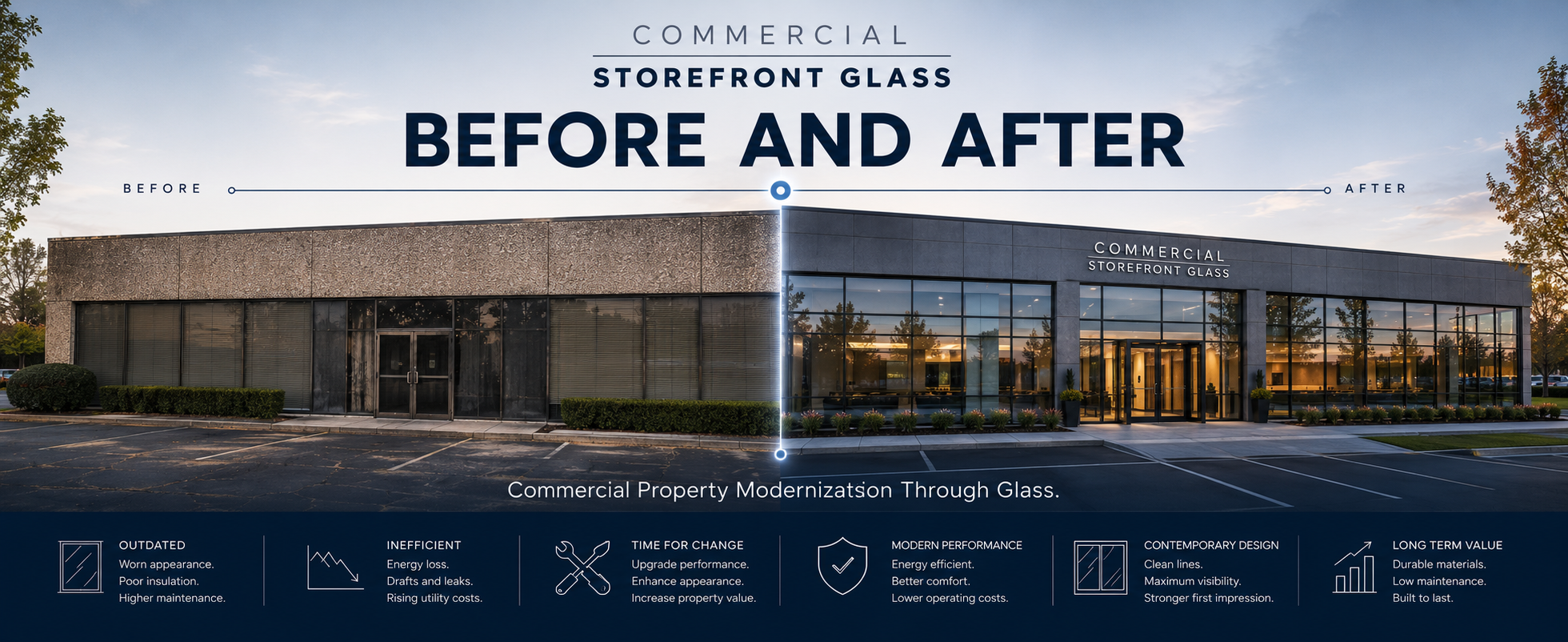
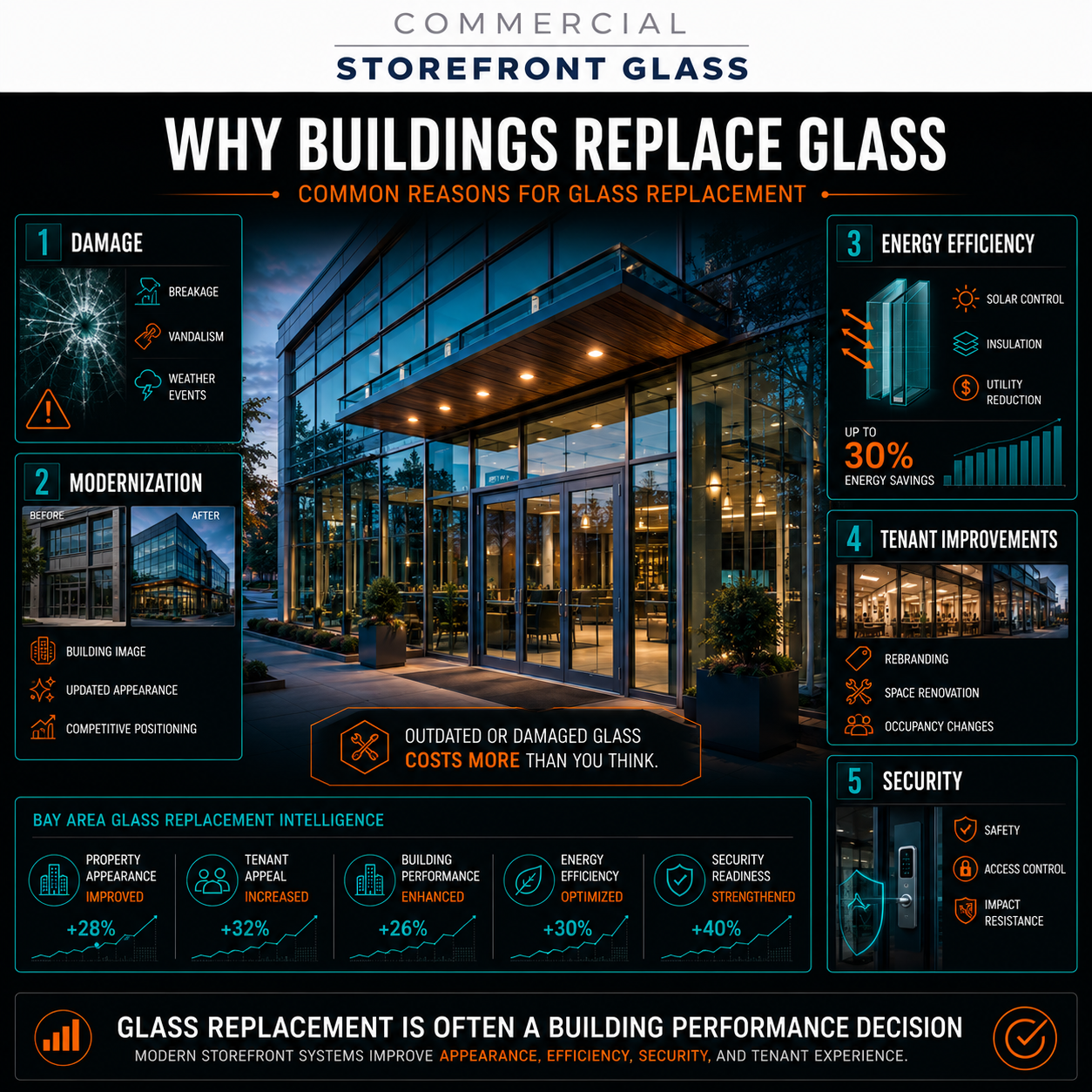
Aging storefront systems can affect both appearance and performance.
Property owners frequently replace outdated glazing during modernization projects.
Tenant improvements may require new storefront configurations.
Exterior renovations often include glass replacement as part of a broader upgrade strategy.
Updated storefronts can immediately improve the perception of a commercial property.
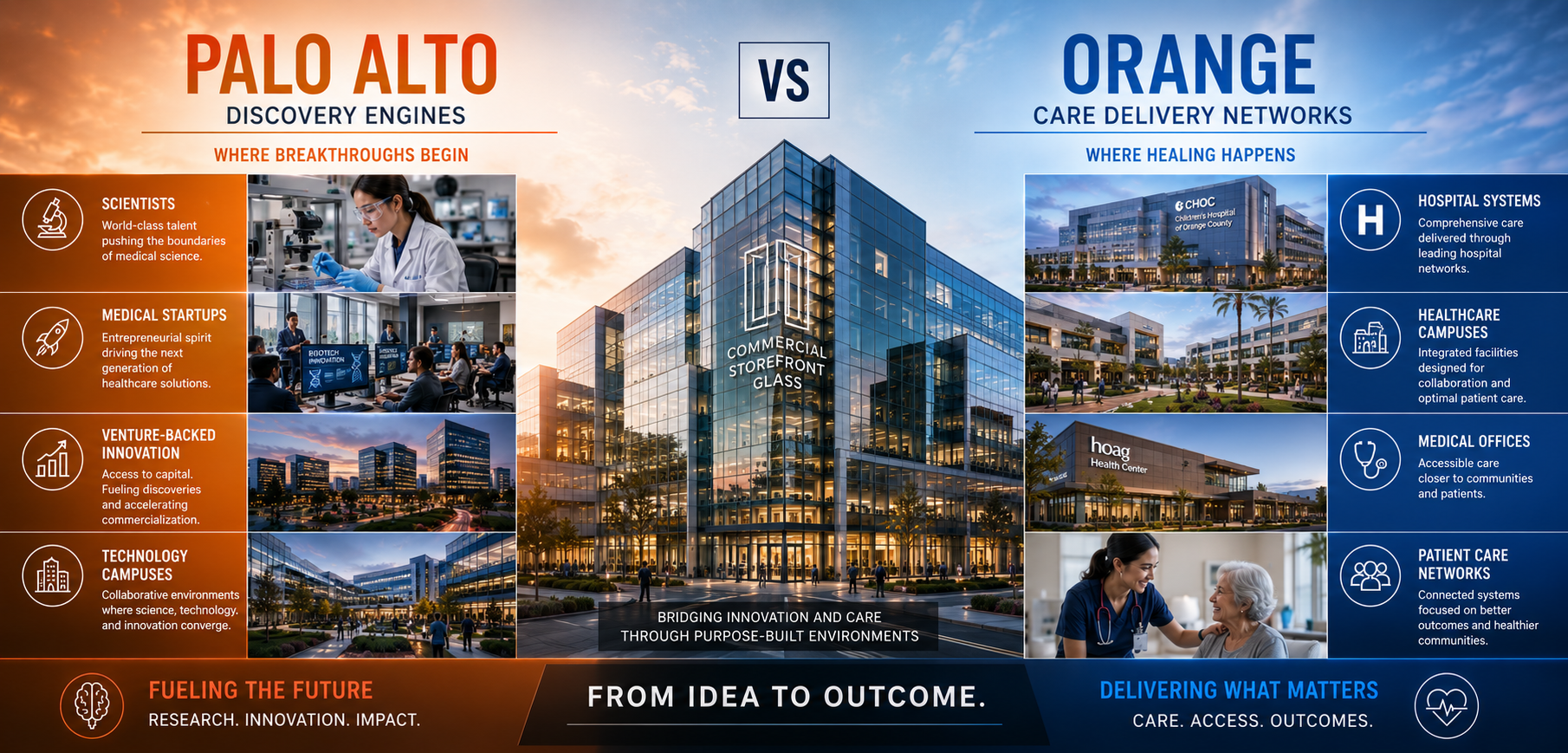
High-end commercial districts, luxury boutique retail corridors, and premium hillside estates where aesthetics and flawless execution take priority over cost.
6. Los Gatos (including Los Gatos Hills) – A major wealth hub where the historic, high-end downtown commercial core meets multi-million dollar mountain-side estates. Demand is driven by historic storefront frame preservation on the commercial side, and heavy-duty UV-filtering glass repair on the hillside estates to protect interiors from intense valley sun.
7. Palo Alto (Stanford/Old Palo Alto/Crescent Park) – The epicenter of venture capital and tech elite. High demand from prestige venture capital offices on Sand Hill Road and premium downtown commercial spaces requiring high-security laminated glass, acoustic workspace isolation, and zero-downtime repair services.
8. Saratoga – An affluent South Bay community blending premium wineries, historic villa commercial properties, and luxury hillside estates. Window repair focuses heavily on matching custom wood-clad frames and specialized thermal barrier restoration.
9. Menlo Park (Allied Arts / West Menlo) – Bordering Stanford, this area features high-end commercial properties and tech-exec estates demanding rapid structural glass maintenance and premium soundproofing from nearby commuter corridors.
10. Monte Sereno – An exclusive, entirely upscale residential enclave nestled between Los Gatos and Saratoga. Dominated by custom architectural properties with complex, large-format glass envelopes requiring highly specialized glazier rigging and crane-assisted glass replacement.
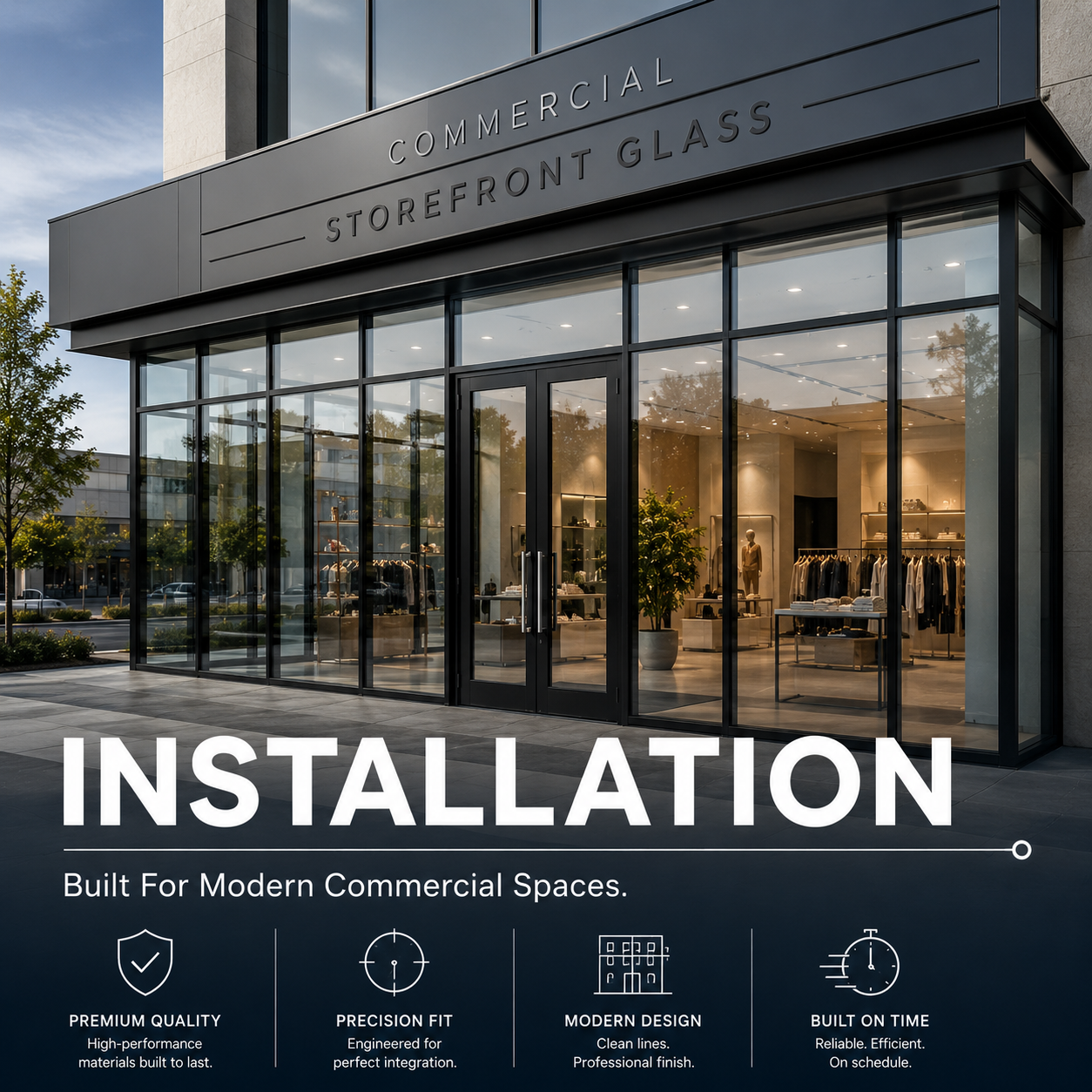
Many Bay Area office buildings, mixed-use developments, and corporate campuses rely on curtain wall systems.
Large-scale glazing creates modern architectural aesthetics while supporting natural light throughout the building.
These systems remain a defining feature of contemporary commercial construction across the region.
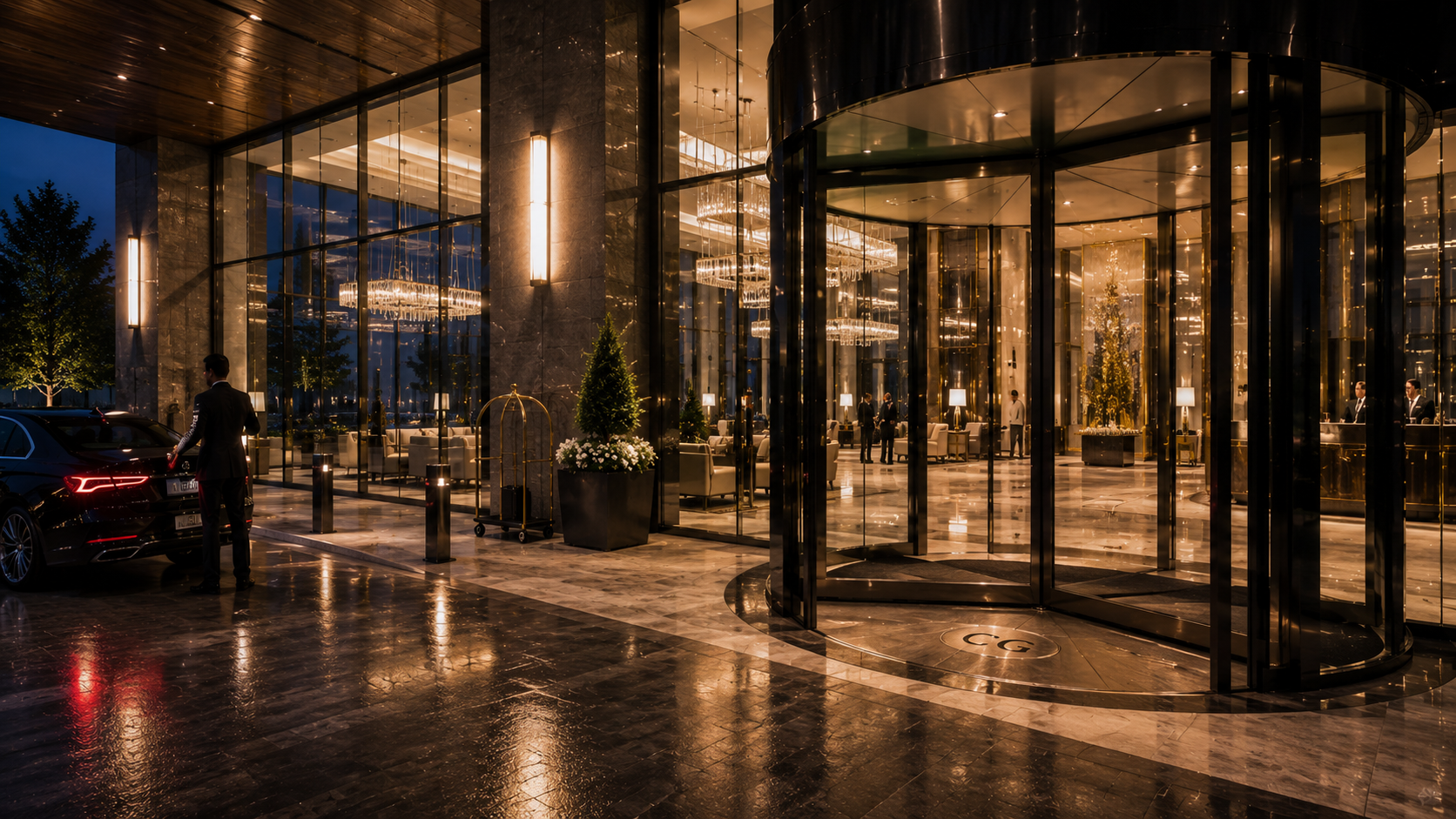
Entrances influence first impressions.
Visitors notice them immediately.
Customers interact with them daily.
Tenants often associate entrance quality with overall building quality.
Modern glass entry systems help improve accessibility, visibility, and customer experience.
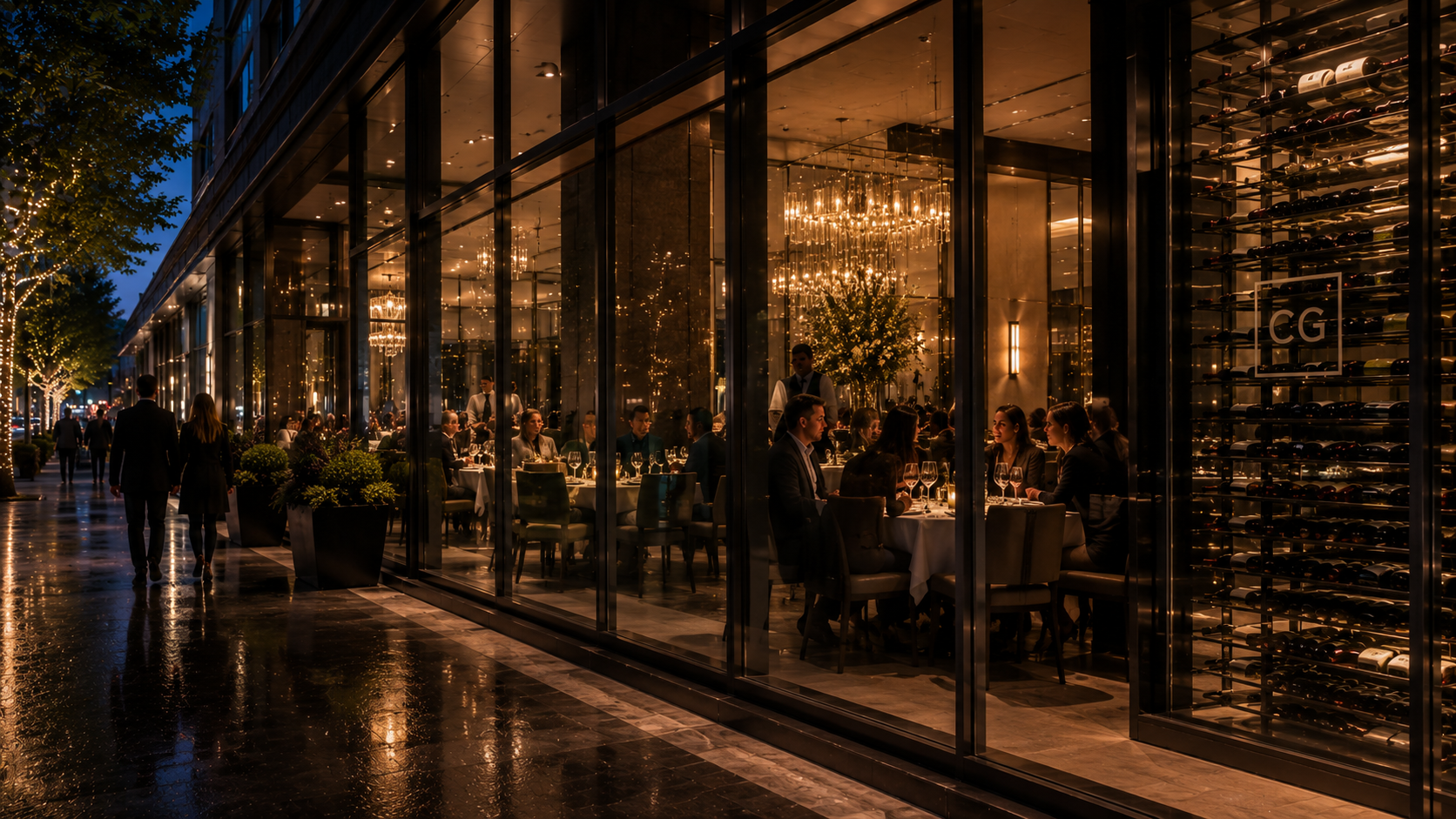
Commercial storefronts depend on strong framing systems.
- CA Corporate Campuses
- CA Healthcare
- CA Industrial & Logistics
- CA Retail Corridors
- CA Life Sciences
- CA Universities
- CA Hospitality
- CA Airports & Transportation
- CA Redevelopment Districts
Aluminum remains one of the most widely used materials because it combines durability with architectural flexibility.
These systems support storefronts, entrances, curtain walls, and a wide variety of commercial glazing applications.
High-end global destinations blending boutique commercial real estate (Michelin-starred restaurants, world-class winery tasting rooms, ultra-luxury resorts) with massive architectural estate properties. For a commercial glazier, these markets are goldmines for high-performance, oversized glass, custom architectural steel entries, and strict UV asset protection.
16. Healdsburg – The premier crown jewel of Sonoma County’s luxury boom. Its historic downtown plaza features Michelin-starred establishments (like SingleThread), ultra-luxury boutique hotels, and upscale tasting rooms with custom steel storefronts. The surrounding valleys feature architectural estate wineries with soaring glass facades that require specialized field resealing and crane rigging to address thermal fractures.
17. St. Helena – Known as “Napa Valley’s Main Street,” St. Helena is the high-end epicenter of luxury wine country commerce. The historic downtown features continuous rows of boutique storefronts that require specialized historic frame restoration. The surrounding hillsides are packed with ultra-premium wineries utilizing massive structural glass walls, floor-to-ceiling automated sliding glass panels, and seamless glass-to-glass corner joints.
18. Yountville – The undisputed culinary capital of Northern California, boasting more Michelin stars per capita than anywhere else in North America (home to The French Laundry). High-urgency hospitality maintenance is the core driver. In luxury restaurants and high-end boutique hotels, property managers pay a premium for discreet, white-glove, zero-downtime overnight repairs to preserve their flawless aesthetic standards.
19. Carmel-by-the-Sea – While sitting just south of the official nine-county Bay Area boundary, Carmel is fundamentally tied to the same northern California wealth pipeline. A punishing Pacific maritime environment meets strict historic architectural preservation. Walkable European-style village storefronts feature custom multi-lite timber windows requiring specialized component repair. Massive expanses of architectural glass on the cliffside face relentless salt-spray corrosion, requiring constant hardware upgrades.
20. Sonoma (City / Sonoma Plaza) – The historic, highly affluent heart of the Sonoma Valley, centered around the historic Sonoma Plaza. This market requires a delicate balance of legacy preservation and modern security upgrades. High-end boutique hotels, tasting rooms, and artisan commercial spaces demand specialized hardware retrofitting to make historic wood and steel window frames function like modern, energy-efficient units.
21. Calistoga – The northernmost anchor of Napa Valley, world-renowned for its high-end wellness resorts, natural hot springs, and sprawling estate compounds. Calistoga’s commercial footprint relies heavily on luxury indoor-outdoor wellness architecture (massive glass bi-fold doors, specialized skylight arrays, and extensive glass pool/spa enclosures). High humidity from hot springs and intense inland summer heat waves accelerate the degradation of dual-pane window seals.

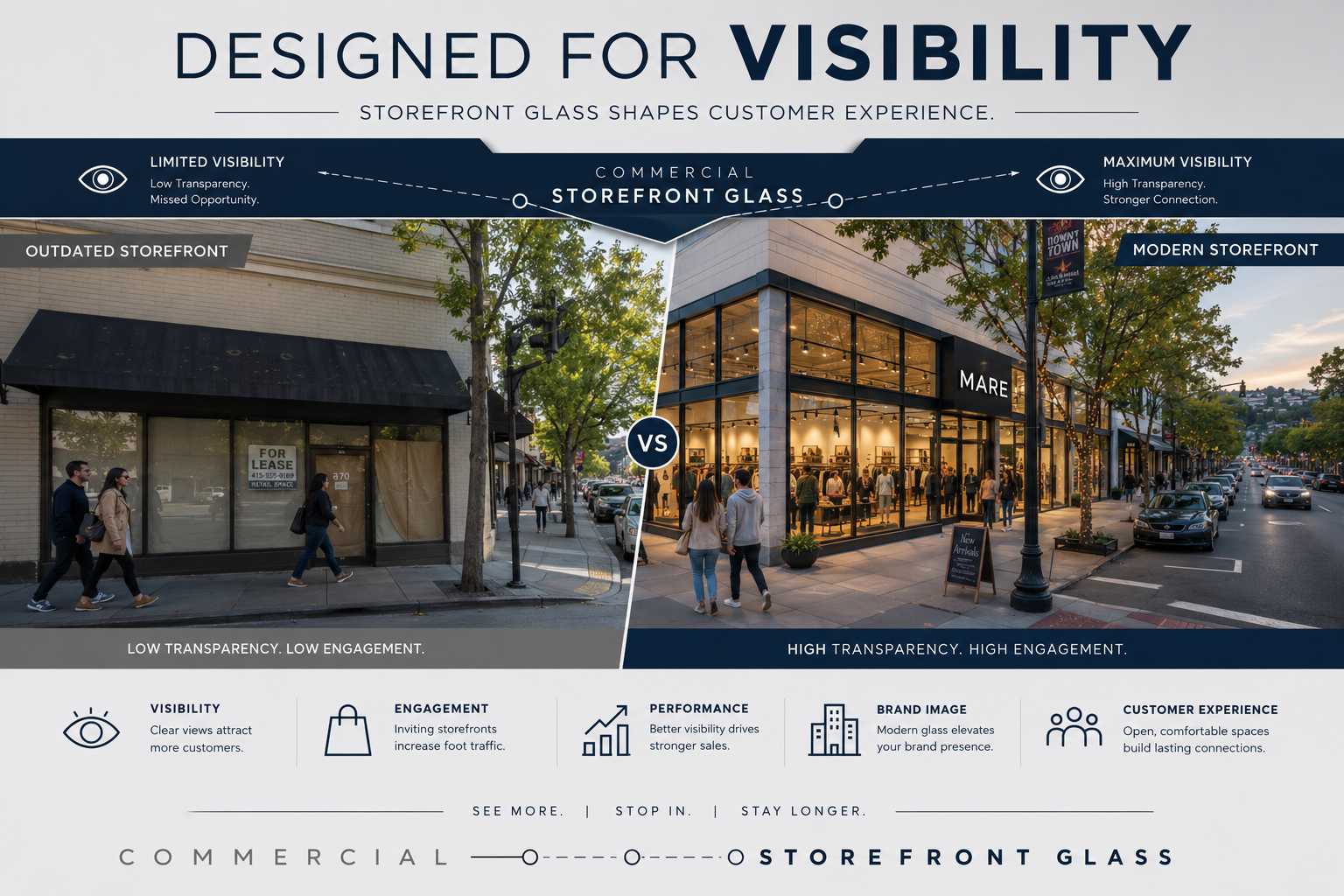
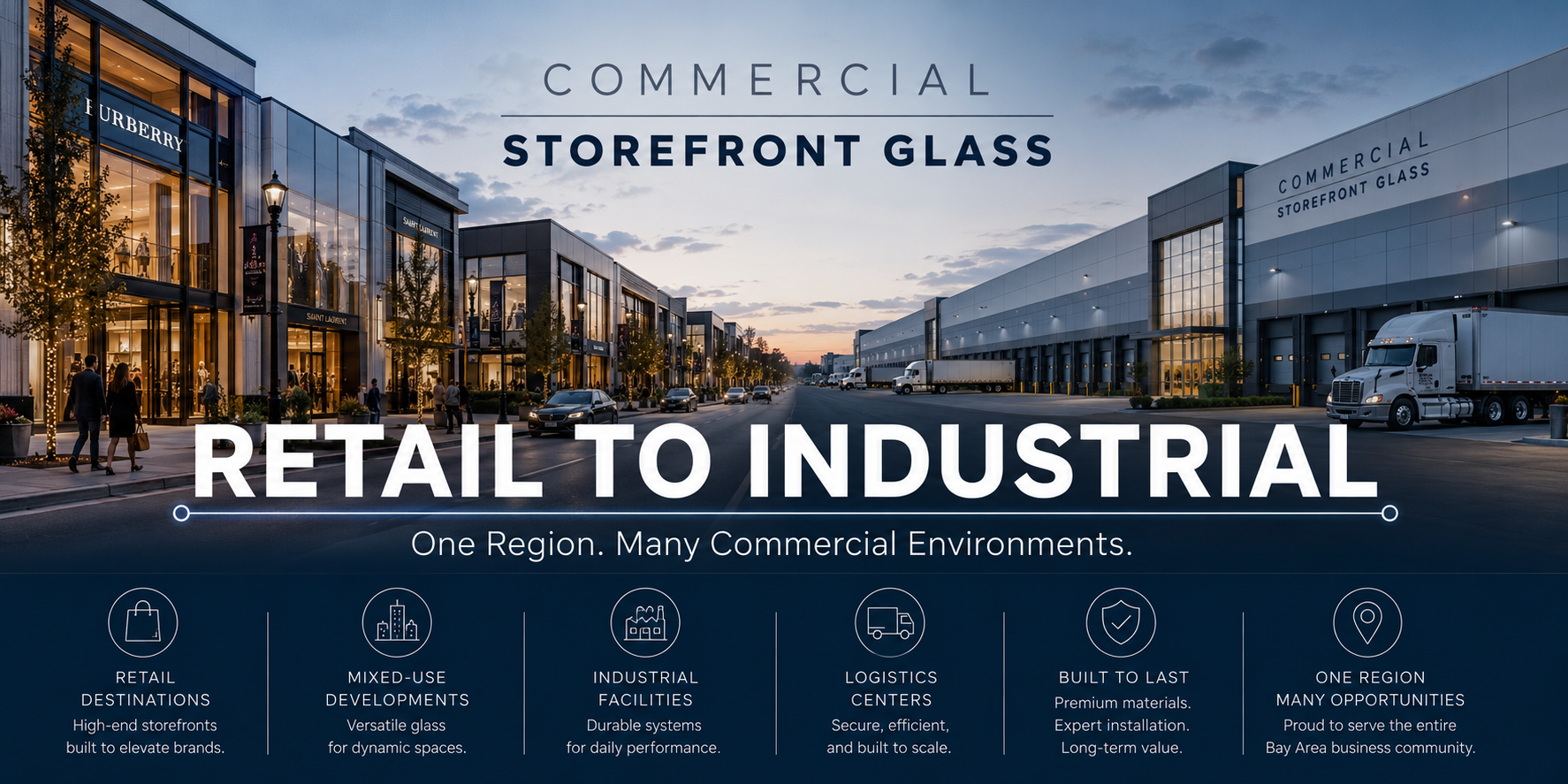
Retail properties throughout the Bay Area compete for attention.
Visibility influences customer engagement.
Storefront presentation affects perception.
Open sightlines often improve the overall shopping experience.
For many retailers, the storefront serves as one of the most important customer-facing assets.
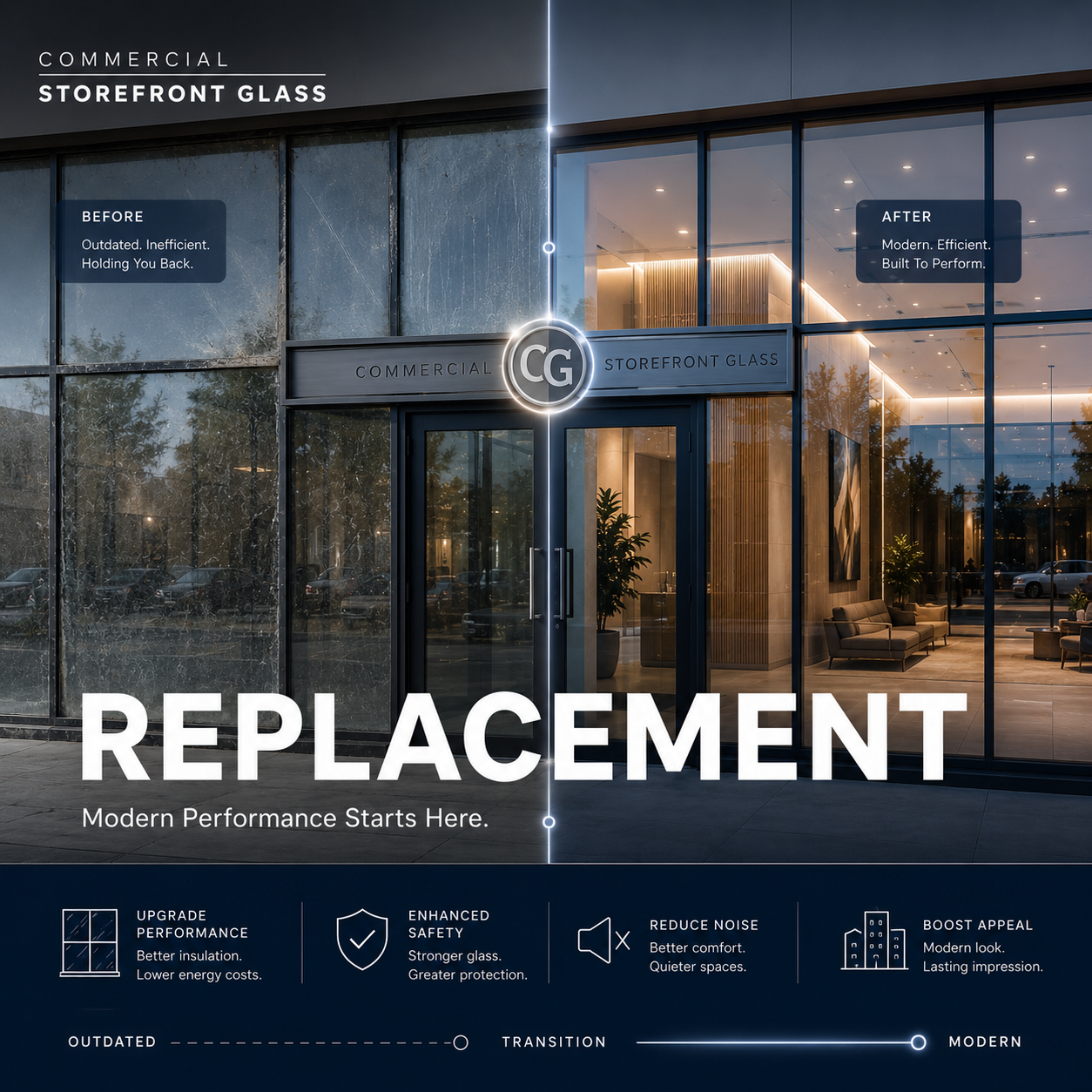
Restaurants benefit from transparency and street-level visibility.
Exterior presentation influences customer perception.
Natural light helps create inviting environments.
Many successful dining establishments use storefront glazing to strengthen their connection with surrounding pedestrian activity.