


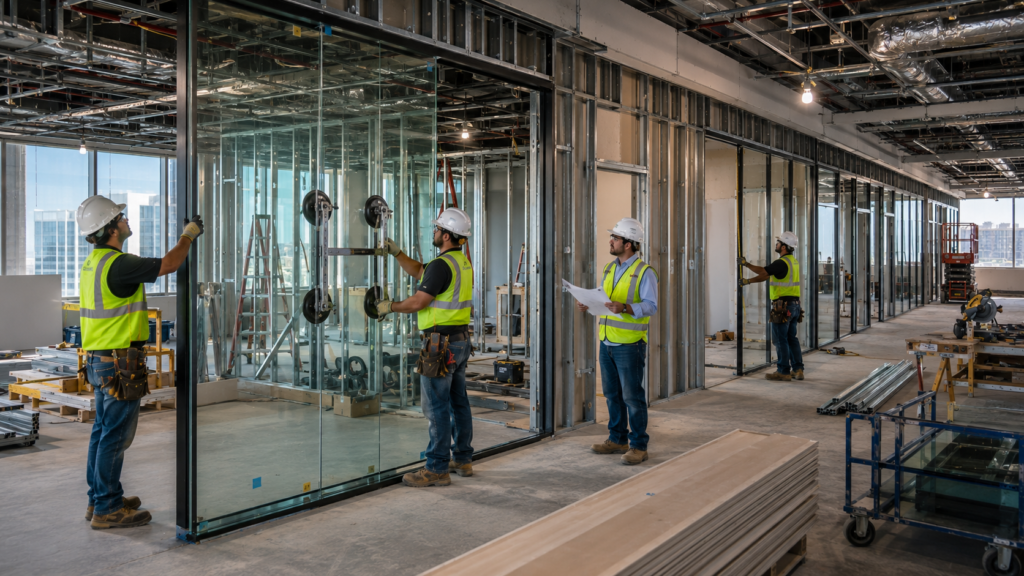
Commercial storefronts throughout the Bay Area combine structure, visibility, and architectural design to create the first impression of a property.
Should a project prioritize the strength of an aluminum storefront system?
Or is a glass storefront the better choice for visibility and customer experience?
Whether modernizing retail centers in Walnut Creek, office buildings in San Francisco, technology campuses in San Jose, mixed-use developments in Oakland, or advanced manufacturing headquarters in Fremont, selecting the right storefront system influences durability, energy efficiency, appearance, and long-term property value.
Aluminum storefronts provide the structural framework.
Glass storefronts create transparency, daylight, and visual connection.
Both work together to support modern commercial buildings.
Aluminum storefronts deliver strength and durability
Glass storefronts maximize visibility and natural light
Both improve long-term building performance
Project objectives ultimately determine the ideal storefront solution
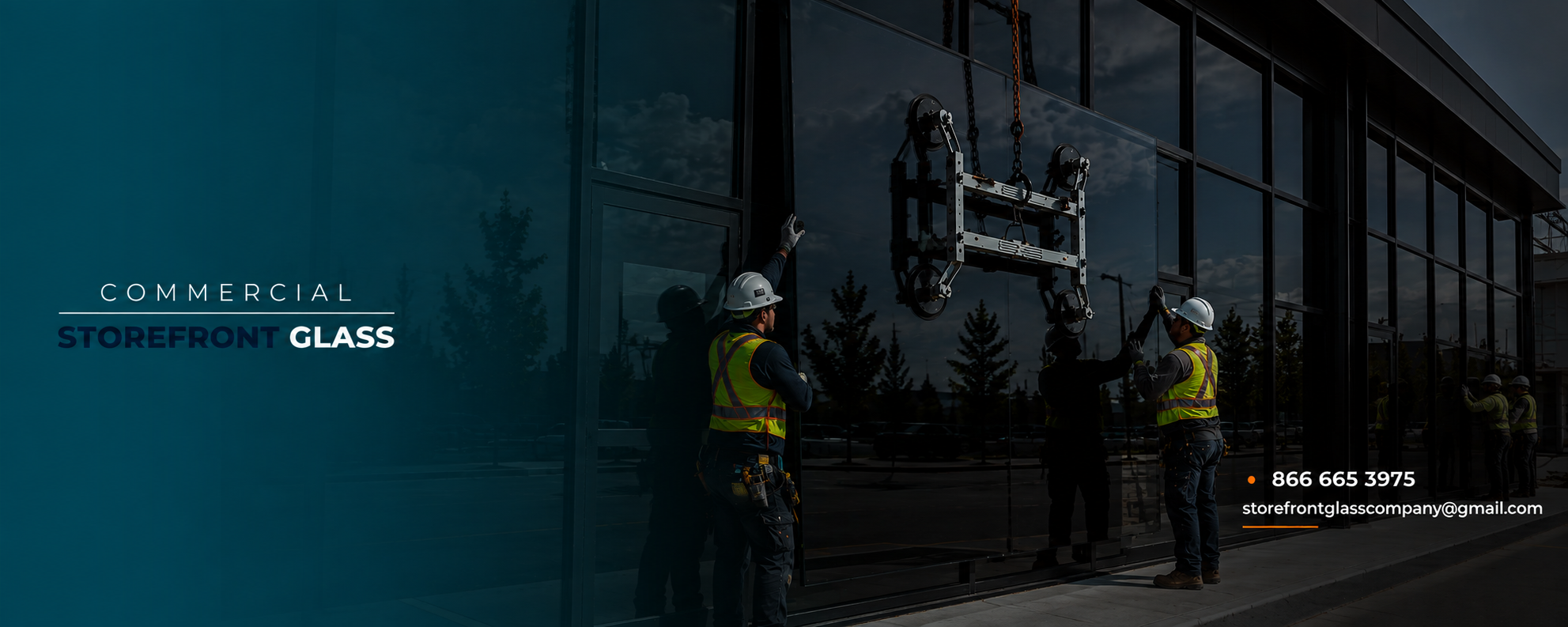
1. The General Contractor (GC) Perspective
How They Perceive It: The GC evaluates this comparison entirely through the lenses of structural tolerances, weatherproofing liability, installation sequencing, and code compliance.
Framed Aluminum Storefront is perceived as the reliable, forgiving workhorse: standard 2″ x 4-1/2″ extruded aluminum systems accommodate typical substrate framing variations, incorporate internal weep paths to manage water infiltration, accept thermal breaks to satisfy strict energy codes (IECC / ASHRAE 90.1 / Title 24), and readily interface with commercial panic hardware and ADA door operators.
All-Glass / Frameless Systems (heavy 1/2″ or 3/4″ tempered/laminated glass with patch fittings or top/bottom shoe rails) are viewed as high-risk, zero-tolerance installations. Substrates must be dead-level and deflection-free; without perimeter framing, exterior weather seals are vulnerable to wind-driven rain, and integrating concealed closers or maglocks requires surgical precision.
Decisions They Normally Make:
Pushes the tenant/architect toward framed aluminum storefronts for exterior elevations to minimize water intrusion callbacks, avoid Title 24/energy code compliance rejections, and save on overall framing budget.
Treats rough-opening tolerances identically for both systems: Frames rough openings with standard framing tolerances, only to discover that an all-glass system cannot absorb 1/4″ to 1/2″ of floor or header deflection without binding the doors or stressing structural patch fittings.
Overlooks structural header anchoring requirements for frameless glass: Fails to coordinate heavy structural steel tube headers above ceiling line to carry the dead load and pivot torque of heavy monolithic glass doors, leading to sagged headers and door misalignment at punch-out.
Decisions They SHOULD Make:
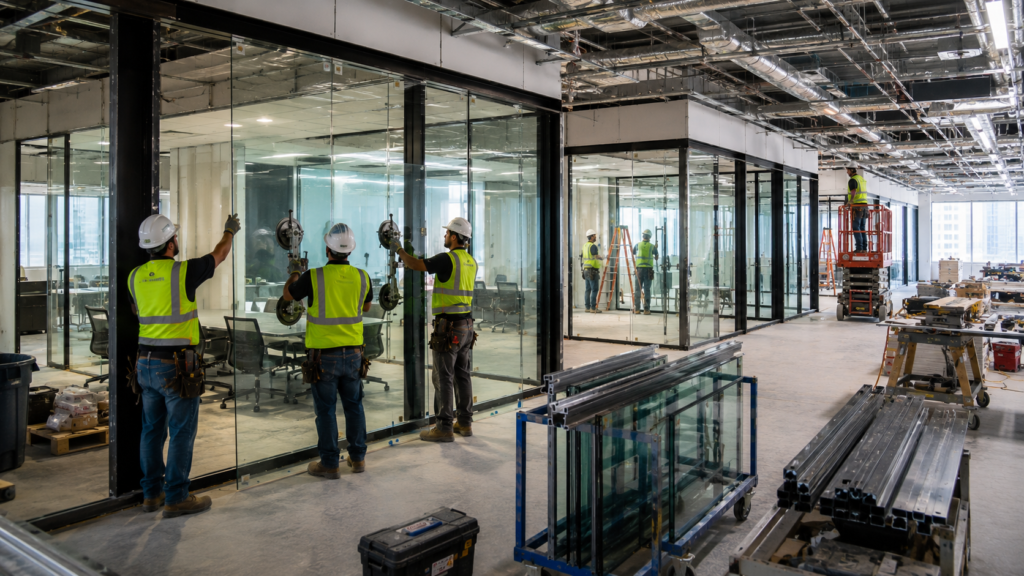
Zone by application: Recommend traditional thermally broken aluminum storefront systems for all exterior weather envelopes, and reserve all-glass frameless partitions for interior mall concourses, office conference rooms, and vestibule divisions where air/water barriers are unnecessary.
Enforce zero-tolerance substrate framing for all-glass packages: If frameless glass is specified, mandate rigid structural steel support above the ceiling, pour self-leveling underlayment along floor tracks, and utilize 3D laser scanning before releasing panels for temper and fabrication.
Pre-coordinate door hardware integration early: Ensure panic hardware, electronic access control (EAC), power supplies, and floor closers are fully engineered into the submittals rather than attempting to retrofit hardware onto finished tempered glass panels in the field.
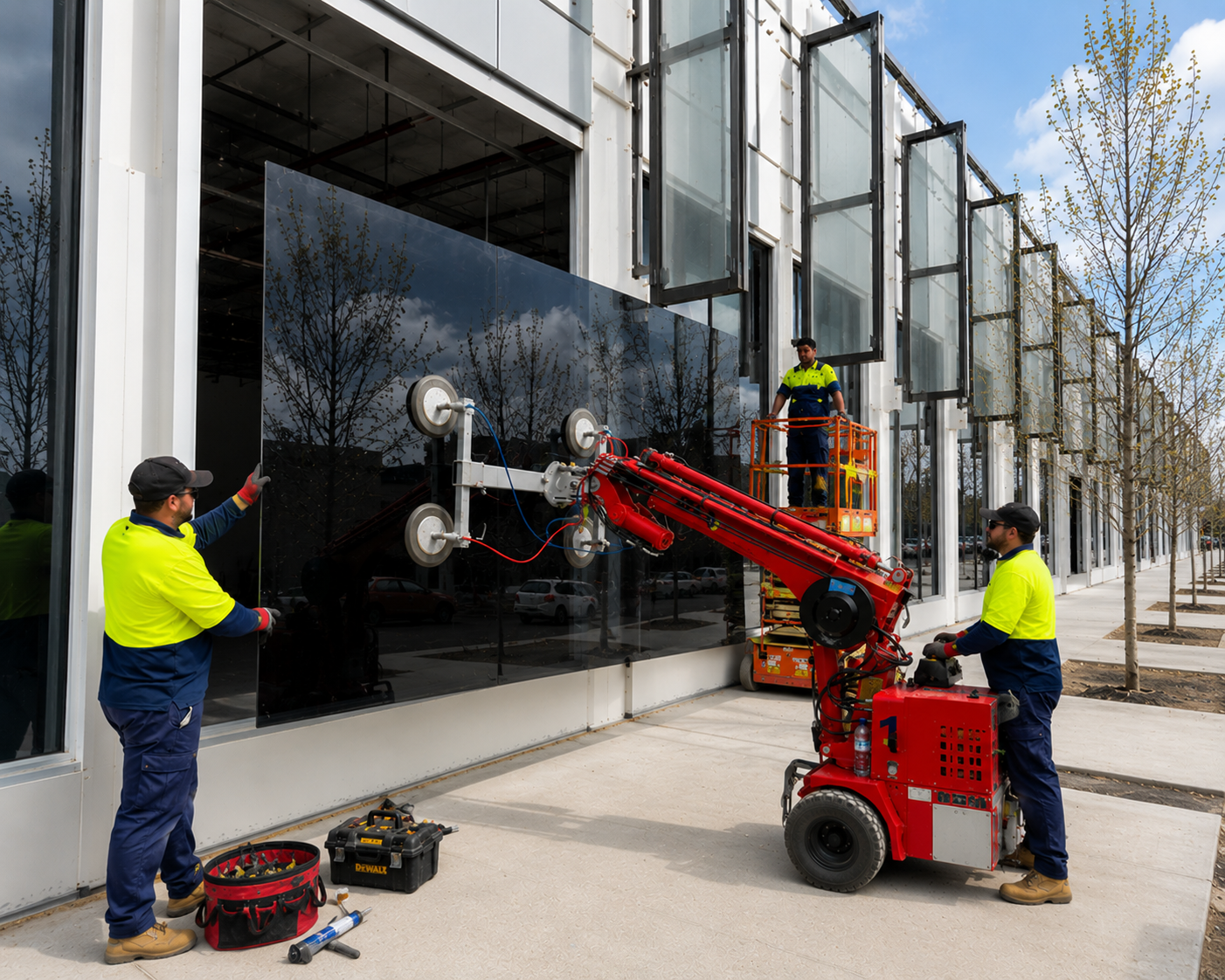
The Commercial / Retail Tenant Perspective
How They Perceive It: The commercial tenant views the choice through brand prestige, merchandising visibility, security, and day-to-day functional maintenance.
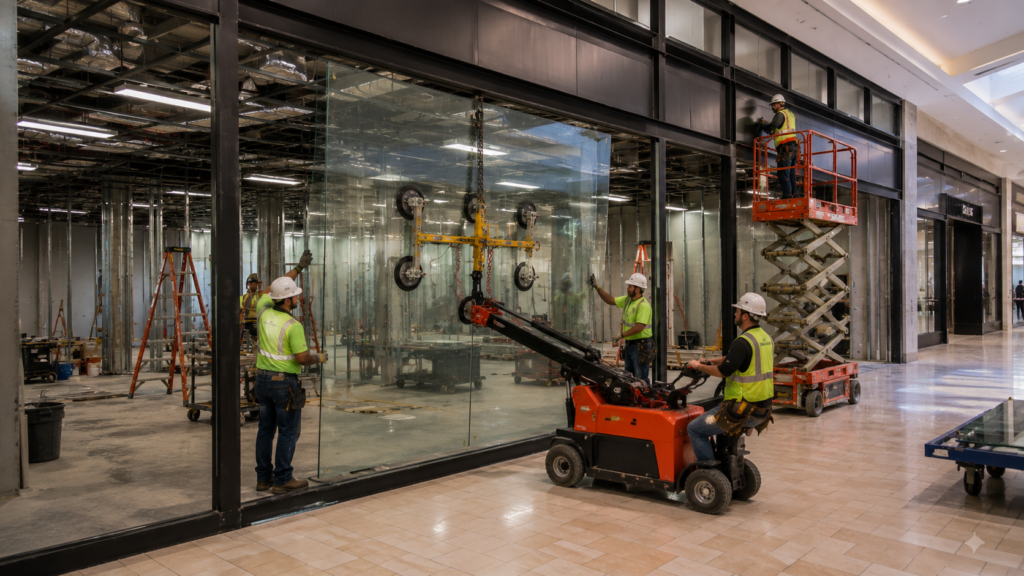
Glass / Frameless Storefronts represent modern luxury, ultra-clean sightlines, and uninterrupted product viewing from the street or corridor—vital for high-end retail boutiques, fashion flagships, law offices, and corporate reception areas.
Aluminum Storefronts are perceived as utilitarian or commercial-grade. While practical and sturdy, prominent vertical and horizontal aluminum mullions can visually “cage” a display window or break up sightlines into the space, though tenants appreciate the rugged perimeter security and climate control they provide.
Decisions They Normally Make:
Demands all-glass frameless facades on exterior street-fronts: Insists on a frameless, minimalist exterior look without realizing that frameless systems lack thermal breaks and multi-point weather seals, leading to howling wind drafts, dust leaks, and uncomfortable customer zones near the entry.
Ignores acoustic isolation limits of interior glass walls: Chooses butt-glazed frameless glass for executive conference rooms and private offices, only to discover that sound leaks through dry-glazed gaps and open glass door reveals, compromising client confidentiality.
Cuts impact/laminated upgrades to afford the aesthetic: Selects basic tempered frameless glass to save capital, leaving the storefront vulnerable to rapid shattering during forced-entry attempts or high-impact retail accidents.
Decisions They SHOULD Make:
Balance aesthetic sightlines with thermal & envelope reality: If an all-glass exterior look is desired, specify a structural silicone glazed (SSG) curtain wall or storefront system—which features concealed interior aluminum framing for full weatherproofing and energy performance while presenting an all-glass flush exterior face.
Specify acoustic laminated glass for frameless interior suites: For interior conference and executive spaces, insist on acoustic interlayers and compression drop-seals at door bottoms to ensure acoustic speech privacy (STC 38+) without sacrificing open sightlines.
Evaluate long-term maintenance and abuse factors: Assess expected daily foot traffic—high-turnover retail and dining spaces benefit from narrow- or medium-stile aluminum doors with continuous geared hinges, while low-impact corporate suites can safely deploy heavy-glass patch-fitting entries.
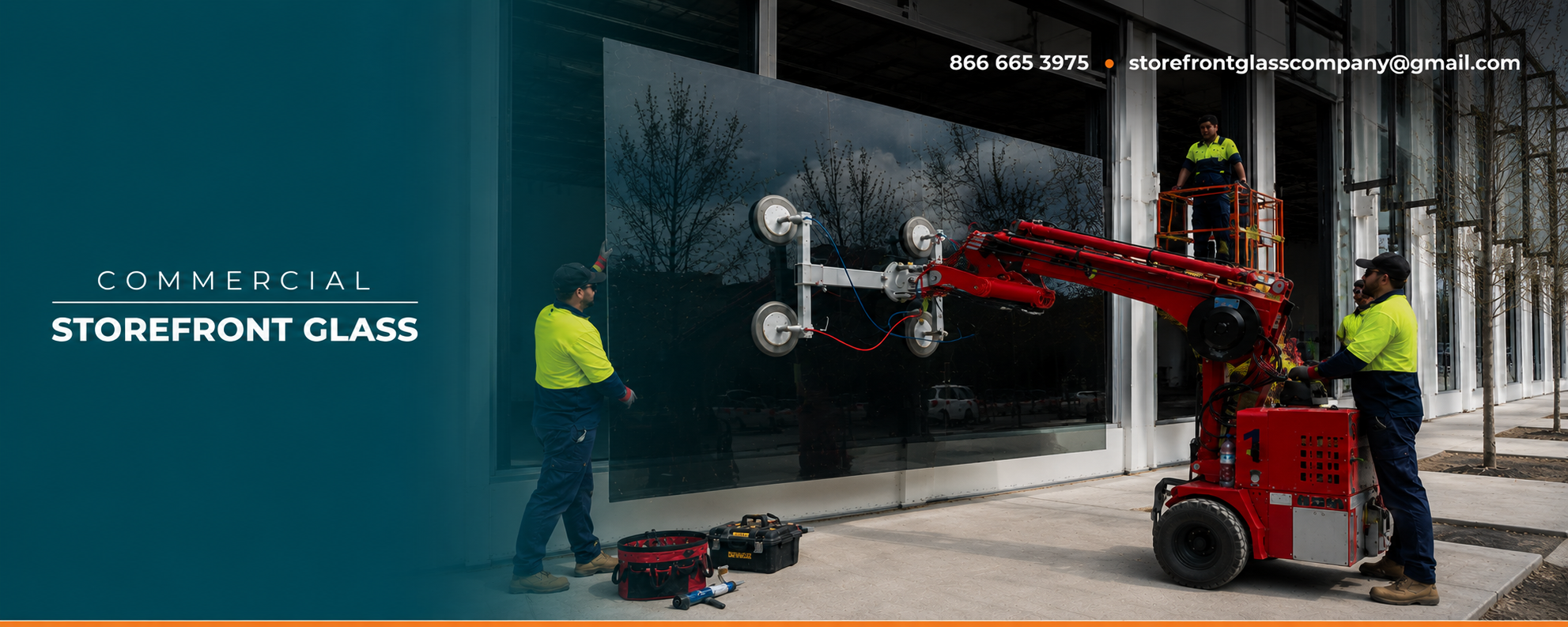
Commercial storefront design has changed significantly over the past several decades.
- Commercial Glass Repair vs Storefront Glass Replacement
- Commercial Storefront Systems vs Aluminum Storefront Systems
- Commercial Glass Doors vs Commercial Window Replacement
- Curtain Wall vs Storefront Systems
- Commercial Glass Installation vs Commercial Glass Repair
- Commercial Glazing Contractor vs Commercial Glass Contractor
- Emergency Board-Up vs Commercial Glass Repair
- Office Glass Installation vs Storefront Glass Installation
- Curtain Wall Installation vs Curtain Wall Repair
- Aluminum Storefront vs Glass Storefront
Commercial real estate became increasingly performance driven.
Ownership groups prioritized:
Sustainability
Customer experience
Building envelope performance
Long-term operational efficiency
Today, aluminum storefronts and glass storefronts work together to create modern commercial environments that balance performance with appearance.

Nearly every commercial property incorporates both aluminum framing and storefront glass.
Project activity remains common across:
- Downtown San Francisco office towers
- San Jose corporate campuses
- Fremont advanced manufacturing facilities
- Santa Clara technology parks
- Mountain View and Sunnyvale research campuses
- Palo Alto life science properties
- Redwood City and South San Francisco biotechnology facilities
- Walnut Creek and Pleasanton retail centers
- Oakland mixed-use redevelopment
- Santa Rosa healthcare campuses
- Napa hospitality properties
- Fairfield logistics facilities
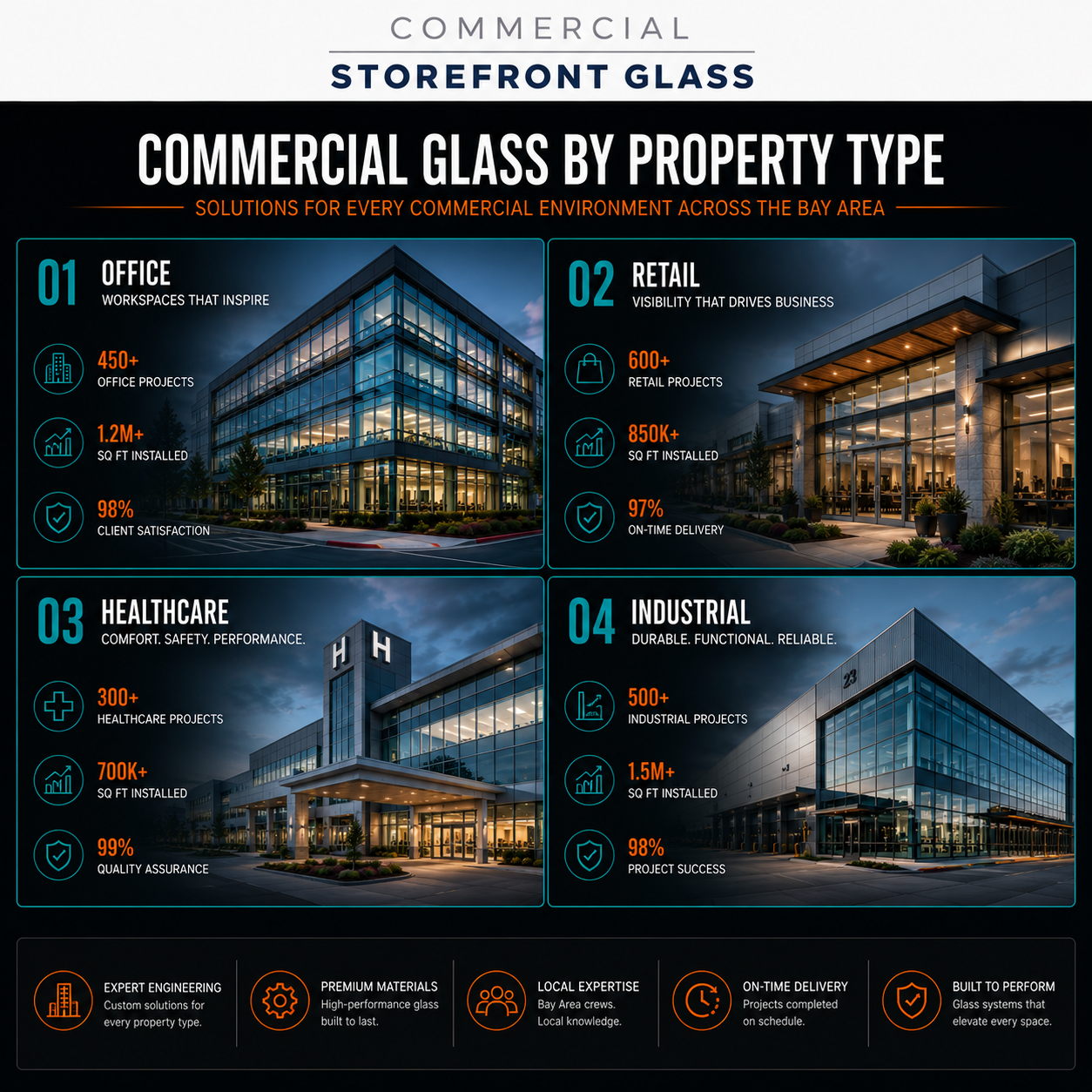
Different commercial environments create different priorities.
Retail centers emphasize visibility.
Corporate offices prioritize architectural appearance.
Healthcare facilities value performance.
Industrial properties emphasize durability.
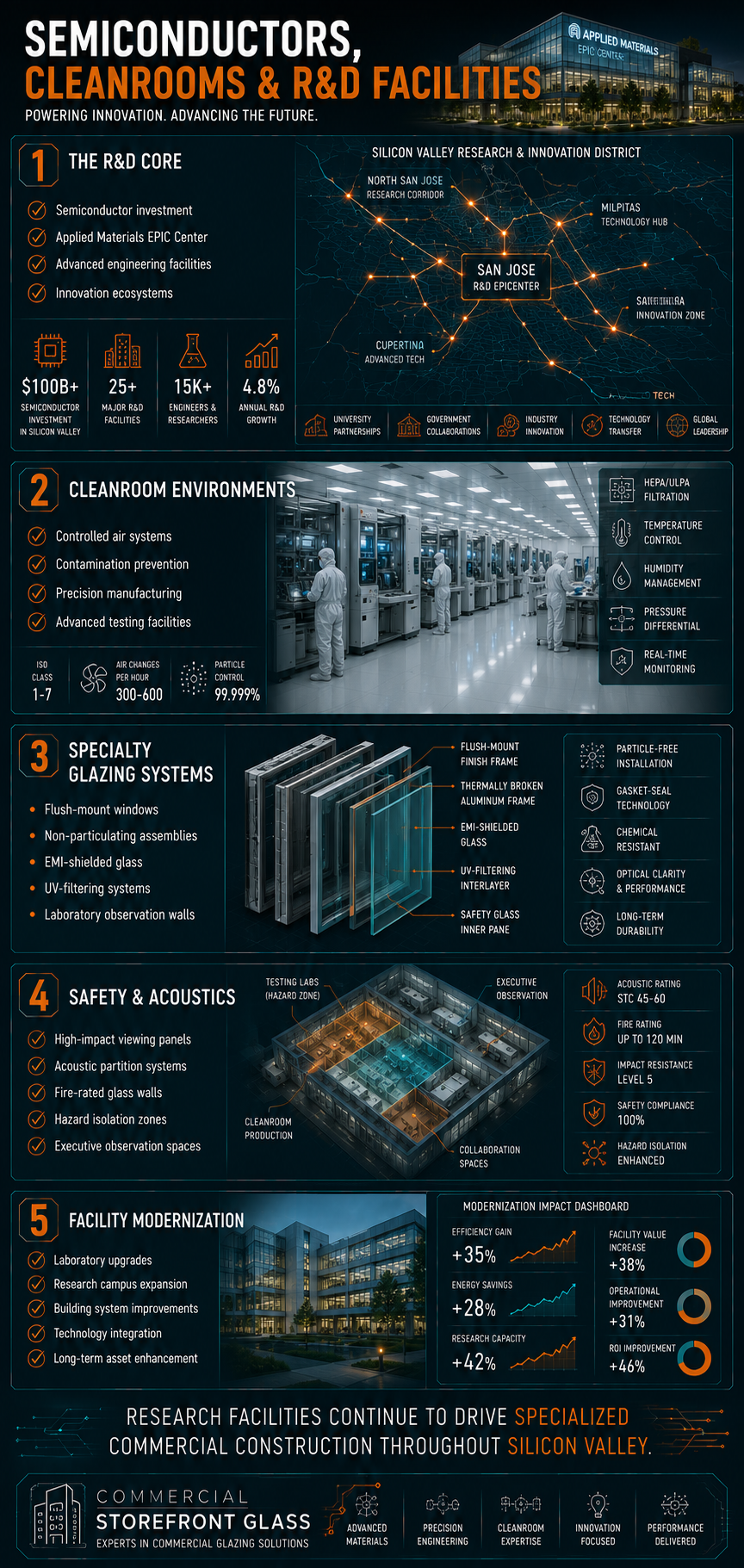
Aluminum framing and storefront glass work together as one integrated system.
Neither performs at its highest level without the other.
Modern ownership groups frequently evaluate:
Thermal performance
Water management
Air infiltration
Structural durability
Long-term maintenance
Across technology campuses in Santa Clara County, office developments in San Mateo County, and mixed-use projects throughout Alameda County, storefront decisions increasingly support complete building envelope modernization.