


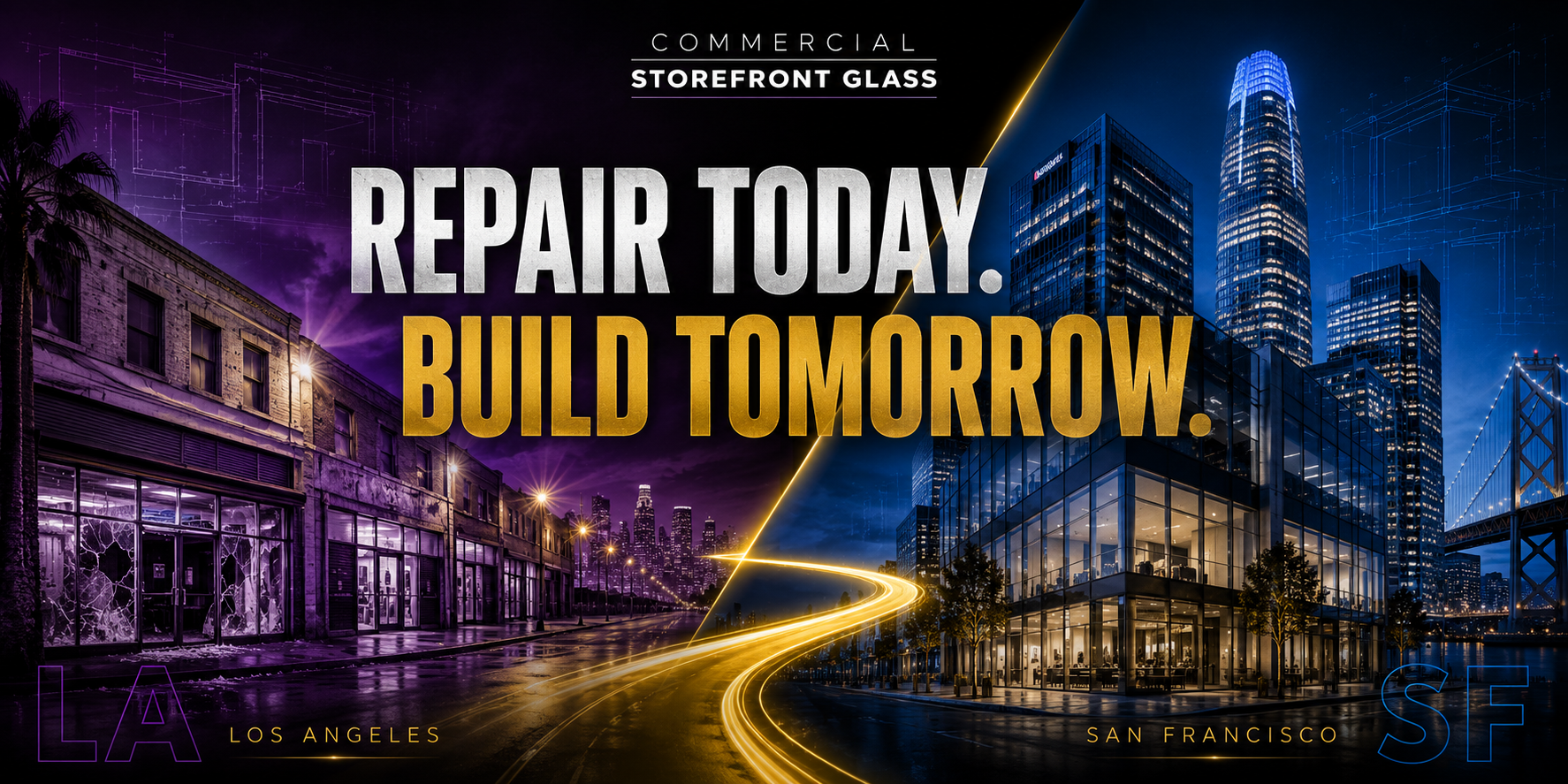
Los Angeles vs San Francisco: Retail Storefront Repair vs Replacement vs New Installation
Retail storefronts do much more than display merchandise. They create first impressions, attract customers, reinforce brand identity, and influence whether someone decides to walk inside. ThroughoutLos AngelesandSan Francisco, retail businesses continually invest instorefront repairs, complete replacements, and entirely newstorefront installationsto remain competitive in two of California’s largest commercial markets.
Although both cities depend on attractive retail environments, their commercial landscapes differ. Los Angeles features expansive shopping centers,lifestyle developments, entertainment districts, and neighborhood retail corridors.San Francisco combines dense urban storefronts, mixed-use developments, destination shopping streets, and historic commercial districts. These differences often influence whether a retail property benefits most fromrepair, replacement, or a completelynew storefront installation.
For property owners, retailers, developers, facility managers, andgeneral contractors, understanding each option helps maximize bothcustomer experienceand long-term property value.
Retail Storefronts Drive Customer Experience
The storefront is often the first interaction customers have with a business.
Aprofessionally designed storefronthelps improve:
- Brand visibility
- Customer confidence
- Natural daylight
- Accessibility
- Security
- Building appearance
- Leasing appeal
Whether serving a luxury retailer in Los Angeles or a neighborhood business in San Francisco,storefront performance directly influenceshow the property is perceived.
When Retail Storefront Repair Is the Right Solution
Many storefront issues can be corrected without replacing the complete storefront system.
Repair is often appropriate when damage remains localized and the storefront continues performing well overall.
Common retail storefront repairs include:
- Broken storefront glass replacement
- Door hardware repairs
- Glass door adjustments
- Lock replacement
- Weather seal replacement
- Minor aluminum framing repairs
- Entrance hardware service
Throughout Los Angeles,storefront repairsare common in shopping centers, restaurants, entertainment districts, outlet centers, and mixed-use retail developments, where businesses need to reopen quickly.
In San Francisco, repairs frequently support street-level retail, neighborhood shopping districts, mixed-use properties, and historic commercial storefronts where maintaining daily business operations is essential.
Repair often provides the fastest and most cost-effective solution when the existing storefront remains structurally sound.

When Retail Storefront Replacement Becomes the Better Investment
Eventually, repeated repairs may no longer provide the appearance or performance modern retailers expect.
Replacement is commonly recommended when:
- Storefront systems become outdated
- Glass damage becomes recurring
- Aluminum framing deteriorates
- Energy performance declines
- Businesses rebrand
- Shopping centers undergo renovation
Los Angeles retailers frequently replace storefronts during tenant improvements,shopping center repositioning, restaurant remodels, and hospitality renovations.
San Francisco retailers often replace storefront systems as they modernize urban retail spaces, upgrade mixed-use developments, improve neighborhood business districts, and reposition commercial properties for new tenants.
A new storefront can dramatically improve visibility while reducing long-term maintenance costs.
New Retail Storefront Installation
New installationrepresents the beginning of a completely new commercial space.
Architects, developers, and retailers can design storefront systems specifically around the tenant’s brand, building architecture, and customer experience.
New retail storefront installations commonly occur during:
- Shopping center construction
- Mixed-use developments
- Restaurant build-outs
- Lifestyle center expansion
- Retail redevelopment
- Commercial tenant improvements
- Entertainment district projects
- Luxury retail developments
Los Angeles continues developing large retail destinations where storefront design becomes a defining architectural feature.
San Francisco combines selective new construction with redevelopment projects that introduce modern storefront systems into established commercial neighborhoods.

Los Angeles vs San Francisco: Different Retail Markets
Both citiessupport thriving retail environments, but the types of storefront projects often reflect different market conditions.
Los Angeles retail projects frequently emphasize:
Lifestyle centers
Entertainment districts
Destination shopping
Restaurant expansion
San Francisco retail projects frequently emphasize:
- Urban storefront modernization
- Mixed-use redevelopment
- Historic commercial corridors
- Neighborhood retail improvements
Both markets prioritize:
— Customer visibility
— Attractive entrances
— Energy efficiency
— Long-term durability
— Professional brand presentation
Successful storefronts help retailers compete regardless of location.
Choosing Between Repair, Replacement, and Installation
Retail propertyowners should evaluate more than visible damagebefore selecting a solution.
Important considerations include:
- Storefront age
- Frequency of repairs
- Brand image
- Customer traffic
- Energy performance
- Accessibility requirements
- Planned renovations
- Long-term leasing strategy
Evaluating the storefront as part of the entire customer experience often produces better investment decisions than focusing on isolated repairs.
Retail Storefronts Support Every Shopping Environment
Commercial storefront systems are installed throughout a wide range ofretail properties.
Common applications include:
- Shopping centers
- Strip malls
- Lifestyle centers
- Restaurants
- Luxury retailers
- Grocery stores
- Mixed-use developments
- Entertainment districts
- Outlet centers
- Neighborhood business districts
Every retail property depends on storefront systems that combine appearance, durability, accessibility, and everyday functionality.
Creating Better Retail Destinations
Retailstorefront repair, replacement, and new installation each play an important role in the lifecycle of a commercial property. Repairs restore day-to-day functionality, replacements modernize aging storefronts, and new installations help define the next generation ofretail environments.
Whether improving a shopping center in Los Angeles or modernizing a neighborhood retail corridor in San Francisco, professionally designed storefront systems strengthen customer confidence, improve operational performance, enhance architectural appeal, and increase long-term property value. In both markets, a retail storefront is far more than an entrance—it is one of the business’s most valuable marketing assets.