



Commercial glass demand reflects far more than building materials.
Economic activity influences development.
Tenant expectations shape modernization decisions.
Property owners invest differently depending on market conditions.
Few comparisons illustrate those differences better than California’s two iconic area codes.
- San Rafael vs Palo Alto Commercial Glass
- Oakland vs Long Beach Commercial Glass
- Los Angeles vs San Francisco Commercial Glass
- Bay Area vs Los Angeles Commercial Glass
- 415 vs 213 Commercial Glass Matchups
- San Jose vs Mountain View Commercial Glass
- San Jose vs Palo Alto Commercial Glass
- San Jose vs Fremont Commercial Glass
- Oakland Aluminum Storefront vs Fremont Curtain Wall
- SF Commercial Glass Repair vs San Jose Storefront Replacement
The 415 represents San Francisco, Marin County, and surrounding Northern California commercial markets.
The 213 represents Downtown Los Angeles and the broader Southern California commercial ecosystem.
Both regions generate significant commercial glass activity.
However, the forces driving demand often look very different.
San Francisco Commercial Glass Repair
San Jose Commercial Glass Repair
Oakland Commercial Glass Repair
Palo Alto Commercial Glass Repair
San Rafael Commercial Glass Repair
Walnut Creek Commercial Glass Repair
Redwood City Commercial Glass Repair
Mountain View Commercial Glass Repair
Fremont Commercial Glass Repair
Sunnyvale Commercial Glass Repair
The General Contractor (GC) Perspective
- How They Perceive It:The GC sees “415 vs 213” as a clash between two completely different logistical and regulatory war zones. In the 415 (San Francisco), they are navigating micro-climate moisture, tight zero-lot-line job sites, aggressive historic preservation guidelines, strict seismic movement tolerances, and brutal sidewalk/crane permitting through SFMTA. In the 213 (Downtown Los Angeles), they are managing extreme solar heat gain coefficients (SHGC), high wind load engineering for urban canyons, fast-paced multi-story core/shell retrofits, and strict Title 24 cooling compliance. To the GC, the matchup is about logistics access, structural engineering, and avoiding costly site delays.
- Decisions They Normally Make:
- Treats structural attachment details interchangeably: Uses standard clip-angle anchoring details across both markets, failing to account for San Francisco’s lateral seismic inter-story drift versus DTLA’s heavy thermal expansion/contraction on south/west-facing facades.
- Standardizes low-E coatings without regional tuning: Orders the same glass makeups for both regions, resulting in overheated interiors in 213 storefronts or insufficient passive solar warmth and condensation issues in 415 microclimates.
- Underestimates site logistics: Assumes flatbed delivery and staging in dense SF financial corridors works the same as wide-arterial DTLA streets, leading to immediate traffic citations, permit shut-downs, or crane-access cancellations.
- Decisions They SHOULD Make:
- Tune glazing specs directly to the area code: Specify higher visible light transmittance (VLT) with robust thermal breaks for 415 fog/damp envelopes, and low SHGC (Solar Heat Gain) solar-control coatings (e.g., Solarban 70/90) with heavy-duty structural silicone glazing (SSG) for high-exposure 213 elevations.
- Mandate regional site logistic plans 60 days out: Pre-coordinate street closures, pedestrian canopy overhead protection, and custom crane/suction-rig access tailored specifically to dense SF hills or DTLA one-way corridors.
- Enforce pre-glaze structural coordination: Align steel/concrete tolerances early with the glazing sub to ensure heavy curtain wall or storefront mullions absorb regional movement without snapping glass or breaking perimeter weather seals.
- Commercial Office Renovation
- Commercial Office Remodel
- Commercial Office Build Out
- Office Build Out Contractor
- Commercial Interior Renovation
- Commercial Space Renovation
- Office Space Renovation
- Commercial Property Modernization
- Commercial Building Renovation
- Retail Store Build Out
- Restaurant Build Out Contractor
- Commercial Interior Construction
- Office Expansion Contractor
- Commercial Leasehold Improvements
- Commercial Space Conversion
The Commercial Tenant Perspective
- How They Perceive It:The commercial tenant (flagship retail, creative agency, corporate office, or ground-floor showroom) views the glass as the defining line between their brand image and the street environment. In the 415, they are fighting grey ambient light, chilly street drafts, and heightened security/vandalism concerns in high-density foot-traffic areas. In the 213, they are battling blinding glare on computer screens/merchandise, massive HVAC cooling bills from afternoon sun, and the need for grand, high-ceiling architectural statements that attract urban foot traffic.
- Decisions They Normally Make:
- Focuses purely on unobstructed glass sizing: Demands floor-to-ceiling single-span lites without factoring in the massive HVAC load in DTLA (213) or the heat loss and draftiness in San Francisco (415).
- Cuts security and acoustic upgrades to save initial TI budget: Skips laminated glass or anti-graffiti sacrificial films, only to incur immediate replacement costs from etching, smash-and-grab attempts, or overwhelming street/transit noise.
- Ignores lease boundary responsibility for perimeter envelopes: Signs commercial leases without knowing whether the landlord or the tenant pays for broken insulated units, failed hermetic seals, or frame re-caulking.
- Decisions They SHOULD Make:
- Demand high-performance laminate & security makeups: In high-density urban corridors (both 415 and 213), insist on multi-layer laminated security glass with exterior sacrificial film to protect against forced entry, vandalism, and urban sound transmission (STC ratings of 38+).
- Balance natural daylighting with occupant comfort: Request spectrally selective low-E glass combined with integrated interior motorized shading systems, ensuring daylight reaches deep into the floor plate without blinding clients or driving up utility costs.
- Verify landlord lease envelope terms upfront: Define clear maintenance and replacement thresholds for exterior storefront glass in the lease agreement before executing the final Tenant Improvement contract.

Northern California commercial real estate frequently revolves around:
- Technology
- Professional services
- Healthcare
- Research institutions
- Mixed-use redevelopment
Many projects focus on modernization.
Property improvement remains a recurring theme.
Tenant expectations continue influencing investment decisions.
Commercial glass upgrades often support workplace quality, energy performance, and building repositioning.
- Commercial Glass Repair vs Storefront Glass Replacement
- Commercial Storefront Systems vs Aluminum Storefront Systems
- Commercial Glass Doors vs Commercial Window Replacement
- Curtain Wall vs Storefront Systems
- Commercial Glass Installation vs Commercial Glass Repair
- Commercial Glazing Contractor vs Commercial Glass Contractor
- Emergency Board-Up vs Commercial Glass Repair
- Office Glass Installation vs Storefront Glass Installation
- Curtain Wall Installation vs Curtain Wall Repair
- Aluminum Storefront vs Glass Storefront
Oakland
Oakland vs Bay Area Commercial Glass Repair
Oakland vs Berkeley Commercial Glass Repair
Oakland vs East Palo Alto Commercial Glass Repair
Oakland vs Hayward Commercial Glass Repair
Oakland vs Richmond Commercial Glass Repair
Oakland vs Vallejo Commercial Glass Repair
Oakland vs National Commercial Glass Repair
Oakland vs Baltimore Emergency Glass Repair
Oakland vs Buffalo Commercial Glass Repair
Oakland vs Cleveland Broken Storefront Replacement
Oakland vs Detroit Storefront Glazing Repair
Oakland vs Long Beach Commercial Glass Repair
Oakland vs Memphis Emergency Storefront Repair
Oakland vs Milwaukee Commercial Glass Repair
Oakland Aluminum Storefront vs Fremont Curtain Wall
Berkeley Window Replacement vs Oakland Emergency Board-Up
415 Markets | 213 Markets |
Workplace Experience | Customer Experience |
Building Performance | Property Visibility |
Office Modernization | Retail Modernization |
Technology Expansion | Urban Redevelopment |
Sustainability Goals | Hospitality Investment |
Both regions rely heavily on commercial glass systems.
The priorities behind those investments often differ.
Commercial Warehouse Repair vs Replacement vs Installation
Commercial Logistics Repair vs Replacement vs Installation
Commercial Storefront Repair vs Replacement vs Installation
Curtain Wall Repair vs Replacement vs Installation
Commercial Window Repair vs Replacement vs Installation
Commercial Door Repair vs Replacement vs Installation
Emergency Board-Up Repair vs Replacement vs Installation
Industrial Building Repair vs Replacement vs Installation
Manufacturing Facility Repair vs Replacement vs Installation
Port & Terminal Repair vs Replacement vs Installation
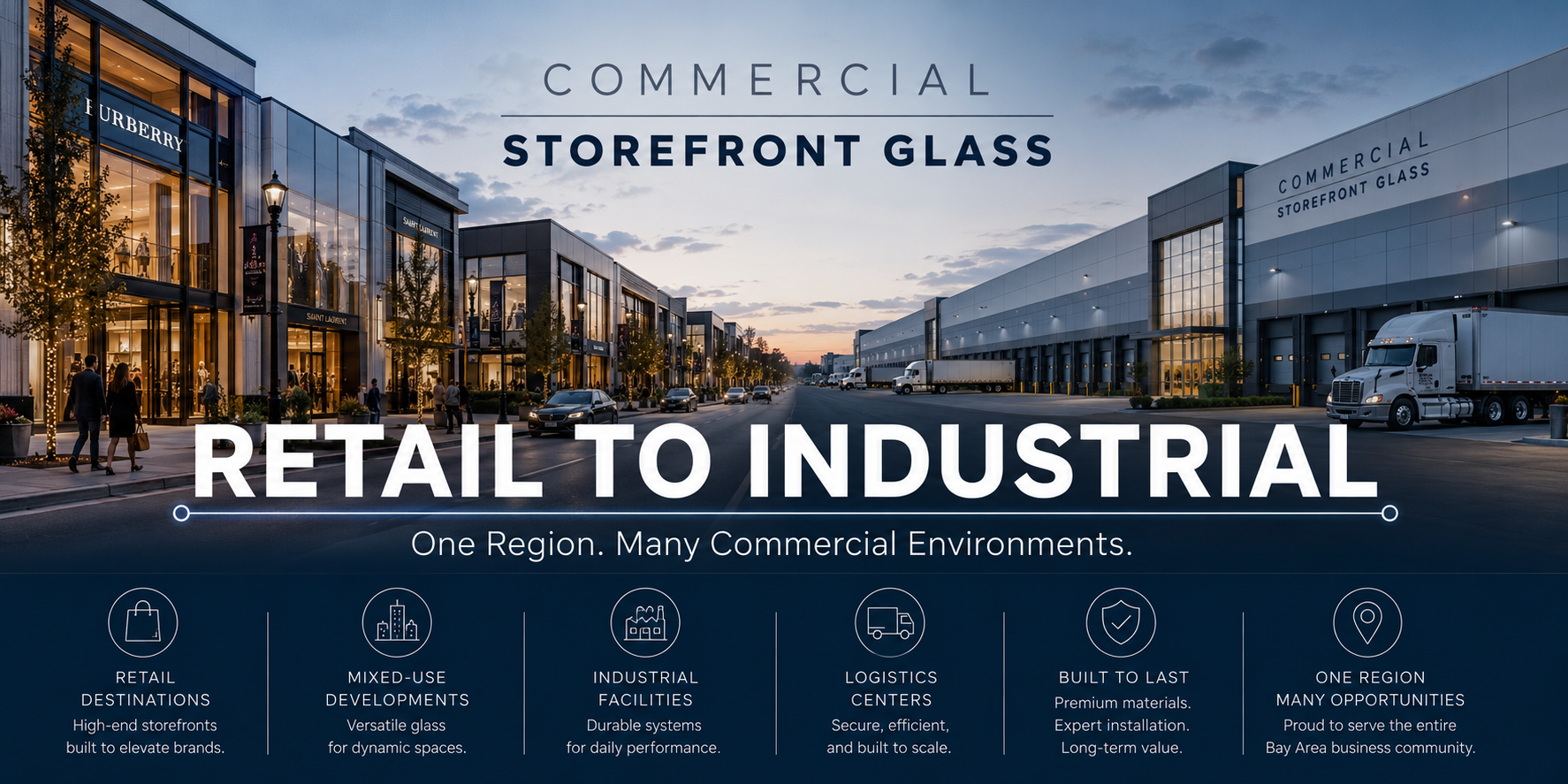
Southern California likely produces greater overall commercial glass volume.
Population density, development activity, hospitality investment, logistics infrastructure, and redevelopment projects create enormous demand across the region.
Northern California remains highly influential.
Technology investment continues supporting office modernization, research facilities, mixed-use projects, and workplace improvements.
Bay Area Commercial Glass
Repair vs Replacement vs Installation Bay Area
Bay Area Commercial Glass Matchups
Bay Area Commercial Glass Repair
Bay Area Commercial Glass Replacement
Bay Area Commercial Glass Installation
Bay Area Commercial Glass Services
Bay Area Commercial Storefront Glass
Bay Area Commercial Window Repair
Bay Area Emergency Glass Replacement
However, the sheer scale of Southern California’s commercial real estate ecosystem generally creates more total glazing activity.
The 415 often drives innovation.
The 213 frequently drives volume.
Both remain essential markets within California’s commercial real estate landscape.