

Antioch has experienced significant growth over the past several decades.
Population expansion has influenced commercial development.
Retail corridors continue evolving.
Healthcare facilities serve a growing community.
Professional services and mixed-use projects contribute to an increasingly diverse local economy.
Commercial glass plays an important role throughout these environments.
Storefronts improve visibility
Medical offices enhance occupant comfort
Retail centers support customer engagement
Mixed-use developments modernize property appearance
As Antioch continues growing, commercial glass remains a visible part of commercial investment and property improvement efforts.
- Tenant Improvement Contractors
- Tenant Improvement Construction
- Tenant Improvement Build Outs
- Tenant Improvement Remodeling
- Tenant Improvement Renovations
- Commercial Tenant Improvement Services
- Office Tenant Improvement Contractor
The General Contractor (GC) Perspective
How They Perceive It: The GC views Antioch and East Contra Costa County through the lens of an inland microclimate transition zone combined with regional logistics. Located along the San Joaquin River Delta, Antioch experiences sharper temperature swings than the coastal Bay Area—blistering 100°F+ summer days paired with persistent Delta wind gusts and river-moisture fog. For the GC, commercial storefront work spans a mix of aging strip center retrofits along A Street or 18th Street and newer auto center/retail park developments near Highway 4. The GC’s primary concerns are managing strict Title 24 envelope compliance for inland Zone 12, securing reliable glazier staging from central Bay suppliers without gridlock delays on the Highway 4 corridor, and preventing structural racking from delta wind loads.
Decisions They Normally Make:
Specifies coastal Bay Area glass makeups by default: Assumes standard Western Bay storefront ratings apply, overlooking that Antioch sits in a significantly hotter climate zone requiring a much lower Solar Heat Gain Coefficient (SHGC) to pass local plan checks.
Treats perimeter weatherproofing as a basic caulking job: Underestimates the wind-driven moisture that sweeps off the Delta, applying standard perimeter wet seals without inspecting whether legacy strip mall rough openings have rotted headers or compromised vapor barriers.
Relies on non-local glass fabricators without buffering transit lead times: Fails to account for East Bay transit choke points and limited local heavy-fabrication runs, leaving rough openings boarded up with plywood while waiting for replacement tempered or insulated glass units (IGUs).
Decisions They SHOULD Make:
Tune the glazing package to Inland Zone 12 Title 24 energy mandates: Specify thermally broken aluminum extrusions with spectrally selective low-E coatings engineered for high cooling loads and high summer heat rejection.
Engineer anchor points and mullions for delta wind shear: Calculate local dynamic wind pressures along open corridors and river-adjacent commercial parks, utilizing reinforced corner mullions and heavy-duty structural anchoring.
Partner with regionally established glazing contractors early: Pre-verify inventory availability, field measure rough openings as soon as framing is plumb, and secure shop drawings weeks ahead to prevent occupancy inspection logjams.
- Retail Tenant Improvement Contractor
- Restaurant Tenant Improvement Contractor
- Medical Office Tenant Improvements
- Industrial Tenant Improvement Contractor
- Warehouse Tenant Improvements
- Tenant Improvement Allowance Guide
- Tenant Improvement Glass & Storefront Systems
- Tenant Improvement Project Planning
The Commercial / Retail Tenant Perspective
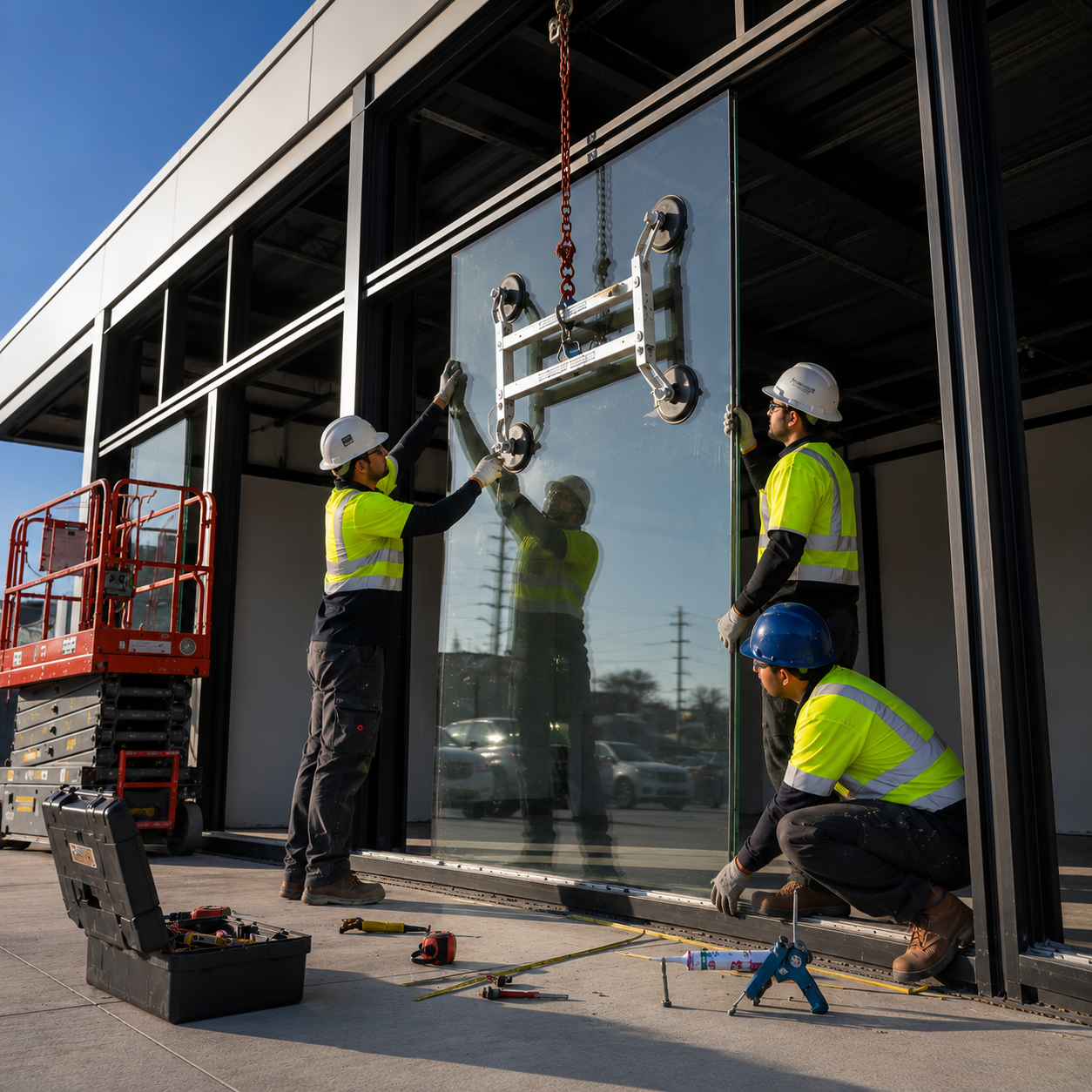
How They Perceive It: The Antioch commercial tenant (auto dealership, medical office, local dining spot, or retail strip shop) views their storefront as their chief defense against two daily realities: intense afternoon sun and asset security. They want clear visibility from busy commuter thoroughfares to attract drive-by traffic off Highway 4 and Lone Tree Way. However, unshaded glass facades can turn an interior into a greenhouse by 2:00 PM, driving utility costs through the roof and making front retail displays or customer seating uncomfortable. Furthermore, security and vandalism mitigation are constant operational concerns.
Decisions They Normally Make:
Applies dark DIY window tinting to combat summer heat: Slaps dark aftermarket tint on front windows to block the punishing sun, inadvertently masking retail displays from the street, darkening the interior, and inducing thermal stress cracks in legacy non-tempered glass.
Skips impact/laminated glass upgrades to conserve upfront cash: Chooses standard annealed or basic tempered glass for high-traffic street-fronts, leaving the business exposed to break-ins, property vandalism, and prolonged downtime waiting for board-ups.
Overlooks commercial door hardware until a complete failure occurs: Ignores sticking latch bolts, blown closer fluid, or sagging hinges caused by constant delta wind door-catches, until a customer gets locked out or the door slams and fractures the lite.
Decisions They SHOULD Make:
Invest in spectrally selective Solar-Control Low-E IGUs: Insist on advanced low-E coatings that let in crisp daylight and showcase interior merchandise while reflecting the bulk of infrared solar heat, keeping cooling bills under control.
Specify security-laminated glass or sacrificial security film: Install laminated glass makeups or high-mil exterior anti-graffiti films on ground-floor panes to prevent smash-and-grab entry and simplify cleanup after tagging or etching.
Require heavy-duty, wind-rated commercial entrance hardware: Install wide-stile entrance doors fitted with continuous geared hinges, exterior threshold seals, and heavy-duty hydraulic door closers rated to overcome persistent Delta head-winds.
- Commercial Office Renovation
- Commercial Office Remodel
- Commercial Office Build Out
- Office Build Out Contractor
- Commercial Interior Renovation
- Commercial Space Renovation
- Office Space Renovation

Different commercial properties create different system requirements.
A healthcare facility operates differently than a retail center.
Professional office environments face different priorities than neighborhood shopping centers.
Common objectives often include:
Improved energy efficiency
Better natural light
Reduced maintenance costs
Enhanced property appearance
Long-term building value
Commercial glass systems throughout Antioch frequently balance performance, functionality, and modernization goals.
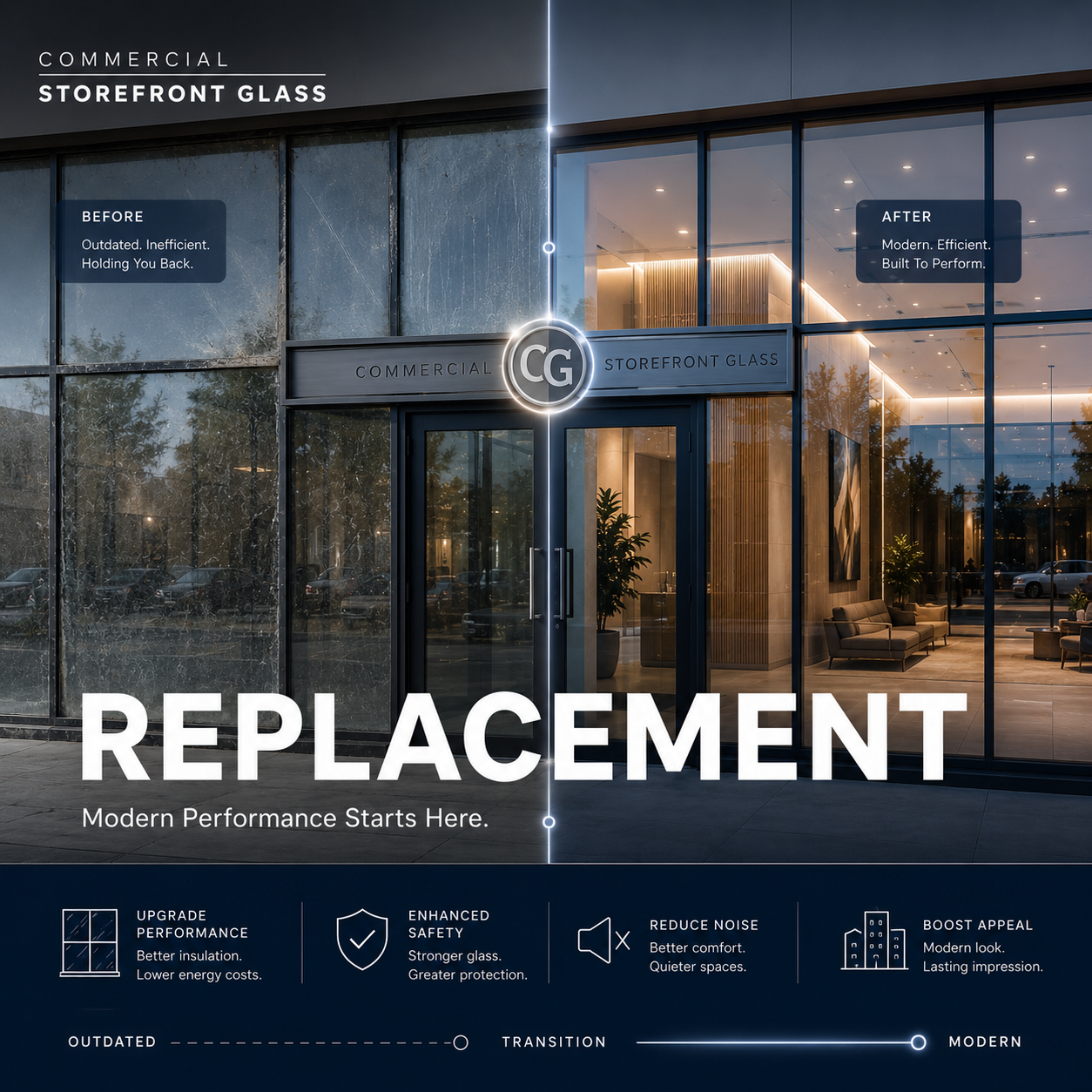
Long-term building performance depends heavily on the quality of the exterior envelope.
Glass remains one of the most important components within that system.
Modern building envelope strategies often focus on:
Energy efficiency
Thermal performance
Water management
Occupant comfort
Long-term durability
Older commercial properties throughout Antioch frequently encounter challenges such as:
Aging seals
Air infiltration
Water intrusion
Outdated glazing systems
Increasing maintenance requirements
As ownership groups pursue modernization initiatives, building envelope improvements often become a priority.
Glass replacement projects frequently align with broader capital improvement strategies designed to improve long-term property performance.
Bay Area Curtain Wall Systems
Bay Area Glass Entry Systems
Bay Area Aluminum Framing Systems
Bay Area Architectural Glass
Bay Area Building Envelope Glass Systems
Bay Area Commercial Security Glass
Bay Area Energy Efficient Commercial Glass
Bay Area Impact-Resistant Glazing
Bay Area Commercial Glass Systems
Bay Area Commercial Glazing Systems