


Boulder is one of Colorado’s most innovative commercial markets, combining world-class research, technology, aerospace, life sciences, higher education, and entrepreneurship within a highly regulated and environmentally conscious development environment. From corporate headquarters and research laboratories to healthcare facilities, office campuses, retail centers, and mixed-use projects, commercial buildings throughout Boulder rely on high-performance glass systems that support energy efficiency, occupant comfort, sustainability, and long-term building performance. Property owners, developers, facility managers, architects, and general contractors regularly evaluate whether commercial glass should be repaired, replaced, or upgraded to protect their investment while meeting the demands of a growing innovation economy.
Commercial activity extends throughout Downtown Boulder, East Boulder, Gunbarrel, North Boulder, University Hill, Boulder Junction, Twenty Ninth Street, the Pearl Street area, and nearby communities including Louisville, Lafayette, Superior, Erie, and Longmont. The region supports technology startups, aerospace companies, research institutions, professional offices, healthcare providers, educational facilities, and advanced manufacturing, creating consistent demand for commercial storefront systems, curtain walls, windows, entrances, and complete building envelope modernization.
Whether serving a laboratory, a university building, a corporate office, or a mixed-use development, commercial glazing is an essential component of Boulder’s modern commercial infrastructure.
- Tenant Improvement Contractors
- Tenant Improvement Construction
- Tenant Improvement Build Outs
- Tenant Improvement Remodeling
- Tenant Improvement Renovations
- Commercial Tenant Improvement Services
- Office Tenant Improvement Contractor
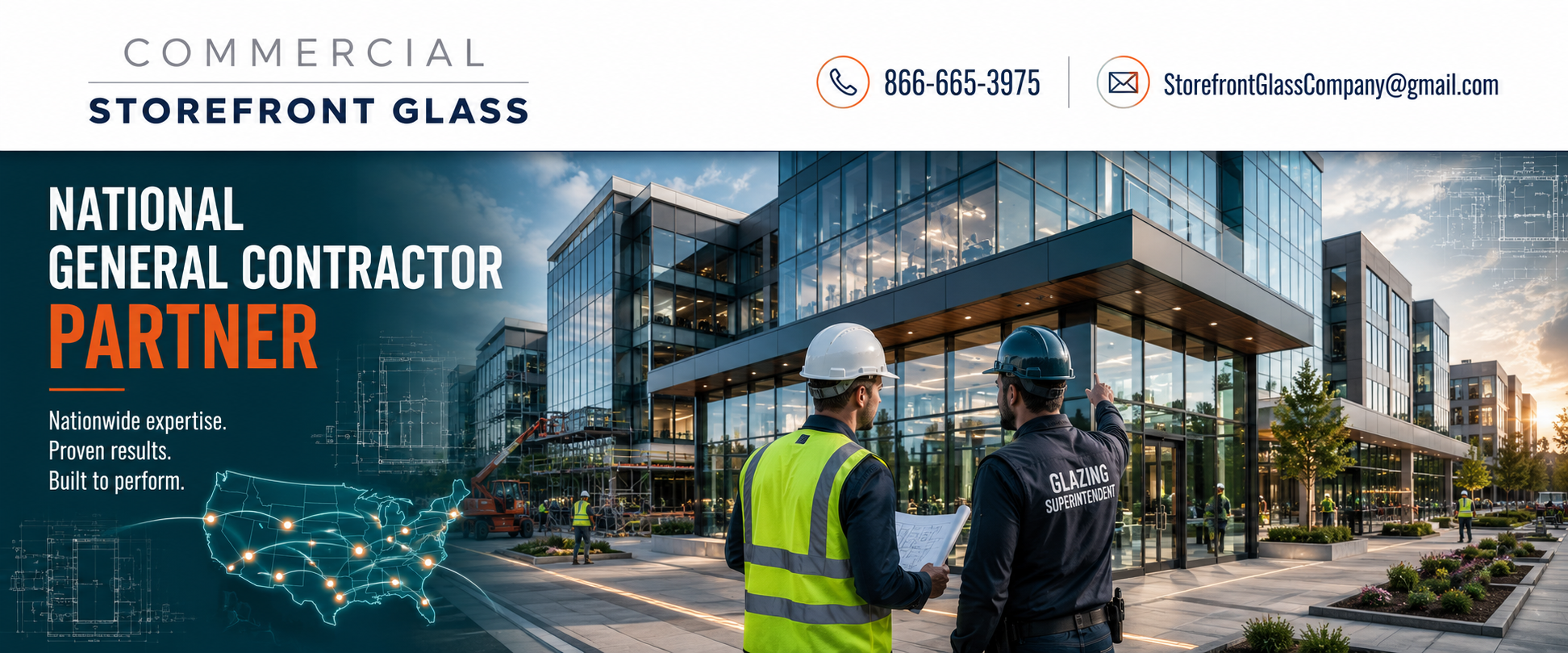
The General Contractor (GC) Perspective
- How They Perceive It:The GC sees Boulder as one of the most demanding regulatory and environmental markets in the Mountain West. Between the aggressive City of Boulder Energy Conservation Code (CoBECC / net-zero mandates), historic downtown Pearl Street design standards, extreme freeze-thaw cycles, and ferocious Front Range downslope wind loads (often exceeding 100+ mph gusts off the Rockies), commercial glazing is a high-risk engineering discipline. To the GC, storefront and curtain wall packages aren’t just aesthetic shells—they are critical-path items that can fail strict air-barrier blower-door tests, get rejected by historic preservation boards, or delay occupancy inspections.
- Decisions They Normally Make:
- Specifies standard “cold-climate” storefront extrusions: Assumes off-the-shelf thermally broken systems suitable for Denver will automatically clear Boulder’s more stringent local energy stretch codes and low U-factor requirements.
- Underengineers perimeter anchor points for wind loads: Uses standard shim-and-fastener schedules along rough openings without calculating the dynamic localized uplift and positive/negative pressures caused by Front Range mountain-wave wind events.
- Treats historic Pearl Street / downtown aesthetic guidelines as an afterthought: Submits modern, wide-profile aluminum storefronts without matching historical sightlines, muntin divisions, or approved anodized finishes, triggering immediate municipal design review pushbacks.
- Decisions They SHOULD Make:
- Specify high-performance thermally broken systems with argon/warm-edge spacers: Partner early with glazing engineers to ensure overall assembly U-factors (not just center-of-glass ratings) comfortably beat Boulder’s strict energy performance thresholds.
- Engineer custom perimeter anchor clips and structural silicone glazing (SSG): Account for Boulder’s severe wind load criteria and thermal expansion/contraction cycles driven by 40-degree single-day mountain temperature swings.
- Conduct pre-submittal reviews with local preservation & planning officials: Align extrusion sightlines, finish colors, and safety glazing details upfront to streamline plan review and prevent costly lead-time restarts on custom storefront systems.
The Commercial / Retail Tenant Perspective
- How They Perceive It:The Boulder tenant (outdoor retail flagship, tech office, brewery/taproom, or farm-to-table restaurant) views storefront glass through the dual lenses of sustainability and the classic Colorado indoor-outdoor lifestyle. They want expansive floor-to-ceiling vistas of the Flatirons, abundant natural daylighting, and massive operable bi-fold or multi-slide glass walls for seasonal patio seating. At the same time, they are acutely aware of winter heating costs, drafty customer seating near perimeter windows, and the eco-conscious brand expectations of the local demographic.
- Decisions They Normally Make:
- Demands large operable glass walls without checking thermal ratings: Pushes for large folding/sliding glass patio doors that maximize summer seating, only to discover in January that basic multi-slide tracks create uncomfortable drafts and spike winter heating bills.
- Focuses on visual transparency over high-altitude solar control: Chooses high-VLT (Visible Light Transmittance) glass to keep the space bright, forgetting that Boulder’s mile-high UV index and intense direct sun can bleach interior wood flooring, fade retail merchandise, and cause uncomfortable customer glare.
- Overlooks bird-friendly glass requirements and local environmental mandates: Selects large, clear reflective glass facades without verifying whether the building location falls under local wildlife/bird-safe building guidelines or eco-sustainability mandates.
- Decisions They SHOULD Make:
- Invest in spectrally selective, high-altitude low-E glass with capillary tubes: Ensure insulated glass units (IGUs) are equipped with breather/capillary tubes for elevation equalization and coated with advanced low-E coatings to block intense high-elevation UV while retaining radiant interior heat during winter.
- Select thermally broken, weather-rated operable door systems: If installing roll-up or bi-fold glass doors for indoor-outdoor customer flow, insist on compression-seal, fully insulated commercial frames designed specifically for alpine/sub-alpine climates.
- Coordinate the glazing strategy with internal floor plans: Position primary customer seating and merchandise displays in harmony with solar orientation, incorporating integrated architectural overhangs or automated interior shading to maintain year-round comfort.
Commercial construction supports a diverse range of industries throughout the region.
Major sectors include:
- Technology companies
- Aerospace and defense
- Research laboratories
- Life sciences
- Healthcare systems
- Professional office buildings
- Higher education
- Advanced manufacturing
- Retail centers
- Hospitality properties
- Mixed-use developments
- Government facilities
Commercial glazing supports each of these industries while helping create efficient, attractive, and productive commercial environments.
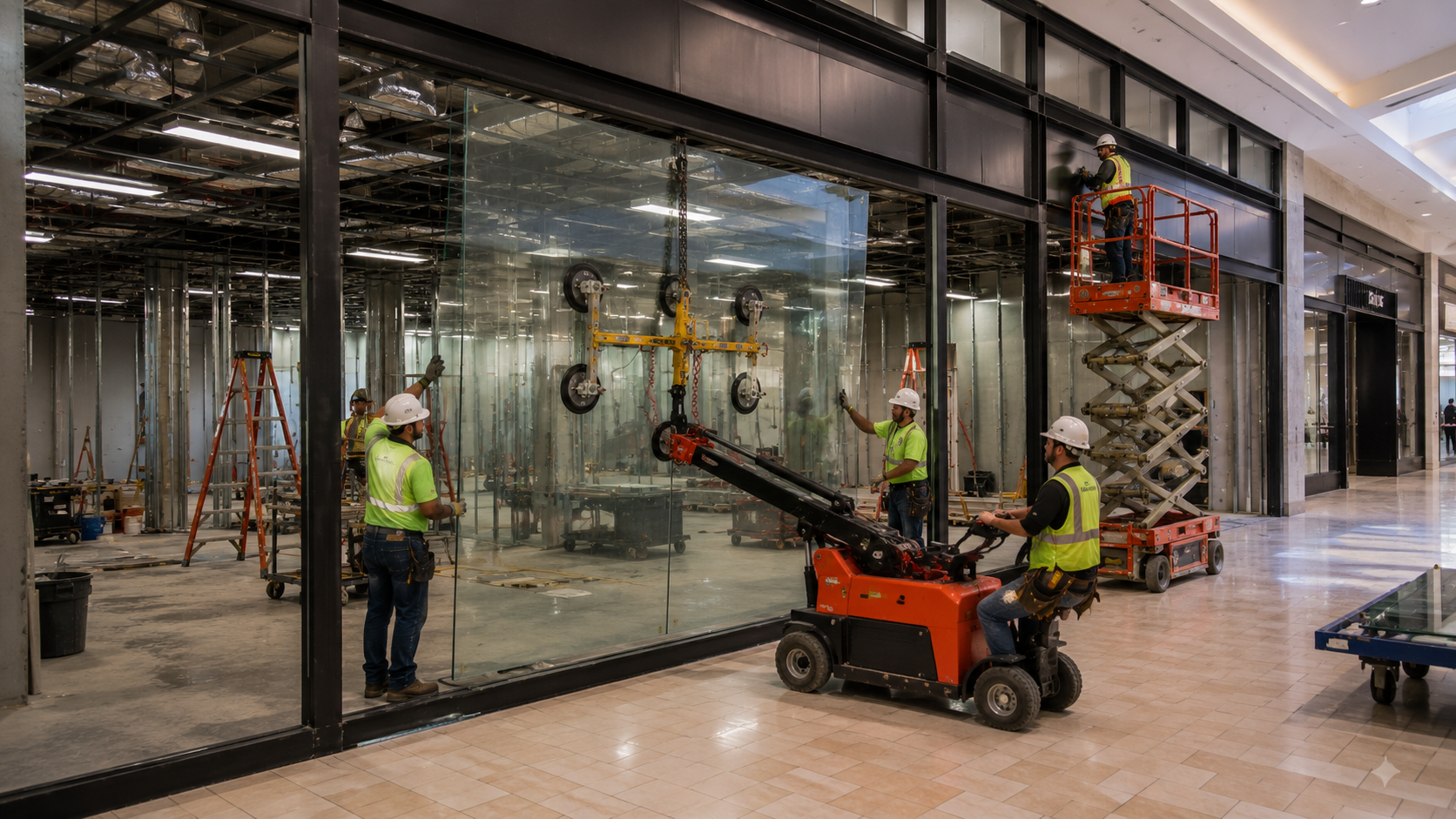
As commercial buildings mature, replacement often becomes the better long-term investment.
Replacement is commonly recommended when:
- Multiple glazing systems begin failing
- Energy performance declines
- Building appearance becomes outdated
- Maintenance costs continue increasing
- Water intrusion becomes recurring
- Tenant improvements are planned
- Capital modernization projects begin
Modern glazing systems improve efficiency, comfort, and long-term building performance while supporting sustainability goals.
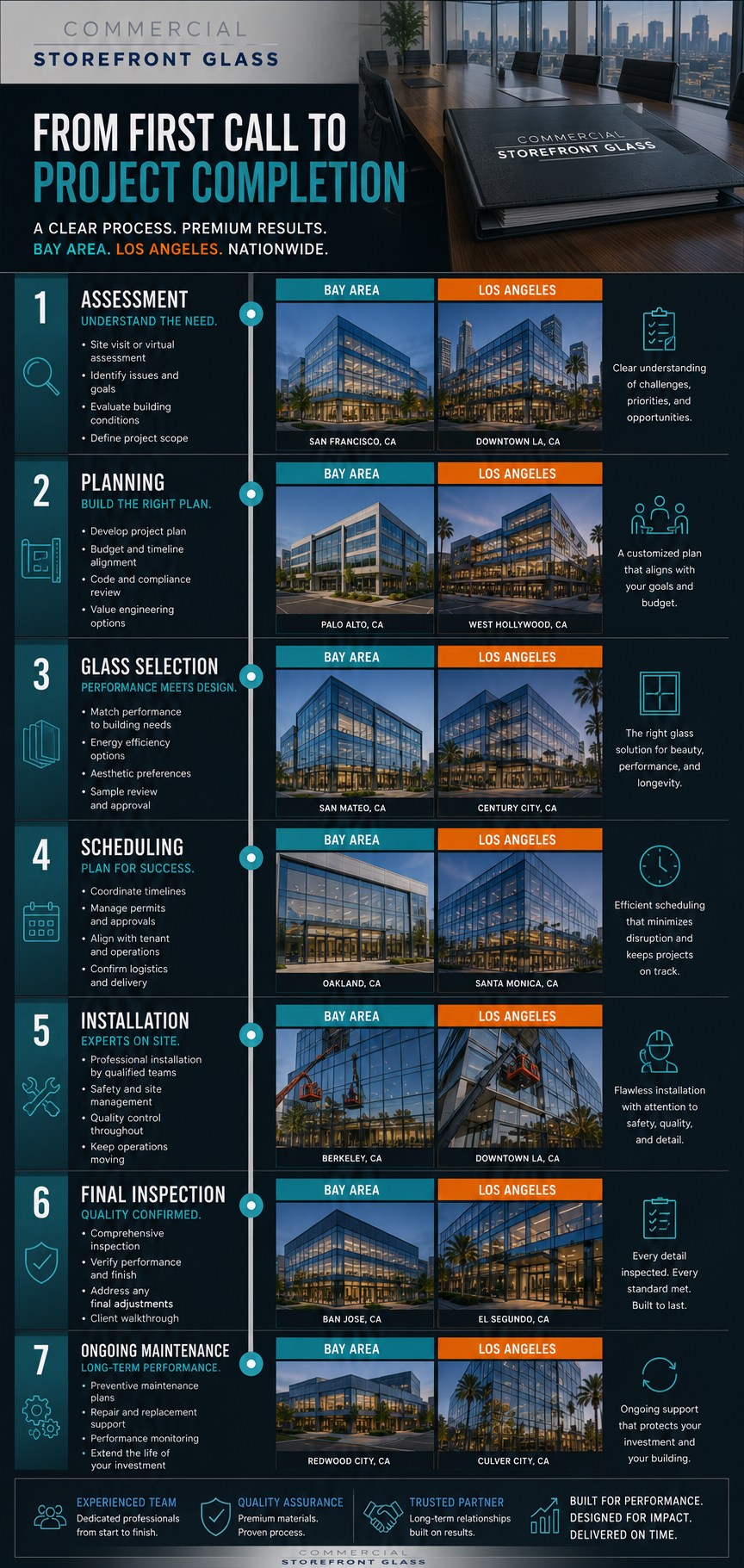
Commercial buildings throughout Boulder experience changing environmental conditions throughout the year.
Property owners commonly plan for:
- Snow and ice
- Freeze-thaw cycles
- Strong ultraviolet exposure
- High winds
- Hail storms
- Seasonal temperature swings
- Rapid weather changes
- Long-term energy efficiency
These conditions influence glazing selection, sealant performance, maintenance schedules, and lifecycle planning.
- Commercial Property Modernization
- Commercial Building Renovation
- Retail Store Build Out
- Restaurant Build Out Contractor
- Commercial Interior Construction
- Office Expansion Contractor
- Commercial Leasehold Improvements
- Commercial Space Conversion
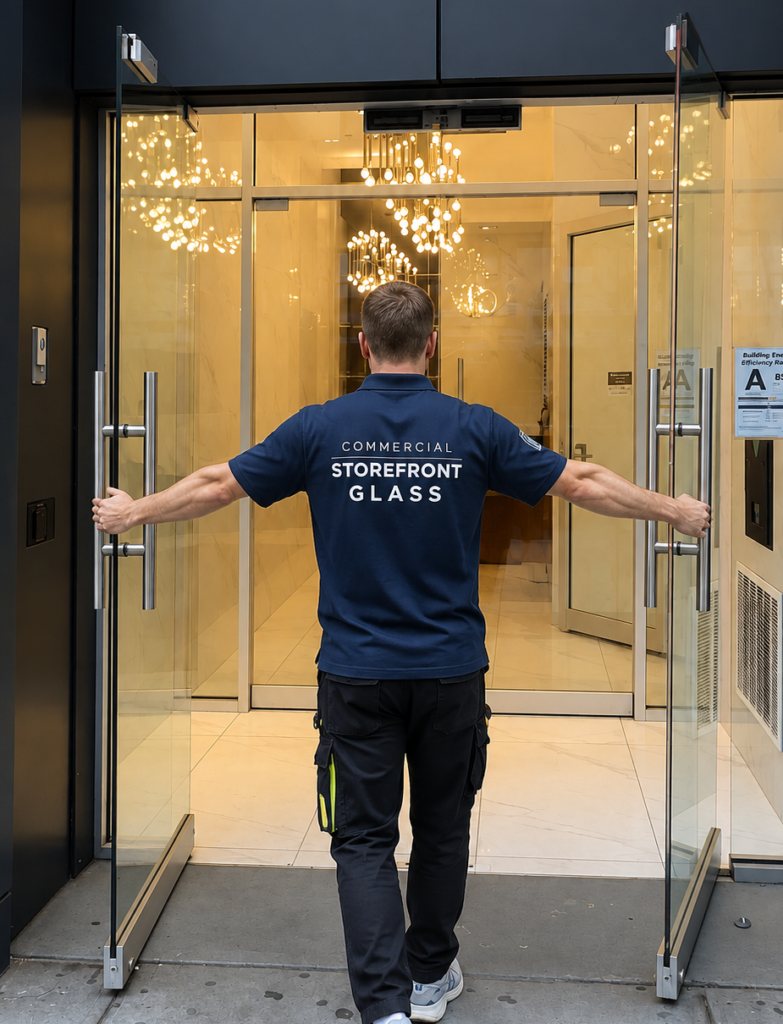
Commercial glazing serves nearly every major commercial sector throughout Boulder.
Common projects include:
- Office buildings
- Technology campuses
- Research laboratories
- Healthcare facilities
- University buildings
- Manufacturing facilities
- Retail centers
- Hotels
- Government buildings
- Mixed-use developments
- Professional office parks
- Innovation campuses
Each property type requires glazing systems that balance performance, durability, aesthetics, and long-term operational value.