

The Bay Area contains one of the most diverse commercial property markets in North America.
Technology campuses dominate certain regions.
Healthcare and life science facilities anchor others.
Retail districts vary dramatically from city to city.
Industrial development follows entirely different patterns.
Because each market faces unique pressures, commercial glass systems often solve very different problems depending on location.
Some properties prioritize visibility.
Others focus on modernization.
Many pursue energy performance, tenant attraction, or building envelope improvements.
Examining commercial real estate through local matchups helps illustrate how those priorities change throughout the region.
- Tenant Improvement Contractors
- Tenant Improvement Construction
- Tenant Improvement Build Outs
- Tenant Improvement Remodeling
- Tenant Improvement Renovations
- Commercial Tenant Improvement Services
- Office Tenant Improvement Contractor
The General Contractor (GC) Perspective
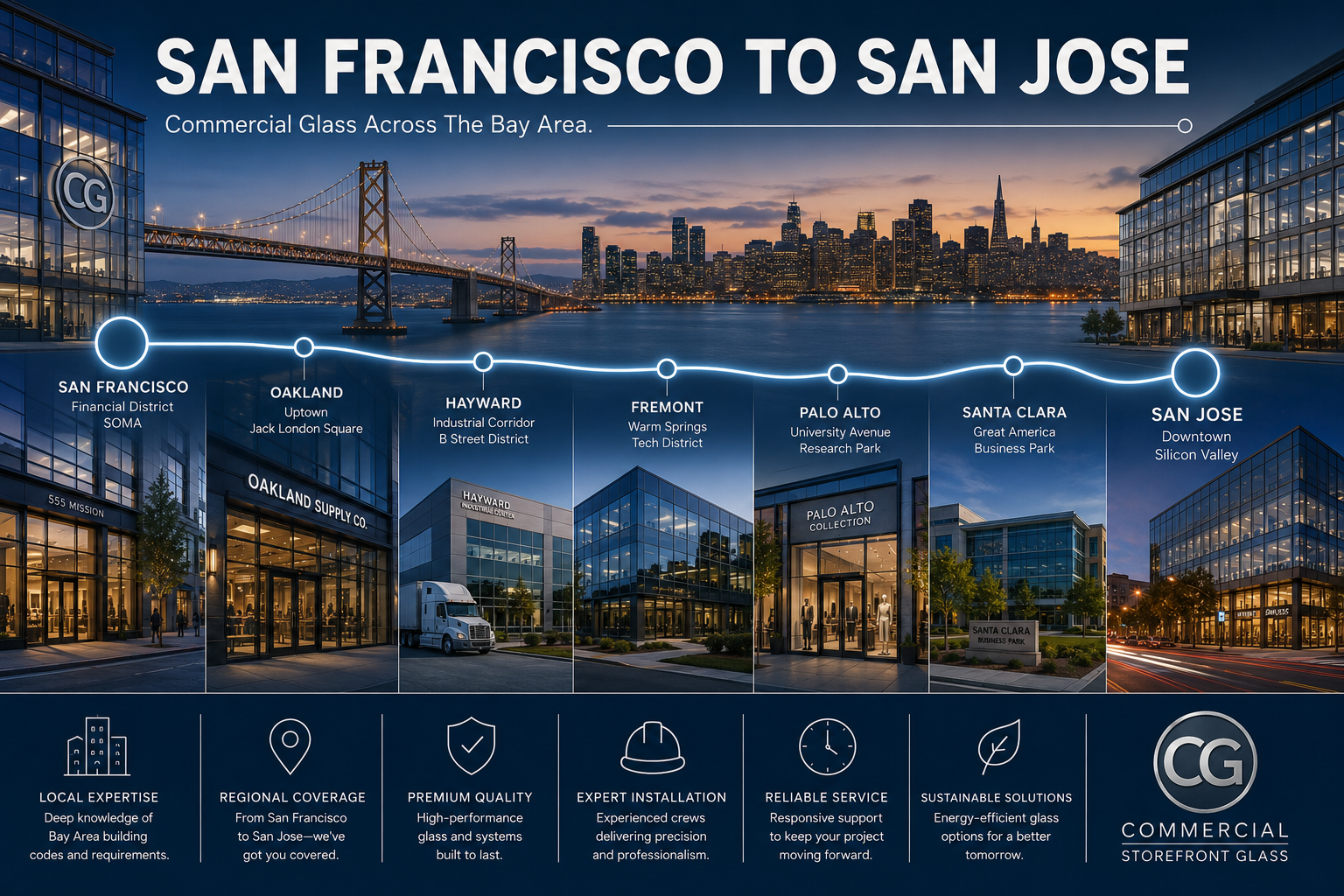
How They Perceive It: The GC evaluates commercial glazing in the San Francisco Bay Area through a complex matrix of regulatory compliance, structural risk, and dense logistics. Between strict California Title 24 envelope requirements (and local municipal “reach codes” mandating aggressive decarbonization and low U-factors), rigorous bird-safe building standards, high lateral seismic drift tolerances due to active regional fault lines, and chronic marine-layer moisture infiltration, commercial glass is a zero-tolerance scope. In dense urban nodes like San Francisco, Oakland, or Berkeley, the GC must also contend with zero-lot-line job sites, transit clearances (SFMTA/Muni overhead lines), and restrictive crane-staging permits that make exterior envelope work the primary critical-path bottleneck to achieving dry-in.
Decisions They Normally Make:
Treats standard commercial storefront systems as universal across regional microclimates: Uses identical framing extrusions in coastal, foggy San Francisco as in the hot, sun-baked Tri-Valley or San Jose corridors, resulting in interior condensation failures on the coast or excessive solar heat gain inland.
Pushes for rough-opening measurements before framing and substrates are plumb: Pressures framing crews and the glazing subcontractor to finalize glass orders prematurely to beat extended lead times, leading to expensive field-shimming hacks, edge-binding, or rejected shop drawings.
Leaves seismic clip and deflection engineering to standard manufacturer submittals: Fails to pre-coordinate slotted perimeter anchoring with the structural engineer of record (SEOR), causing installation stalls when framing cannot accommodate dynamic inter-story drift calculations.
Decisions They SHOULD Make:
Tune the glazing package to the specific Bay Area microclimate zone: Mandate thermally broken aluminum systems with high condensation resistance (CR) and warm-edge spacers for marine fog zones (Zone 3), while engineering ultra-low Solar Heat Gain Coefficients (SHGC) for inland South and East Bay locations (Zone 4/12).
Deploy 3D Building Information Modeling (BIM) and on-site laser scanning: Scan rough concrete and steel openings before releasing shop drawings to ensure thermally broken curtain wall and storefront assemblies fit exact field conditions without site modifications.
Coordinate municipal street closures and utility drops 60–90 days out: Secure city right-of-way approvals, pedestrian canopies, and transit overhead wire de-energization permits well in advance to prevent crane setup and staging cancellations.
- Retail Tenant Improvement Contractor
- Restaurant Tenant Improvement Contractor
- Medical Office Tenant Improvements
- Industrial Tenant Improvement Contractor
- Warehouse Tenant Improvements
- Tenant Improvement Allowance Guide
- Tenant Improvement Glass & Storefront Systems
- Tenant Improvement Project Planning
The Commercial Tenant Perspective
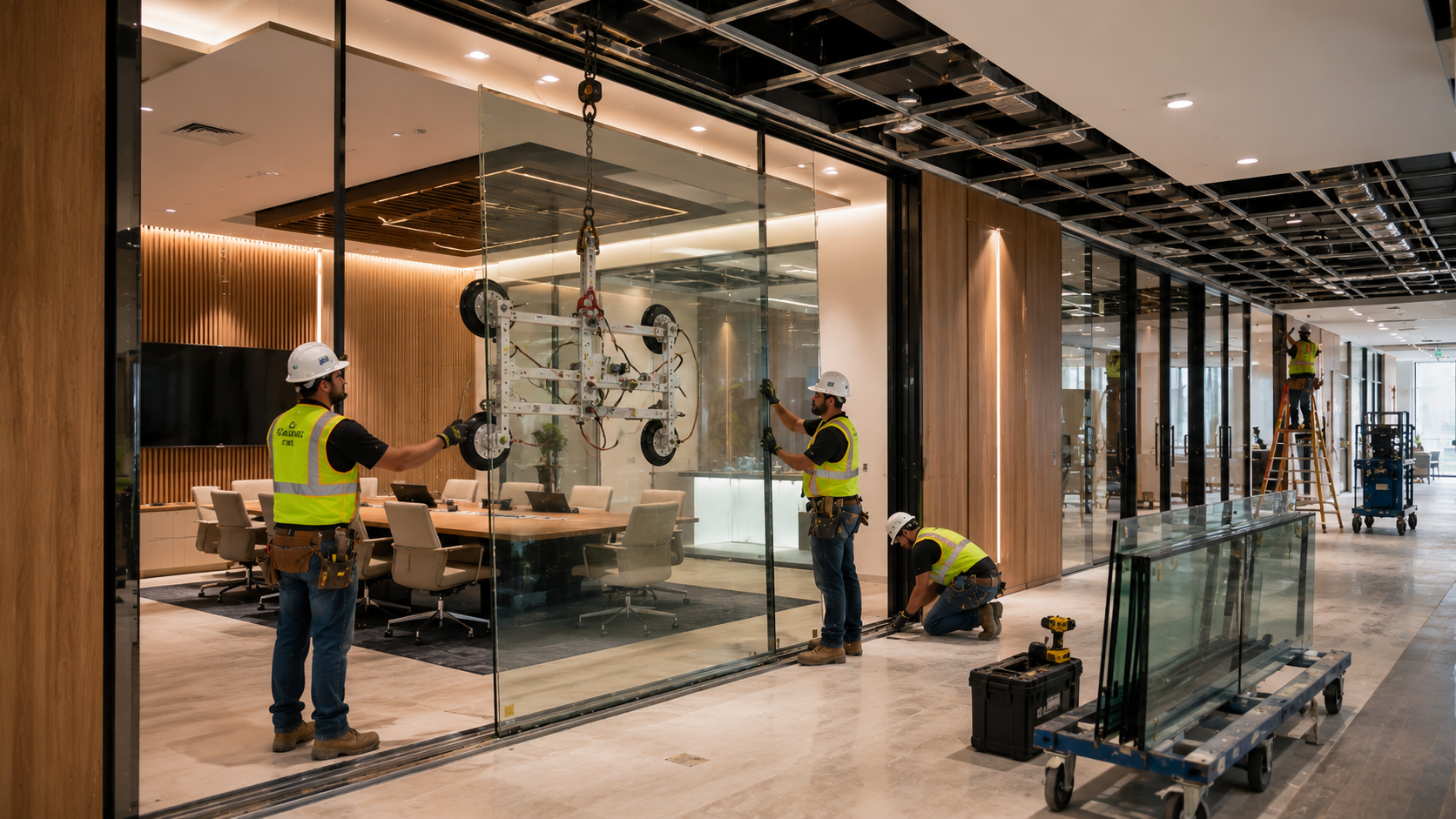
How They Perceive It: The Bay Area commercial tenant (tech corporate office, life-science facility, retail flagship, or high-end dining establishment) views commercial glass as a defining element of brand perception, workplace productivity, and physical security. They require expansive natural daylighting and unobstructed street-level visibility, paired with acoustic dampening to shield interior spaces from sirens, Muni/BART lines, and urban traffic. Concurrently, tenants are acutely sensitive to day-to-day comfort—such as avoiding chilly drafts near perimeter glass during overcast mornings—and mitigating ongoing urban property security risks like smash-and-grab burglaries and vandalism.
Decisions They Normally Make:
Focuses purely on high visual transparency while ignoring acoustic ratings: Chooses standard dual-pane insulated glass units (IGUs) to minimize Tenant Improvement (TI) capex, only to find that street noise and urban rumble penetrate meeting rooms and executive offices, compromising speech privacy.
Skips forced-entry protection until an active break-in occurs: Leaves ground-floor clear tempered glass without security interlayers or protective films, resulting in emergency board-up costs, business downtime, and damaged inventory following vandalism or burglary.
Assumes the landlord handles all exterior envelope maintenance under triple-net (NNN) terms: Signs a commercial lease without reviewing perimeter maintenance boundaries, only to discover that broken insulated seals, fogged panes, leaking door sweeps, and failing entry hardware are direct tenant obligations.
Decisions They SHOULD Make:
Specify asymmetric acoustic laminated glass makeups: Insist on multi-layer laminated makeups (such as 1/4″ exterior + 1/2″ airspace + 3/8″ acoustic laminated interior) to hit STC ratings of 38–42+, ensuring quiet work environments adjacent to busy transit corridors.
Install laminated security glass with exterior sacrificial anti-graffiti film: Upgrade ground-floor storefront lites to impact-resistant laminated makeups with replaceable surface films to provide 24/7 break-in defense and enable quick, low-cost cleanup after acid-etching or tagging.
Audit building envelope thermal and maintenance specifications during lease negotiation: Ensure the landlord certifies storefront U-factors and air-infiltration ratings before signing, and negotiate clear service level agreements (SLAs) regarding who pays for structural frame defects versus routine glass care.
- Commercial Office Renovation
- Commercial Office Remodel
- Commercial Office Build Out
- Office Build Out Contractor
- Commercial Interior Renovation
- Commercial Space Renovation
- Office Space Renovation
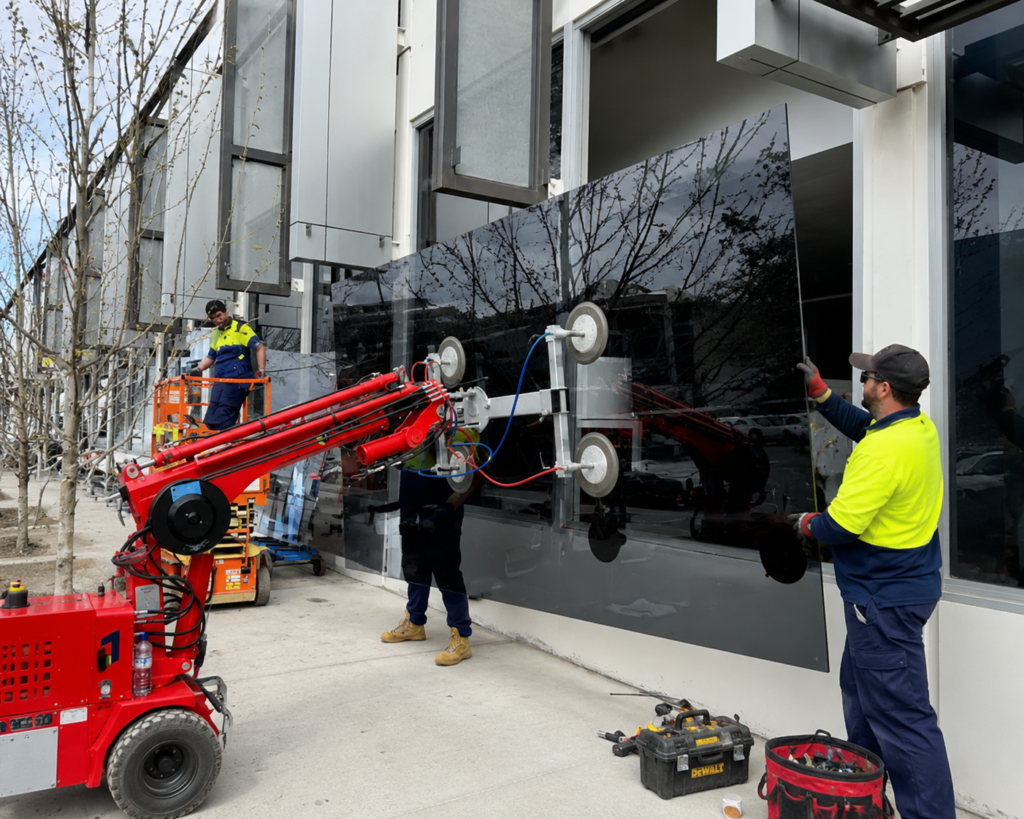
Industrial real estate continues expanding throughout California.
However, not every industrial market serves the same purpose.
Some locations focus on logistics and regional distribution.
Others support advanced manufacturing and production facilities.
Building design, visibility requirements, and glazing applications often reflect those differences.
- Commercial Property Modernization
- Commercial Building Renovation
- Retail Store Build Out
- Restaurant Build Out Contractor
- Commercial Interior Construction
- Office Expansion Contractor
- Commercial Leasehold Improvements
- Commercial Space Conversion
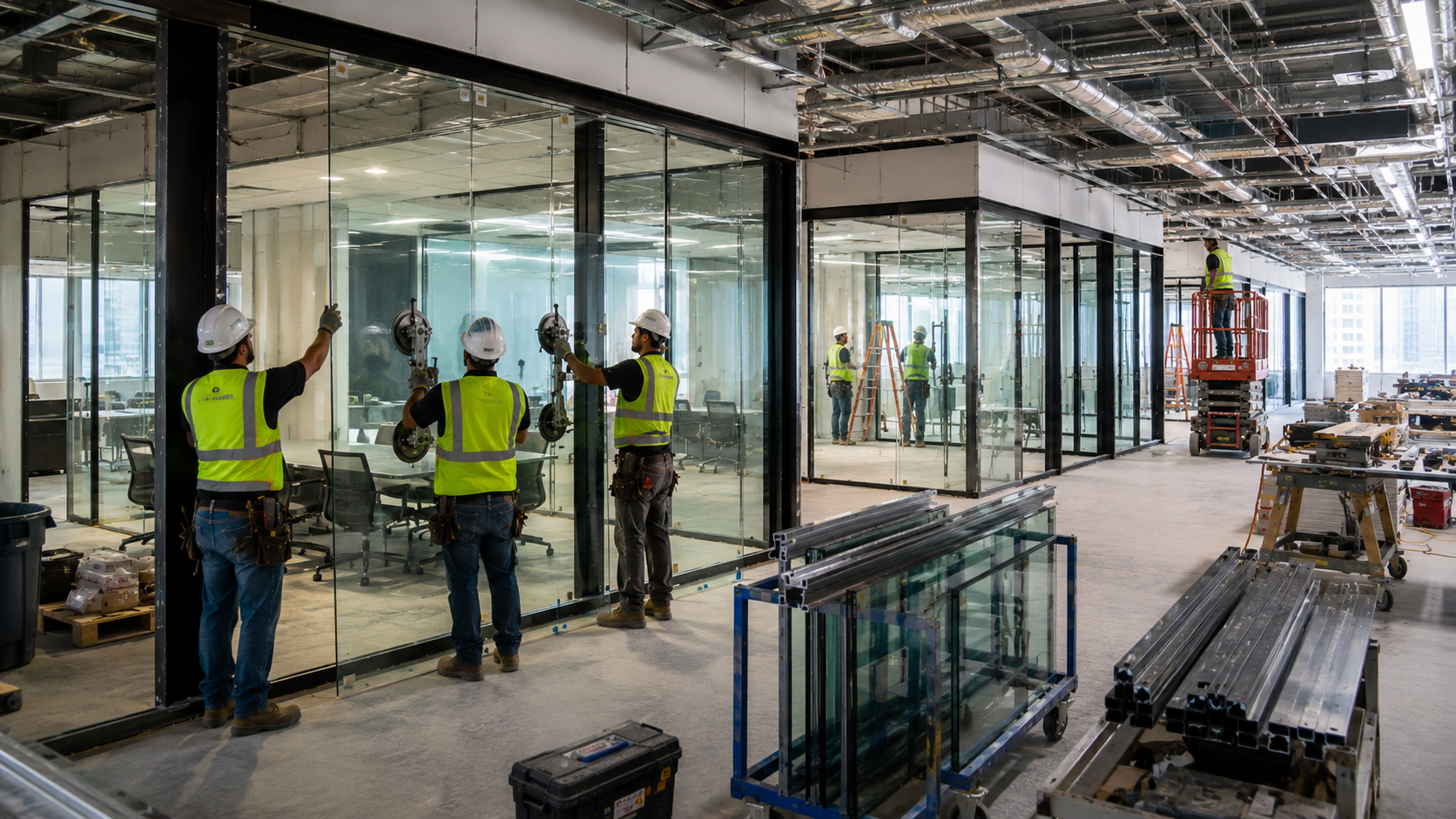
Healthcare development remains a major driver of commercial construction.
Research-focused markets frequently prioritize specialized facilities.
Operational healthcare markets often emphasize patient access, scalability, and service delivery.
Both rely heavily on modern glazing systems, but for different reasons.
- Office Reconfiguration
- Office Demolition & Rebuild
- Commercial Space Planning
- Office Relocation Renovations
- Corporate Office Upgrades
- Spec Suite Build Outs
- Medical Office Renovations
- Dental Office Build Outs

Some commercial districts are built around entirely different economic engines.
Aerospace development creates one set of building requirements.
Life science facilities often demand another.
Modern glass systems support workplace quality, research environments, and long-term property modernization across both sectors.
- Veterinary Clinic Renovations
- Fitness Center Build Outs
- Hotel Lobby Renovations
- Bank Branch Renovations
- Retail Store Renovations
- Restaurant Renovations
- Commercial Building Repositioning

Some commercial districts compete almost entirely on experience, aesthetics, and location.
Property presentation matters.
Pedestrian environments influence customer behavior.
Architectural quality often shapes long-term value.