


Los Angeles vs San Francisco: Curtain Wall Repair vs Replacement vs New Installation
Los AngelesandSan Franciscoare home to many of California’s most recognizable commercial buildings. From corporateheadquartersand financial towers to healthcare campuses, hotels, universities, and mixed-use developments,curtain wall systemsdefine the appearance and performance of countless commercial properties.
Although both cities depend on modern building envelopes, the reasons for curtain wall projects often differ. Some buildings require localized repairs after years of exposure or accidental damage. Others benefit from complete curtain wall replacement as part of major modernization efforts. New office towers, hospitals, hotels, and mixed-use developments require entirely new curtain wall installations designed around today’s architectural, energy, and performance standards.
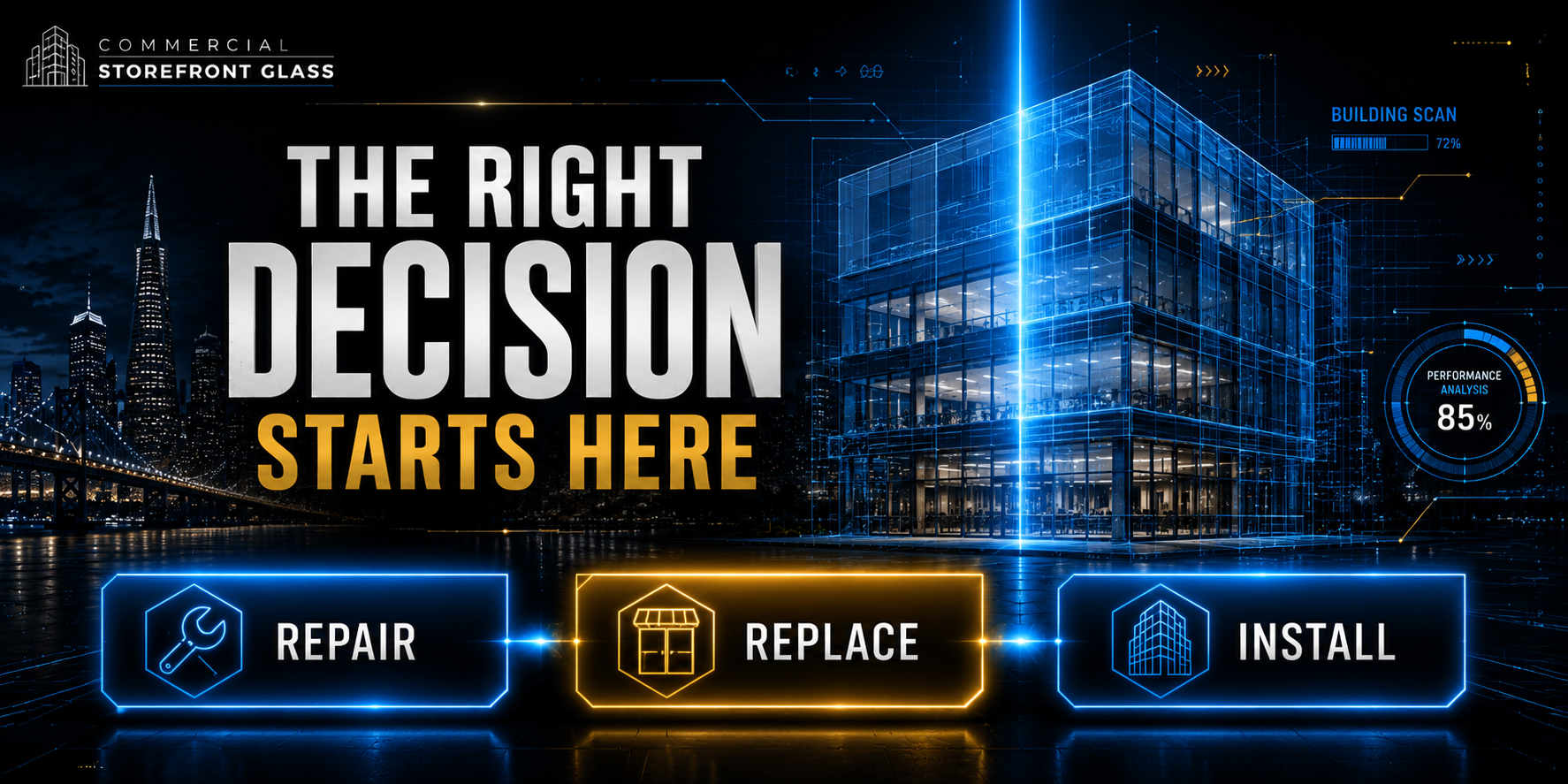
Understanding when to repair, replace, or install a new curtain wall system helps developers, architects, property owners, facility managers, and general contractors make informed long-term decisions.
Curtain Walls Across Two World-Class Skylines
Both Los Angeles and San Francisco feature extensive commercial skylines, but each market has developed differently.
Los Angeles continues expandingthrough new corporate campuses, hospitality projects, entertainment districts, healthcare facilities, and mixed-use developments.
San Francisco combines landmark high-riseconstruction with office modernization, adaptive reuse, financial district upgrades, and technology-driven redevelopment.
Despite their differences, both cities depend on high-performance curtainwall systemsto improve:
- Building appearance
- Natural daylight
- Energy performance
- Weather protection
- Occupant comfort
- Long-term building value
When Curtain Wall Repair Is the Best Solution
Not every curtain wall issue requires replacing the entire façade.
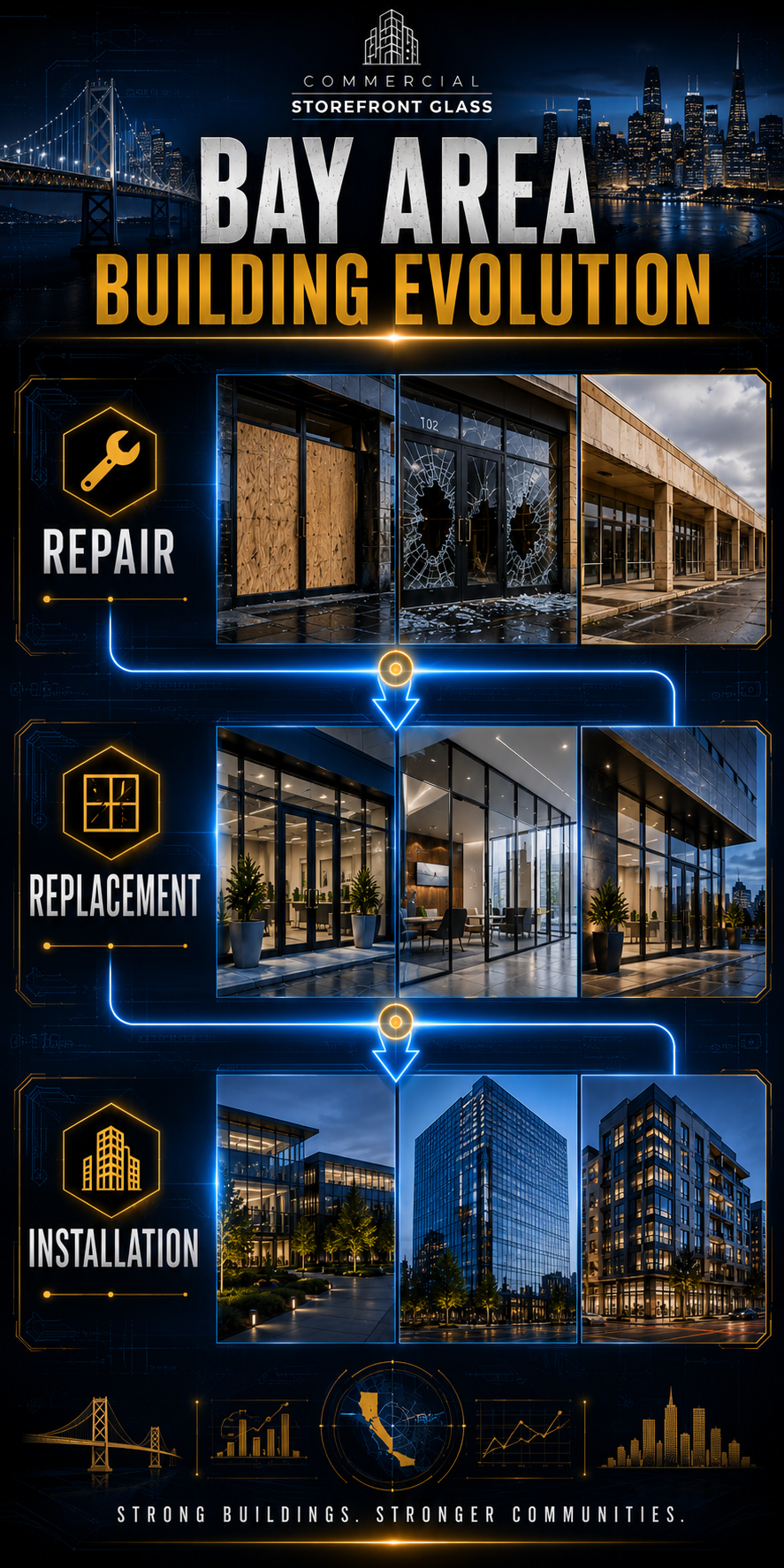
Many commercial buildings benefit from targeted repairs that restore performance while preserving the original system.
Typical repair projects include:
- Broken insulated glass replacement
- Failed seal replacement
- Gasket replacement
- Water infiltration repairs
- Exterior sealant restoration
- Damaged pressure cap replacement
- Hardware adjustments
Throughout Los Angeles, repairs are commonly performed on office towers, hotels, healthcare facilities, and other commercial buildings that experience heavy daily use.
In San Francisco, repair projects often support aging office buildings, financial institutions, mixed-use developments, and technology campuses that continue operating during phased maintenance programs.
Prompt repairs help preserve building performance while extending the servicelife of the curtainwall system.
When Curtain Wall Replacement Becomes the Better Investment
As buildings mature, complete replacement often delivers greater long-term value than repeated repairs.
Replacement is commonly considered when:
- Glass failures become widespread
- Air and water performance declines
- Energy efficiency no longer meets expectations
- Aluminum framing reaches the end of its service life
- Buildings undergo major renovations
- Owners reposition commercial assets
Los Angelesfrequently sees curtainwall replacement during hospitality renovations, office repositioning, and large redevelopment projects.
San Francisco often incorporates curtain wall replacement into office modernization programs, adaptive reuse developments, and financial district renovations where improving energy performance and tenant appeal becomes a priority.
Replacing an aging curtain wall can significantly improve both operational efficiency and architectural appearance.
New Curtain Wall Installation for Modern Development
New installation represents a completely different phase of the building lifecycle.
Rather than working with an existing façade, architects and engineers design an entirely new curtain wall system around the project’s performance requirements.
New installations are common during:
- Office tower construction
- Mixed-use developments
- Healthcare campuses
- University buildings
- Hotels
- Corporate headquarters
- Government facilities
- Laboratory construction
Both Los Angeles and San Francisco continue to invest in commercial developmentsin which modern curtainwall systems are defining architectural features.
Different Markets. Similar Performance Goals
Although project types vary between the two cities, building owners pursue many of the same objectives.
Los Angeles projects often emphasize:
New commercial development
Hospitality modernization
Entertainment facilities
Corporate expansion
San Francisco projects frequently prioritize:
Both markets value:
— Improved energy efficiency
— Better occupant comfort
— Modern architectural design
— Lower maintenance requirements
Choosing Repair, Replacement, or Installation
Several factors determinewhich solution provides the greatest long-term value.
Property owners often evaluate:
- Building age
- Overall façade condition
- Frequency of repairs
- Energy performance
- Occupancy requirements
- Long-term ownership plans
- Tenant expectations
- Capital improvement budgets
Evaluating the entire building envelope rather than isolated problems often yields the strongest long-term investment.
Curtain Walls Support Every Commercial Building Type
Across both cities, curtain wall systems serve a wide range of commercial properties.
Common applications include:
- Office towers
- Medical campuses
- Hotels
- Universities
- Government buildings
- Convention centers
- Airports
- Mixed-use developments
- Corporate headquarters
- High-rise residential towers
Each building placesdifferent demands on the curtainwall system, but all depend on long-term performance and architectural quality.
Building Better Skylines
Repair, replacement, and new installation each play an important role throughout the lifecycle of acommercial curtain wall system. Repairs extend service life,replacements modernizeaging façades, andnew installations define the next generation of commercial architecture.
Whether supporting a landmarktower in Downtown Los Angelesor modernizing acommercial high-rise in San Francisco’s Financial District,professionally designed curtain wall systemshelp improve building performance,strengthen architectural identity, increase energy efficiency, andprotect long-term property value.
As both cities continue evolving,curtain wall systems will remainone of thedefining elements of California’s commercial skyline.