


Los Angeles vs San Francisco: Commercial Entrance Repair vs Replacement vs New Installation
Commercial entrancesare one of the most important parts of anybuilding. They control access, shape first impressions, support accessibility, protect interior spaces, and influence how customers, tenants, employees, and visitors experience the property. InLos AngelesandSan Francisco, commercial entrance systems serve some of the mostactive buildings in California, including office towers and hotels, restaurants,retail centers, medical facilities, and mixed-use developments.
Because entrances are used constantly, they eventually require attention. Some need targeted repairs to restore safe operation. Others requirefull replacementwhen the system becomes outdated, unreliable, or difficult to maintain. New construction,tenant improvements, and major renovations may require new commercial entrance installations designed to meet modern building expectations.
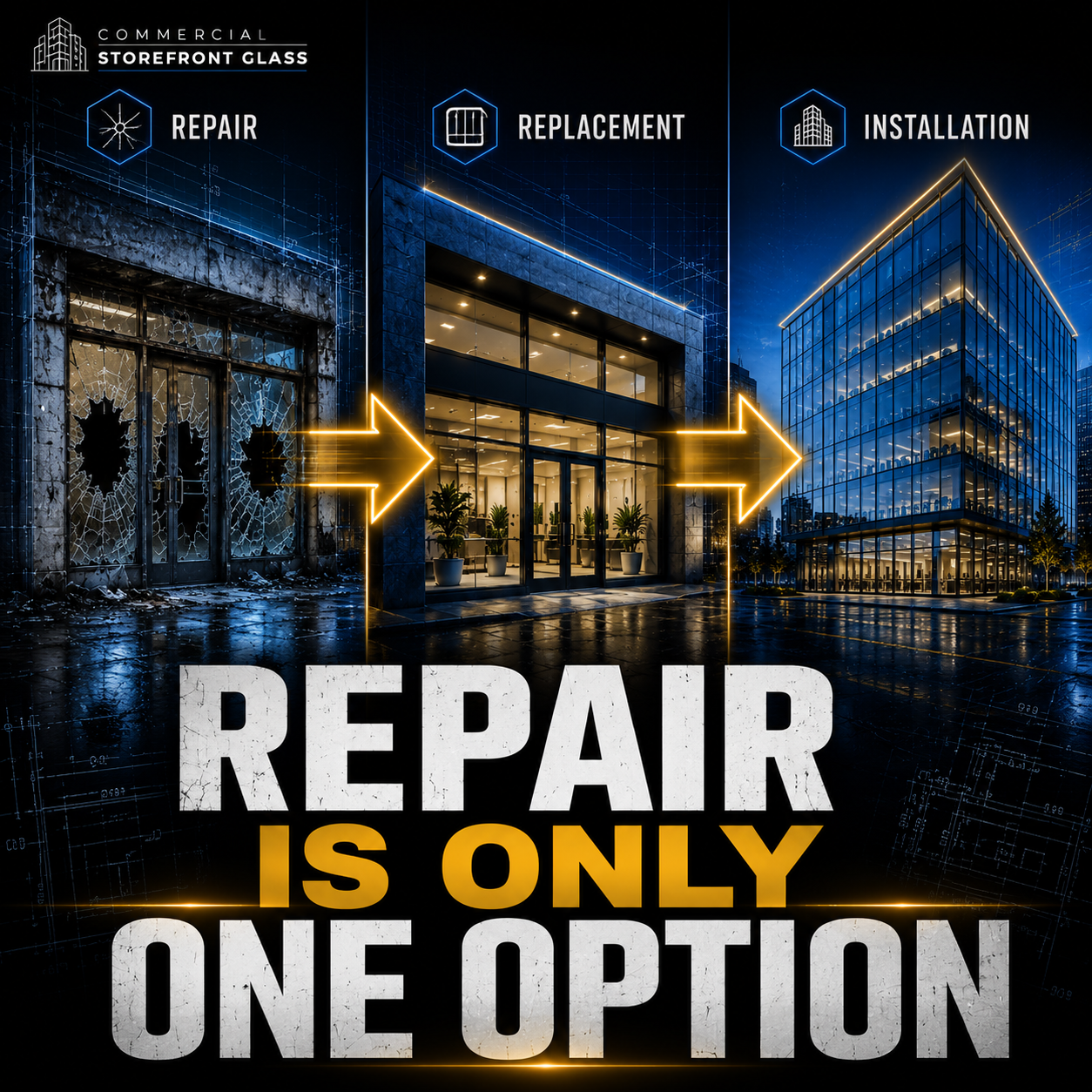
Understanding the difference betweenrepair, replacement, and installation helps property owners,facility managers, developers, architects, andgeneral contractorschoose the right solution for each building.
Why Commercial Entrances Matter in Both Cities
Los Angeles and San Francisco both depend on high-performing commercial entrances, but their buildings often create different project demands.
Los Angeles includes expansive retail centers, entertainment venues, hospitality properties, office campuses, medical buildings, and mixed-use developments. Many entrance projects are connected to tenant build-outs, restaurant renovations, hotel upgrades, and new commercial construction.
San Francisco includes dense office districts, financial buildings, neighborhood storefronts, technology workplaces, adaptive reuse projects, and mixed-use towers.Many entrance projectsfocus on modernization, secure access, urban durability, and the improvement of older commercial properties without disrupting daily occupancy.
In both markets, commercial entrances help improve:
- Building image
- Customer confidence
- Accessibility
- Security
- Traffic flow
- Tenant appeal
- Long-term property value
A well-designed entrance makes the building easier to use and easier to trust.
When Commercial Entrance Repair Is the Right Solution
Repair is often the best first step when the entrance system is still structurally sound.
A repair focuses on restoring performance without replacing the entire assembly. This approach can reduce downtime, protect the owner’s budget, and extend the life of the existing system.
Common commercial entrance repairs include:
- Door closer adjustment
- Hinge or pivot repair
- Lock and latch repair
- Panic hardware repair
- Glass replacement
- Weatherstrip replacement
- Threshold repair
- Minor frame adjustment
InLos Angeles, entrancerepairs are common for restaurants, retail suites, hotels, and entertainment properties where daily customer access cannot be interrupted for long.
In San Francisco, entrance repairs often support occupied office buildings, mixed-use properties, urban storefronts, and older commercial entrances that need careful service rather than full demolition.
Repair is most effective when the issue is isolated and the system still meets the building’s operational needs.
When Entrance Replacement Becomes the Better Investment
Replacement becomes the smarter option when repairs no longer solve the larger problem.
Anentrance systemmay continue functioning, but still fail to meet modern expectations for appearance, accessibility, security, or long-term reliability. At that point, replacing the entrance can improve both performance and property value.
Replacement is often considered when:
- Doors drag, bind, or fail repeatedly
- Hardware problems keep returning
- Frames are bent, worn, or damaged
- Glass panels are outdated or inefficient
- The entrance no longer matches the tenant image
- Accessibility improvements are needed
- A larger renovation is already planned
In Los Angeles, entrance replacement often happens during retail repositioning, hotel renovations, restaurant remodels, and office tenant improvements.
In San Francisco, entrance replacement frequently supports office modernization, financial district upgrades, adaptive reuse, and the repositioning of older buildings for new tenants.
Replacement gives owners the opportunity to solve multiple problems at once.
New Commercial Entrance Installation
New installation applies whenthe entrance is designedas part of new construction, a major build-out, or a full redesign.
Instead of working around an older system, architects and contractors can design the entrance around building function, appearance, security, and traffic patterns from the beginning.
Newcommercial entrance installationis common during:
- Office tower construction
- Tenant improvement projects
- Restaurant build-outs
- Hotel renovations
- Medical office development
- Retail conversions
- Mixed-use developments
- Corporate headquarters projects
Los Angeles often sees new entrance installation tied toexpanding commercial districts, hospitality projects, and large-scale tenant improvement work.
San Francisco often sees new entrance installation connected to adaptive reuse, lobby modernization, office repositioning, and mixed-use redevelopment.
A new entrancecan completely change how the building feels from the street.
Los Angeles vs San Francisco: Different Entrance Priorities
Both cities rely on durable commercial entrances, but the surrounding market conditions often influence the project.
Los Angeles entrance projects often emphasize:
Retail visibility
Hospitality experience
Restaurant access
Large tenant build-outs
San Francisco entrance projects often emphasize:
- Urban security
- Office modernization
- Adaptive reuse
- Dense pedestrian traffic
Both markets require:
— Reliable daily performance
— Clear access points
— Durable materials
— Accessible entry systems
— Professional appearance
The rightentrance systemmust support both the building’s design and the way people move through the property every day.
What Property Owners Should Evaluate
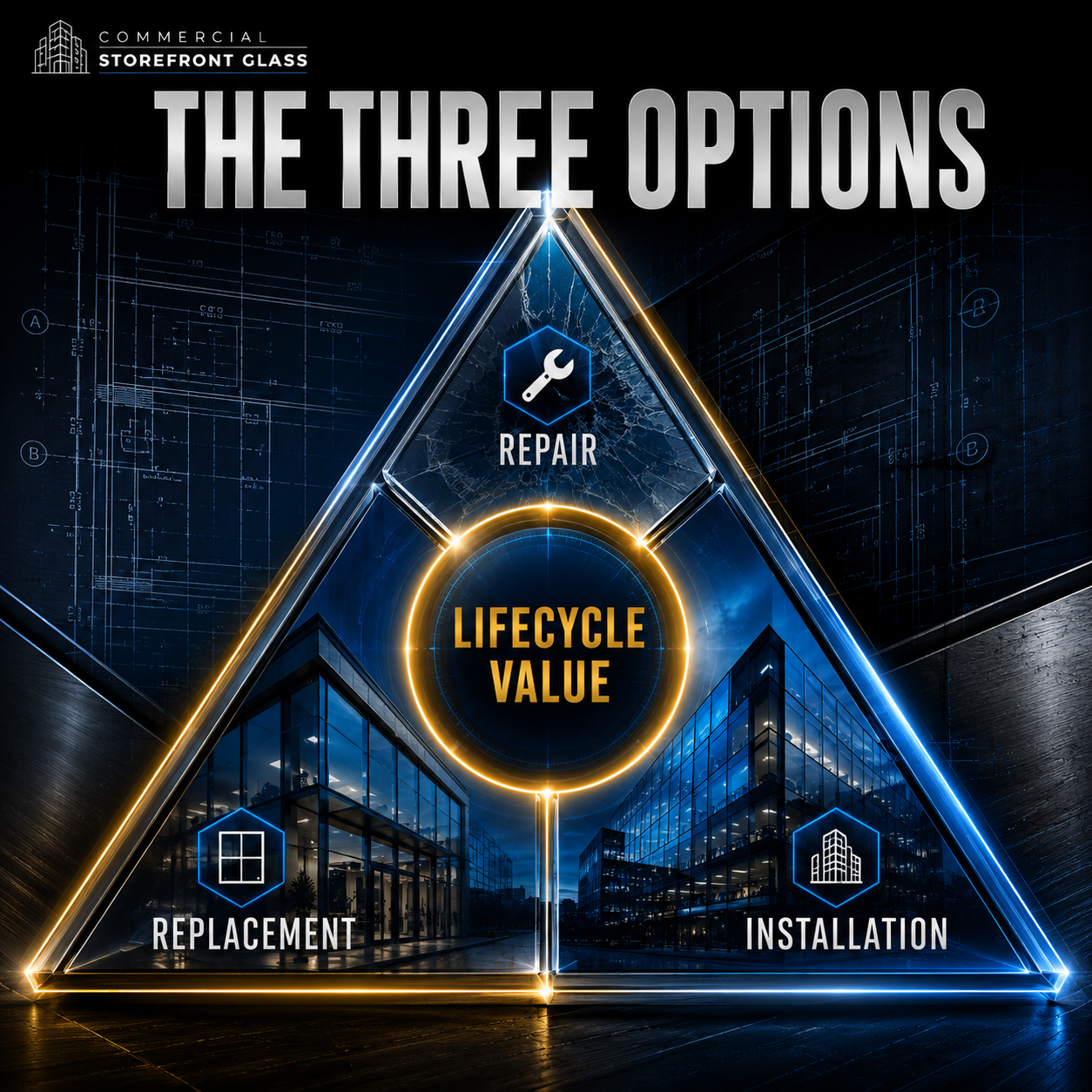
Choosing between repair, replacement, and installation requires a broader look at the entire entry system.
Important questions include:
- Is the problem isolated or recurring?
- Is the frame still straight and secure?
- Does the entrance meet accessibility needs?
- Does the door operate smoothly during peak traffic?
- Does the entrance support the tenant’s brand?
- Are security concerns increasing?
- Is a renovation planned soon?
These questions help owners avoid spending money on repeated short-term fixes when a larger upgrade would provide stronger value.
Commercial Entrances Serve Every Building Type
Modern commercial entrance systemsare used across nearly every property category.
Common applications include:
- Retail storefronts
- Office buildings
- Hotels
- Restaurants
- Medical offices
- Universities
- Government buildings
- Mixed-use developments
- Corporate headquarters
- High-rise lobbies
Each building has different access needs, but all depend on entrances that are safe, attractive, durable, and easy to use.
Building Better First Impressions
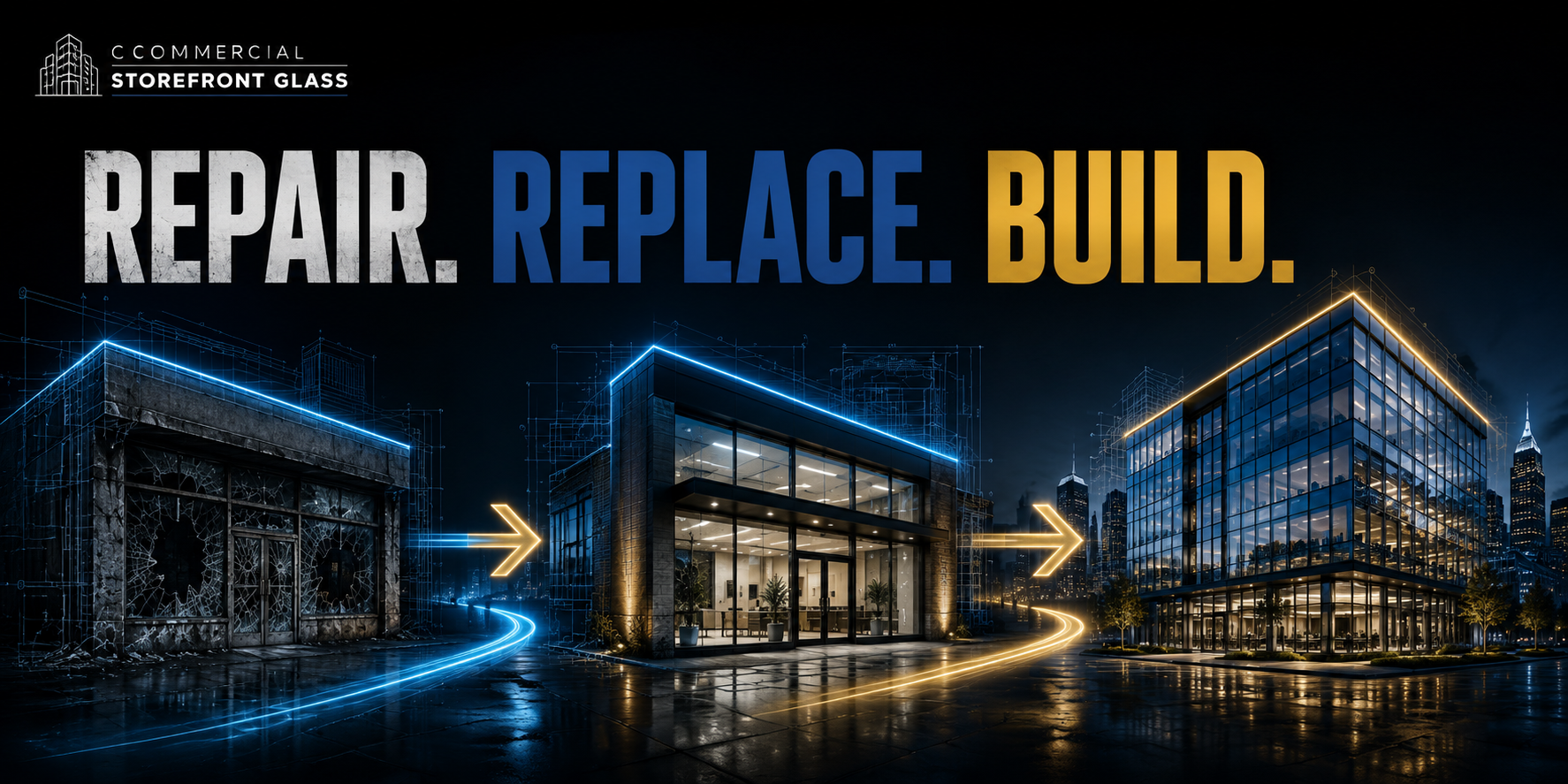
Commercial entrance repair, replacement, andnew installation each play a specific rolein a building’s life. Repairs restore daily function, replacements modernize aging entry systems, and new installations support new development or major repositioning.
Whether improving a hotel entrance in Los Angeles or modernizing an officelobby entrance in San Francisco, professionally designedcommercial entrance systemshelp buildings perform better, welcome people more effectively, andmaintain long-term property value.
Forcommercial propertiesin both markets,the entrance is more than a door. It is the point where thebuilding meets the public.