
Los Angeles vs San Francisco: Emergency Board-Up, Repair, Replacement, and New Installation
Commercial glass damagecan happen suddenly. A broken storefront window, a damaged glass door, a vandalized entrance, a storm-related impact, or a construction accident can leave a building exposed in minutes.In both Los Angeles and San Francisco,emergency board-up serviceis often the first step in protecting a commercial property before decisions are made aboutrepair,replacement, orfull installation.
Board-upis different from ordinarystorefront repair. It is a temporary protective response designed to secure the opening, protect the interior, reduce liability, and give property owners time to plan the right permanent solution. After the building is stabilized, the next question becomes whether the damagedsystem should be repaired, replaced, or upgraded as part of a larger commercial glass project.
For property managers,facility teams, retailers, restaurants, office owners, and general contractors, understanding the full sequence helps reduce downtime and improve long-term building performance.
Why Emergency Board-Up Matters in Both Cities
Los AngelesandSan Franciscoboth havedense commercial corridorswherestorefront glass is exposedto heavy public activity.Retail shops, restaurants, hotels, office lobbies, mixed-use buildings, andstreet-level businessesall depend on secure glass entrances to remain operational.
Emergency board-up helps protect:
InLos Angeles, board-up servicesare often associated withhigh-traffic retail centers, hospitality properties, entertainment districts, andrestaurant corridors.
In San Francisco,emergency board-up frequently supports urban storefronts, financial district buildings, neighborhood retail, mixed-use properties, andolder commercial buildings where damaged glasscan quicklyaffect safety and access.
Emergency Board-Up as the First Response
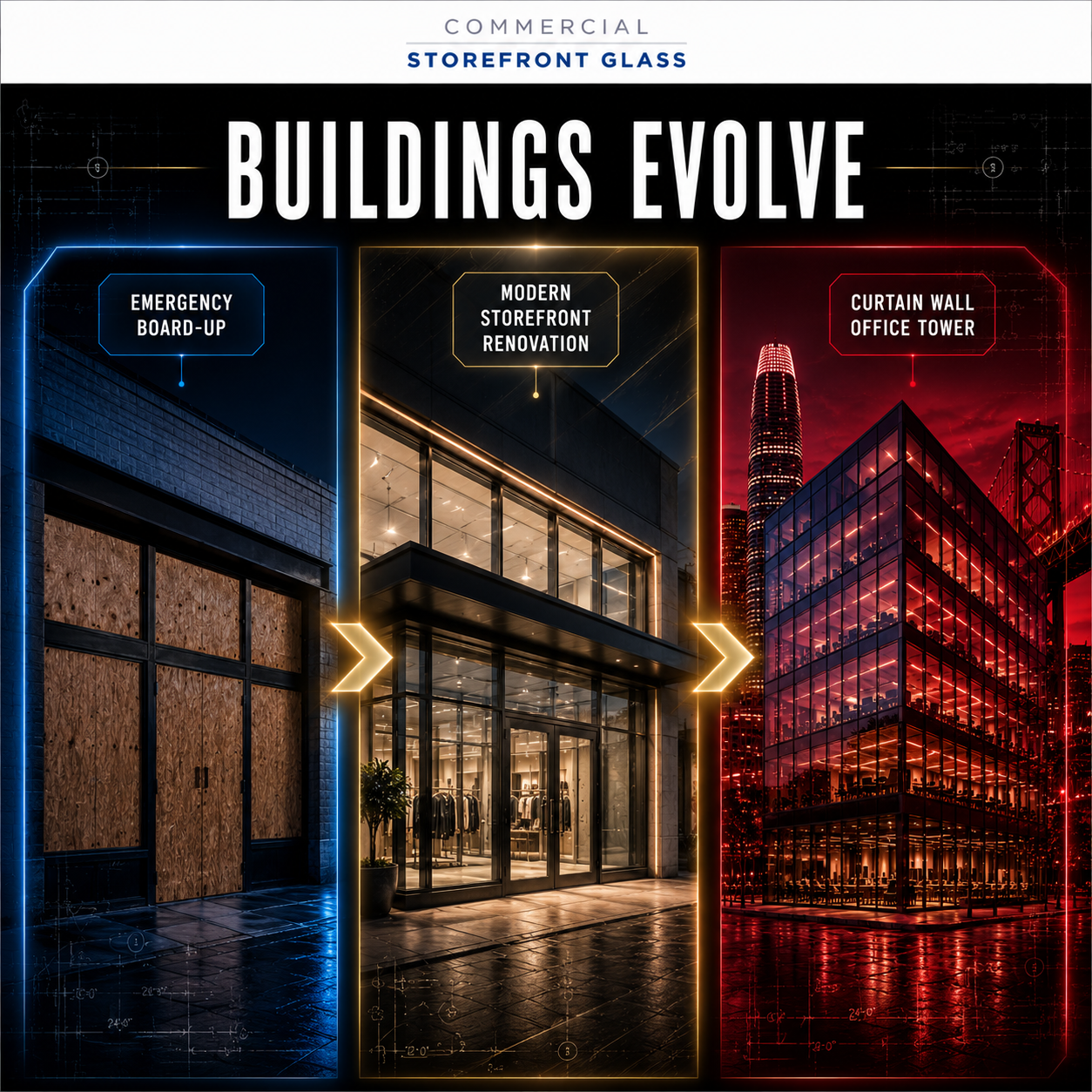
Board-up service is usually not the final repair. It is thefirst protective stepaftercommercial glass damageoccurs.
A typical board-up response may include:
- Securing broken storefront glass
- Covering exposed openings
- Protecting damaged doors
- Stabilizing entry areas
- Removing immediate hazards
- Preparing the site for repair or replacement
The goal is simple: protect the propertywhile the permanent glass solution is evaluated.
For active businesses, speed matters. Arestaurant, retail shop, oroffice lobbycannot remain exposed overnight. Board-up allows the property toregain temporary security while scheduling the correct commercial glasswork.
When Board-Up Leads to Glass Repair
Some board-up situationslead to straightforward repair.
Repair may be appropriatewhen the damage is isolated, and thesurrounding storefront system remains in good condition.
Common follow-up repairs include:
- Replacing a single broken glass panel
- Repairing entrance hardware
- Adjusting damaged doors
- Replacing seals or gaskets
- Correcting minor frame damage
In Los Angeles, this type of repairoften occurs in shopping centers, storefront retail, hospitality properties, and restaurants, where the main priority is to reopen quickly.
In San Francisco, repair workmay be used when older storefronts,mixed-use entrances, or officelobby systems can be restoredwithout replacing the full assembly.
When the framing is sound, repair keeps the project focused and cost-effective.
When Board-Up Leads to Storefront Replacement
Board-up sometimes revealsdeeper issues.
If theglass damageis part of a larger system problem,replacement may deliverbetter long-term value than another repair.
Replacement becomes more likely when:
The storefront frame is bent or deteriorated
Doors no longer operate correctly
Previous repairs have become frequent
The existing system looks outdated
The building is already scheduled for renovation
Los Angeles property ownersmay choosereplacement when damaged storefrontsare part of larger tenant improvements, restaurant remodels,retail repositioning, or hospitality upgrades.
San Francisco property owners may choose replacementwhen older street-level systems no longer match the performance expectations of modern office tenants, retailers, or mixed-use developments.
Replacement turns an emergency event intoan opportunity to improve the building.
When a New Installation Becomes the Right Step
Not every board-up situationinvolves returning the building to its previous condition.
In some cases, the property owner, tenant, or general contractor may decide that the damaged storefront should beredesigned entirely. This is especially common when a business is preparing for anew tenant, a remodel, or a larger property upgrade.
New installation may be appropriate during:
- Tenant improvement projects
- Restaurant build-outs
- Retail conversions
- Office lobby renovations
- Mixed-use redevelopment
- Building entrance redesigns
InLos Angeles, new storefront installationoften connects to fast-moving commercial build-outs, entertainment-related properties, and expanding retail or hospitality concepts.
InSan Francisco, new installations may support adaptive reuse, office repositioning, boutique retail upgrades, and the transition of commercialpropertiesto new uses.
A board-up may begin as an emergency, but the final solution can become a planned improvement.
Los Angeles vs San Francisco: Different Emergency Patterns
Both cities requireemergency commercial glass response, but the project context often differs.
Los Angeles board-up projects often involve:
San Francisco board-up projects frequently involve:
- Urban storefronts
- Mixed-use buildings
- Financial district properties
- Historic commercial spaces
- Dense pedestrian streets
Both markets require:
— Clear repair or replacement planning
Theurgencymay be similar, but thebuilding conditions and final project goals can vary significantly.
What Property Owners Should Evaluate After Board-Up
After a commercial opening is secured, the next decision should be based on the condition of the entire storefront system.
Important questions include:
- Is the damage limited to one piece of glass?
- Is the aluminum frame still straight and secure?
- Are the doors operating correctly?
- Has this area failed before?
- Does the storefront still support the tenant’s image?
- Would replacement improve security or efficiency?
- Is a renovation already planned?
These questions help property owners avoid short-term decisions that lead to repeated service calls.
Board-Up Protects the Building, But Planning Protects the Investment
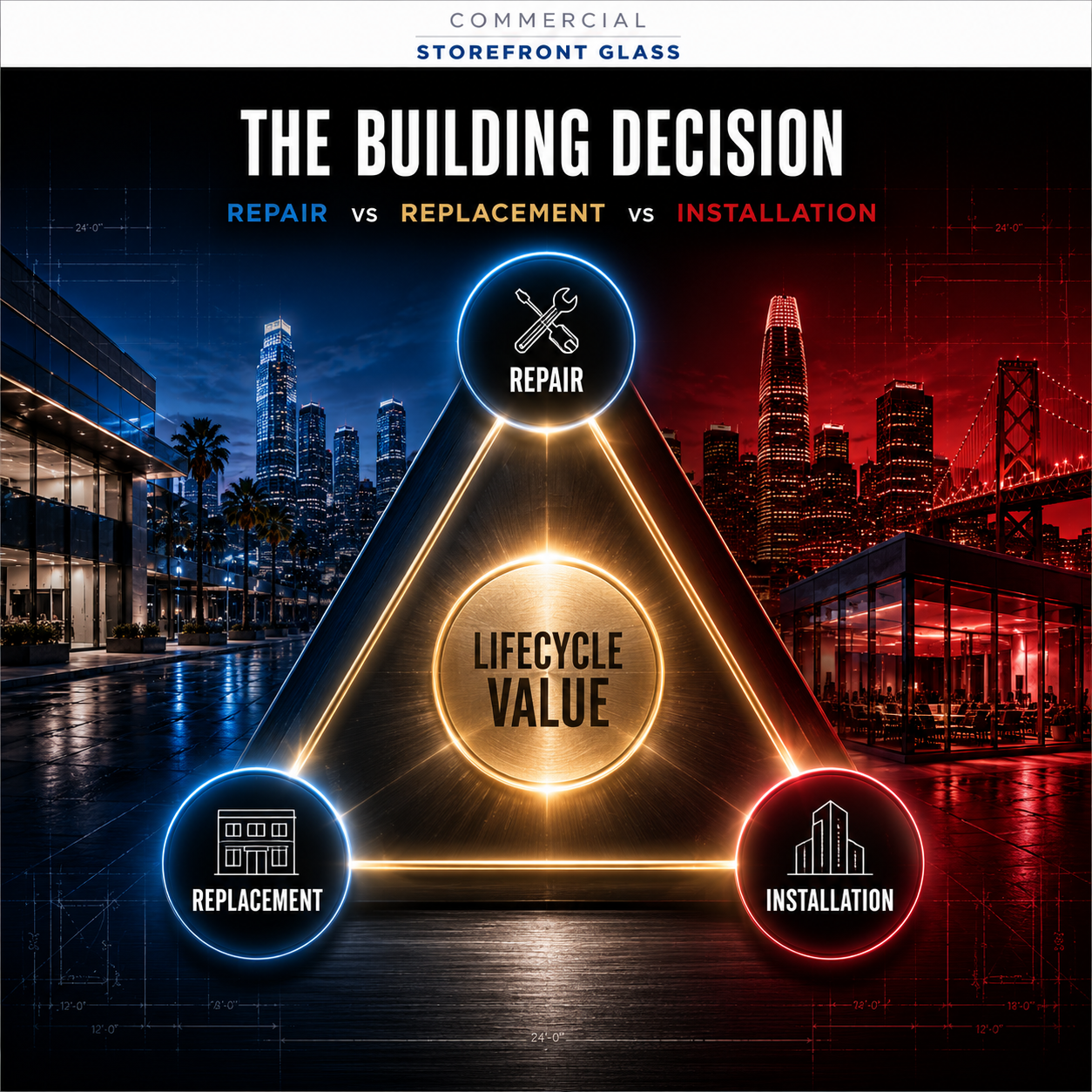
Emergency board-up solves the immediate problem.Repair, replacement, and installation solve the long-term problem.
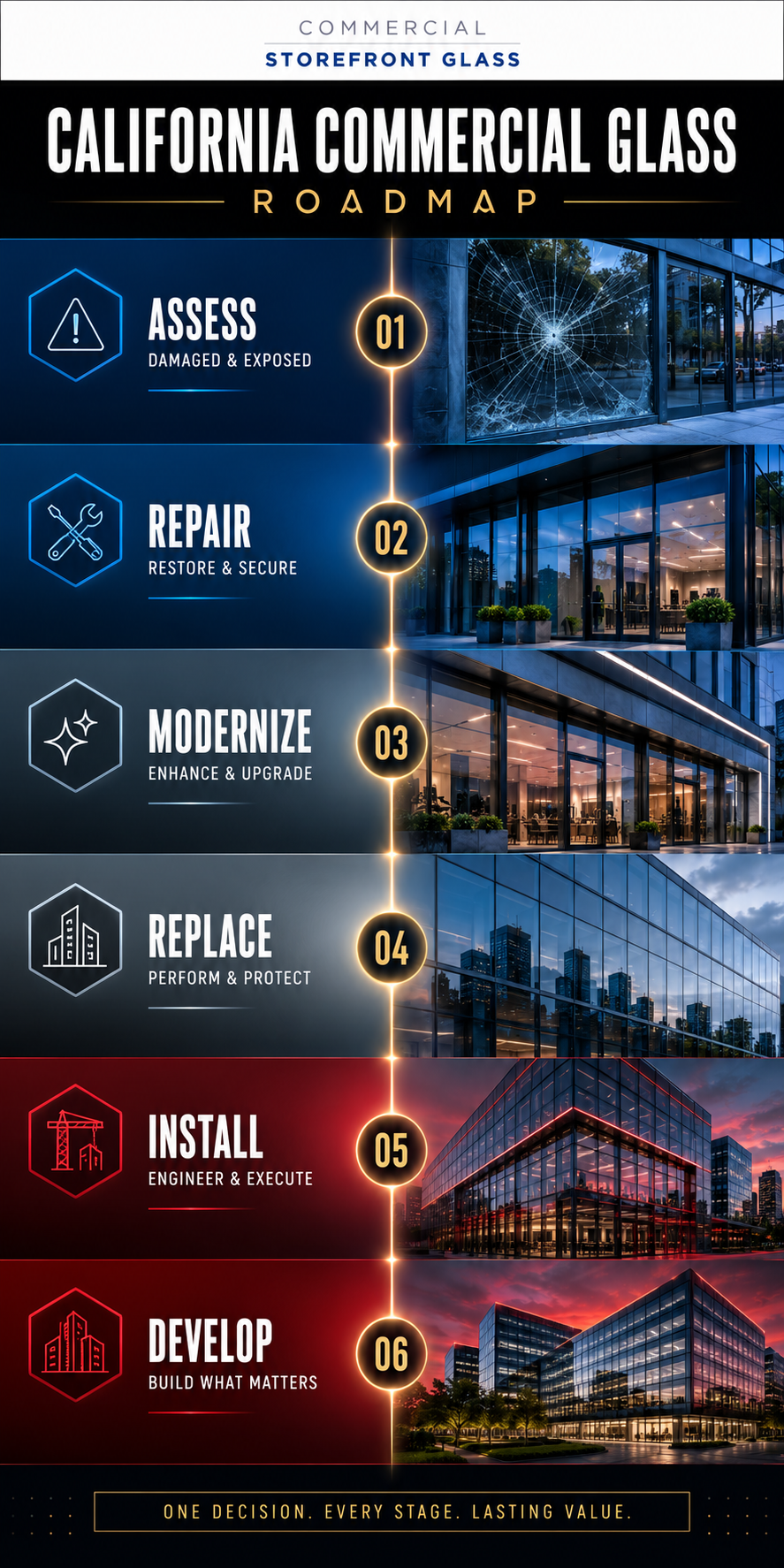
For commercial properties, the best results often come from viewing board-up as part of a larger service sequence:
- Secure the opening
- Evaluate the damage
- Restore safe operation
- Decide between repair, replacement, or new installation
- Improve the building where possible
This approach keeps businesses protected while helping owners make smarter capital decisions.
From Emergency Response to Long-Term Storefront Performance
Los Angeles and San Francisco both dependon fast, professional board-up service to protect commercialbuildings after glass damage. But the real value comes from what happens next. Some properties need a simple repair.Others benefit from full storefront replacement. In larger commercial projects,a new installation may providethe best long-term result.
Whethersecuring a retail storefront in Los Angelesor stabilizing amixed-use entrance in San Francisco, emergencyboard-up should result in a clear planto restore appearance, safety, access, and building performance.
For property owners, facility managers, retailers, restaurant operators, and general contractors, the right commercial glass response protects the building today while enhancing its future value.