

Los Angeles vs San Francisco: Commercial Framing Repair vs Replacement vs New Installation
Commercial framing forms the structural foundation of nearly every storefront, entrance system,curtain wall, and commercial glazing project. While glass often receives the most attention, aluminum framing provides the strength, alignment, weather resistance, and long-term durability that allowcommercial glass systemsto perform properly. ThroughoutLos AngelesandSan Francisco, property owners regularly evaluate whether damaged framing should berepaired,replaced, or completely redesigned as part of anew commercial installation.
Both cities depend heavily onaluminum storefront framing, but their commercial building inventories often lead to different project priorities. Los Angeles continues expanding with new retail centers, hospitality developments, healthcare facilities, entertainment venues, and mixed-use construction. San Francisco frequently focuses on upgrading aging commercial buildings, adaptive reuse projects,financial district office towers, and historic storefrontmodernization.
Understanding when framingrepair, replacement, or new installation provides the greatest value helps property owners protect both their investment and their building’s long-term performance.
Commercial Framing Supports the Entire Building Envelope
Aluminum framingdoes much more than hold glass in place.
Modern framing systems support:
- Structural stability
- Glass alignment
- Weather protection
- Water management
- Energy performance
- Entrance operation
- Architectural appearance
Whether installed within a storefront system, curtain wall, office entrance, or high-rise façade, commercial framing directly affects how the entire glazing system performs.
Without properly functioning framing, even high-quality commercial glass cannot perform as intended.
When Commercial Framing Repair Is the Right Choice
Many framing problems can be corrected without replacing thecomplete storefront or curtain wall system.
Repair is often appropriate when damage remains localized and the overall structure continues performing properly.
Common repair projects include:
- Minor aluminum frame repairs
- Fastener replacement
- Sealant restoration
- Pressure plate repairs
- Cover cap replacement
- Isolated framing adjustments
- Anchor corrections
In Los Angeles,framingrepairs commonly support shopping centers, office buildings, hotels, restaurants, and healthcare facilities where businesses need to remain open during maintenance.
In San Francisco, repairs frequently occur in occupied office buildings, financial district properties, mixed-use developments, and establishedcommercial storefrontswhere preserving the existing system remains practical.
When completed early, repairs can significantly extend the service life of commercial framing.
When Framing Replacement Becomes the Better Investment
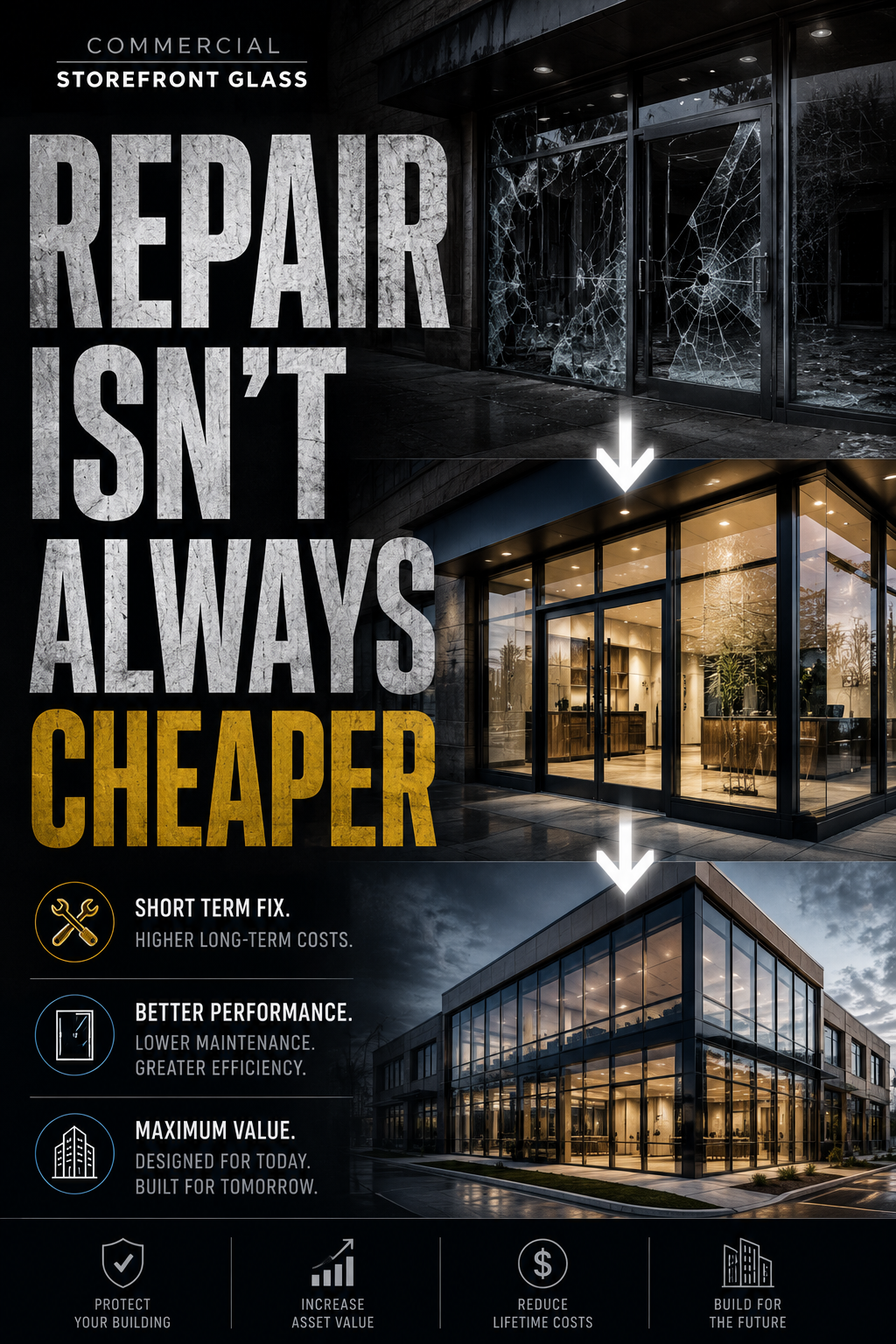
Over time, framing systems may deteriorate beyond practical repair.
Repeated service calls, structural movement, impact damage, corrosion, or major renovations oftenmake replacement the better long-term investment.
Replacement is commonly recommended when:
- Framing has become structurally compromised
- Multiple framing sections require repair
- Water intrusion continues
- Alignment problems affect doors or glass
- Building modernization is underway
- Existing systems no longer meet current project goals
Los Angeles property owners frequently replace framing during tenant improvements, retail redevelopment, hotel renovations, restaurant remodeling, and office modernization.
San Francisco owners often replace framing while repositioning office buildings, upgrading financial district properties, modernizing mixed-use developments, and renovating older commercial buildings.
Replacing the framingoften creates an opportunity to improve the entire storefront system rather than addressing isolated problems.
New Commercial Framing Installation
New framing installation occurs during commercial construction or major redevelopment where the glazing system is designed from the ground up.
Instead of adapting existing aluminum systems, architects and contractors specify framing that supports the building’s structural, operational, and architectural requirements.
Newframing installationscommonly support:
- Office towers
- Corporate headquarters
- Retail centers
- Hotels
- Restaurants
- Medical campuses
- Mixed-use developments
- Universities
- Government facilities
- Laboratory buildings
Los Angeles continues to add new commercial developments in which aluminum framing systems are an important part of contemporary architecture.
San Francisco continues balancing new construction with adaptive reuse projects that incorporate modern framing into revitalized commercial properties.
Los Angeles vs San Francisco: Different Framing Priorities
While both cities use similar commercial framing systems, the project’s focus often differs.
Los Angeles projects frequently emphasize:
New commercial construction
Hospitality development
Retail expansion
Entertainment venues
San Francisco projects often prioritize:
Both markets value:
— Long-term durability
— Structural performance
— Energy efficiency
— Modern architectural appearance
— Reduced maintenance
Regardless of location, quality framing remains one of the most important components of every commercial glazing project.
Choosing Between Repair, Replacement, and Installation
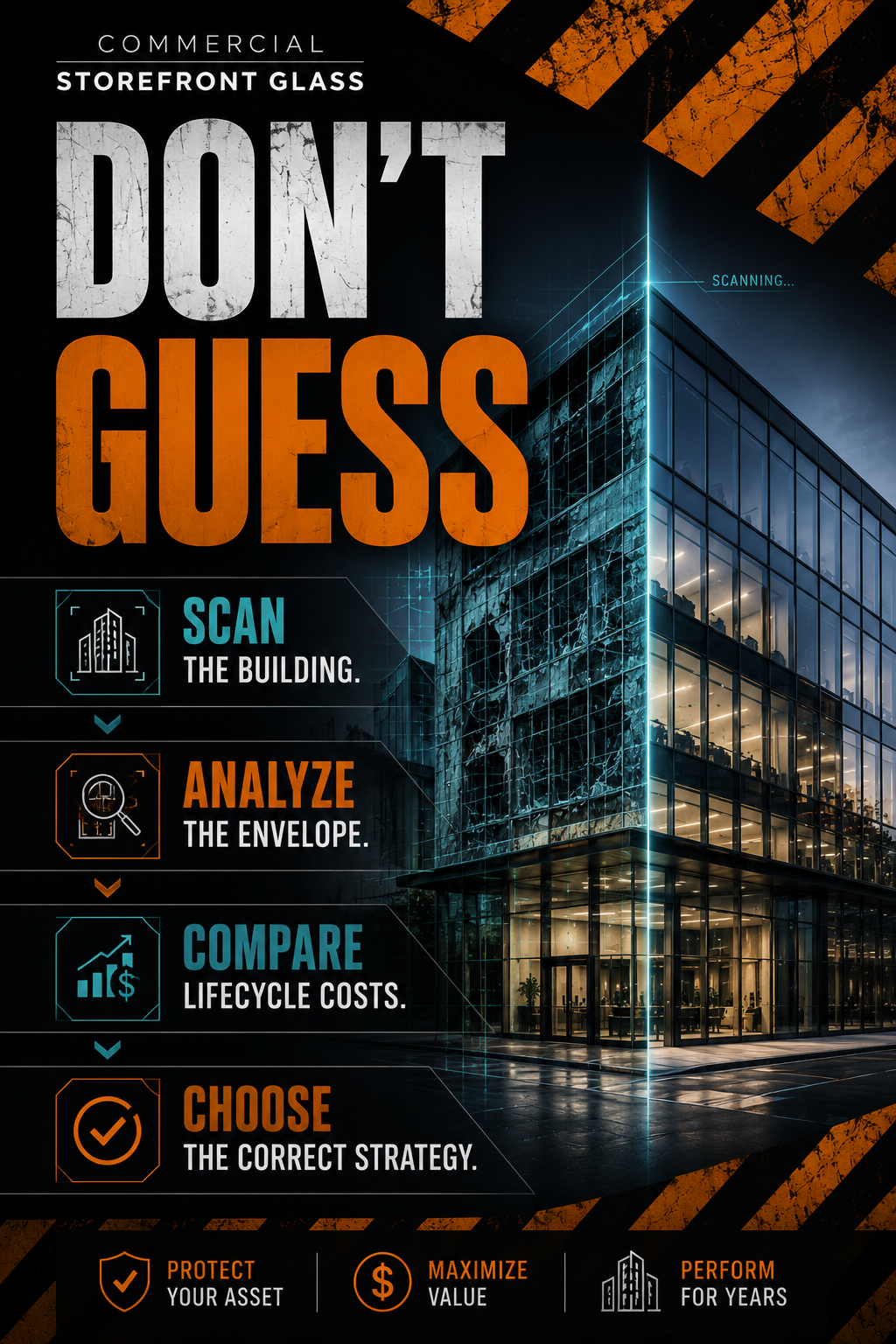
Every framing project should begin with evaluating the condition of the complete glazing system.
Property owners should consider:
- Age of the framing
- Structural condition
- Water intrusion history
- Door performance
- Glass condition
- Planned renovations
- Occupancy requirements
- Long-term ownership goals
Looking beyond a single damaged section often yields a stronger long-term investment strategy.
Commercial Framing Serves Every Building Type
Modern aluminum framing systems are installed throughout nearly every commercial property.
Common applications include:
- Retail storefronts
- Office buildings
- Curtain wall systems
- Hotels
- Restaurants
- Medical facilities
- Universities
- Government buildings
- Mixed-use developments
- Corporate headquarters
Each buildingdepends on framing systemsthat provide strength, reliability, andarchitectural flexibilitywhile supporting years of everydaycommercial use.
Building Stronger Commercial Properties
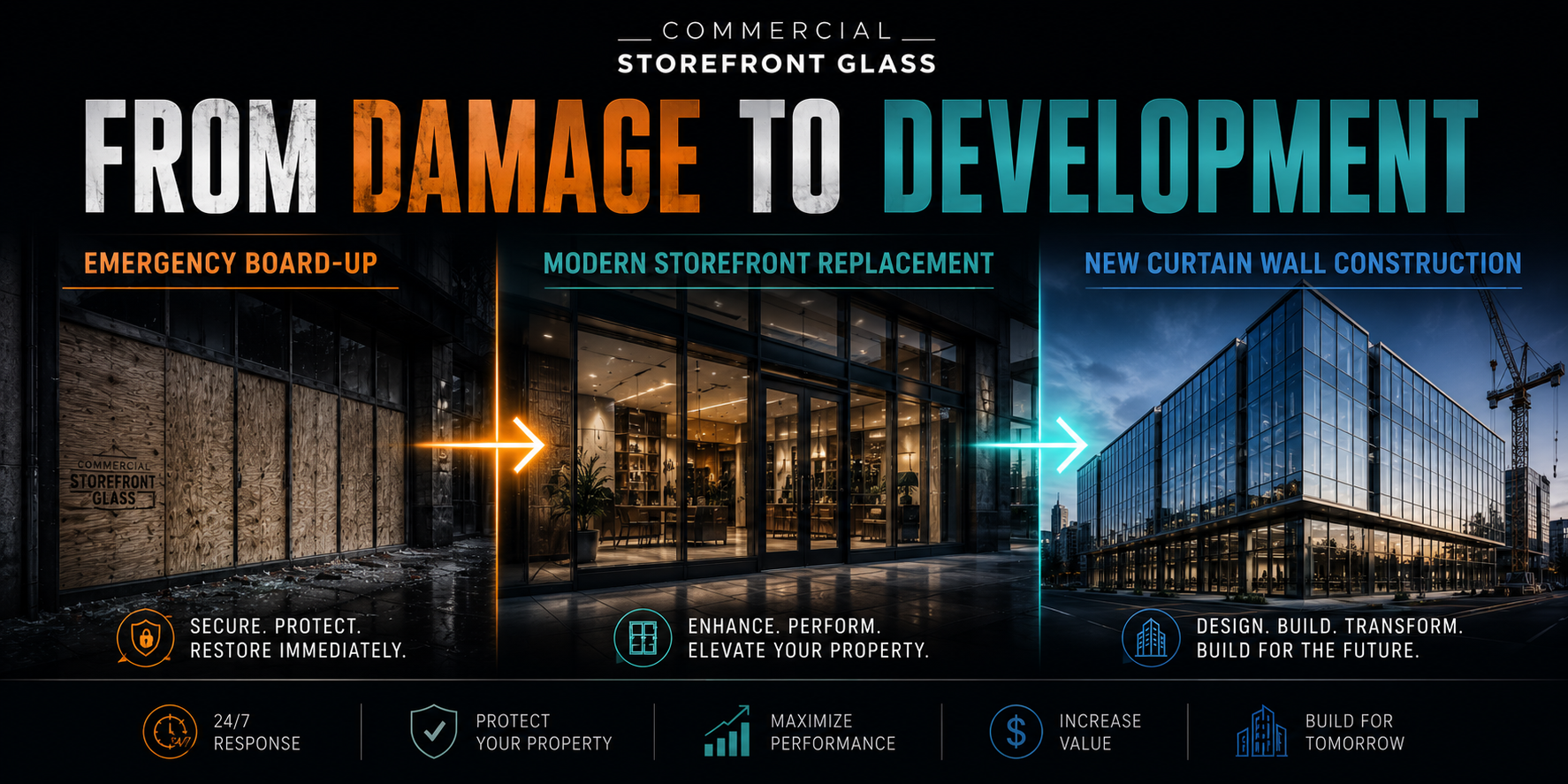
Commercial framing repair,replacement, and new installation each play an essential rolein the lifecycle of a commercial building.Repairshelp extend the service life of existing systems, replacementsrestore structural performanceduringmajor renovations, and new installationscreate the foundation for modern commercial architecture.
Whetherimproving a retail center in Los Angelesor modernizing anoffice building in San Francisco, professionally engineered aluminum framing systems support safer entrances, stronger storefronts, improved building performance, and long-term property value. Behind every successful commercial glass project, theframing system provides the strengththat keeps the entirebuilding performingfor years to come.