


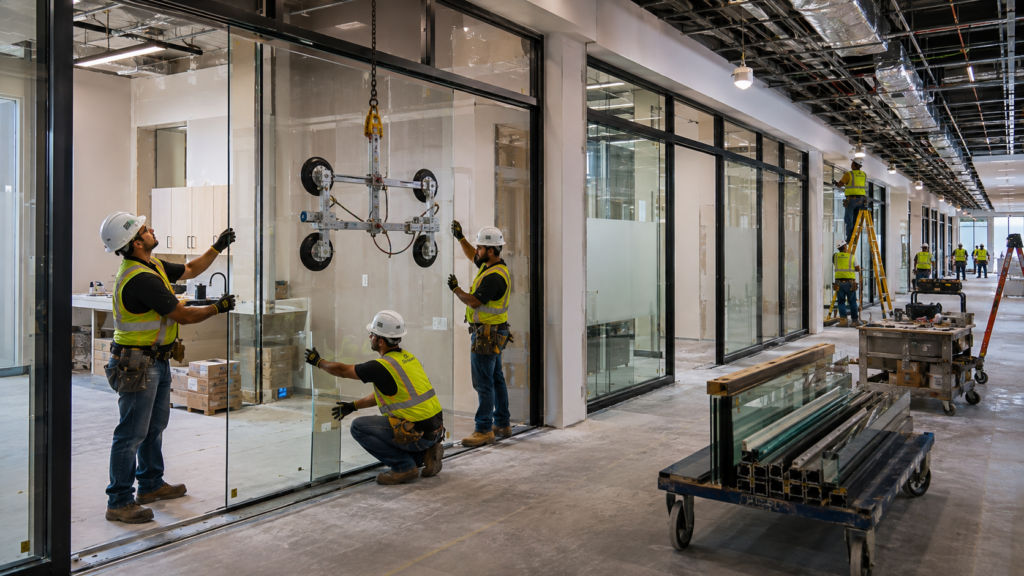
Commercial glass systems experience constant use.
Customers interact with storefronts every day.
Employees rely on entrances throughout business hours.
Property owners depend on exterior systems to maintain appearance, functionality, and security.
Over time, damage and wear become unavoidable.
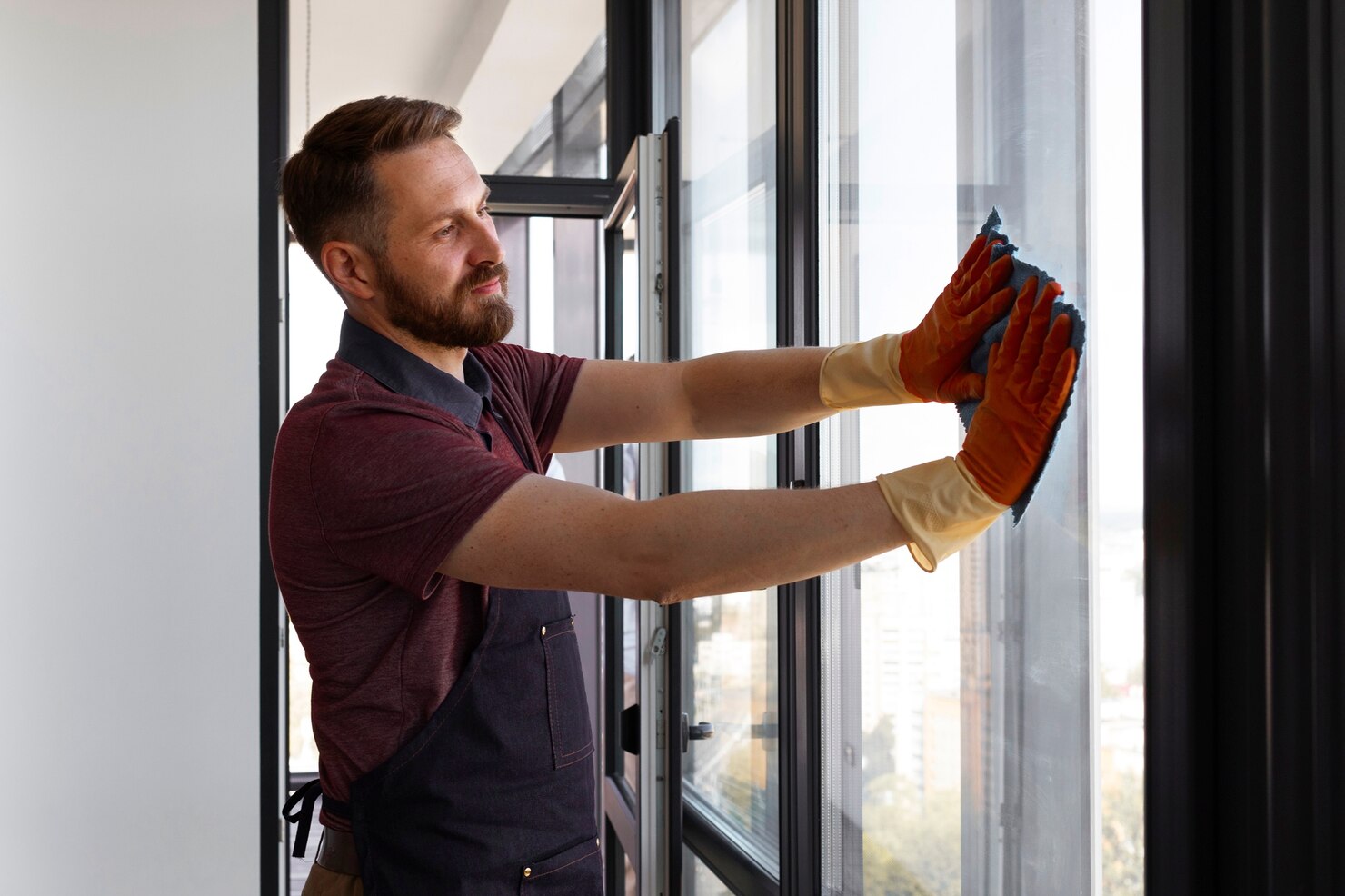
Commercial glass repair helps restore performance while extending the life of existing storefront systems, entry doors, and glazing components.
When addressed early, many issues can be corrected before larger and more expensive problems develop.
- Tenant Improvement Contractors
- Tenant Improvement Construction
- Tenant Improvement Build Outs
- Tenant Improvement Remodeling
- Tenant Improvement Renovations
- Commercial Tenant Improvement Services
- Office Tenant Improvement Contractor
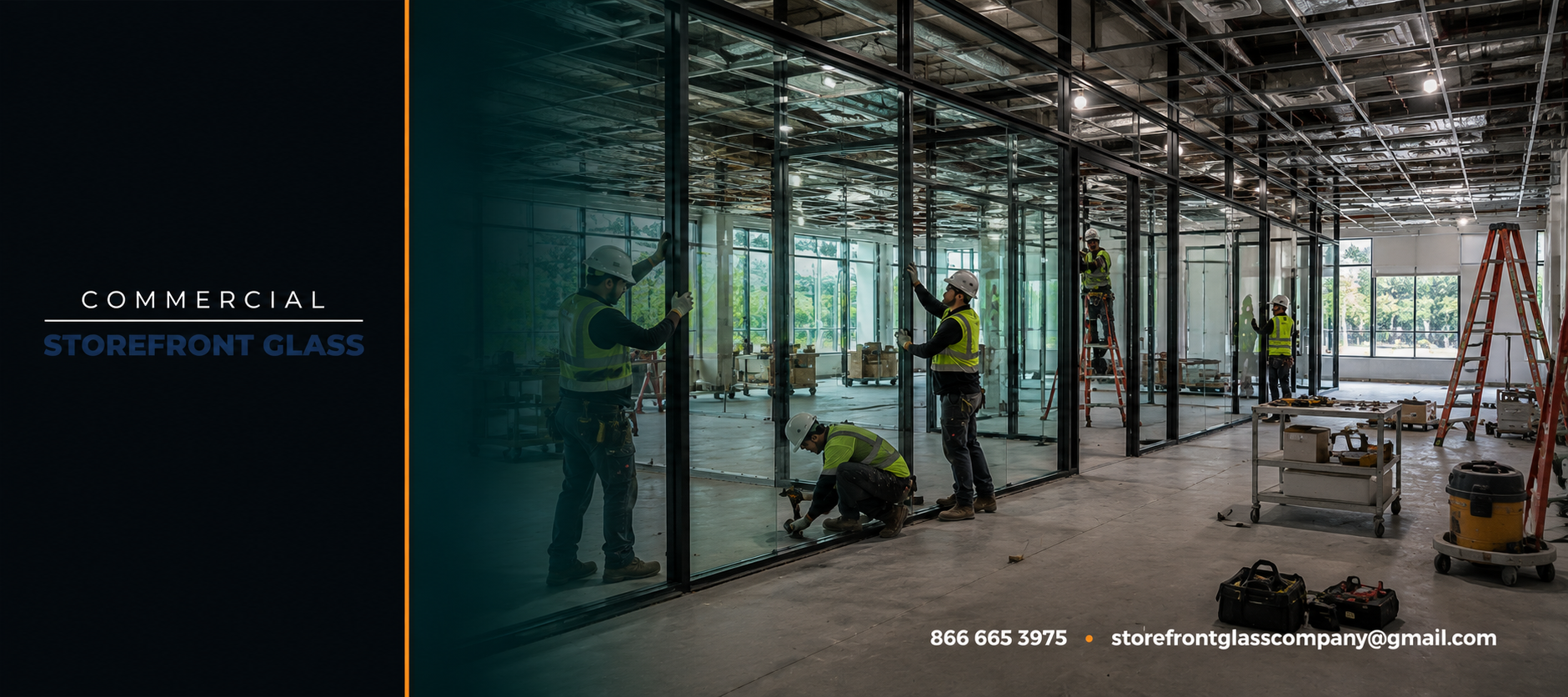
1. The General Contractor (GC) Perspective
How They Perceive It: The GC perceives commercial glass repair as an unpredictable scope fraught with hidden structural liabilities, punch-list friction, and thin margins. Unlike ground-up installation where tolerances, extrusions, and anchor details are known and specified on clean submittals, repair work means inheriting someone else’s installation flaws. When called to address broken lites, water leaks, or failed seals, the GC worries about uncovering rotted substrate framing, obsolete aluminum extrusion dies that are no longer manufactured, and brittle setting blocks that cause callbacks. To them, the goal is getting the building envelope watertight and structurally sound without letting a minor repair spiral into an unbudgeted critical-path delay.
Decisions They Normally Make:
Treats glass repair as a cosmetic “swap-and-caulk” job: Orders a replacement insulated glass unit (IGU) based purely on daylight opening measurements, scrapes away failed exterior wet seals, and slaps fresh silicone over degraded backer rods without investigating internal drainage or weep-hole blockages.
Delegates heavy door hardware adjustments to laborers or framers: Has general punch-list carpenters adjust failing concealed overhead closers, floor pivots, or panic exit devices, often over-tightening valves or throwing the door out of plumb, leading to glass binding and edge-chipping.
Substitutes standard monolithic or basic dual-pane glass to beat lead times: Bypasses custom laminated, tinted, or coated specs in order to close an opening immediately, inadvertently violating local safety glazing mandates (CPSC 16 CFR 1201) or building envelope energy compliance (Title 24 / ASHRAE 90.1).
Decisions They SHOULD Make:
Execute a full forensic inspection before ordering glass: Pull the glass stops, inspect the condition of the setting blocks, evaluate the internal weep system for standing water, and probe the framing anchors to ensure structural integrity hasn’t been compromised by moisture intrusion.
Match manufacturer extrusions, gaskets, and thermal breaks exactly: Source replacement parts and dry-glaze EPDM gaskets directly compatible with the original manufacturer (e.g., Kawneer, Tubelite, Oldcastle) to preserve the system’s engineered air- and water-infiltration performance ratings.
Establish clear parameters for when to stop repairing and push for replacement: Give the property manager or owner an honest lifecycle assessment when an aging frame shows metal fatigue, galvanic corrosion, or severe racking, demonstrating that replacing the entire storefront opening will cost less than continuous cyclical spot repairs.
- Retail Tenant Improvement Contractor
- Restaurant Tenant Improvement Contractor
- Medical Office Tenant Improvements
- Industrial Tenant Improvement Contractor
- Warehouse Tenant Improvements
- Tenant Improvement Allowance Guide
- Tenant Improvement Glass & Storefront Systems
- Tenant Improvement Project Planning
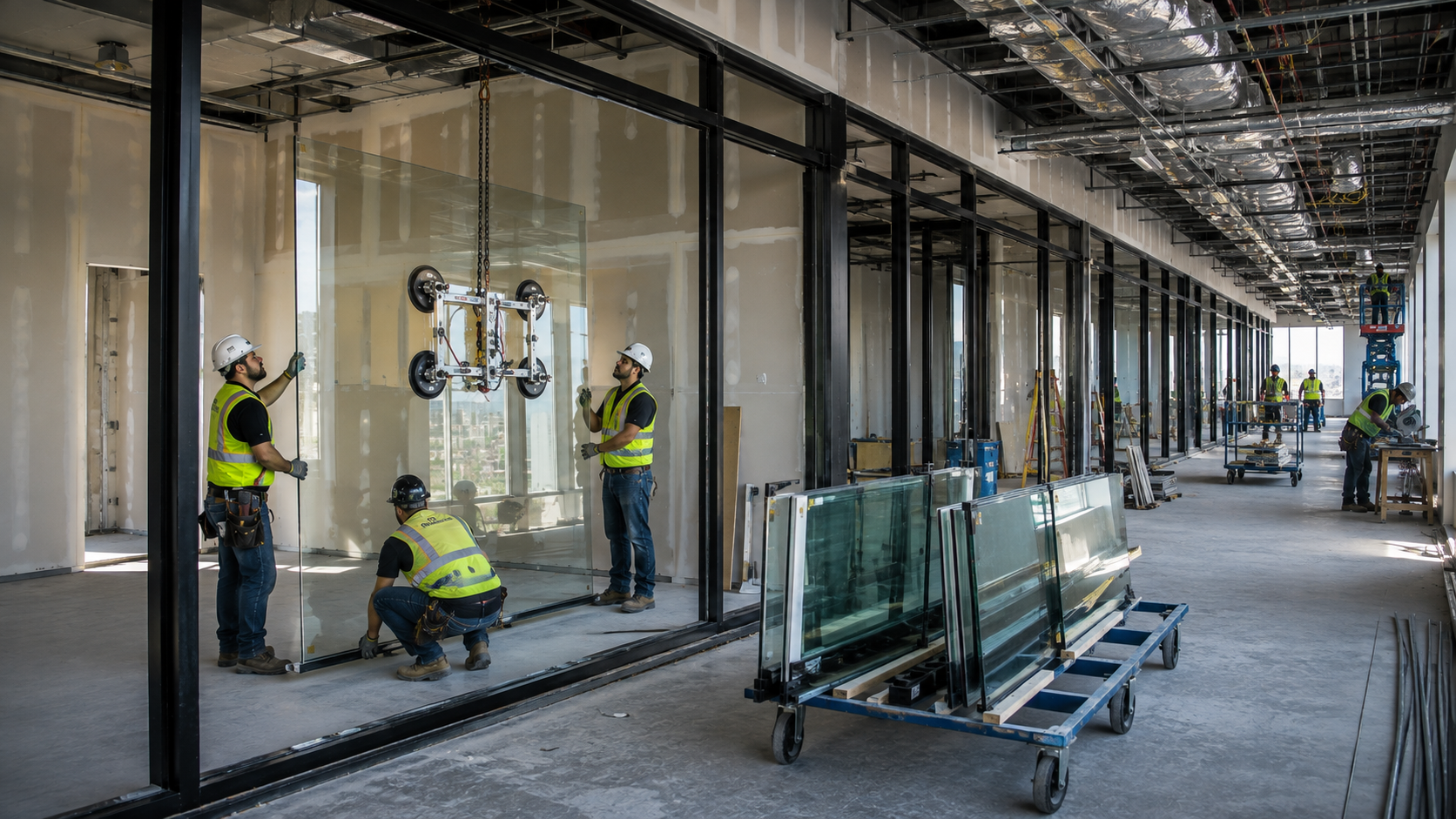
The Commercial Tenant Perspective
How They Perceive It: The commercial tenant (retailer, office manager, restaurant operator, or medical provider) perceives broken or failing commercial glass as an immediate operational emergency. A cracked pane, a foggy insulated window, or a misaligned front door directly damages curb appeal, invites security risks, disrupts customer foot traffic, and drives up interior utility bills. Tenants view repair through the lenses of business continuity and cost containment: they want fast turnaround, zero interruption to their operating hours, and minimal out-of-pocket expenses, often finding themselves frustrated by landlord lease boundaries and slow response times.
Decisions They Normally Make:
Ignores early warning signs of seal and hardware failure: Tolerates hazy interior condensation between panes, whistling air drafts, or a front entrance door that slams or drags on the threshold until the glass fractures or a customer gets pinched, turning a minor maintenance item into an emergency closure.
Applies unauthorized DIY fixes or aftermarket films: Slaps opaque tape over stress cracks, adjusts door closer screws with zero hydraulic knowledge, or applies dark adhesive films over damaged units to mask flaws, which can create localized thermal stress that shatters the pane.
Assumes the landlord handles all exterior glass repairs automatically: Neglects to review the commercial lease agreement on day one of an incident, assuming property management will dispatch a repair crew, only to discover under triple-net (NNN) terms that storefront glass and entry maintenance are 100% the tenant’s financial responsibility.
Decisions They SHOULD Make:
Upgrade to security-laminated or high-performance glass during repair cycles: Instead of paying to replace broken glass like-for-like with standard annealed or basic tempered units, pay the marginal difference to install laminated security glass or spectrally selective solar-control low-E glass to improve 24/7 break-in defense and reduce HVAC load.
Implement a quarterly commercial entrance maintenance schedule: Contract a certified commercial glazier to regularly inspect pivot alignment, fluid levels on hydraulic closers, weather-stripping, and panic hardware operation to prevent catastrophic door failures during business hours.
Clarify and document glass repair liability in the lease: Negotiate clear repair boundaries and response-time service level agreements (SLAs) with the landlord before signing, ensuring that structural frame defects are the landlord’s duty while routine surface maintenance is clearly budgeted in tenant operating reserves.
Not every damaged system requires replacement.
Many issues can be repaired through targeted service and maintenance.
Cracks may appear.
Hardware can fail.
Doors often fall out of alignment.
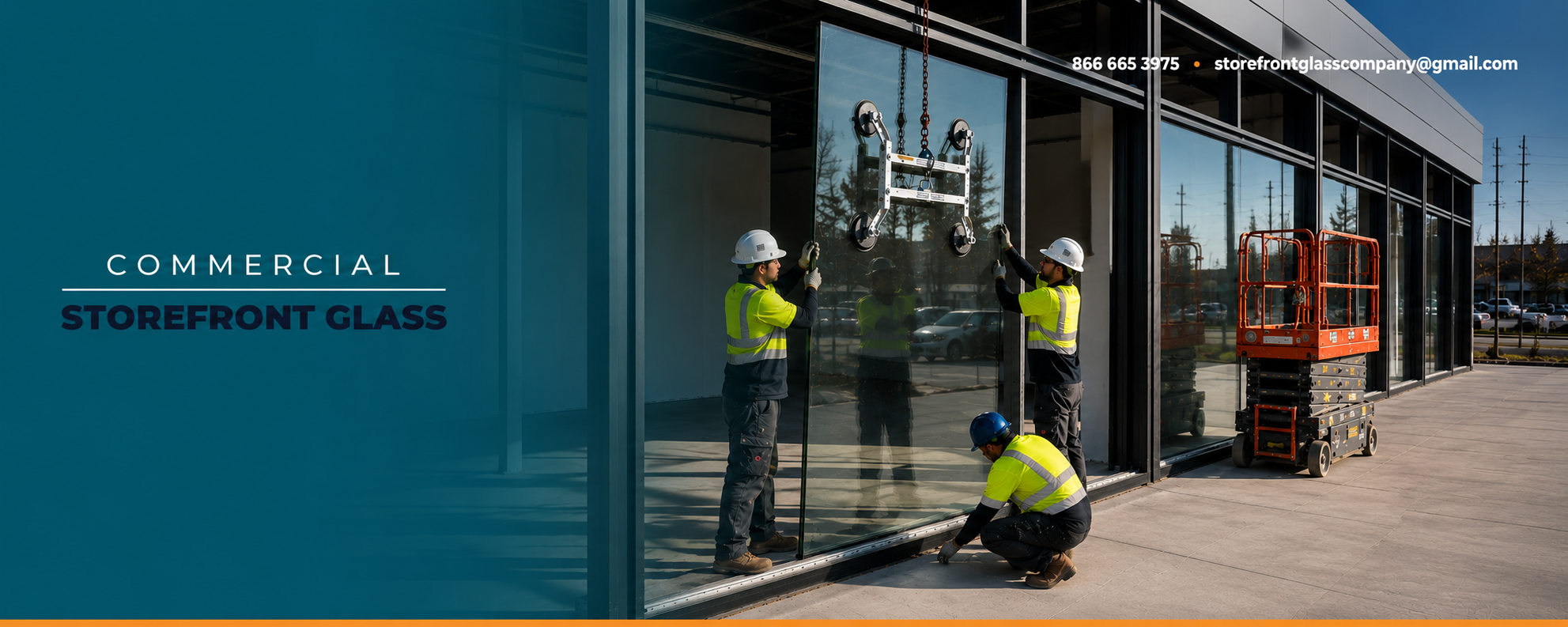
Seal problems sometimes affect performance.
Storefront systems are among the most visible features of a commercial property.
Damage can affect customer perception immediately.
Cracked glass creates safety concerns.
Operational issues may impact accessibility.
Prompt repairs help restore functionality while maintaining a professional appearance.
Many storefront repairs can be completed without replacing the entire system.
Commercial Warehouse Repair vs Replacement vs Installation
Commercial Logistics Repair vs Replacement vs Installation
Commercial Storefront Repair vs Replacement vs Installation
Curtain Wall Repair vs Replacement vs Installation
Commercial Window Repair vs Replacement vs Installation
Commercial Door Repair vs Replacement vs Installation
Emergency Board-Up Repair vs Replacement vs Installation
Industrial Building Repair vs Replacement vs Installation
Manufacturing Facility Repair vs Replacement vs Installation
Port & Terminal Repair vs Replacement vs Installation
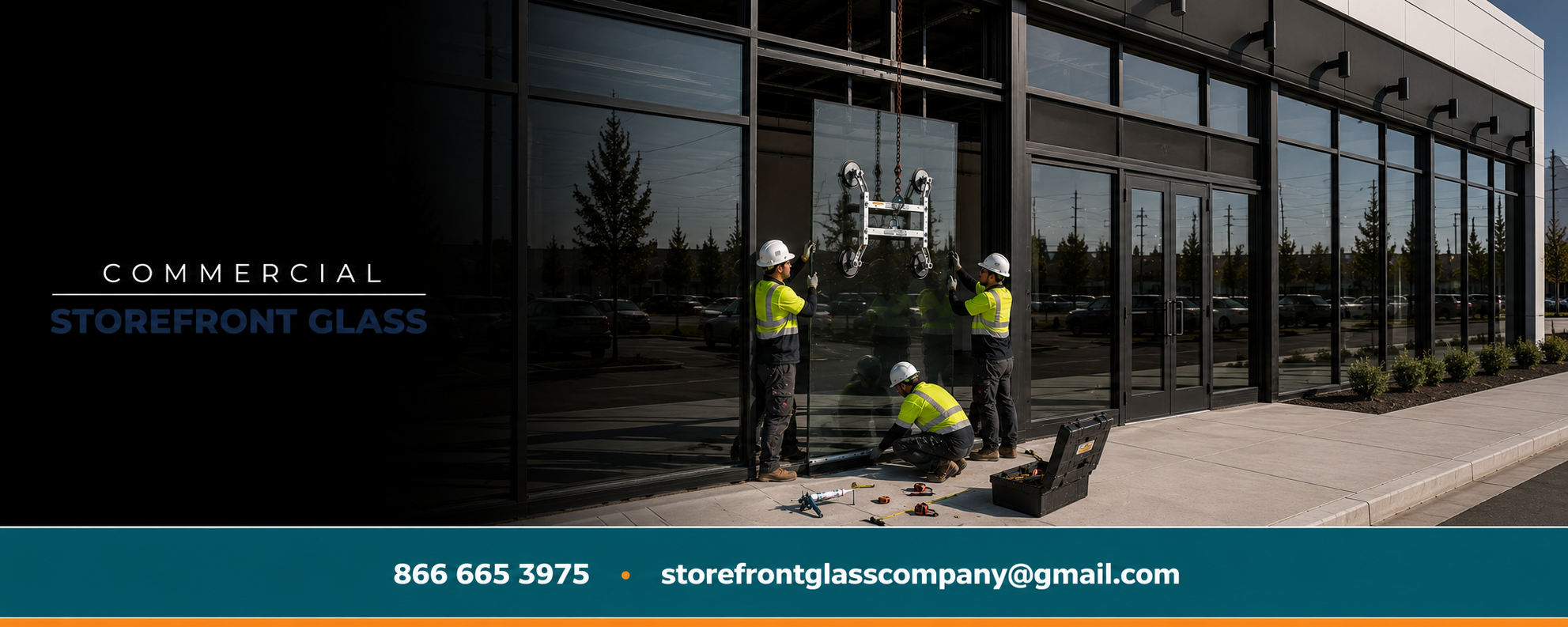
Framing systems support the overall performance of commercial glazing.
Impact damage can affect alignment.
Hardware failures may create operational problems.
Wear often develops over time.
Repairs help restore structural integrity while preserving the appearance of the storefront system.
Many commercial properties can extend system life through proactive maintenance and targeted repairs.
- Repair vs Replacement
- Installation vs Retrofit
- Storefront vs Curtain Wall
- Office Buildings vs Retail Buildings
- Tenant Improvements vs New Construction
- Glass Doors vs Automatic Entrances
- Emergency Response vs Planned Renovations
- High-Rise Systems vs Street-Level Storefronts
- Security Glass vs Decorative Glass
- Energy Efficiency vs Visibility

Restaurants rely on strong first impressions.
Exterior presentation influences customer decisions.
Damaged storefront glass can affect the dining experience before guests ever enter the building.
Repair services help restore visibility, safety, and overall curb appeal while supporting uninterrupted operations.
- Commercial Storefront Systems vs Aluminum Storefront Systems
- Commercial Glass Doors vs Commercial Window Replacement
- Curtain Wall vs Storefront Systems
- Commercial Glass Installation vs Commercial Glass Repair
- Commercial Glazing Contractor vs Commercial Glass Contractor
- Emergency Board-Up vs Commercial Glass Repair
- Office Glass Installation vs Storefront Glass Installation
- Curtain Wall Installation vs Curtain Wall Repair
- Aluminum Storefront vs Glass Storefront
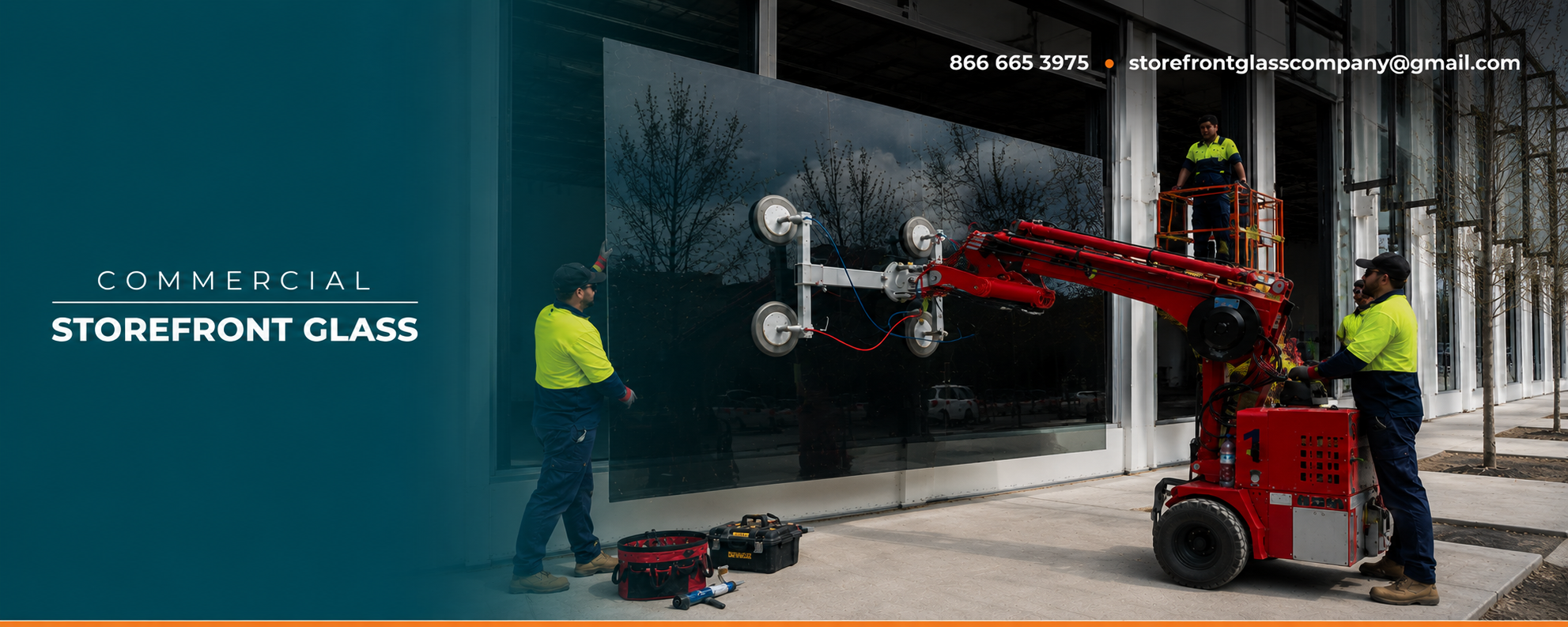
Not every issue requires a new storefront system.
Minor damage can often be repaired successfully.
Hardware failures are frequently correctable.
Alignment issues may be adjusted.
Replacement becomes more appropriate when damage is extensive, recurring, or affecting overall system performance.
Evaluating the condition of the storefront helps determine the most practical long-term solution.
Commercial Glass Repair Bay Area